Printable guide
Pirates of Campeche: History of the Walled City, Forts & Attacks
Published
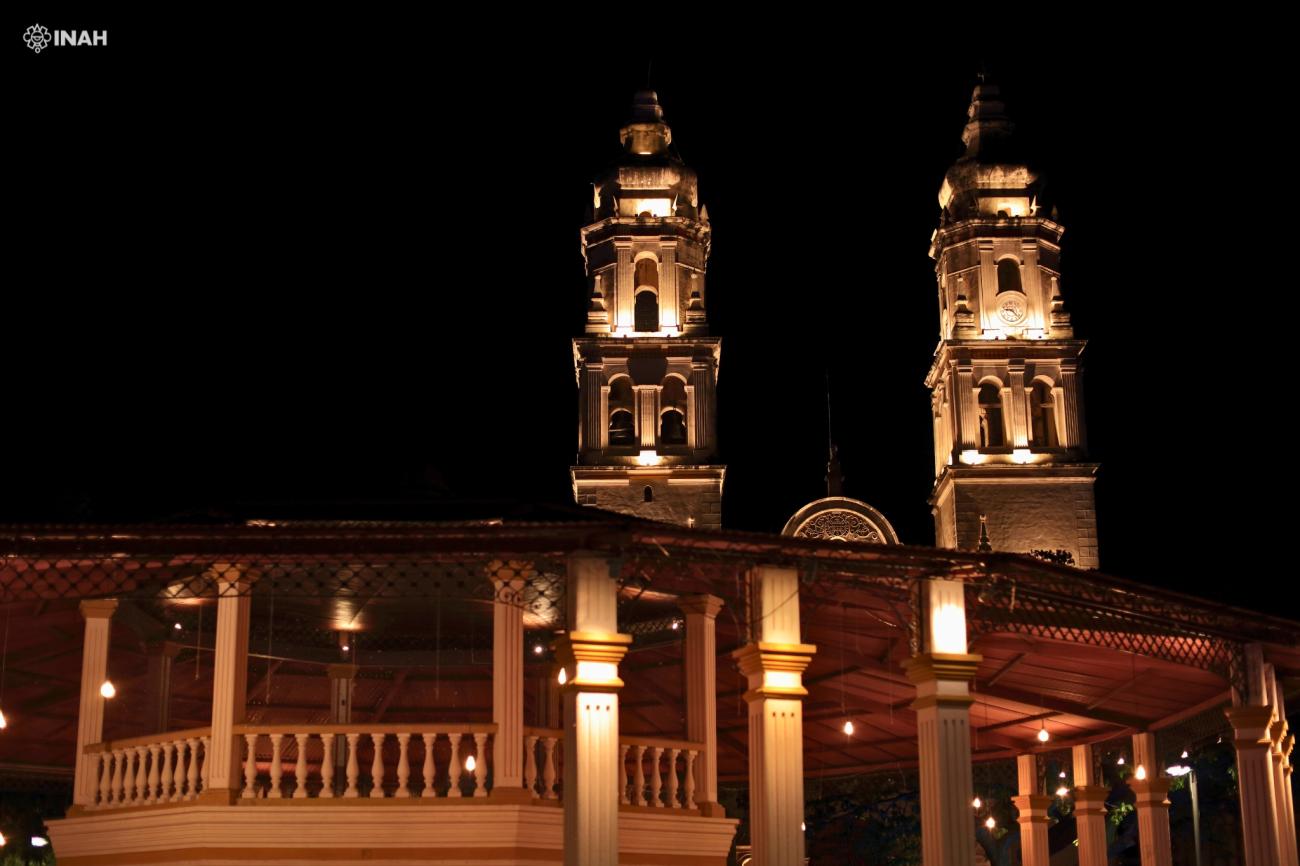
Campeche’s pirate story is not a decorative legend added to a colonial city after the fact. It is the reason the city’s most recognizable buildings exist. The walls, gates, bastions and forts of San Francisco de Campeche record a long argument between a valuable Gulf port and the people who wanted to seize its cargo, ships and trade. You can follow that argument on foot, from the old sea entrance to the land gate, then continue to the forts on the hills outside the historic centre.
The story is also more complicated than the familiar image of a pirate with a cutlass. Campeche was a Maya settlement before the Spanish foundation of San Francisco de Campeche in 1540. It became a Spanish colonial port connected to the maritime route between Spain, Havana and Veracruz. Its commercial importance made it vulnerable, but many of the attackers called pirates were privateers operating with the protection, commissions or political approval of European powers. Local residents, Indigenous communities, African and Afro-descendant people, merchants, sailors, soldiers and officials all belonged to the city’s history, even when popular retellings focus only on famous captains.
This guide explains what happened, what you can still see, how to read the fortifications, and how to plan a visit without reducing the city to a theme park. It stays within Campeche State and concentrates on San Francisco de Campeche, where the best surviving evidence is close together. The goal is not to make every attack sound like an adventure. The useful question is how a port exposed to violence built one of the most distinctive defensive landscapes in the Americas.
Why Campeche attracted pirates and privateers
The first key is geography. Campeche faces the Gulf of Mexico on the western side of the Yucatán Peninsula, with a harbour that connected the city to regional and transatlantic commerce. The port handled valuable products from the peninsula and served as an embarkation point for goods moving through the Spanish colonial system. Timber and dyewoods were important to the regional economy, while ships also carried provisions, trade goods and wealth moving between larger ports.
A port does not need to contain a gold mine to attract an attack. It only needs predictable ships, warehouses, merchants and a harbour where a fleet can approach. Campeche offered those targets. The bay also placed the town in the wider Caribbean and Gulf conflict between Spain and its rivals. England, France and the Netherlands challenged Spanish control of sea routes and colonial commerce. A captain with a letter of marque could attack Spanish ships and settlements under a state commission; a captain operating without that authorization was a pirate. On the ground, the distinction was not comforting to the people whose homes and businesses were threatened.
Campeche was founded at the site of a Maya settlement known in Spanish accounts as Campeche or Ah Kim Pech. The colonial town was laid out around a central plaza, religious buildings, homes and port facilities. For a long period its defenses were limited compared with the value of the place. The coastline made the town accessible from the sea, while the roads and approaches from inland needed their own control. The later wall was therefore not a single response to one dramatic event. It was a large engineering project shaped by repeated attacks, changing military technology and the need to protect a working city.
The safest way to understand this background while traveling is to begin with the city rather than with a list of pirate names. Stand in the historic centre and note the short distance between the commercial streets, the harbour-facing side of the walls and the entrances through which people and goods moved. Then visit a bastion or fort museum. The architecture gives the history a scale that a story alone cannot provide.
Campeche before the wall
Before the city became famous for its fortifications, it was a port settlement with a much older Maya history. Spanish colonization did not begin on an empty shoreline. The foundation of San Francisco de Campeche in 1540 followed earlier expeditions and conflicts with Maya polities. The colonial town was built into a landscape whose people, routes and political realities predated Spanish rule by centuries.
That matters when you visit the walls because the defensive city is only one layer. The museums in Campeche State connect the colonial story with Maya archaeology, and objects from sites such as Calakmul and Edzná help explain that the region’s history did not start with ships from Europe. A pirate-focused visit should therefore include at least one museum with archaeological or local-history collections, not only a fortification walk.
The early colonial port grew because it was useful. It connected the peninsula with the sea and became part of the Spanish system for moving people, supplies and resources. This brought administrative power and commercial opportunity, but it also exposed the town. A harbour that welcomes merchant ships can also welcome an attacking fleet. The city’s layout made the problem visible: the valuable core and waterfront needed protection, and the approach from land could not be ignored.
The first defenses were not enough to stop determined attacks. The town had local soldiers and civic institutions, but it lacked the continuous masonry system that later defined Campeche. As weapons, ships and siege tactics changed, a few isolated buildings could not protect every street. The response eventually became a ring of walls with bastions, gates, parapets and controlled sightlines, supported by forts outside the centre.
When you walk through the historic district, look for the relationship between ordinary buildings and military structures. Churches, homes, public buildings and markets belonged to a living port; the wall was not an isolated monument. It shaped movement, separated the protected core from outer neighbourhoods and made the city’s limits legible. That is why a slow walk is more revealing than a quick photo stop at one gate.
The attacks that shaped the city’s memory
Campeche experienced multiple raids and attacks during the seventeenth century. The most frequently discussed episodes include attacks in the 1630s, the sack associated with English forces in 1663, and the assault led by Laurens de Graaf in 1685. Dates and details can vary between popular accounts, archival summaries and museum interpretations, so it is wise to treat dramatic numbers and individual anecdotes with care. The stable historical point is that the town was repeatedly vulnerable and that the attacks convinced authorities and residents that a major defensive system was necessary.
The 1663 sack is central to the popular story because it demonstrated how quickly a poorly defended port could be overwhelmed. English forces associated with Christopher Myngs attacked Campeche, and later accounts connect Henry Morgan with the expedition. The event became part of the city’s long memory because the attackers captured wealth and ships and exposed the weakness of the existing defenses. It is tempting to tell the episode as a daring raid, but from the city’s perspective it meant violence, loss, fear and disruption to families and commerce.
Laurens de Graaf’s attack in 1685 reinforced the same lesson. De Graaf, a Dutch privateer often called Lorencillo in Spanish-language accounts, occupied the town for a period and left destruction behind. The attack occurred when plans for stronger defenses were already developing, but the completed system was still some years away. A city can understand the need for walls and still be unable to build them quickly. Funding, design, labour, stone, transport and political approval all take time.
These episodes explain why pirate portraits, models, maps and references to corsairs appear in Campeche museums. They are not proof that every story told in a tour is equally documented. A good guide distinguishes between a documented attack, a later legend and the way the city chose to remember both. If you book a history experience, ask whether it focuses on the surviving architecture, colonial trade and local context rather than only on colourful tales.
Compare verified Campeche history experiences on GetYourGuide · See the Walled City Tour of Campeche and Fort San Miguel on Viator
The wall: a defensive system, not a backdrop
Construction of the major wall began in 1686 and was completed in 1704. UNESCO describes the resulting system as an irregular hexagonal fortification integrating bastions, gates and curtain walls. The wall enclosed the historic town, while additional forts and batteries extended the defense beyond the immediate perimeter. The aim was to create overlapping positions from which defenders could observe, fire and control access.
The surviving sections are enough to show the logic, but not enough to give you an uninterrupted circuit of the original enclosure. Parts of the wall disappeared as the city changed, and some portions have been restored or adapted. That is normal for an urban fortification. A wall that remained completely untouched would probably mean the city had stopped living around it. In Campeche, the historic core remains a neighbourhood as well as a heritage site.
Start at a gate, follow the accessible stretch of wall, and then move between bastions. From above, notice how the parapet created a protected passage for soldiers and how the corners offered positions with wider views. At ground level, notice the thickness of the masonry and the way the wall interrupts streets. The point was not to create a scenic promenade. It was to make an attack difficult, slow movement and give defenders a better position.
The wall also controlled daily life. Gates were places where people and goods entered and left. A town enclosed at night or during an alert had to regulate access, watch for threats and manage trade through limited openings. The same gates are now easy meeting points for travelers, but their original role was restrictive and practical.
Heat changes the experience. The stone holds warmth, and upper sections may offer little shade. Go early, carry water and avoid building your whole day around walking the highest exposed sections at midday. If you use a walking guide, a morning tour can give you the historical framework before you explore museums independently. A second visit after sunset is useful for atmosphere, but darkness makes uneven surfaces harder to read.
 Baluarte de San Carlos on Campeche’s historic fortification circuit
Puerta de Mar and the harbour side
Puerta de Mar, the Sea Gate, connected the walled city with the waterfront and the maritime life that made Campeche wealthy and vulnerable. The present urban waterfront has changed, so do not expect the gate to look out onto an unchanged colonial harbour. Instead, use it to imagine the movement of sailors, merchants, officials and cargo through a controlled opening in the defenses.
The sea gate is best visited as part of a route through the centre. Walk from the main square toward the waterfront, then continue along nearby streets and sections of the wall. This lets you compare the civic heart with the defensive edge. The cathedral, plaza and colonial façades communicate authority and community; the gate communicates surveillance and controlled passage.
The nearby malecón is a separate Gulf-facing landscape rather than part of the walled city. It is a good place for a late walk and sunset, but it does not replace the sea gate. Campeche’s coast is broad and open beyond the old centre, while the gate belongs to the historical boundary of the fortified town. Keeping those places distinct makes the geography easier to understand and prevents the common mistake of treating every waterfront view as a pirate-era scene.
At the gate, pay attention to scale. It is easy to photograph the opening and move on, but the important detail is how the entrance fits into the masonry around it. The gate was one component of a broader system. Its effectiveness depended on the walls, bastions, watch positions and the ability to respond from more than one direction.
A guide can add value here if the tour explains the port’s commercial role and the later defensive works. Otherwise, read the site slowly, then use a museum to fill in the missing history. The city is compact enough that you can do both without committing to a long excursion.
Compare Campeche walking tours on GetYourGuide · Browse Campeche tours on Viator
Puerta de Tierra and the land approach
Puerta de Tierra, the Land Gate, is one of the most recognizable surviving symbols of the walled city. Its role was different from Puerta de Mar because it controlled movement between the protected centre and the inland side of Campeche. The gate is associated with a surviving stretch of wall and defensive features such as firing openings, storage spaces and a moat or ravelin arrangement described in local historical interpretation.
This is the place to think about what the wall protected against besides ships. An attacking force could land outside the harbour and approach overland. Soldiers, supplies and civilians also needed to move through the gate in ordinary times. The land entrance therefore combined ceremony, logistics and defense. It was a threshold between the city and its surrounding settlements, not simply a hole in the masonry.
The gate can become busy because it is visually dramatic and often included in city tours. Arrive early if you want time to inspect the structure without a group moving through it. If access to the upper passage, museum rooms or an evening performance is offered, check the current schedule locally rather than relying on an old itinerary. Cultural programming and access can change, and a historic gate may close portions for maintenance or events.
A light-and-sound presentation may be offered at or near the gate on selected nights, but do not build your entire trip around a remembered schedule from a previous visitor. Confirm the current day, language, ticket procedure and weather policy in Campeche. If it is sold out or unavailable, the gate remains worthwhile in daylight. Its masonry and position explain more about the city than a show can do on its own.
Puerta de Tierra also gives you a useful walking link toward the bastions on the western and northern sides of the centre. Wear shoes suitable for steps and uneven surfaces. Parents should keep children close on elevated sections, and travelers with limited mobility should ask staff which parts are accessible before paying for an activity.
 Puerta de Tierra, the land gate of San Francisco de Campeche
The bastions inside the historic centre
Campeche’s bastions were the strong points of the wall. They projected from the corners or sides of the enclosure, allowing defenders to cover the faces of the adjoining walls. Several survive and have been reused as museums, gardens or cultural spaces. Each one is worth seeing for its position, but you do not need to force yourself through every interior in one afternoon.
Baluarte de San Carlos helps explain the civic history of the city and the way a military structure can become a museum. Baluarte de la Soledad, facing the sea side, houses the Museo de Arquitectura Maya and is especially useful if you want to connect colonial defenses with the older architectural traditions of the peninsula. Baluarte de Santiago is associated with a botanical garden, offering a shorter, more relaxed stop for travelers who need a break from dense historical displays. San Francisco, San Juan, San Pedro and Santa Rosa complete the larger defensive story, although access and current use can vary.
The names can be confusing because some bastions are more visible from the street than others, some interiors have changing exhibits, and the city’s modern roads do not always follow the original defensive line. Use a current city map or ask at a museum for the open route. Do not assume that a closed door means the structure has disappeared; it may simply be operating on a different schedule.
The best approach is thematic. Choose one bastion for military architecture, one for local or archaeological collections, and one for a view or garden. This gives you variety and leaves time for the plaza, cathedral and streets between them. History enthusiasts can spend longer comparing masonry, embrasures and restoration. Families may prefer short museum visits separated by open-air walks.
If you want to visit several museums, note that opening days and hours can change. Official INAH information is a useful starting point for the forts and heritage sites, but confirm the details close to your visit. Bring identification or cash only if the current ticket rules require it; do not rely on old blog posts for entrance prices.
See current Campeche city activities on GetYourGuide · Compare local history and fort tours on Viator
Fuerte de San Miguel: the city’s strongest museum stop
Fuerte de San Miguel stands outside the historic centre on higher ground and was part of the later defensive landscape built to protect Campeche from attacks approaching by sea or land. Today it is associated with the Museo de Arqueología Maya, making it one of the most useful places to visit when you want both fortification and archaeology.
The fort’s position is important. A bastion inside the wall shows how defenders protected a corner of the town. San Miguel shows how the city extended its defensive reach beyond the wall. From a higher position, soldiers could observe approaches and communicate with other points in the system. The view is part of the architecture’s meaning, not just a bonus for photographs.
Inside, archaeological collections provide a different time scale from the pirate stories. Objects from Maya sites in Campeche State, including important material associated with Calakmul and other regional centres, place the colonial port within a much older cultural landscape. Allow enough time to read rather than rushing directly to the viewpoint. The museum can help you understand Maya symbols, architecture and political history before you visit a ruin in the forest.
San Miguel is not a casual walk from every part of the walled centre, especially in hot weather. Use a taxi, private vehicle or a verified city tour if that is more practical. A tour listing can change its included stops, so check the current description before booking. If you go independently, combine the fort with other city sights rather than trying to squeeze it between a long morning walk and an evening event.
The fort includes steps, thick walls and uneven surfaces. Ask about accessible routes if needed. Photography rules may apply inside museum rooms, and some displays are more sensitive to light than an outdoor monument. Plan for a slower visit than the gate photographs suggest.
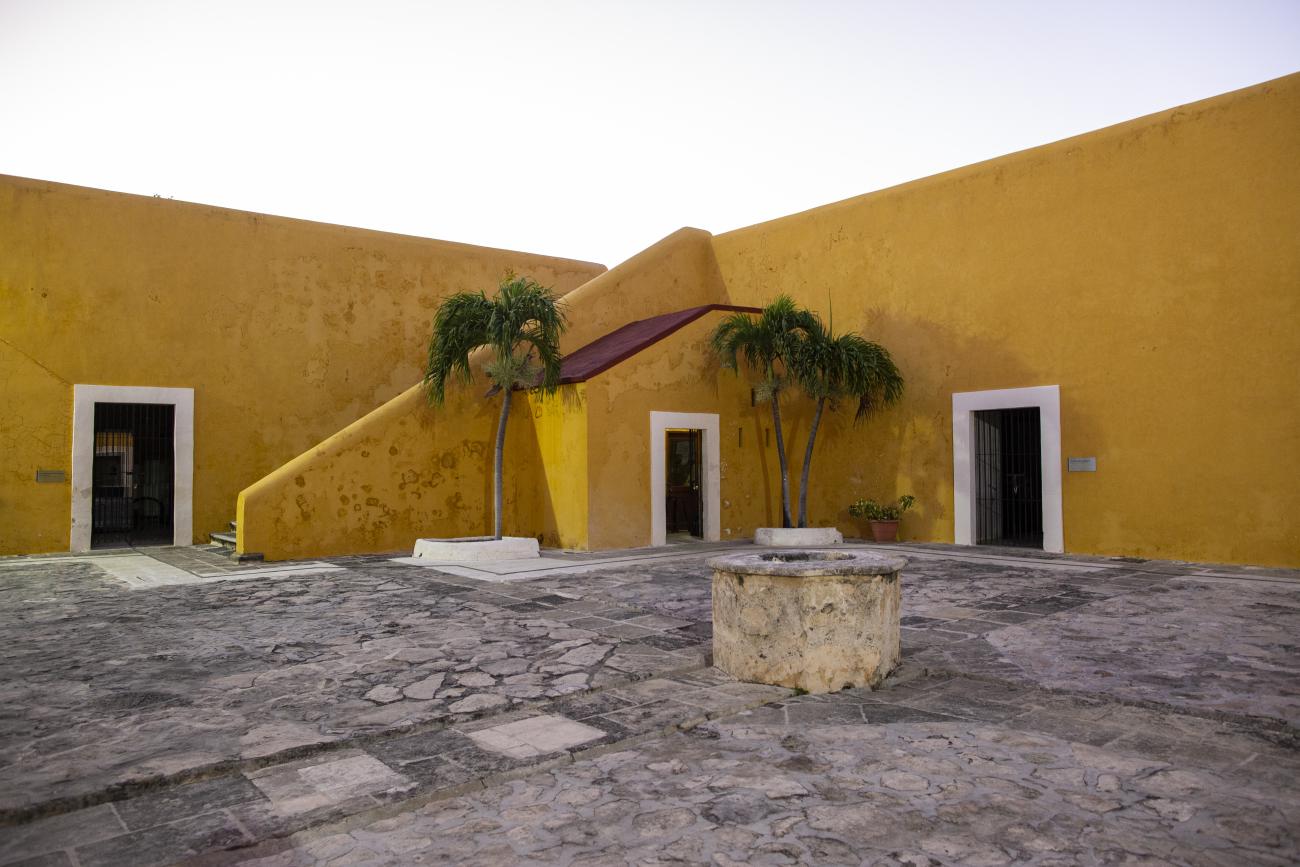 Fuerte de San Miguel above Campeche, a defensive fort and archaeology museum
Fuerte de San José el Alto and the maritime story
Fuerte de San José el Alto occupies another elevated position outside the old centre. Its museum use has focused on underwater archaeology and maritime heritage, giving your pirate itinerary a useful counterpoint to San Miguel. Where San Miguel is closely associated with Maya archaeology and the panoramic defensive position, San José can help explain ships, wrecks, navigation and the material evidence left beneath the Gulf and Caribbean waters.
The two forts should not be treated as interchangeable. Their locations, collections and visitor experience differ. If you have only time for one, choose according to your interests: San Miguel for a broad introduction to Maya archaeology inside a major fort; San José for maritime and underwater archaeology when that subject is your priority. If both are open and your schedule allows, visiting them on separate parts of the day is less tiring than treating them as a single rushed museum circuit.
The forts also show why the city could not depend solely on its central wall. Defensive planning extended outward to occupy high ground and monitor approaches. The system involved more than dramatic combat. It required maintenance, supplies, trained personnel and communication. A fort abandoned or poorly staffed would not protect a port simply because its walls were thick.
Check current museum information before traveling. The names used in English and Spanish can vary between listings, and some online pages describe the building, the museum and the collection with different labels. Use the official site or local cultural information for the latest access conditions. Do not invent a timetable around an old review.
A visit to San José works well after a morning in the historic centre, but the heat can make two fort museums in one day demanding. Carry water, take breaks and leave space for the malecón in the evening. The waterfront gives you a sense of the open sea that the forts were built to watch, even though the modern shoreline no longer presents the same colonial scene.
A practical pirate-history walking route
For a first visit, use this sequence over one full day or two shorter sessions. Begin at Plaza de la Independencia in the morning. This gives you orientation and puts the city’s civic and religious centre before the military story. Walk toward Puerta de Mar, noting the streets, façades and the relationship between the square and the harbour side.
Continue through the historic centre to one bastion with a museum. Baluarte de la Soledad is a strong choice for linking Maya architecture with the city’s later defensive history. If it is closed, choose another open bastion rather than waiting through the hottest part of the day. Read the exhibits and look at the structure around you; the building is part of the collection.
Take a shaded break around a plaza or arcade, then walk a section of the wall. You do not need to complete every surviving stretch. The useful part is the change in perspective from street level to parapet level. Think about how guards would have watched the sea, gates and approaches, and how a civilian would have experienced the same structure as a limit on everyday movement.
After lunch and a rest, go to Puerta de Tierra. If you want an evening cultural presentation, confirm the schedule and tickets locally. Otherwise, explore the gate in daylight and continue along the nearby fortification route. Finish with the malecón at sunset, remembering that this is the modern Gulf waterfront and not the same physical space as the old sea gate.
Put Fuerte de San Miguel and Fuerte de San José on a second day if you can. That gives you time to absorb the archaeology and maritime collections. A rushed fort visit followed by a long drive to another destination usually produces photographs but little understanding. Campeche works better when the itinerary allows the architecture to connect.
For travelers who prefer a guide, the verified GetYourGuide historic-center walking tour lists the Land Gate, Sea Gate, El Palacio Museum, Casa 6, the main square, cathedral and other centre sights. Viator lists a Walled City Tour of Campeche with Fort San Miguel. Check the exact current inclusions, duration, language and pickup conditions before booking; marketplace listings can change.
Where to stay for a fortification-focused visit
The most convenient base is inside or close to Campeche’s historic centre. Staying near the walled city lets you walk to the main square, Calle 59, the gates and several bastions without arranging transport for every stop. It also makes a split schedule practical: visit museums in the morning, rest during the hottest hours and return for an evening walk.
A stay farther along the malecón can be comfortable if you value open waterfront space, sunsets or larger hotel facilities. The trade-off is that you may use taxis to reach the historic centre and the outlying forts. That is not a problem, but include the extra movement when planning a museum-heavy day.
If the pirate story is part of a larger Campeche State road trip, Campeche City is a better first base than trying to sleep near every attraction. Edzná is a realistic addition from the capital, while Calakmul and the Río Bec sites require a different south-eastern route and usually an overnight base near Xpujil or another suitable town. Do not confuse the city’s forts with Calakmul’s jungle archaeology: they belong to different places, periods and day-planning requirements.
Use current destination searches rather than relying on a hotel name copied from an old guide. Check current Campeche City rates on Booking.com · Compare Campeche stays on Trip.com
When choosing, prioritize walking distance, air conditioning, luggage storage and a quiet room if you plan early museum visits. Historic buildings can have steps, narrow corridors and limited accessibility. Ask the property about elevators, ground-floor rooms and parking before booking if those details matter.
How to explain the pirate story to children
Campeche is a good place for families who enjoy history because the evidence is physical. Children can see a gate, climb a wall where access is permitted, stand inside a bastion and look across the bay from a fort. The story becomes easier to follow when you explain the city as a port that needed to protect people and goods, rather than presenting pirates as cartoon villains.
Keep the vocabulary simple but accurate. Explain that privateers could be authorized by a government to attack an enemy, while pirates operated outside that legal permission. Then acknowledge that both could cause fear and destruction for local residents. Avoid turning violence into a treasure hunt. Ask children what a gate, wall or high lookout would help defenders do, and let the architecture answer.
Short visits work best. One fort, one bastion and one gate may be enough for a younger traveler. Add the plaza, a shaded break and the malecón rather than another indoor display. Comfortable shoes, water and sun protection matter more than completing a checklist.
Check whether museums permit photography, food or large bags. Keep children close on stairs, parapets and elevated paths. The historic centre is active and urban, so look both ways at crossings even when walking between heritage buildings.
History, tourism and responsible interpretation
Campeche’s pirate identity supports museums, tours, shows and local storytelling, but responsible travel requires a little skepticism. A dramatic story may combine a documented event with a later legend. A famous captain may be linked to an attack without having played the role a tour script assigns him. The walls themselves are less ambiguous: they were built, repaired, used, altered and preserved as part of the city’s response to insecurity.
Support institutions that preserve the actual places. Pay museum admission when required, respect photography rules, do not climb closed masonry and avoid touching archaeological objects or old surfaces. Keep the streets usable for residents. The historic centre is not a film set; people live, worship, work and study there.
Be careful with the word “pirate” when discussing colonial history. It can flatten the roles of European states, colonial authorities, local communities and enslaved or marginalized people into a single adventure narrative. The city’s wealth depended on unequal colonial systems as well as maritime trade. The attacks caused harm, but the fortifications did not erase the deeper conflicts created by conquest and colonial rule.
Museums are the best place to look for context because collections can place the colonial port alongside Maya history, local civic life and maritime archaeology. Read labels, ask staff respectful questions and allow for different kinds of evidence. A fort is not only a viewpoint; it is a record of who had power, who was protected and who was expected to maintain the system.
When to visit and what to expect
The most comfortable time for walking the walls is usually the cooler part of the day. Campeche’s climate is warm and humid, and stone surfaces become tiring under direct sun. The dry season can still be hot, while rainy-season showers may interrupt an open-air route. A short storm does not necessarily end a museum day, but it can make stairs and paving slippery.
Before leaving your accommodation, check whether the gates, bastions and forts you want are open that day. Museums may close for holidays, maintenance or institutional changes. Official INAH pages are useful for INAH-managed sites, while municipal cultural listings may be more relevant for city museums and events. Verify locally when the information affects a timed ticket or a long taxi ride.
Bring water, sun protection and a small bag. Avoid carrying more than you need into museums. Cash may be useful for smaller purchases or transport, but do not assume a particular entrance fee, payment method or show schedule from a previous visit. Ask before taking photographs inside religious buildings and active cultural spaces.
A full pirate-history visit can take two days, but you can get the outline in one. The one-day version should include the historic centre, one or two bastions, Puerta de Mar, Puerta de Tierra and either San Miguel or San José if the opening hours and transport line up. The two-day version gives the forts and museums the time they deserve.
Beyond the pirate story: add Edzná carefully
Edzná is a useful addition for travelers who want to connect Campeche’s colonial history with the Maya civilization that shaped the region long before the fortified port. It is not in the historic centre and should not be described as part of the pirate landscape. It is an archaeological site in Campeche State with its own architecture, political history and practical requirements.
Plan it as a separate half-day or day-trip block, depending on transport and how long you want to stay. Go early for cooler conditions, carry water and check current access information before leaving the city. A guided Edzná visit is a described activity and should be booked only through a verified listing with clear current inclusions. Compare Edzná activities on GetYourGuide · See verified Edzná options on Viator
The comparison is valuable because it prevents a common mistake: treating all of Campeche’s history as one colonial narrative. The forts show a Spanish port defending itself in an international maritime conflict. Edzná shows a Maya urban centre with a much older history. Both belong in a Campeche itinerary, but they should be explained on their own terms.
Questions travelers often ask
Were pirates actually in Campeche?
Yes. Campeche was attacked repeatedly during the colonial period by pirates, privateers and forces connected to European maritime conflicts. The best-known episodes include attacks in the seventeenth century, including the 1663 sack associated with English forces and the 1685 attack led by Laurens de Graaf. Popular details vary, so museums and heritage sources are preferable to unverified legends.
Why is Campeche walled?
The wall was built to protect a valuable Gulf port from repeated attacks and to control access to the colonial town. Major construction began in 1686 and was completed in 1704. Bastions, gates and curtain walls formed the central system, while forts outside the centre extended the defense.
Can you walk on the walls?
Some surviving sections and gates allow visitor access, but routes, hours and conditions can change. Expect steps, uneven surfaces and exposed heat. Confirm which sections are open when you arrive and do not enter closed areas.
Which fort should you visit first?
Fuerte de San Miguel is the strongest first choice if you want a major fort combined with Maya archaeology and broad views. Fuerte de San José el Alto is useful for travelers more interested in maritime or underwater archaeology. Check current museum access before choosing.
Is Campeche’s malecón the old pirate harbour?
The malecón is the modern Gulf-facing waterfront and is excellent for walking and sunset. Puerta de Mar belongs to the historic fortification and the old city boundary. They are related geographically but are not the same visitor experience.
How many days do you need?
One full day can cover the main gates, a section of wall, one or two bastions and the central streets. Two days are better if you want both outlying forts, several museums and time for Edzná or an evening programme.
The most useful way to see Campeche’s pirate heritage
Start with the city as a port, not with the legend of a single captain. Walk from the plaza toward the sea gate, follow the defensive line, study Puerta de Tierra and choose museums that connect colonial defense with Maya and maritime history. Then visit Fuerte de San Miguel or Fuerte de San José to understand how the city’s protection extended beyond the wall. Leave the malecón for the evening, when the Gulf breeze and open horizon offer a calm contrast to the enclosed streets.
That route gives you the practical facts and the human scale of the story. Campeche was attacked because it mattered, rebuilt because it had to continue functioning, and fortified through years of engineering rather than one heroic moment. The surviving walls are worth visiting precisely because they let you see that process in the streets where the city still lives.
Check current Campeche City accommodation on Booking.com · Compare stays on Trip.com
When you leave, remember the distinction between a legend and a place. The city does not need exaggerated pirate drama to be compelling. Its gates, bastions, forts, museums and Gulf horizon already tell a strong story, provided you give them enough time to speak.