Printable guide
Edzná, Campeche: Complete Guide to the Maya Ruins
Updated
How to visit Edzná from Campeche city, what to see at the Maya archaeological zone, how to arrive without a car, and how to plan the site around heat, light, and opening conditions.
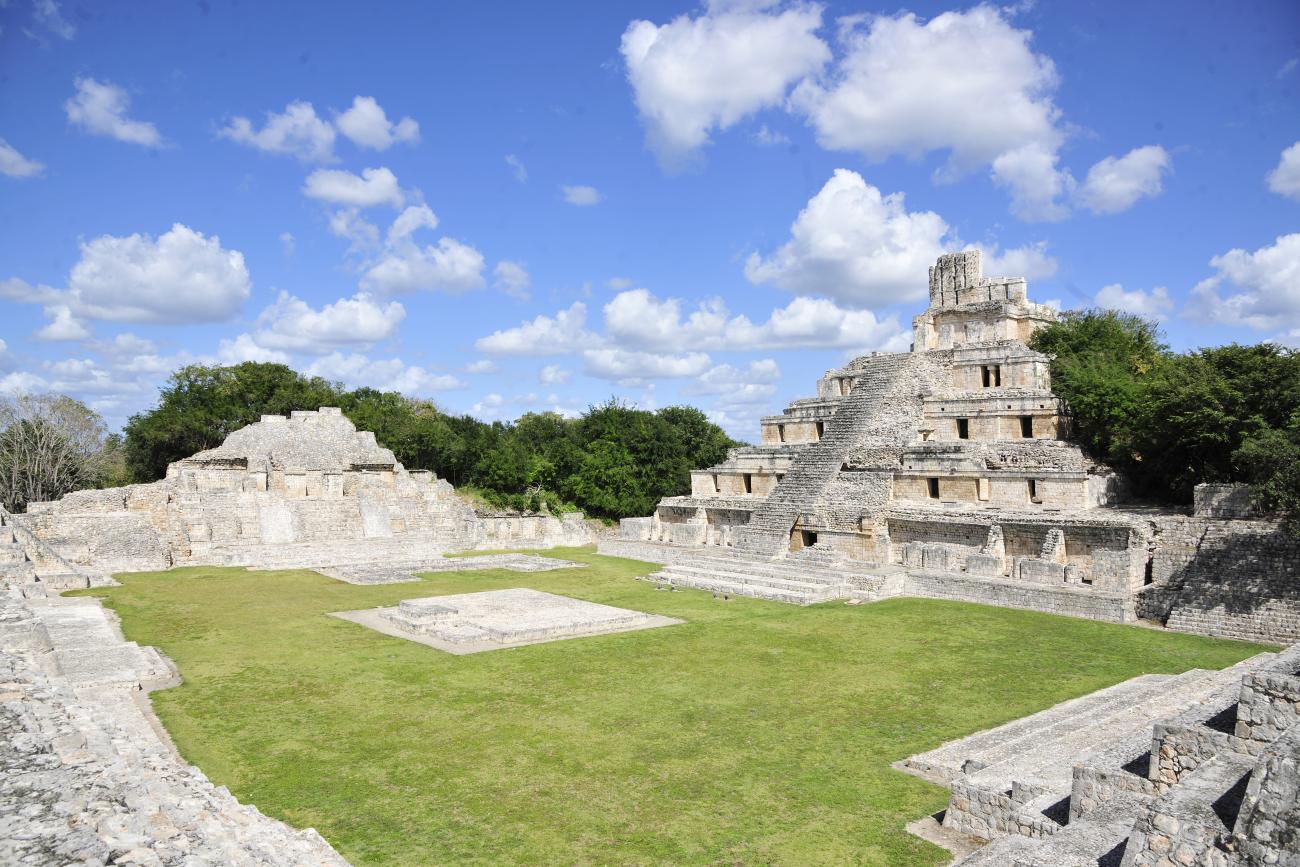
Edzná is one of the most manageable major Maya sites to visit in Campeche State. It is close enough to San Francisco de Campeche for a half-day outing, yet its broad plazas, raised acropolis, old waterworks, and distinctive five-level temple feel more spacious than a quick roadside stop. The site is not a small group of ruins beside a car park. It was a regional city with a long history, and the visible center is only part of the landscape that once supported it.
The practical advantage is that you can visit Edzná without turning the day into an expedition. From Campeche city, the archaeological zone is roughly an hour away by road. You can drive, arrange a taxi or private tour, or investigate the local colectivo service near the market. Public transport is less predictable than a pre-booked excursion, so the best choice depends on whether your priority is price, independence, interpretation, or a fixed return to the city.
This guide explains what you are looking at, how to plan the route, which structures deserve your time, and what the tropical conditions mean once you are inside. Edzná is in Campeche State, not near Calakmul in the southern jungle. That distinction matters: Edzná works naturally with a Campeche city stay, while Calakmul requires a separate long-distance plan and usually an overnight base.
Why visit Edzná?
Edzná combines several things that are often separated at larger archaeological sites. The central spaces are monumental, but the route between them is readable. The most prominent building gives the site a strong visual focus, while the surrounding courtyards show how Maya architecture was organized around movement, ceremony, administration, and elevation. You can understand the layout in a couple of hours without needing to cover an enormous reserve.
The site is also valuable because its story is not limited to one spectacular pyramid. Edzná’s inhabitants adapted to a landscape where managing seasonal water was essential. Rainwater collection, storage, and drainage formed part of the city’s infrastructure. The relationship between water, farming, labor, and monumental construction is one of the most useful themes to keep in mind as you walk. The broad platforms and plazas were not isolated decorative objects; they belonged to a functioning city with political and religious institutions.
Edzná suits travelers who want:
- A substantial Maya archaeological zone within reach of Campeche city.
- Architecture that rewards looking at both the overall plan and individual details.
- A site where the main plaza and acropolis can be understood without a full-day trek.
- A quieter alternative to the busiest archaeological destinations in the peninsula, while accepting that visitor numbers vary by season and day.
- A history-focused outing that can fit around Campeche’s walled center, museums, and malecón.
It may not suit you if you want a cool, shaded attraction or a site with extensive food and drink services inside the gate. Edzná is open terrain. The limestone reflects heat, shade is limited in the main ceremonial areas, and the walking surfaces can be uneven. Go early, carry water, and give the buildings time rather than treating the visit as a photo stop.
The central architecture of Edzná archaeological zone in Campeche
Where is Edzná?
Edzná lies in the northern part of Campeche State, southeast of San Francisco de Campeche. The official INAH visitor listing places the archaeological zone on the Campeche–Edzná federal road at kilometer 55, near the junction with Highway 188, in the municipality of Campeche. In practical travel terms, Campeche city is the useful base. You do not need to move hotels or route through Escárcega, Xpujil, or the Calakmul Biosphere Reserve.
The road approach passes through the countryside outside the capital. Depending on your route and the current road conditions, the final approach may involve the state road through communities including Pocyaxum, Nohacal, and Tixmucuy before joining the federal road and continuing to the entrance. Use an updated map and confirm the final directions locally, especially if you are driving a rental car and your navigation app proposes a minor road that looks faster.
The landscape is part of the experience. Edzná is not in the urban fabric of Campeche city, and there is no continuous line of cafés, pharmacies, or convenience stores around the gate. Buy water and any simple food you need before leaving the city. INAH’s visitor information says food is not permitted inside the archaeological zone, so plan to eat before entering or after you return rather than assuming you can picnic among the structures.
Opening hours, admission, and facilities
INAH currently lists Edzná as open Monday through Sunday from 8:00 a.m. to 5:00 p.m., with last access at 4:30 p.m. The same official listing gives an admission category of MXN 105 for national visitors and MXN 210 for foreign visitors. These details can change, and official portals themselves note that information is subject to updates. Verify the current fee, access rules, and any temporary closure before setting out, particularly around holidays, maintenance, or extreme weather.
The official listing identifies parking, toilets, a shop, accessibility services, and guided tours. Availability of a guide at the exact time you arrive is not something to assume, so arrange a guide in advance if interpretation is central to your visit. A guide can make the hydraulic system, reused inscriptions, architectural styles, and changing phases of construction much easier to follow than a quick walk around the main plaza.
Bring:
- Drinking water for the road and the visit, while respecting the site’s rules about food and containers.
- A hat or other sun protection.
- Light, breathable clothing and comfortable shoes with secure soles.
- Insect repellent, especially during wetter periods or if you linger near vegetation.
- Cash as a backup for transport and small purchases. Do not assume every local transport or service accepts cards.
- A phone with offline maps and a fully charged battery if you are arranging your own return.
- A small amount of toilet paper and hand sanitizer for the wider travel day, even though visitor facilities are listed at the site.
Professional cameras may carry an extra fee according to the INAH information. Drones, tripods, and other equipment can have separate rules; ask before using them. Smoking, pets, and food are not permitted according to the official visitor conditions. Do not climb, lean on, or touch the masonry. A ruin remains vulnerable even when the stones look massive.
How to get to Edzná from Campeche city
By rental car
A car gives you control over your departure time and return. It is the easiest option if you want to arrive at opening, stay longer than a standard excursion, or combine Edzná with another stop in the countryside. Leave Campeche with enough fuel for the outing and download the route before signal becomes unreliable. Follow the signed road rather than improvising a shortcut through small communities.
Allow about half a day for the archaeological zone and the drive, but do not make the schedule so tight that a delayed departure turns the visit into a rushed hour. The trip is short by Campeche State standards, yet traffic leaving the city, roadworks, rain, and a slower return can all change the timing. Avoid planning a demanding southern-state drive immediately afterward unless you have left substantial margin.
Driving is particularly useful for families, photographers carrying equipment, and travelers who dislike negotiating a return ride. The trade-off is that the driver must manage heat, navigation, parking, and the temptation to continue on unfamiliar roads after a long day. Do not drive back tired or after dark simply to fit in an extra stop.
By taxi or private transfer
A taxi or private transfer can work well for two or more people who want door-to-door travel but do not want to drive. Agree on the full arrangement before leaving: whether the quoted service is round trip, how long the driver will wait, where the return meeting point is, and what happens if you stay longer. Ask your accommodation or a recognized local operator to help arrange it rather than accepting an unclear offer at the last minute.
A private ride is also the most flexible choice if you want to visit Edzná early and return to Campeche for lunch, or if mobility needs make public transport uncomfortable. The price is normally a vehicle price rather than a per-seat bus fare, so compare the total cost with a guided tour for your group. Write down the driver’s contact details and confirm the meeting time before entering the site.
By colectivo
Local colectivo service has been used by independent travelers from the area near Campeche’s market. Reports describe red-and-white vans serving the Edzná direction, sometimes with a route associated with Bonfil, and a pickup area around Calle Chihuahua and nearby streets. Exact departure points, vehicle markings, and schedules can change. Ask several people locally and confirm with the driver that the vehicle goes toward Edzná, not merely in the general direction.
The colectivo is the budget option, but it requires patience and basic Spanish. Vans may wait until they have enough passengers, and the outward and return journeys do not necessarily operate as a tourist timetable. You may be dropped on the main road rather than directly at the gate, leaving a walk or local connection to complete. Before entering the site, establish how you will return and where the vehicle can be found. If no clear return plan exists, switch to a taxi or tour rather than hoping a van will appear at closing time.
Colectivo travel is best for experienced independent travelers with a flexible day. It is less suitable for visitors carrying lots of luggage, anyone with a strict flight connection, or families who need a predictable shaded wait. Carry small cash and keep your phone charged. Do not treat an old blog’s schedule or fare as current; confirm locally on the day.
With a guided tour
A guided excursion removes the hardest logistics and adds historical context. Current GetYourGuide inventory includes a four-hour Edzná experience from Campeche with a local guide, and listings can change by date, language, pickup area, and cancellation terms. Compare current Edzná tours on GetYourGuide before booking.
Viator also lists an Edzná-focused half-day experience from Campeche. See the current Edzná listing on Viator. Check what is included rather than comparing only the headline duration: transport, guide language, entrance fees, hotel pickup, and free-cancellation conditions can differ.
A tour is particularly useful if you want to understand the architecture rather than simply identify buildings. It is also practical when you do not speak much Spanish, when you are traveling without a car, or when you want a fixed return to the city. The drawback is less freedom to linger at one structure or wait for the best light. Ask whether the itinerary goes directly to Edzná or combines the site with other Campeche attractions, then choose the version that matches your available time.
A short history of Edzná
Evidence of occupation at Edzná reaches back to approximately 400 BC. The settlement developed over many centuries, and the monumental landscape visible today represents layers of construction rather than one single building campaign. Earlier sacred and civic structures were often covered by later additions. This practice created the large, built-up platforms and architectural masses that give the central precinct its scale.
By the centuries around the beginning of the Common Era, the community had developed centralized government and a more formal urban organization. Edzná eventually became a powerful regional center in western Yucatán, with its influence connected to the control of surrounding settlements, agricultural production, ritual authority, and the organization of labor. INAH describes its period as a regional capital broadly between 400 and 1000 AD, followed by a gradual loss of political and economic power over the next centuries.
The city’s name is often translated as “House of the Itzaes,” although archaeological interpretation is more complicated than a simple label. Edzná’s architecture shows relationships with several Maya building traditions, including Petén, Puuc, and Chenes influences. Those terms are useful comparisons, not instructions to imagine a single uniform style. Look for differences in proportions, masonry, decorative treatment, and how buildings were placed in relation to courtyards and platforms.
INAH’s account emphasizes Edzná’s hydraulic engineering. The inhabitants collected and stored rainwater and built drainage systems, making seasonal water management central to urban life. That infrastructure also supported farming and the production of mortar. In a region where the wet and dry seasons shape travel even now, this is an especially tangible part of the site’s history.
Archaeological work has continued through successive projects since the twentieth century. The public route represents research, excavation, restoration, and maintenance rather than an untouched city frozen at one date. Some areas remain partly excavated or are closed for conservation. Read the site as an archaeological record with gaps, not as a complete reconstruction.
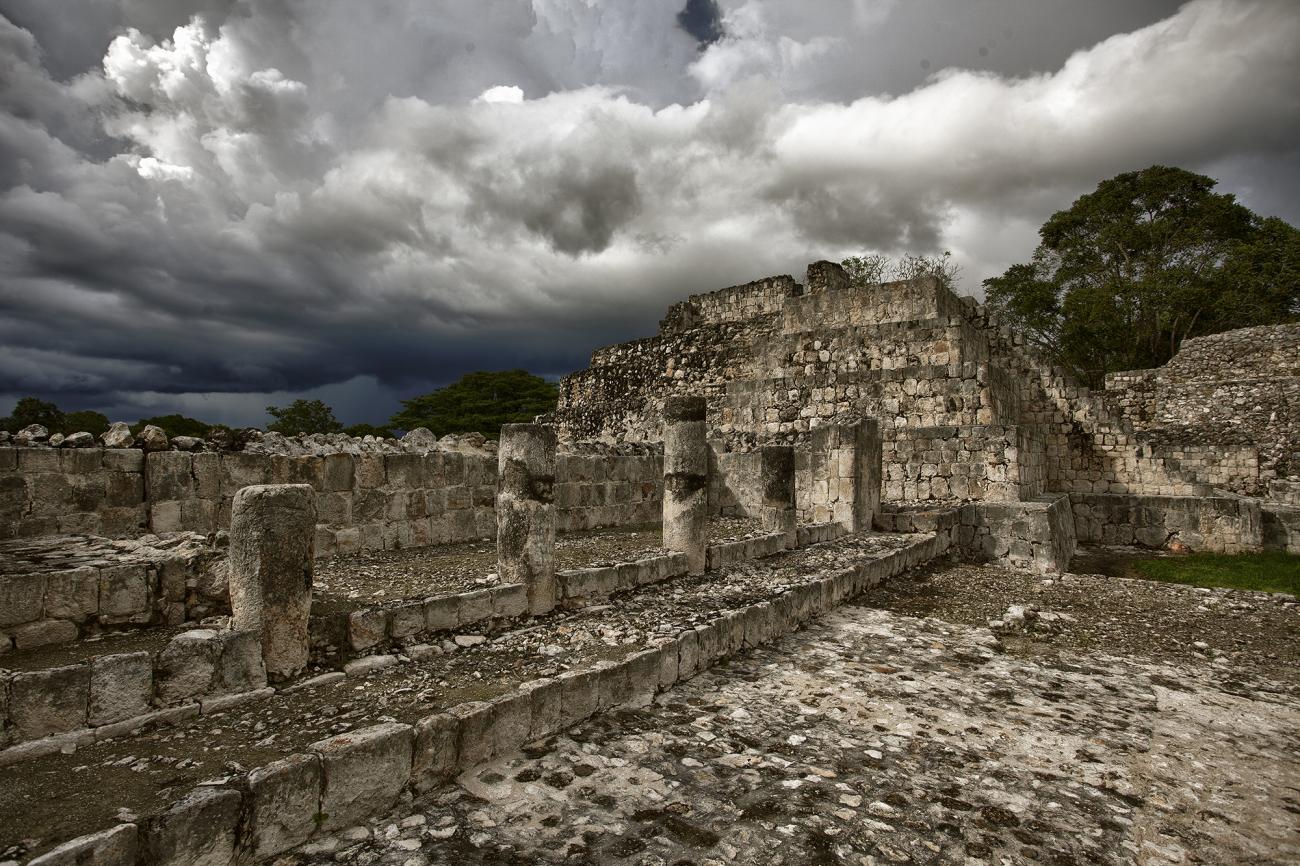 The Temple of the Masks at Edzná in Campeche
What to see inside the archaeological zone
The Great Acropolis
The Great Acropolis is the core of the visit. It is a substantial elevated complex rather than a single freestanding pyramid, and its size makes the city’s investment in labor and ceremony clear. Walk around the edges before focusing on the highest building. From different sides, you can see how platforms, stairways, rooms, and later construction phases combine into one architectural mass.
The broad courtyard is important because it changes your sense of scale. A photograph of the five-level building can make Edzná look like a single monument, but the Great Acropolis shows the relationships among structures. Notice how the raised space organizes sightlines and movement. Consider who could enter each area, who would have stood above the plaza, and how public ceremonies might have been staged.
Avoid rushing straight to the most recognizable façade. The less dramatic slopes and corners can contain reused blocks, changes in masonry, or evidence of earlier construction. A guide can point out details that are difficult to distinguish in bright sunlight.
The Building of the Five Floors
The Building of the Five Floors, or Edificio de los Cinco Pisos, is Edzná’s defining structure. It rises from the eastern side of the Great Acropolis and is named for its five visible levels, each associated with vaulted chambers. INAH gives the structure a height of about 31.5 meters, making it one of the highest points in the Edzná valley.
The building is more complex than a five-tiered pyramid viewed from the front. The visible form incorporates earlier architecture and later additions. The western façade dates to the ninth century AD, while the northern side shows Petén-related characteristics. Blocks bearing hieroglyphs were reused in a staircase, and inscriptions dated to 649 and 830 mention rulers described as sacred lords and preserve the site’s emblem glyph.
Spend time looking at the building from the courtyard and from the side. The changing angle reveals the difference between the steep central mass, the chamber levels, and the broad platform beneath. Even where climbing is restricted, the structure communicates through proportion and elevation. Follow all barriers and current instructions; access rules can change as conservation work progresses.
The high point also explains why early arrival helps. By mid-morning the open plaza can be hot, and glare reduces the visibility of surface detail. Soft morning light gives the building more depth, while clouds after rain can make the limestone easier to photograph. The weather is not guaranteed, so visit for the site rather than for a perfect image.
The Temple of the Masks
The Temple of the Masks contains some of Edzná’s most important decorative remains. Large stucco masks associated with an early phase of the site represent powerful supernatural imagery, commonly interpreted in relation to the sun. Look closely but do not touch. Stucco is especially vulnerable to moisture, salts, human contact, and repeated exposure.
This structure is a useful counterpoint to the Five Floors. The larger temple dominates the skyline, while the masks reward patience and close observation. Notice how the decorative program changes your reading of the building: the platform is not merely a technical support, and the façade was part of a visual and religious language. A guide can explain what is known, what is inferred, and what remains uncertain.
The central plaza and connected platforms
The central plaza gives you the clearest overview of Edzná’s monumental organization. From here, trace the edges of the surrounding platforms and notice how spaces open into one another. The site was not designed as a sequence of isolated attractions. Movement between courtyards, stairways, and elevated areas was part of the experience for ancient residents and visitors.
Use the plaza as a pause rather than only a crossing point. Stand in a shaded edge if available, drink water outside restricted areas, and look for the way the buildings frame one another. The most useful questions are practical: where would a crowd gather, where would a ruler or priest be seen, how would rain be directed, and which approaches were controlled?
The North Temple and smaller complexes
The North Temple and other smaller structures help broaden the visit beyond the Great Acropolis. Their scale can make construction phases and architectural differences easier to see. Walk slowly through the accessible route and read any current interpretive signs. A smaller platform may show a different relationship between rooms, stairways, and open ground than the major central complex.
The site’s smaller groups also create better moments for observing wildlife and vegetation, especially when visitor traffic is low. Do not feed animals or leave food behind. Iguanas and birds may be visible, but they are part of the living landscape, not attractions to approach or handle.
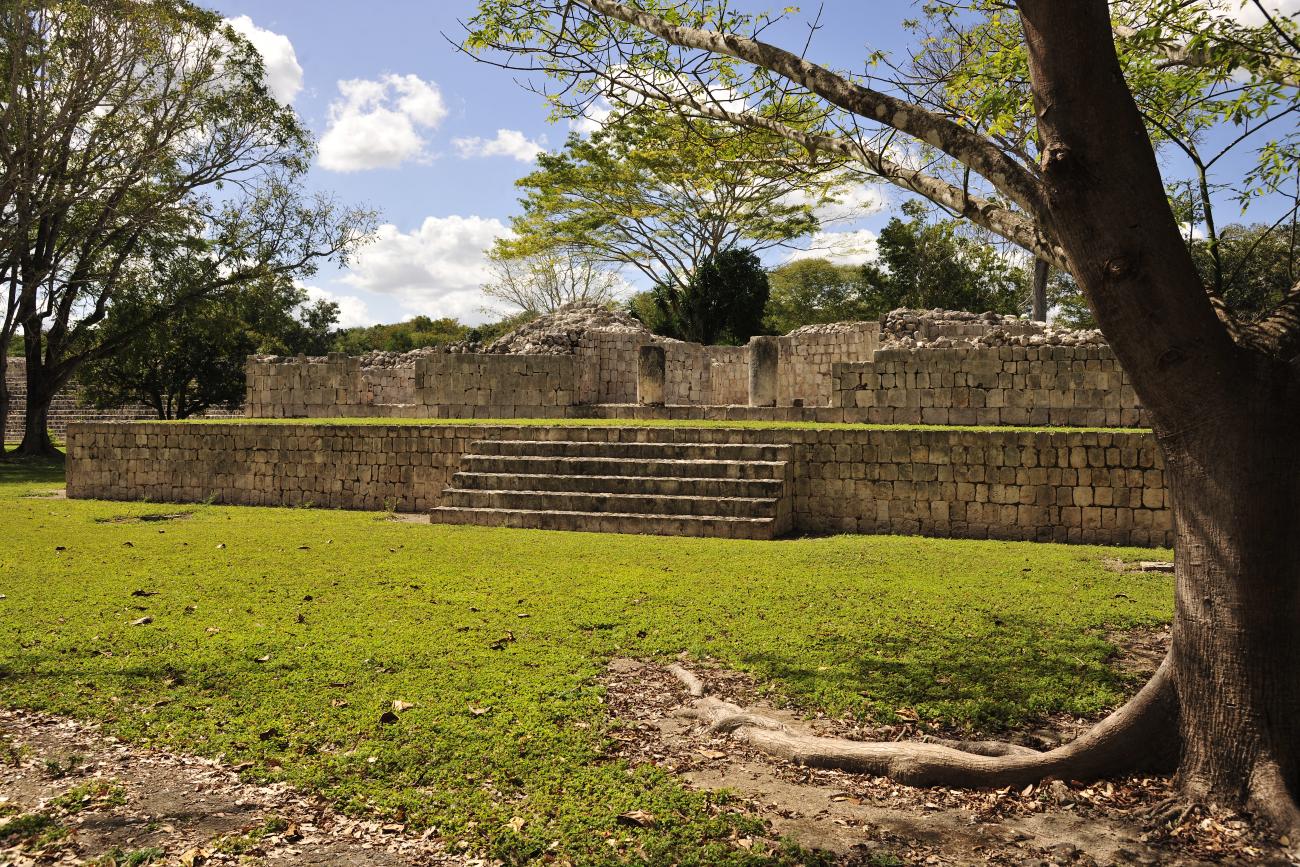 A view of the North Temple at the Edzná archaeological site
How long do you need at Edzná?
A rushed visit can cover the central buildings in about an hour, but two hours is a more comfortable minimum for travelers who want to understand the layout. Add time if you are visiting with children, using a guide, taking photographs, or walking slowly in the heat. The entry and exit logistics also take time, particularly if you are using public transport.
A practical half-day plan is:
- Leave Campeche early enough to reach the gate near opening time.
- Walk first to the main central complex before the sun becomes strongest.
- Spend time with the Great Acropolis and Five Floors from several angles.
- Continue to the masks and smaller structures rather than leaving after the headline building.
- Return to the entrance with time for toilets, the shop, and your onward transport.
- Eat and rest back in Campeche city, where you can continue with the historic center or malecón.
If you are using a colectivo, do not rely on this schedule too tightly. The waiting time can be part of the journey, and the return may require flexibility. A private ride can make a two- or three-hour archaeological visit much easier to control.
Weather, heat, and the best time of day
Campeche is hot for much of the year. Edzná’s open plazas can feel hotter than the temperature reported in the city because limestone reflects sunlight and there is limited shade near the principal buildings. Morning is the safest default for comfort, photography, and a calmer walk. The site’s official opening time allows an early start.
The wetter season can bring sudden rain, muddy edges, slippery stone, and humid conditions after a storm. Rain may also make the jungle around the road more active, but it can disrupt a carefully timed return. In the drier months, heat and glare become the main concerns. There is no universally perfect season: choose a period that matches your tolerance for heat and rain, then keep the day flexible.
Wear shoes that can handle uneven surfaces. Sandals with a loose sole are not ideal on steps or rough ground. Apply sunscreen before entering and reapply according to the product instructions. A wide-brimmed hat is more useful than a small cap in the main plaza. Bring water, but follow the site’s rules about where containers may be used.
Edzná with children and older travelers
Edzná can work well for families because the journey from Campeche is relatively short and the main buildings are visually clear. Children often engage with the scale of the plazas, the idea of hidden water systems, and the search for wildlife. Set expectations before entering: this is an archaeological site, not a playground, and climbing restrictions exist to protect the structures.
Plan an early arrival, keep the visit focused, and take shade breaks. The site can be tiring for children even when the walking distance looks modest. Bring a stroller only if it handles rough surfaces; a carrier may be more practical for infants. Confirm current accessibility conditions with INAH if a traveler in your group needs step-free access, since a listed accessibility service does not mean every platform or route is accessible.
Older travelers and anyone with knee, balance, or heat concerns should ask about the current route before buying a ticket. A private vehicle reduces the uncertainty of the return, and a guide can help you choose viewpoints without unnecessary backtracking. Do not feel obliged to climb every available step. Edzná’s most important relationships can be understood from ground level.
Where to stay for an Edzná visit
Most travelers stay in San Francisco de Campeche and visit Edzná as a half-day excursion. This gives you the widest choice of transport, food, museums, and evening walks, while keeping the archaeological outing separate from your urban sightseeing. Staying inside or near the historic center is convenient if you want to walk before or after the trip; staying outside the walls can be easier if you have a rental car and prefer straightforward parking.
An Edzná visit does not normally require a special overnight base near the ruins. If you are already traveling toward the southern archaeological sites, do not confuse Edzná with Xpujil or Calakmul. Those destinations are much farther away and need different lodging and driving decisions.
Check current Campeche stays on Booking.com · Compare Campeche hotels on Trip.com
Combining Edzná with other Campeche plans
Edzná and Campeche’s historic center
This is the natural combination. Visit Edzná in the morning, rest and eat in the city, then walk the walled center later when the light softens. The two experiences complement each other: Edzná explains a deep Maya urban history, while Campeche’s walls, gates, bastions, and colonial streets reflect a later Gulf-coast city shaped by maritime trade and defense.
Do not try to see every museum and monument on the same afternoon if you return tired. Choose one focused historic-center walk, then leave time for the malecón at sunset. A tour that combines Edzná with a Campeche city circuit can be efficient, but an independent visit gives you more control over rest and pacing.
Edzná and the Camino Real communities
The road north and east of Campeche connects with communities known for regional crafts and food traditions, including the wider Camino Real area. These places deserve their own respectful visits rather than being reduced to a rushed shopping stop. If you add one, confirm opening conditions and transport in advance. The distance that looks small on a map can become significant when local roads, heat, and several stops are involved.
Edzná and Calakmul
Do not combine Edzná and Calakmul as a casual same-day pairing from Campeche city. Calakmul is deep in the south of Campeche State, beyond Escárcega and Xpujil, with a long approach through the biosphere reserve. It deserves an overnight plan and an early start. Edzná can be your archaeological day from the capital; Calakmul belongs to a separate jungle itinerary.
If you are deciding between them, choose Edzná for accessible history, a manageable day, and architecture that can be explored without a long remote drive. Choose Calakmul for scale, jungle setting, wildlife possibilities, and the commitment of a much longer route. Travelers with enough time can visit both on different days, but the logistics are not interchangeable.
A realistic half-day itinerary
Start with breakfast and water in Campeche city, then leave for the site with your entry money and transport plan ready. Aim to arrive early. At the gate, confirm the return arrangement before you become absorbed in the ruins.
Walk directly toward the central monumental area, but pause at the first good overview. Let the layout register before taking close photographs. Continue to the Great Acropolis and spend time with the Five Floors from the courtyard, side, and any permitted viewpoints. Look for how the levels and platform relate to the surrounding space.
Move on to the Temple of the Masks and the North Temple. Read the signs, ask your guide about chronology, and leave room for uncertainty: archaeology does not provide a complete answer to every question. Use the final part of the visit for smaller structures, vegetation, and a second look at any detail you missed.
Return before the last access period, even if the site still appears quiet. This protects your transport connection and avoids walking the final route in the strongest heat. Back in Campeche, eat, rest, and choose a low-effort evening walk. The best Edzná day is not the one that leaves you too exhausted to enjoy the city that brought you there.
Common mistakes to avoid
Treating Edzná as a quick photo stop. The Five Floors is memorable, but the site’s value is in the relationship among water management, platforms, plazas, and changing construction phases.
Leaving transport until the exit. If you use a colectivo, learn the return arrangement before entering. If you use a taxi, agree on the wait and meeting point in advance.
Arriving in the hottest part of the day. The site has open terrain and reflected heat. Early morning is more comfortable and usually easier for a thoughtful visit.
Using old prices or schedules as guarantees. INAH updates visitor information. Check the official listing shortly before travel and carry a payment backup.
Assuming the site is near Calakmul. Edzná is a Campeche city outing. Calakmul is a southern Campeche journey with a remote approach and different planning needs.
Climbing or touching without checking. Access rules protect the architecture and can change. Follow barriers, guards, and current signs even if an older photograph shows visitors elsewhere.
Packing a picnic for inside the zone. INAH’s listed conditions say food is not permitted. Eat before or after, and keep the archaeological area clean.
Is Edzná worth visiting?
Yes, if you are staying in Campeche city and want one substantial archaeological day without committing to the long drive required by the southern jungle sites. Edzná offers more than a single pyramid: its hydraulic system, layered construction, acropolis, masks, and broad plaza create a coherent visit. The site asks for an early start and some tolerance for heat, but the logistics are straightforward when you arrange the return before entering.
The strongest way to visit is to slow down at the Great Acropolis, look beyond the Five Floors, and let the city’s water-management story shape what you see. Pair the ruins with a rested afternoon in Campeche’s historic center rather than forcing another distant attraction into the same day. That balance gives Edzná room to be an ancient city, not merely a background for a hurried photograph.
 The stepped architecture and open plaza of Edzná, Campeche
Frequently asked questions
Can you visit Edzná without a car?
Yes. You can investigate the local colectivo service from Campeche, arrange a taxi or private transfer, or book a guided experience. The colectivo is the least predictable option, so confirm the return before entering. A guided tour is easier if you need fixed timing or interpretation.
Is Edzná a day trip from Campeche?
Yes. The site is close enough for a half-day outing from San Francisco de Campeche. Allow extra time for the road, entry, walking in the heat, and your chosen return transport.
How is Edzná different from Calakmul?
Edzná is a northern Campeche archaeological zone that works naturally from Campeche city. Calakmul is in the south, deep in the biosphere reserve, and requires a much longer drive and more careful overnight planning. Edzná is the easier choice for a focused archaeological half-day.
Are there restaurants inside Edzná?
Do not plan on eating inside. The official INAH conditions state that food is not permitted in the archaeological zone. Eat before leaving Campeche or after returning, and verify any current visitor-service changes locally.
What is the official opening time?
INAH currently lists Monday-to-Sunday opening from 8:00 a.m. to 5:00 p.m., with last access at 4:30 p.m. Verify the current information before travel because schedules, fees, and access conditions can change.
Do you need a guide?
No, but a guide can make the hydraulic system, architectural phases, masks, and inscriptions easier to understand. Independent travelers can walk the site on their own, while guided tours remove much of the transport uncertainty from Campeche city.
Can you climb the buildings?
Access depends on the structure and current conservation rules. Never cross barriers or climb where signs and staff prohibit it. The site can be understood from ground-level viewpoints, and restrictions may change after restoration or weather damage.
What should you wear?
Wear light clothing, sun protection, and shoes with secure soles. Expect heat, uneven surfaces, and limited shade. Carry water and plan your visit for the morning when possible.
Is Edzná suitable for a short Campeche stay?
It is one of the better archaeological choices for a short stay because the road journey is manageable. Leave enough time for the historic center as well; the contrast between Edzná and the walled city is part of what makes the excursion worthwhile.
Edzná is a place to visit with time enough to look twice: first at the skyline, then at the systems and decisions beneath it. Start early, arrange the ride home, and let the Great Acropolis lead you into the rest of the city’s story.