Printable guide
Camping in Calakmul: Where to Camp & What to Know
Published

Camping in Calakmul is for travellers who want the forest to be part of the trip, not just the view from a vehicle window. The archaeological zone sits deep inside the Calakmul Biosphere Reserve, in the southeast of Campeche State, and an overnight camp can put you closer to the reserve’s early-morning quiet than a hotel in Xpujil. You may hear howler monkeys before sunrise, see a sky with very little artificial light, and start the road to the ruins without first crossing the whole route from town.
It is also a stay that asks more of you. This is not beach camping with shops nearby, and it is not a polished campground where every service is guaranteed. Water, electricity, food, mobile signal, toilets, weather, insects and access arrangements vary by site and season. The right way to plan the experience is to treat it as a remote accommodation choice inside a protected forest, then confirm the current details directly before you travel.
This guide explains the camping options around Calakmul, how to choose between a tent and a room in Xpujil, what to bring, how to handle heat and rain, and how to visit the reserve without turning a quiet forest into a campsite surrounded by waste and noise. It stays within Campeche State: Calakmul, Conhuás, the reserve road and Xpujil are the practical geography.
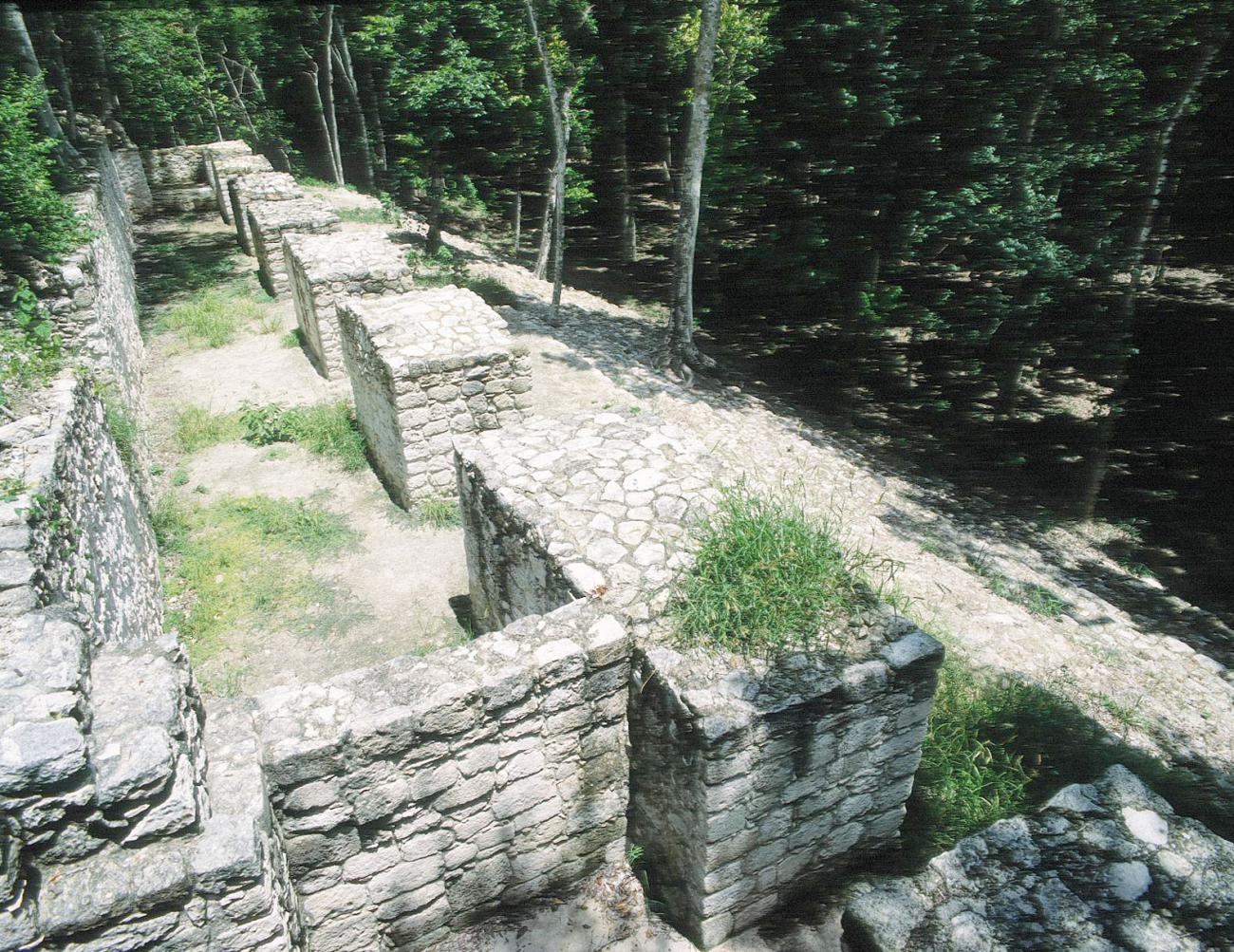 Calakmul archaeological landscape in the Campeche jungle
The short answer: is camping in Calakmul worth it?
Camping is worth considering if you enjoy basic conditions, have enough time to absorb a slow morning, and are comfortable preparing for limited services. It is a good match for wildlife-minded travellers, photographers, road-trippers and people who would rather sleep near a forest than spend every night in a town. It can also make a Calakmul visit feel less rushed because you are already in the region the night before.
Choose Xpujil instead if you need dependable air-conditioning, a private bathroom, easy access to food and fuel, a late arrival, or a straightforward plan without much advance coordination. Xpujil is not beside the ruins, but it is the most practical service base in the area. A room there is often the better choice for a first visit, families with young children, travellers carrying medication that needs cooling, or anyone arriving by bus or train without a confirmed transfer.
Do not choose a campsite simply because an online map shows it inside the reserve. The label “Calakmul” covers a large area. A property may be near the highway, near Conhuás, on the reserve road, or much closer to the archaeological zone. Ask for the exact location, the road condition, the check-in process and what is actually included. “Jungle accommodation” is not a substitute for knowing whether you will have drinking water, a shower, bedding, a meal or a place to charge a phone.
Where can you camp near Calakmul?
A managed camp near the reserve road
The best-known type of camping option is a managed camp near the Calakmul access corridor, where visitors can bring a tent or reserve a basic tent or room when available. Campamento Yaax Che en Calakmul is a real property listed on current accommodation platforms, with listings describing it in the Conhuás and Calakmul Municipality area. Availability, facilities and room categories can change, so use the live listing rather than relying on an old travel blog.
Check current Campamento Yaax Che availability on Booking.com · See the Campamento Yaax Che listing on Trip.com
A managed camp may be the most convenient compromise between carrying your own gear and booking a conventional hotel. You still need to confirm the sleeping arrangement: a bare pitch, a supplied tent, a cabin or a family room are very different experiences. Ask whether the tent is already erected, whether mattresses or bedding are provided, and whether the bathroom is private or shared. Also ask whether the property accepts late arrivals; a dark forest road is not a good place to improvise check-in.
A camp near the reserve road can shorten the next morning, but it does not make the archaeological site close in the way a city hotel is close to a museum. The road continues through forest, and you must allow time for the gate, the reserve access and the drive to the ruins. The gain is mainly that you start nearer the approach and can avoid waking in Xpujil and solving the entire transfer before breakfast.
Independent camping with your own tent
Some rural properties accept travellers who bring a tent, but the conditions are site-specific. Never assume that undeveloped forest land is legal or safe for wild camping. The Calakmul Biosphere Reserve is protected, and access, fire, waste and overnight rules are controlled for environmental and visitor-safety reasons. Camp only where the operator or relevant authority explicitly permits it.
If you bring your own tent, confirm the ground surface before you arrive. A flat cleared patch may be compact soil, leaf litter, gravel or a platform. In the wet season, a pleasant-looking area can collect water during a storm. Ask whether there is a roofed shelter for cooking and whether tents must be placed in a designated zone. Do not move into a forest edge simply because it looks more private; wildlife needs space, and an isolated pitch is harder to monitor.
A freestanding tent is usually more flexible than a tent that depends on perfect soil for pegs. Bring a groundsheet, a rainfly that can handle tropical showers, and a way to secure the tent against wind without tying lines across a walkway. Keep food inside sealed containers. A hammock can be comfortable for experienced campers, but it requires suitable trees and good mosquito protection; do not attach equipment to young or damaged trees.
Sleeping in a basic room instead of a tent
Some jungle camps combine camping with simple rooms, cabins or family accommodation. This can be useful if members of a group have different tolerances for heat and insects. One person can have the forest experience while another has a solid roof, a bed and a more protected sleeping space. Read the current property description carefully: a room at a remote camp may still have limited water, intermittent electricity or no air-conditioning.
A room does not remove the need for preparation. If electricity is supplied by a generator or solar system, charging may be limited to certain hours. If water is stored in tanks, showers may be brief. If food is served only at set times, arriving without snacks can make the evening unnecessarily difficult. Those limits are not automatically a problem; they become a problem when you expect town-hotel service.
Camping inside the reserve versus staying in Xpujil
The decision is really about what you want the night to do for your itinerary. Camping gives you a forest setting and may reduce the morning approach. Xpujil gives you services, choice and a stronger fallback plan. Neither is universally better.
Choose a camp when the forest is the destination
A camp makes sense when you want to wake to natural sounds, spend several days in the Calakmul region, and accept a slower routine. It works especially well for a road trip that includes Calakmul, the Río Bec sites and wildlife time rather than a single rushed pyramid visit. You can use the evening to prepare food, listen for animals and sleep early before the archaeological site.
Camping is also useful for travellers who have their own vehicle and can carry water, food, fuel and equipment. A car gives you independence if a meal is unavailable, a storm changes your route or you decide to leave before dawn. Even then, do not drive the reserve road quickly or treat wildlife sightings as a reason to stop in an unsafe position.
Choose Xpujil when logistics matter most
Xpujil is the safer default for a first trip. It has the region’s concentration of accommodation and everyday services, and it is easier to arrange a driver or local guide from town. If your bus or Tren Maya connection is delayed, a town hotel is less stressful than trying to reach a remote camp before a property’s reception closes.
Xpujil also works better for a two-day archaeology plan. You can visit Xpuhil, Becán and Chicanná on one day, then dedicate a separate early start to Calakmul. If you are exhausted after the reserve road and the archaeological walking, returning to a room with dependable cooling and a nearby meal may be worth more than sleeping closer to the site.
Compare current Xpujil accommodation on Booking.com · Browse Xpujil-area stays on Trip.com
A practical hybrid plan
A hybrid itinerary can be the best solution. Spend the first night in Xpujil to arrive, buy supplies and confirm the road plan. Camp for the following night if you want to experience the forest, or camp first and return to Xpujil after the archaeological visit for a more comfortable recovery night. The right order depends on your route and the current check-in rules.
Do not schedule camping as the final night before a flight or a long intercity transfer unless you have a wide buffer. Tropical rain, a flat tyre, a delayed gate procedure or a poor night’s sleep can make the next connection uncomfortable. Remote camping is most enjoyable when the itinerary has room around it.
What conditions should you expect?
Heat does not stop at sunset
Calakmul is hot for much of the year, and a forest campsite can remain warm after dark. A tent in direct sun becomes hotter quickly in the morning. Choose shade when the operator allows it, but do not pitch beneath dead branches or trees with visible damage. Ventilation matters more than adding heavy bedding. A sleeping mat with some separation from the ground, a light sleeping bag or sheet, and breathable clothing are usually more useful than a thick blanket.
Humidity can make clothing and bedding feel damp even when it does not rain. Pack a dry bag or sealed bag for clothes, and keep a second set of sleeping clothes separate from the clothes used on the road. If you are camping with children, bring enough dry changes that one wet evening does not affect the next day.
Rain changes the experience
The rainy season can turn a calm campsite into a noisy, muddy and insect-heavy night. That does not make the forest less interesting, but it raises the standard of preparation. Waterproof footwear, a sealed pack, a groundsheet and a reliable rainfly matter. Confirm whether the access road remains passable after heavy rain and whether the campsite closes or changes its operating arrangements during storms.
Short tropical showers can arrive suddenly. Do not leave a phone, camera, passport or food on a picnic table while you walk away. Pack a lightweight cover for your day bag and keep electronics in waterproof pouches. A clothesline under a roofed area is useful, but do not expect wet items to dry quickly in humid weather.
Insects are part of the accommodation
Mosquitoes, ants, beetles and other insects are normal in the reserve. Choose a tent with intact mesh, use repellent according to its label, and wear long lightweight clothing around dusk. Shake out shoes before putting them on. Do not spray chemicals inside a small tent without ventilation, and avoid leaving sweet drinks or food residue near your sleeping area.
If you are sensitive to bites, ask the operator whether the sleeping area has a mosquito net and whether the bathroom is screened. A screened room can make a large difference. Bring any medication you normally use for allergies, but seek professional medical advice for serious reactions rather than relying on a campsite first-aid kit.
Electricity and signal may be limited
Assume that mobile service can be unreliable or absent on the reserve road and at remote camps. Download maps, booking confirmations and emergency contacts before leaving Xpujil. Tell someone your route and expected return time. A power bank is useful, but it does not replace a plan for communication.
Ask whether electricity is continuous, generator-based or unavailable. Charge cameras and phones in town before departure. If you need a medical device or temperature-controlled medicine, verify the power arrangement directly before booking; a remote campsite may not be suitable even if it advertises rooms.
What to bring for a Calakmul camping night
Pack for a remote tropical base rather than a normal hotel night. The exact list depends on whether the operator supplies a tent and bedding, but the following items cover the common gaps:
- A valid reservation, downloaded offline, plus the property’s contact details.
- Drinking water for the road and the night, unless the operator has clearly confirmed a safe supply.
- Food for the journey and a backup snack in case meal service is limited or delayed.
- A headlamp with spare batteries. Phone lights are poor for walking around camp.
- Lightweight long sleeves and trousers for mosquitoes, sun and brush.
- Repellent, sunscreen and any personal medication.
- A waterproof phone pouch, dry bags or sealable bags for documents and electronics.
- A compact first-aid kit, including blister care and any items you normally need.
- A sleeping sheet or liner if bedding is not confirmed.
- A sleeping mat or pad if you are carrying your own tent.
- A rain cover for the backpack and a small towel.
- Cash in Mexican pesos for places that do not accept cards or have no reliable signal.
- A rubbish bag so every item you bring out can leave with you.
Do not overpack heavy clothing. The main challenge is heat, not cold, although a light layer can be useful during a breezy dry-season night. Avoid bringing scented food into the tent. A cooler can help in a vehicle, but never leave perishable food in a hot car for long periods.
If you are renting a tent, ask what is included in writing. “Camping available” may mean a pitch only. Confirm the tent size, mattress, pillow, blanket, lighting, bathroom, drinking water and meal arrangement. The details are more important than the property’s promotional photographs.
How to plan the archaeological visit from camp
Camping does not give you permission to enter the archaeological zone outside its published arrangements. The Calakmul site is managed by INAH, and the reserve has its own conservation and access rules. Check the current official information shortly before travel, including opening hours, last access, fees, route conditions and whether a guide is required for any particular trail.
The INAH Calakmul visitor page identifies the archaeological zone’s access from the reserve road and publishes current visitor information, but official details can change. Use that page as a starting point and confirm locally when you arrive. The site is large, the approach is long, and the useful time is not simply the number of hours between opening and closing.
Leave camp with water, food, sun protection and a full enough fuel plan. There are not normal town services along the forest approach. Do not count on buying breakfast, petrol, bottled water or a replacement cable after entering the reserve. Keep enough fuel for the return and any detours that are part of your confirmed plan.
Start early for cooler conditions and better light. The forest road can be slow, and the archaeological walk includes uneven ground, stairs and exposed sections. Wear shoes with grip. Carry only what you need for the site; a heavy pack makes climbs and long paths harder. If a structure is closed or a route has changed, respect the barrier rather than looking for a side path.
Compare current Calakmul experiences on GetYourGuide · See the verified Calakmul tour from Xpujil on Viator
These links are useful if you decide that a guided visit is a better fit than self-driving. The live listings can change departure points, inclusions and availability, so check whether transport starts at your camp or only from Xpujil. If a listing describes hotel pickup, do not assume a remote tent pitch is included without confirmation.
Camping and wildlife: how to behave at night
The forest is not a petting zoo and not a night safari unless a properly authorised activity says otherwise. You may hear animals without seeing them. Howler monkeys can sound close when they are high in the canopy. Small mammals may move at the edge of camp. A quiet night is still a successful wildlife night.
Never feed an animal, leave scraps beside a tent or photograph wildlife by placing food on the ground. Feeding changes behaviour and can attract animals to sleeping areas. Keep rubbish closed, wash food utensils promptly and follow the campsite’s instructions for storing supplies. If the operator provides a shared kitchen or dining area, use it rather than eating in the tent.
Do not walk into the forest alone after dark. Use the marked route to the bathroom, keep your headlamp on and follow the campsite’s boundaries. Do not shine a bright light directly into an animal’s eyes. If you hear movement, pause, observe from a safe distance and call the operator if the animal is near the tents.
Do not try to find a jaguar, tapir or other large animal at night. Wildlife sightings are never guaranteed, and chasing them damages the very habitat you came to experience. The best contribution a visitor can make is to leave animals unhabituated and the forest quiet.
Cooking, food and water
Food planning is one of the main differences between Calakmul camping and camping near a large town. A camp may have a restaurant or simple meal service, but confirm the days and hours. Do not build the itinerary around a meal that has not been confirmed for your arrival date.
Bring food that tolerates heat and does not require complicated cooking. Tortillas, nuts, fruit that travels well, crackers and sealed meals are practical, but keep everything inside a container that ants cannot open. Avoid leaving meat, sweets or open drinks in a tent. If you use a stove, ask where cooking is permitted and never use a fuel stove inside a tent or closed room.
Treat drinking water seriously. Use the operator’s confirmed safe source or carry sealed water. Do not drink from an unmarked tap, stream or rain barrel simply because the water looks clear. A filter or purification method can be useful for experienced campers, but it must be appropriate for the local water and used correctly.
Wash dishes away from sleeping areas and dispose of greywater only where the operator directs. Soap, food oils and scraps can affect soil and attract animals. The goal is to make the campsite as uninteresting to wildlife as possible.
The best season for camping
The cooler and generally drier part of the year is usually the easiest period for a first camping trip, especially from late autumn through early spring. Days can still be hot, but nights and early mornings are more manageable. Demand can rise around holidays, so check availability rather than assuming a pitch will be open.
The warmer wet-season months can be rewarding for a lush forest and dramatic weather, but they require more flexibility. Rain can affect the road, tents can become humid, and mosquitoes may be more noticeable. If you travel then, keep a spare indoor night in mind and confirm the cancellation or change policy.
April and May can feel particularly demanding in the heat. A traveller who tolerates hot city walks may find a forest camp harder because there is less cooling after sunset. Plan short activity blocks, drink regularly and avoid arriving at camp after a long day without time to recover.
The best season is ultimately the season in which the conditions match your tolerance. A quiet rainy-season night can be memorable for an experienced camper, while a dry-season tent can be miserable for someone who needs air-conditioning. Choose honestly rather than treating “low season” as automatically better.
Is Calakmul camping suitable for families?
It can work for families with older children who enjoy nature and understand that the camp is not a hotel. It is less straightforward with babies, toddlers or children who need a predictable sleep environment. Heat, insects, long drives, uneven archaeological paths and limited bathrooms all add friction.
For a family camping, confirm the sleeping layout, bathroom route, food and water before booking. A room or cabin may be a better compromise than a tent. Keep children within the marked camp area, especially after dark, and do not let them approach animals or wander ahead on the reserve road.
A family may prefer two nights in Xpujil and a daytime reserve visit. That plan offers more control over meals and rest, and it allows you to switch the order of sites if the weather changes. Camping should be an option the family is excited to try, not a punishment for choosing the cheaper-looking listing.
Common planning mistakes
Treating a map pin as a transport plan
A campsite marker does not tell you whether a taxi will accept the route, whether a bus stops nearby, or whether the property can receive you after dark. Arrange the complete journey, including the return from the archaeological site and the next morning’s departure.
Arriving without supplies
There is no reliable reason to expect a shop after entering the reserve. Buy water, food and any medication-related supplies before leaving a service town. Fuel up early. Keep a reserve rather than calculating the tank to the last kilometre.
Assuming every “Calakmul tour” collects at camp
Bookable tours can start in Campeche City, Xpujil, Bacalar or another base. Read the meeting point and pickup area. A remote camp may need a private transfer to the tour departure point, which can erase the convenience of camping.
Bringing the wrong sleep system
A thin beach sheet may not be enough if a supplied tent is open to night air, while a heavy sleeping bag can be unbearable in tropical heat. Ask what the campsite provides and pack a flexible layer instead of guessing.
Forgetting the return journey
The morning drive to Calakmul is only half the transport problem. After walking in heat and climbing structures, you still need to return to camp or town. Avoid a tight same-day bus connection unless the transport operator has given you a realistic plan with a generous buffer.
Leaving rubbish behind
Plastic, food scraps and wet wipes do not disappear in a protected forest. Carry everything out or use the camp’s designated bins. Do not burn plastic. Do not bury toilet paper or food waste unless a clearly marked system instructs you to do so.
A realistic two-night camping itinerary
Day one: arrive and prepare. Reach Xpujil or the camp area with daylight to spare. If you are coming by public transport, do not assume you can solve the final transfer on arrival. Buy water and food, confirm the archaeological plan, charge electronics and inspect the tent before dark. Eat early and sleep rather than trying to add a late activity.
Day two: Calakmul. Leave according to the campsite’s confirmed recommendation and the archaeological zone’s current opening arrangements. Carry water, food, cash, sun protection and a small day pack. Move slowly on the paths, respect closed structures and take breaks in shade. Return before the road becomes a rushed race against darkness. Back at camp, keep the evening quiet and secure food.
Day three: nearby archaeology or departure. If you have time, visit a Río Bec site such as Xpuhil, Becán or Chicanná only after checking its current opening and transport arrangements. Otherwise, pack carefully, inspect the ground for rubbish and leave with enough time for your next base. Do not add a distant transfer simply because the map appears to show a short drive.
This plan works because it gives Calakmul a complete day. A one-night camp with a long arrival and an immediate early departure can be done, but it leaves little room for weather, delays or a poor night’s sleep. The reserve rewards margin.
When camping is not the right choice
Skip camping if you have a medical condition that makes heat or uncertain electricity risky, if you need guaranteed refrigeration or accessible bathrooms, or if you are travelling with no way to carry water and food. Choose a hotel in Xpujil if a late arrival is unavoidable. Choose a confirmed room if you are not comfortable sleeping with insects and natural forest sounds.
You also do not need to camp to have a meaningful Calakmul experience. Staying in town and leaving early can be the more responsible decision when it prevents a poorly prepared overnight stay. The forest does not become more authentic because a traveller is uncomfortable in it. Good planning means choosing the level of exposure that allows you to pay attention, stay safe and leave the site undamaged.
Final recommendation
For most visitors, the best approach is to spend one preparation night in Xpujil and camp only after confirming the exact site, water, bathroom, food, electricity and transport arrangements. If the answers are clear and you genuinely enjoy basic outdoor conditions, a managed camp near the Calakmul corridor can add a quiet, memorable dimension to the trip. If the answers are vague, book a room in Xpujil instead and make the archaeological visit the focus. Calakmul is already a demanding journey; the right overnight choice is the one that leaves you rested enough to experience the forest and Maya city with care.
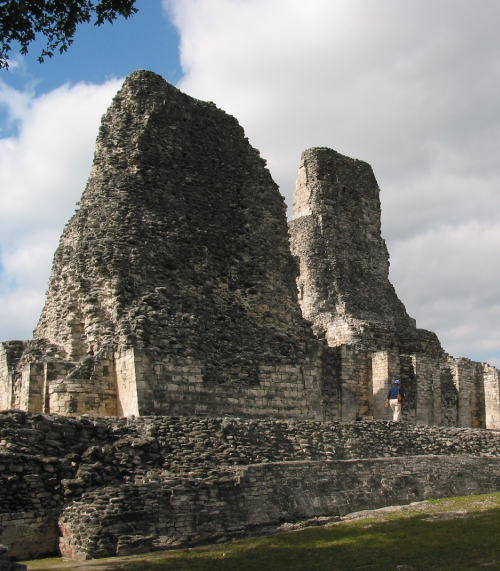 The Xpujil archaeological zone near Calakmul in Campeche
 Structure II at the Calakmul archaeological site in Campeche
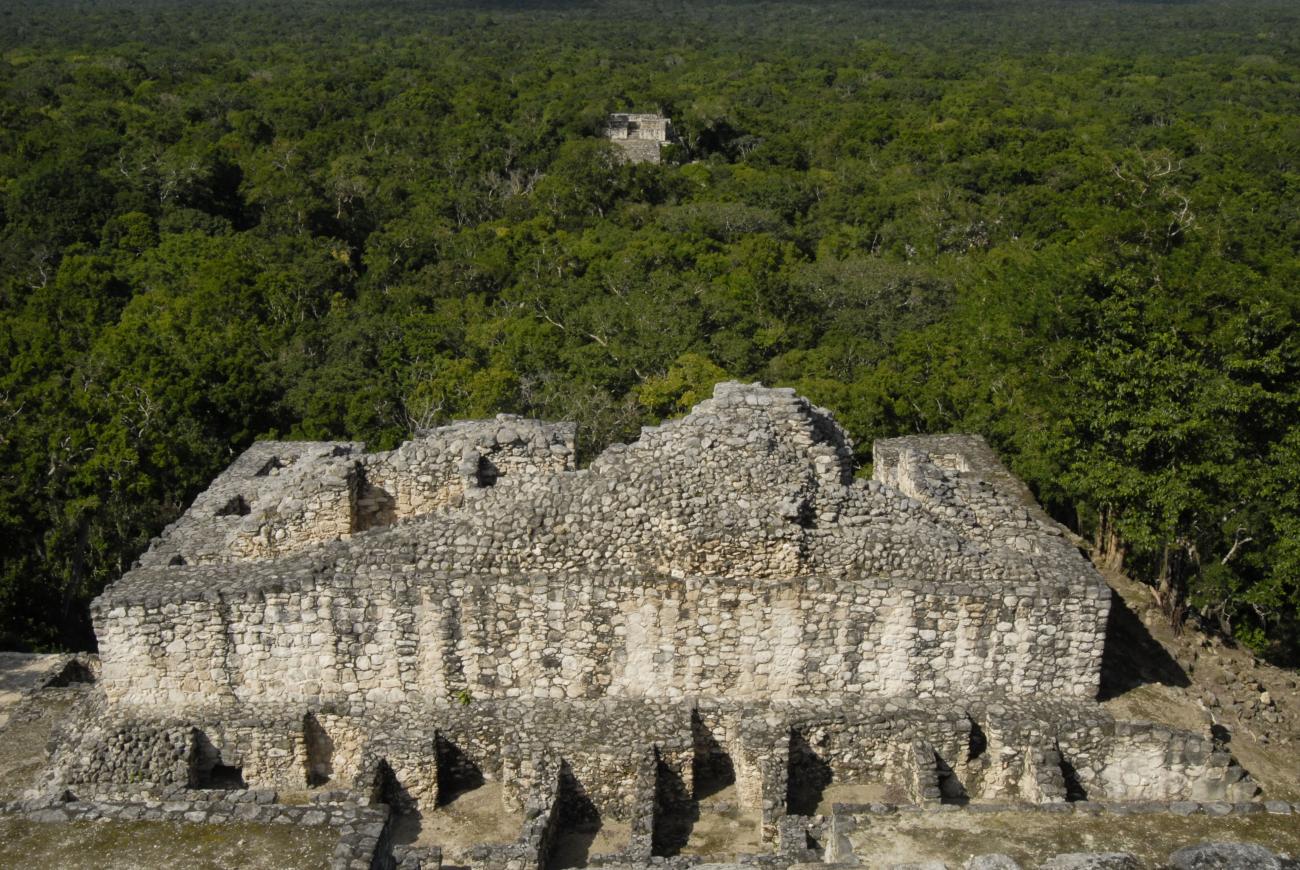 Calakmul archaeological landscape in Campeche State
Check Calakmul-area stays on Booking.com · Compare Calakmul Municipality accommodation on Trip.com
Compare guided Calakmul activities on GetYourGuide · See Calakmul tour availability on Viator
FAQ
Can you camp inside the Calakmul Biosphere Reserve?
You should camp only at a designated or authorised accommodation site. Do not wild camp in the forest. Confirm the current rules and the exact property location before travelling.
Do camps near Calakmul have electricity?
Some may have limited electricity, while others may rely on generators or have none in the sleeping area. Ask the property directly and bring a charged power bank, but do not rely on it for medical equipment without confirmation.
Should you camp or stay in Xpujil?
Stay in Xpujil for the simplest logistics and more dependable services. Camp when the forest setting is a central reason for the trip and you are prepared for heat, insects, limited signal and basic facilities.
Do you need a car to camp near Calakmul?
A car is not always essential, but it makes camping much easier because you can carry water and food and control your arrival and departure. Without one, arrange the full transfer in advance and confirm that the operator can reach your campsite.
Is camping near Calakmul safe?
A managed, authorised campsite with clear boundaries and current operating arrangements is safer than improvised wild camping. Follow the operator’s wildlife, fire, food and night-walking rules, and do not approach animals.
Can you visit Calakmul and return to camp the same day?
Yes, if the camp is open, your transport is arranged and the archaeological zone’s current access schedule allows it. Leave enough time for the long forest road, walking, heat and the return; do not plan the day around a tight onward connection.
What is the most important thing to confirm?
Confirm the exact sleeping arrangement and the complete transport plan. Then verify drinking water, toilets, food, electricity, mobile signal and current road conditions. Those details matter more than photographs or a campsite’s distance label.
Should you camp during the rainy season?
Experienced campers may enjoy it, but first-time visitors should understand that heavy rain can affect tents, roads, insects and services. Pack waterproof protection, keep the itinerary flexible and confirm conditions shortly before departure.
Can you see jaguars from camp?
There is no guarantee and you should never try to attract or search for them. The reserve is their habitat, not a wildlife enclosure. Quiet observation, sealed food and a clean campsite are the correct approach whether you see an animal or only hear the forest.
Is camping cheaper than a hotel?
It can be, but not always after adding transport, equipment, food and park-related costs. Compare the complete trip rather than the nightly rate. A simple Xpujil room may be better value if you would otherwise need a private transfer or rented camping gear.
How far in advance should you book?
Book before arrival when you need a specific tent, room, family layout or meal arrangement. Remote capacity is limited and current operations can change. Recheck the listing and contact details shortly before the trip, especially around holidays or in the rainy season.
What should you do if the camp cannot confirm its facilities?
Choose a different authorised property or stay in Xpujil. Uncertainty about water, bathrooms, electricity or transport is a reason to change the overnight plan, not a reason to arrive and hope the basics work out.
What should you do with rubbish?
Carry all personal rubbish out or place it in the campsite’s designated bins. Keep food scraps away from tents, never feed wildlife and do not leave plastic, wet wipes or toilet paper in the forest.
Can you combine camping with other Campeche archaeological sites?
Yes. Xpuhil, Becán, Chicanná and Balamkú are in the wider southern Campeche route, but check each site’s current opening arrangements and allow realistic driving time. Do not turn every stop into the same day as Calakmul unless you have verified the route and energy demands.
What is the best mindset for a Calakmul campsite?
Expect a protected forest with basic services, not an outdoor resort. Prepare carefully, keep plans flexible, respect the wildlife and accept that the quiet, distance and inconvenience are part of why the region remains special.
If camping makes the trip more complicated than enjoyable, choose Xpujil and leave early for the ruins. The forest will still be there in the morning.