Bécal is a small town in northern Campeche known for a very specific craft: fine hats and other objects woven from jipi-japa palm fibre, often inside cool, humid caves cut into the limestone beneath family homes. The cave is not a theatrical backdrop added for visitors. It is part of the production method. In Bécal, humidity keeps the prepared fibre flexible enough to weave, while the town’s streets, church, square and workshops give the craft its social setting.
That makes Bécal a different kind of stop from a major Maya archaeological zone. There is no single monumental site that explains the whole visit. You come to see how a material becomes a finished object, to meet the people who make it when a workshop is open, to understand why the cave matters, and to explore a Campeche community that is easy to pass on the highway. The visit works best when you allow time for conversation and do not treat an artisan’s home as a scheduled attraction.
Bécal is in Calkiní Municipality, close to the northern edge of Campeche State and near the Yucatán border. It fits naturally into a northern Campeche route that can include Calkiní, Dzitbalché, Hecelchakán, Pomuch and the Camino Real corridor. It can also be visited as part of an organised excursion from Campeche City or Mérida, although a day trip that includes several major stops will leave less time for the town itself. This guide keeps the focus on Bécal in Campeche, with neighbouring places mentioned only as route context.
 Jipi-japa hats and palm-fibre weaving in Bécal, Campeche
Is Bécal worth visiting?
Bécal is worth visiting if you are interested in living craft, small-town travel and the practical details behind an object you might otherwise see only in a shop. It is less suitable if you want a long list of conventional attractions or a guaranteed sequence of timed demonstrations. The town’s appeal is concentrated in the craft tradition and the chance to see it in context.
The best reasons to go are straightforward:
- You can learn why weaving takes place underground or in enclosed caves.
- You can compare different levels of fineness and different types of jipi-japa work.
- You can buy directly from an artisan or family workshop rather than from an anonymous souvenir shelf.
- You can connect Bécal to the wider craft traditions of northern Campeche.
- You can make a short, culturally meaningful stop between Campeche City and the northern border.
There are also honest drawbacks. The town is not designed like a large museum. Some workshops may be closed, artisans may be working privately, and a cave visit may need local introduction. The heat outside can be intense, while cave floors can be uneven or damp. Public transport may get you to the town but does not automatically solve the last connection to a particular workshop. If you arrive with a rigid itinerary and expect every stop to operate like a ticketed attraction, Bécal can feel inconvenient.
A slower approach is more rewarding. Start in the central area, understand the town’s hat identity, ask where a current demonstration is available, and choose whether you want to buy something. If an artisan is not receiving visitors, do not pressure the household. The tradition is important precisely because it remains part of local work rather than a performance running continuously for tourists.
What Bécal is famous for
Bécal is famous for sombreros de jipi, usually translated as jipi-japa hats. English-language visitors sometimes call them Panama hats, but that comparison can hide the local story. The name Panama hat describes a style and an international trading history; Bécal’s defining fact is the work done by Campeche artisans with prepared palm fibre, their techniques and their cave workshops.
The fibre is associated with the jipi-japa palm. Artisans prepare the leaves into narrow strands, then weave those strands into hats, baskets, boxes, bags, fans and other objects. The fineness of the strand and the density of the weave affect the appearance, flexibility, finishing time and price. A piece with a very fine weave represents more labour than a broad, quickly made souvenir. Ask the maker what you are looking at instead of judging quality only by colour or shape.
The caves solve a climate problem. Northern Yucatán Peninsula weather is hot and comparatively dry for the fibre’s needs. In a cave or a humid underground workspace, the strands remain more pliable. That makes it possible to bend and interlace them without the same risk of brittleness. The cave also provides shade and a cooler working environment. The method is a practical adaptation to local geology and weather, not a mysterious claim that needs embellishment.
Campeche’s tourism authority describes Bécal as a place where caves are found at the back of many houses and where generations work the fibre into hats and other objects. That description is useful, but do not interpret it as a promise that every house is open to visitors. Family workshops are private spaces. The respectful question is whether a visit is possible, who will explain the process and whether photography is welcome.
The central area and the hat monuments
Begin near Bécal’s main square or central public spaces. The town’s monumental hat sculpture makes the local identity immediately legible and is an easy orientation point. It is useful for a photograph, but it is only the signpost to the real experience. The object in the square cannot show you how fibre is prepared, why humidity matters or how long a finely woven piece takes to finish.
Look at the square as a public setting rather than a checklist item. Notice the scale of the town, shade, benches, traffic and the way people use the space. Depending on the season and time of day, it may be quiet or active. Keep a little flexibility for a local event, a closed shop or a workshop lead that takes you away from the centre.
 The monumental hat sculpture in Bécal, Campeche
Bécal is compact enough for a short walk, but heat changes the experience. A morning arrival is generally easier on the body than a long midday circuit. Wear shoes with a secure sole, carry water and use shade whenever it is available. The town is not a jungle hike, but unpaved edges, uneven paving and workshop yards are normal parts of a small community.
The square is also a good place to decide how much time to allocate. A quick stop for the monument and a shop might take less than an hour. A visit that includes a cave explanation, careful shopping and a walk around the centre deserves several hours. If you are combining Bécal with another northern Campeche destination, resist the temptation to promise yourself an exact departure time before you know whether a workshop is receiving visitors.
The church and town streets
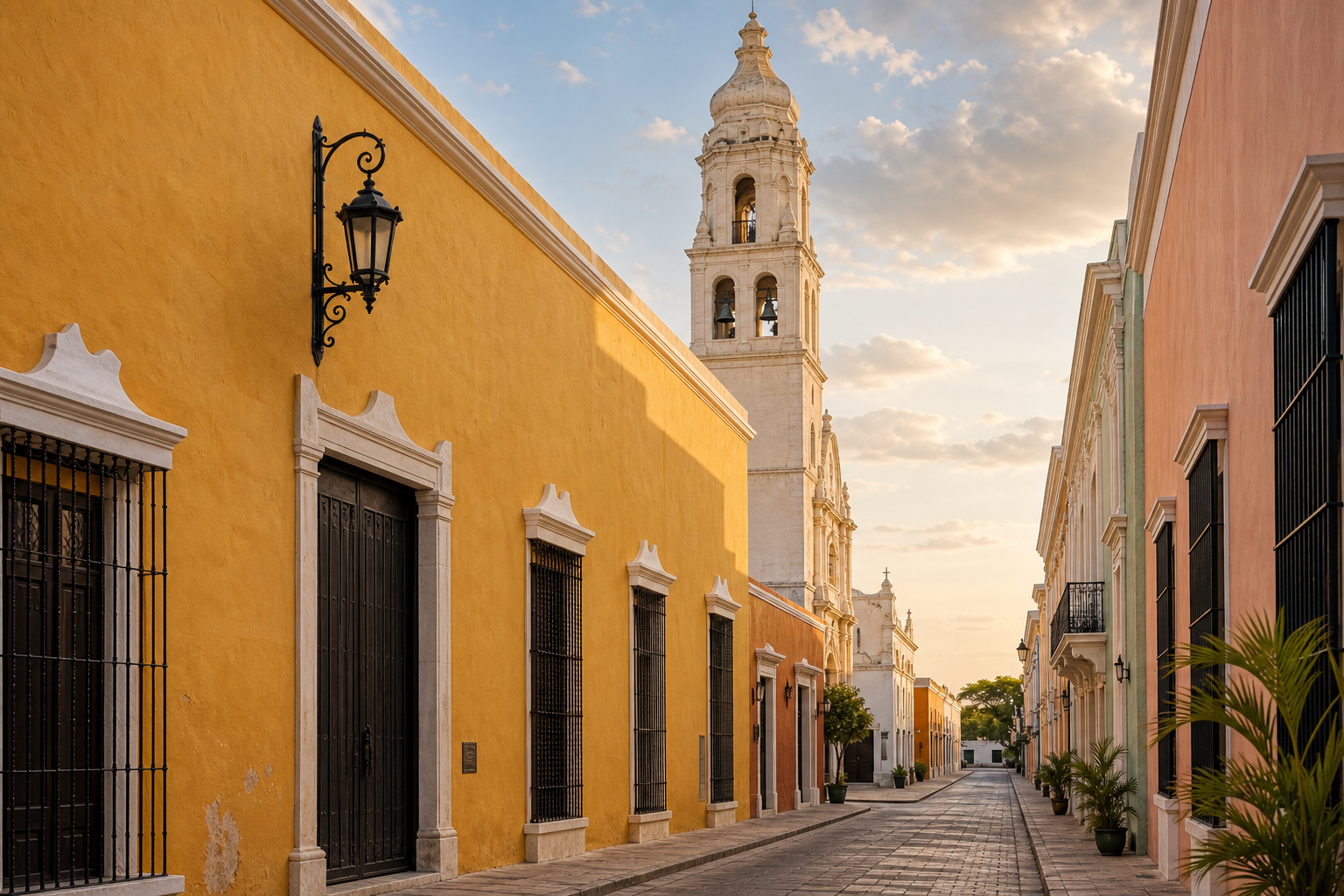
Bécal’s church is another useful part of the visit, especially for travellers who want to understand the town beyond its commercial identity. The historic religious building sits within the everyday fabric of the community, with public space and homes around it. Its architecture belongs to the long history of northern Campeche and the Camino Real corridor, but the church remains a place of worship rather than a decorative set.
 Historic church in Bécal, Campeche
If the doors are open, enter quietly and dress appropriately. Do not walk through a service to take photographs. Ask before photographing religious images, parishioners or ceremonies. The same rule applies to the square: people living their daily lives are not automatically part of a travel display.
The streets around the centre are worth a brief wander because they show how the craft fits into ordinary homes. Some houses may have a small sales area at the front and a work space farther inside. Others may offer no visitor access at all. You may see finished hats, palm materials or tools, but avoid touching anything unless invited. A good purchase begins with a conversation about the object and its care.
The church also helps prevent a common misunderstanding: Bécal is not only a roadside hat market. Its identity includes public institutions, religion, family life, schools, transport, local commerce and craft. A visit that spends all its attention on buying something misses the reason the tradition has endured.
How the cave workshops work
A cave visit usually involves descending below ground level or entering a low limestone space in a household or community workshop. The exact layout varies. Some spaces are natural or partly natural cavities; others have been adapted or excavated. Do not assume that a photograph or description of one workshop applies to every cave in Bécal.
Inside, the first thing you notice may be the change in temperature and humidity. The space can feel dramatically cooler than the street, though conditions vary with weather and ventilation. The artisan may sit close to the light, with strips of fibre arranged in the hands or across a simple work surface. The process can look effortless when performed by someone who has practiced since childhood, but the speed hides repeated preparation and years of skill.
Ask the artisan to explain the sequence in their own terms. A typical account may include selecting the palm, splitting or preparing fibres, drying or treating them, softening them again for weaving, building the crown, shaping the brim and finishing the hat. Do not turn those stages into a fixed recipe: materials, quality and family practice vary. The value of a visit is hearing how the work is actually done in that workshop.
The cave is also a place where visitors need to be careful. Watch your head and footing, follow the household’s route, and do not enter a narrow space if you feel uncomfortable. People with mobility limitations, claustrophobia or respiratory sensitivity should ask for a description before descending. A cave demonstration may be short, but the floor can be uneven and the entrance may not be designed for accessibility.
Photography is not automatically included. Ask before taking pictures of the artisan, the cave, unfinished work or family members. If the answer is no, put the camera away. A good explanation is more valuable than a photograph taken without permission.
Understanding jipi-japa quality
Visitors often ask how to identify a good hat. There is no single visual shortcut, and sellers may use different local descriptions. Start by asking what the fibre is, how fine the weave is, whether the hat can be folded or rolled, and how it should be stored. Let the maker demonstrate only if they recommend doing so. Do not bend a delicate piece yourself to test a claim.
Finer work generally requires more time. Thin, evenly arranged strands create a smoother surface and more detailed pattern, but the relationship between fineness, durability and price is not something to guess from a photograph. A hat intended for regular sun use may be a better choice than a very fine display piece if you will carry it through a hot, wet journey.
Inspect the brim and crown for the finish you want. Check whether the shape is symmetrical, whether the band is secure and whether the inside has been finished comfortably. Ask whether the hat is treated, how to clean it and what happens if it gets wet. A serious artisan will usually be more interested in matching the object to your use than in pushing you toward the most expensive option.
Colour is a separate decision. Natural pale fibre is common, but dyed or decorated pieces can have a different character. If you want a hat as a gift, ask about head size and whether the piece can be reshaped. If you are buying a bag or box, check the joins, lining and handles. The same principle applies: ask the maker what matters instead of treating every object as identical.
Prices change with labour, material, exchange rates and the level of finishing. Do not rely on an old blog post or a remembered price from another traveller. Ask politely in pesos, clarify whether a quoted figure is for the exact piece in your hand and keep enough cash for a small purchase. Smaller family workshops may not accept cards. A fair conversation about budget is normal; aggressive bargaining over a labour-intensive handmade object is not.
Buying a hat without damaging it
If you are flying home, plan the purchase before you choose the piece. Some hats are designed to fold or roll, while others should retain their shape. The artisan can tell you whether rolling is safe and how long it can remain rolled. Never force a hat into a suitcase because an internet description said all Panama-style hats are flexible.
Carry a clean protective bag or box if you buy a fine piece. Avoid leaving it in a parked car, where heat can affect shape and finishes. Keep it away from rain until you know how the material behaves. On a bus, place it where luggage will not crush it. If you are travelling with several hats, separate them rather than stacking weight on a delicate brim.
A direct purchase can be a meaningful form of cultural tourism when the buyer understands what is being purchased. Ask the artisan’s name if they are comfortable sharing it, learn the care instructions and remember the workshop if you need future advice. Do not photograph a person’s work and then try to reproduce it commercially without permission.
Not every visitor needs to buy. A workshop visit is still worthwhile if you leave with a better understanding of the skill and the conditions that make it possible. You can support the town by paying for an agreed explanation or demonstration when that is the local arrangement, buying a smaller object that suits your budget, or simply treating the space respectfully.
Other jipi-japa objects
Hats are the signature product, but Bécal’s craft tradition is broader. Depending on the workshop, you may see baskets, fans, boxes, bags, small decorative objects and other woven pieces. Smaller objects can be easier to carry and may suit travellers who do not want to manage a full-size hat on a long route.
A smaller object is not automatically a lesser object. A tightly woven container or patterned accessory can involve careful preparation and finishing. Ask whether it is made from the same fibre, whether it was woven in the cave and how it should be cleaned. If a product is made by several people, the artisan can explain the division of work.
Look for practical fit. A box may need protection from crushing; a bag may need a stronger lining; a fan may be decorative rather than designed for daily use. Buy the object you will actually use rather than collecting a piece because a guide called it essential. Craft is more sustainable when it remains useful after the trip.
Where to find an explanation or guided visit
The most reliable way to see a cave is through a workshop or local introduction rather than by walking into a private yard. Ask at a recognised local tourism point, a current artisan centre or through a guide who has an established relationship with families. The Campeche tourism page for Bécal describes the hat tradition and provides links to local operators and guides; use it as a starting point, then confirm what is actually available on your date.
Organised tours can solve transport and introductions, especially if you are coming from Campeche City or combining Bécal with the walled capital. The itinerary matters: a tour that lists Bécal alongside several other full attractions may offer only a brief craft stop. Read the current description for pickup, language, group size, time at the workshop and what is included before booking. Compare current Bécal activities on GetYourGuide and see verified Bécal and Campeche options on Viator. Availability, pickup areas and product details can change.
A direct independent visit gives you more time but requires more patience. You may need to ask several people before finding a workshop that is open. That is not necessarily a failure. The purpose is to find an appropriate introduction, not to demand access from the first household you see.
How to get to Bécal
Bécal is in northern Campeche on the route between the state capital and the Yucatán border. By car, it is a practical detour from the main highway, but check a current map and road conditions rather than relying on a memorised travel time. Traffic, construction, weather and your starting point change the calculation. The official Campeche tourism material places Bécal roughly 95 kilometres north of Campeche City; treat that as route orientation, not a promise of door-to-door timing.
Driving is the easiest option if you want to combine Bécal with Calkiní, Dzitbalché, Hecelchakán or Pomuch. Leave room for parking and for the final local streets around the centre. Do not plan to drive, buy a delicate hat and immediately leave without a safe way to protect it.
Public transport can be workable for travellers comfortable with slower connections, but the exact service and departure point should be checked locally. A bus or colectivo that serves the main corridor may not stop beside the workshop you want. Ask where to get off, how to return and how late the last practical connection runs. If a cave visit is the main reason for the journey, arrange the workshop first rather than assuming a transport arrival will produce an available demonstration.
A taxi or local ride can help with the last connection, though availability varies. Agree the destination and fare before departure when the service is not metered or posted. Carry Mexican pesos and keep offline map access because mobile coverage can be inconsistent on rural stretches.
From Campeche City, a private driver or bookable guided day trip is the simplest choice for visitors who want a hosted introduction. From Mérida, Bécal is often combined with Campeche City or Maya sites across the border, producing a long day. Since this site focuses on Campeche State, treat Mérida only as an arrival point and confirm that the itinerary gives Bécal enough time rather than turning the town into a quick roadside stop.
Bécal as part of a northern Campeche route
Bécal makes the most sense when you understand its position in the northern part of the state. Calkiní provides a broader municipal context and another craft-oriented stop. Dzitbalché adds a separate town identity and local textile traditions. Hecelchakán and Pomuch bring food, religious and cultural history into the corridor. These places are not interchangeable, and combining them requires a car or carefully arranged transport.
A simple craft-focused day could begin in Bécal, continue to Calkiní or Dzitbalché, and end in Campeche City. Start early, spend the warmest hours in a workshop or shaded indoor setting, and do not attempt to include every town. A longer two-day plan can use Campeche City as the overnight base and reserve the second day for a slower northern route.
Bécal can also be paired with a coastal detour toward Isla Arena, but that is a different landscape and should not be treated as a guaranteed add-on. Coastal wetlands, fishing communities and craft workshops have different schedules. If you want both, check distances and return transport carefully. A route that looks close on a map may take longer because roads are indirect and stops are spread across the municipality.
The old Camino Real idea is useful as historical framing: movement between the port of Campeche and inland communities shaped trade and contact across the region. It should not be confused with a single preserved road that you can follow like a museum trail. Today’s visit is a network of roads and towns, and the craft tradition is a living part of that geography.
Bécal from Campeche City
A day trip from San Francisco de Campeche is possible, but choose your priorities before leaving. If the main goal is the cave and the craft, make that the first confirmed stop. If the trip is primarily a Campeche City sightseeing day, Bécal may receive too little time to justify the detour.
A hosted excursion can be useful for visitors who do not speak Spanish or who prefer not to negotiate local transport. The current GetYourGuide inventory includes Bécal-focused and Bécal-plus-Campeche products, while Viator lists tours from Mérida that combine the town with the fortified capital. These listings are commercial products, not a guarantee that every family workshop is open; read the current itinerary and confirm the craft component before paying.
Compare Bécal and Campeche guided excursions on GetYourGuide · Check the current Viator Bécal inventory
If you are staying in Campeche City, use the city as the practical overnight base rather than trying to sleep in Bécal without confirming current accommodation. Check current Campeche City rates on Booking.com · Compare Campeche City stays on Trip.com. This keeps the lodging advice honest: Bécal is a craft-town visit, not a destination where a large hotel inventory should be assumed.
GuideCampeche Map: Routes from City to Coast and JungleSee how Campeche’s walled capital, Gulf towns, Maya cities, and southern jungle connect—and choose a base that turns the state’s long distances into a rewarding route.Explore
When to visit
Bécal can be visited throughout the year, but the experience changes with heat, rain and local activity. The dry season is generally more comfortable for walking and road travel, while the wetter months can bring greener landscapes and heavier showers. Weather does not determine whether a family workshop is open, so it is still important to confirm the visit.
Go early if you are driving. Morning light and cooler temperatures make the square and streets easier, and an early workshop visit leaves time for a slow conversation. Midday heat can be tiring, especially if you have a long drive afterward. If rain begins, do not crowd a cave entrance or assume every demonstration will continue; wait for local guidance.
Festivals and public events can change the atmosphere of the town. They can also affect parking, road access and workshop routines. If your dates overlap a major local celebration, ask what is happening in the centre and whether the activity you want is operating normally. A busy event may be an interesting cultural experience, but it is not the same as a quiet craft visit.
Practical etiquette in a family workshop
A few simple habits make the visit better for everyone:
- Ask before entering a home, yard or cave.
- Confirm whether the demonstration has a fee and what it includes.
- Ask before photographing people, tools, unfinished work or the cave.
- Do not handle fibre or hats unless invited.
- Keep the group small and follow the host’s route.
- Listen to the explanation instead of interrupting to bargain.
- Carry cash in small denominations, but do not assume every seller accepts it.
- Keep children close near cave entrances and fragile work.
- Avoid promising to return or order later unless you genuinely intend to do so.
- Buy directly when you want something, and ask how to care for it.
These are not formal rules unique to Bécal. They are ordinary respect for a working household. The cave may be used for production even when no tourist is expected, and an artisan may need to stop talking to finish an order.
Visiting with children
Bécal can work well for families who enjoy making and hands-on processes. Children can see that a hat is not made by a machine in a distant factory and can learn why the cave’s humidity matters. The visit is less suitable for children who cannot manage uneven floors, dark spaces or a quiet explanation.
Explain the etiquette before arriving. No touching without permission, no running in the cave and no flash photography unless the host says it is fine. Let the artisan decide whether a child can hold a strand or try a simple movement. The safest experience is one where the child observes first.
The square and public streets provide space to reset after a workshop. Carry water, sun protection and a snack, but ask before eating inside a private workshop. If the cave is too narrow or the descent is difficult, enjoy the explanation from the entrance or choose a public demonstration space instead.
Accessibility and physical conditions
Accessibility varies widely. A cave entrance may require steps, a descent, crouching or a walk across uneven ground. Historic public buildings may also have thresholds and surfaces that are difficult for wheelchairs or mobility aids. Contact a local guide or operator in advance with specific questions rather than asking only whether a place is “accessible.”
Useful questions include whether there are stairs, how narrow the entrance is, whether a person can remain above ground while the group descends, whether there is a restroom and whether a vehicle can reach the workshop. Conditions can change, so confirm close to the visit.
The heat is a more universal consideration. Plan shade, water and rest stops. Lightweight clothing is practical, but shoulders and knees should be covered when entering a church. Closed shoes are better than sandals for a cave floor and workshop yard.
What not to expect
Bécal is not a shopping mall with identical stock in every shop. It is not a guaranteed underground show. It is not a place where every resident wants to sell a hat to a passing visitor. It is not a substitute for a Maya archaeological site, and the town should not be described as one.
Those limits are part of its value. You are visiting a community whose main attraction is a skill embedded in daily life. The experience depends on timing, consent and a willingness to spend longer on one object than a conventional sightseeing itinerary allows.
Do not compare Bécal only with large tourist centres. The town’s quiet streets and ordinary homes are not evidence that there is “nothing to do.” They show that the craft is not separated from the place that sustains it. At the same time, do not romanticise poverty or assume that a handmade object is cheap because it is made locally. Pay attention to labour and buy only what fits your budget.
A practical half-day plan
For a focused visit, use this sequence:
First, arrive in the central area. Find the main public spaces, orient yourself and take a short break before approaching workshops. Do not start by following a stranger into a private yard without asking who they represent.
Second, arrange the craft explanation. Use a recognised local contact, tourism point or established guide. Confirm whether the visit is inside a cave, what the fee is, whether photography is allowed and how much time you have.
Third, listen before shopping. Learn about fibre preparation, weave fineness and care. Look at several pieces only after the maker explains the differences.
Fourth, walk the centre. Visit the church from the outside or inside when appropriate, see the hat monument and notice the relationship between public space and workshops.
Finally, pack any purchase safely. Ask the seller for specific instructions and leave enough time for your onward journey. A hat crushed in the last hour of a road trip is a preventable problem.
This plan can fit into a morning or afternoon, but it should not be squeezed between two distant attractions with fixed entry times. If you have only a short window, choose the workshop over a long town walk; the craft is the reason to make the detour.
A practical full-day plan
A full day gives you more flexibility. Arrive early, visit a workshop, take a shaded break, explore the centre and then continue to one nearby northern Campeche town. Keep the second stop modest. Combining Bécal with several museums, a distant coast and a major archaeological zone creates a route that looks impressive on paper but leaves no time for the conversations that make Bécal distinctive.
If you are using a guide, ask them to protect the Bécal time rather than adding another stop automatically. If you are driving, decide whether you want to return to Campeche City or continue north. Check the last practical connection before committing to public transport.
The best full day is not the one with the highest number of pins. It is the one in which you understand one craft well, make a purchase you can care for, and still have enough energy for the drive back.
Food and breaks
Bécal is a working town, so eat and drink according to what is open rather than building the day around a restaurant list. Carry water and a small snack, especially if you are driving from another city. Local markets and everyday food counters may have changing schedules and limited card acceptance. Ask what is being prepared that day and mention allergies clearly.
Do not invent a famous food stop into the itinerary simply because a guidebook needs a named recommendation. Northern Campeche’s food traditions are better explored through local questions: what is fresh, what is being cooked now and where do residents go for a quick meal? If you are continuing toward Calkiní or Campeche City, you can make the larger town your dependable meal base.
A shaded break is part of the route, not wasted time. The combination of heat, walking and a cave visit can make travellers underestimate fatigue. Drink water before you feel depleted, and never leave a child or pet in a parked vehicle.
Where to stay
Most visitors use Campeche City as their overnight base and visit Bécal on a northern route. That arrangement gives you a wider choice of accommodation, restaurants and onward transport, while Bécal remains a focused day stop. Browse current Campeche City accommodation on Booking.com · Compare hotels in Campeche on Trip.com.
You can also plan a northern Campeche route through Calkiní or another nearby town, but confirm the actual lodging inventory and late-arrival arrangements before relying on it. Smaller towns may have fewer options and less flexible check-in. Do not choose a stay solely because it appears close to Bécal on a map; ask about transport, parking, air conditioning and whether the property can receive you after your workshop visit.
If you are taking an organised day trip from Mérida, you may not need a Bécal overnight at all. Mérida is outside the scope of this destination guide, but it is a common arrival point for a Campeche-border itinerary. Check the return timing carefully: a route that combines Bécal and Campeche City can be a long day, especially when pickup and drop-off are included.
Bécal and responsible cultural travel
Responsible travel here is concrete rather than abstract. Pay agreed fees, buy from makers when possible, ask permission and do not treat homes as public property. Keep your expectations flexible enough that a closed workshop does not turn into pressure on another family. If a guide introduces you to an artisan, listen to the introduction and let the host set the pace.
Be careful with language. The caves are not a “secret” to be extracted from residents, and the artisans are not props for a story about an untouched town. The work is skilled, adaptive and economic. A useful article or tour should explain that labour, training, material preparation and market access all shape what you see.
Buy less and buy better. A fine piece that you carry home and use is more meaningful than several cheap objects that break in luggage. Ask who made the item, how to care for it and whether it can be repaired. If you want a custom order, agree on delivery, payment and shipping details clearly; do not assume a verbal promise made during a short visit is a formal commission.
Final recommendation
Go to Bécal for the process, not just the photograph of the giant hats. Give the town a morning or a relaxed half-day, arrange a respectful workshop introduction, ask why the cave matters, and let the artisan explain the differences between pieces. Walk through the centre and church area without turning local life into scenery. If you buy a jipi-japa hat, protect it and remember the hands and conditions behind it.
Bécal is an especially good addition to a northern Campeche itinerary when you want a living cultural stop between the state capital and the border. It asks for less speed and more attention than a conventional attraction. That is exactly why it stays with you.