Calkiní is the northern gateway to one of Campeche State’s most interesting travel corridors. The municipality brings together a historic town centre, Maya and colonial traditions, Bécal’s jipi-japa hat workshops, Dzitbalché’s textile and craft communities, the former henequén estates around Tankuché and Santa Cruz, the freshwater setting of El Remate, and the fishing coast of Isla Arena. It is a place to travel slowly rather than a single monument to tick off.
The geography explains the character of the visit. Calkiní sits in northern Campeche, close to the Yucatán border and on the old Camino Real route. The inland towns are separated from the Gulf coast by a landscape of low forest, former agricultural estates, villages and wetlands. A visit to the municipal seat can take a few hours; a proper journey through the wider area needs at least a full day, and two days make the coast and craft stops much easier.
This guide focuses on what you can realistically see, how the places fit together, and how to plan the trip without treating community workshops or sensitive wetlands like a theme park. Opening days, transport connections, boat departures and workshop access can change, so confirm locally before building a tight itinerary.
Why visit Calkiní?
Calkiní is useful for travellers who want a more grounded northern Campeche experience. The area is not organised around one large archaeological zone or a resort beach. Its attractions are distributed among working communities, small civic centres, churches, craft workshops, old estates and coastal ecosystems. That makes the route rewarding, but it also means you need to allow for pauses, local coordination and slower transport.
The municipality is known locally as the “Cuna de las Artesanías Campechanas,” or cradle of Campeche handicrafts. That description is not just a slogan. Bécal is associated with finely woven jipi-japa hats, Dzitbalché with embroidery, hammocks and leatherwork, Nunkiní with petate weaving, Tepakán with pottery, and parts of the coast with fishing and nature guiding. The best visit gives these skills context: you see where the work happens, understand the materials, and buy directly when a workshop is open.
Calkiní also works as a transition point between the colonial city of Campeche and the northern coast. If you are driving from San Francisco de Campeche toward the Yucatán border, it makes a useful detour. If you arrive by the Maya Train, check the current station-to-town connection before assuming that a train ticket solves the whole journey. The station is outside the historic centre, and Isla Arena is not a walkable extension of the platform.
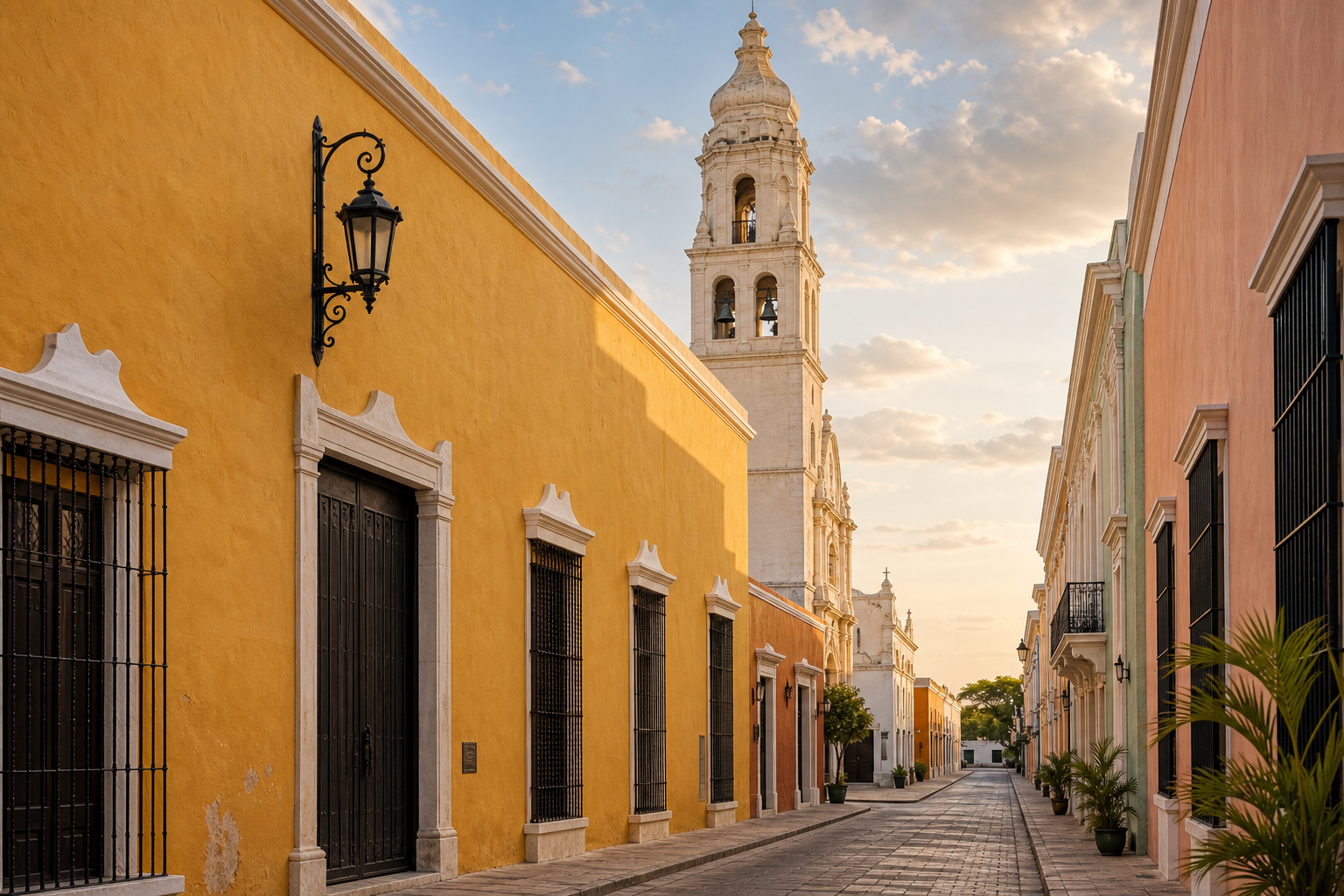
 Calkiní town and local architecture in northern Campeche
Calkiní town centre: what to see
Begin in the municipal seat if you want to understand the area before heading to the smaller communities. The centre combines Maya influence, colonial-era religious architecture and later civic buildings. It is compact enough to explore on foot, although the heat can make a morning visit much more comfortable than an afternoon circuit.
San Luis Obispo church
The church of San Luis Obispo is the principal historic reference point in Calkiní. Official local tourism material dates its foundation to the sixteenth century, during the first decades of the Franciscan presence in the peninsula. Its long history is visible in the layered character of the complex rather than in a single perfectly preserved architectural style. Look for the relationship between the church, its open spaces and the surrounding town fabric.
The church is a place of worship, not simply a photo stop. Dress respectfully, avoid entering during services unless invited, and ask locally before photographing people or religious activity. Religious buildings in northern Campeche often feel quieter than the headline attractions in the capital, which is part of their appeal. Give yourself time to notice the details instead of expecting a museum-style interpretation panel at every turn.
Central market and everyday food
A market visit is one of the best ways to make Calkiní more than a transit stop. The municipal market is where you can observe the rhythm of breakfast, shopping and local produce. Go with an appetite and a willingness to point, ask and learn. Regional cooking here belongs to the wider Campeche and Maya food traditions: corn, beans, recados, pork, poultry, seafood and seasonal produce appear in different combinations.
Do not assume every stall serves visitors in the same way or accepts cards. Carry small Mexican peso notes, ask the price before ordering when there is no visible menu, and follow the market’s own pace. A market is also a practical place to buy water and simple provisions before a drive toward El Remate or Isla Arena.
Calkiní’s food is better approached through dishes and ingredients than through a list of supposedly essential restaurants. Ask what is being prepared that day. If you are sensitive to spice, shellfish or unfamiliar ingredients, say so clearly. Coastal dishes and inland dishes can differ, and availability changes with the fishing season and local supply.
A town for an unhurried walk
The centre is not large, but it rewards a short walk between the church, market, plaza and side streets. Notice low-rise façades, shaded doorways, painted walls, small workshops and the way older roads connect the communities. The town is more useful as a cultural starting point than as a full-day sightseeing destination for most visitors.
The practical mistake is to arrive late, take a quick photograph of the church and immediately leave for Bécal. Spend enough time to understand the route and ask about current local transport. A driver or community guide may know whether a workshop, church or nature stop is open that day; that information can save you a wasted detour.
Bécal and the jipi-japa hat tradition
Bécal is the most recognisable stop in the Calkiní area. The town is known for its jipi-japa hats, often described to travellers as Panama-style hats, although the important point is the local technique and material rather than the comparison. Artisans work the prepared palm fibre in cool, humid caves or cave-like spaces because the moisture keeps the fibre flexible while it is being woven.
 Bécal in Calkiní municipality, known for jipi-japa hat weaving
What a Bécal visit looks like
A good visit normally combines a central walk with a workshop or demonstration. The Plaza de los Sombreros reflects the town’s identity, and the church of the Natividad stands near the main square. Along the road and in different neighbourhoods you may find craft shops, family workshops and a tourism stop with a demonstration cave. Because these are working spaces, opening arrangements are not necessarily as predictable as a major museum’s timetable.
Ask whether a demonstration is available before entering, and listen to the artisan explaining the process. The work is more complex than simply plaiting a hat. Fibre must be prepared, split, softened, selected and woven to the desired fineness; shaping, drying, finishing and sizing all affect the result. A demonstration gives you a better basis for comparing hats than judging only by colour or a tourist label.
Buying a hat responsibly
If you want to buy, decide first whether you need a wearable everyday hat, a very fine display piece or a less expensive souvenir. Ask how to care for the hat, whether it can be rolled, and how it should be packed for a flight. Do not squeeze or fold a hat simply to test it. Fibre quality and weave density vary, and an artisan can explain what the price reflects.
Buy from the maker or a clearly identified local workshop when possible. Bargaining aggressively over a labour-intensive handmade object misses the point of the visit. You can ask politely whether there is a different size or finish within your budget. Carry a protective bag or box if you are buying a fine hat, and keep it away from heavy luggage, rain and prolonged heat in a parked car.
How long to spend in Bécal
Allow at least a couple of hours if you want a workshop, the central area and time to shop without rushing. Bécal can be combined with Calkiní and Dzitbalché in an inland craft day. It can also be the first substantial stop on the longer route toward Nunkiní, Tankuché, El Remate and Isla Arena.
A half-day visit from Campeche City is possible by car or arranged tour, but the route becomes more comfortable if you are already staying in the northern part of the state. The day-trip option is convenient when you want interpretation and transport bundled together. Compare current Bécal and Campeche day-trip options on GetYourGuide and check Viator’s current Yucatán Peninsula activity inventory before relying on an old timetable or an unverified pickup promise.
GuideBécal, Campeche: Jipi-Japa Hats, Caves & Travel GuideExplore
Dzitbalché: crafts and a separate town identity
Dzitbalché lies close to Calkiní and is easy to overlook when travellers focus only on Bécal. It deserves its own stop because it is a sizeable town with a distinct civic and craft life. The local tourism information highlights hammock making, embroidered clothing and leatherwork, while the central church is dedicated to Nuestra Señora de la Asunción.
The town is a useful reminder that the Calkiní corridor is not a single artisan attraction. Skills are distributed among communities, and each place has its own families, schedules and traditions. If a particular workshop is closed, that is not a reason to treat Dzitbalché as a failed stop. Walk the centre, ask about current craft activity, and allow the town to be part of the route rather than demanding a staged performance.
Hammock weaving is especially practical to understand in person because scale, knots, fibre and finishing are difficult to judge from a photograph. If you buy one, ask about the correct hanging distance and the weight it is designed to support. Textiles also vary in fibre, weave and embroidery. Look closely, ask who made the piece, and give yourself enough time to choose something you will actually use.
Dzitbalché works well before or after Bécal. The two stops are geographically close, but they are not interchangeable. Bécal is the place to prioritise for jipi-japa weaving; Dzitbalché is more useful for a broader view of northern Campeche’s household crafts and community production.
Nunkiní, Tepakán and the craft corridor
The road from the inland towns toward Isla Arena is best understood as a corridor rather than a checklist. Nunkiní is associated with petate weaving and other local craft traditions. Tepakán is known for pottery. Other communities along the route contribute textiles, woodwork, fibre work and food. Not every stop will have a formal visitor centre, so independent travellers should ask locally and avoid turning into private courtyards or workshops without permission.
A community-based route can be a strong option if you want interpretation and direct contact but do not speak much Spanish. It can also reduce the risk of arriving at a village with no idea where to begin. Confirm what is included: transport, demonstrations, purchases, meals and nature activities are not automatically part of one package. A guide should explain the itinerary clearly rather than promise every attraction regardless of current conditions.
The route is also a good place to practise low-impact shopping. Choose fewer, better objects. Ask how to transport food, pottery or woven goods. Keep receipts where available, especially for larger purchases. Do not remove plant material, shells or archaeological-looking objects from the landscape. Craft travel is strongest when the money and respect stay with the people whose work made the visit worthwhile.
Santa Cruz and Tankuché: the former henequén landscape
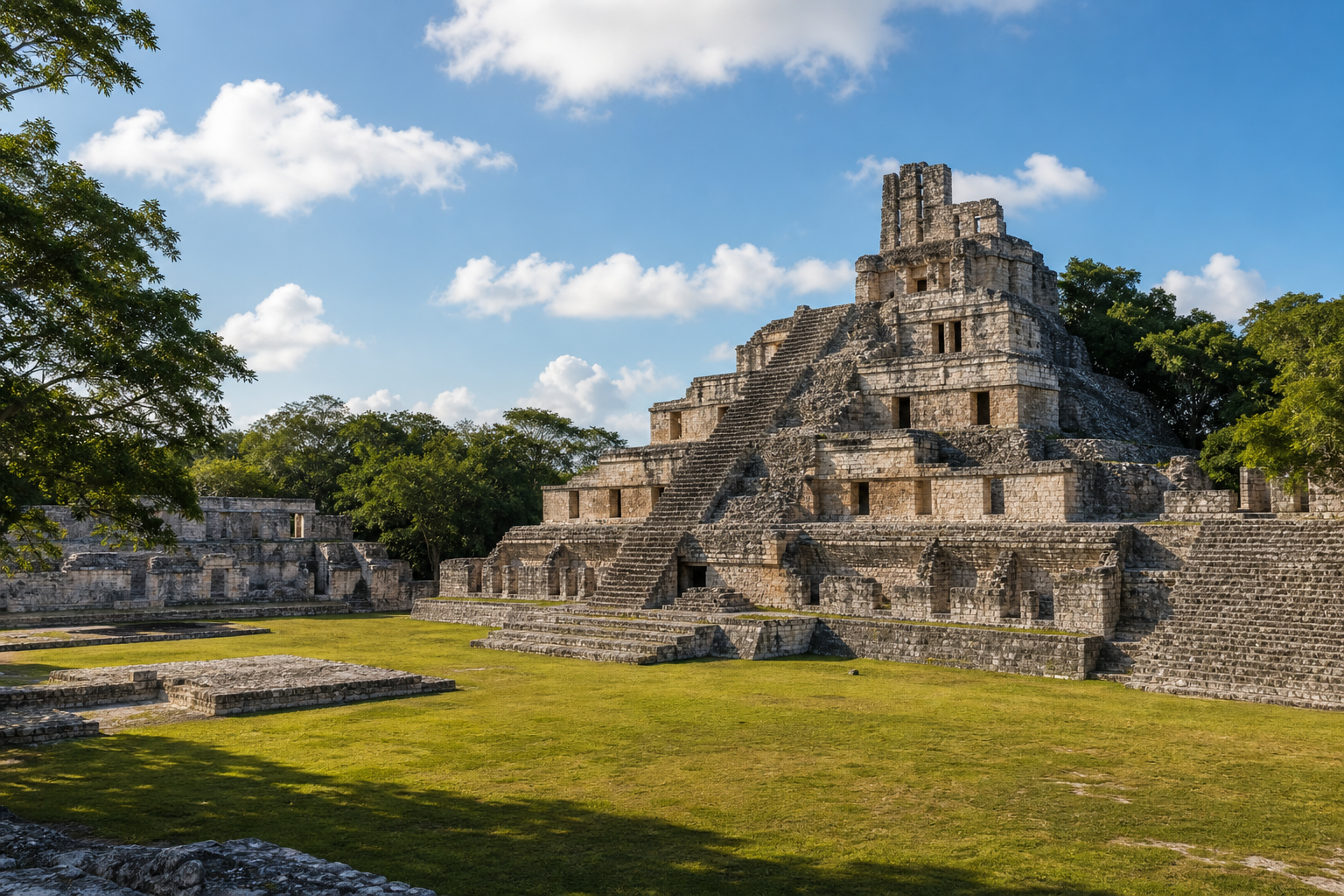
The Calkiní coast road passes through a landscape shaped by henequén agriculture and former haciendas. Santa Cruz and Tankuché are important because they show another layer of the region’s history: the estates, labour systems, architecture and rural production that followed the earlier Maya landscape and later became part of twentieth-century economic life.
Tankuché’s former hacienda is described in local tourism material as one of the important henequén estates in Campeche, with architecture that resembles a fortified European complex. Treat the site as a historic community place, not as an abandoned film set. Conditions can be rough, access can be limited and restoration status may change. Ask before entering buildings, respect fences and do not climb unstable walls.
The old estate architecture makes more sense after seeing the craft corridor. Henequén fibre, palm, cotton, wood and clay all belong to the material story of the region, but they carry different techniques and histories. A route through the villages can therefore link landscape and labour without pretending that every historical chapter was benign. The wealth of hacienda owners depended on demanding rural work, and a practical guide should leave room for that complexity.
This is a good section of the route for travellers who enjoy photography, history and rural architecture. It is less suitable if you need a predictable attraction with toilets, a café and a fixed entry process at every stop. Carry water, keep the vehicle fuelled and download directions before leaving the stronger mobile-signal areas.
El Remate: freshwater, forest and a change of pace
El Remate is a nature stop on the road toward Isla Arena. Local descriptions identify it as a freshwater spring or eye of water with an interpretive trail and adventure facilities such as kayaking, a zip line and artificial climbing. The setting offers a useful contrast with the saltwater coast: instead of arriving for a beach, you come to slow down around clear water, vegetation and a small ecotourism operation.
 El Remate freshwater ecotourism setting near Calkiní, Campeche
Conditions and activities may not all be operating on every visit. Confirm whether swimming, kayaking or other activities are available, and ask about safety equipment before paying. Water levels, weather, maintenance and staffing can change. Wear shoes that can handle wet paths, protect your phone and avoid assuming that a photograph online represents the current site.
El Remate is particularly useful during a long day because it breaks up the drive to Isla Arena. You can combine a morning in Bécal or Calkiní with an afternoon at the water, but do not schedule every activity as if the corridor were a motorway. If you want a relaxed nature visit, choose one or two activities and leave time to sit, walk the interpretive trail and observe birds.
Keep the spring clean and follow instructions about swimming, food and waste. Freshwater environments are easily affected by sunscreen, litter and uncontrolled access. If you are travelling with children, check the depth, supervision arrangements and life-jacket availability rather than relying on the word “adventure” in a listing.
Isla Arena: coast, wetlands and fishing culture
Isla Arena is the coastal end of the Calkiní corridor and a very different proposition from Calkiní town or Bécal. It is a fishing community on the northern Campeche coast, close to the wetlands associated with the Ría Celestún Biosphere Reserve. The area is known for beaches, seafood, mangroves, birds, crocodile-focused nature visits and seasonal flamingo sightings.
 Isla Arena coast and fishing landscape in Calkiní municipality
The beach is only one part of the experience. A boat or guided wetland excursion may reveal mangrove channels, bird habitat and crocodile areas, but wildlife is never guaranteed and should not be chased for a photograph. Keep distance, follow the boat operator’s instructions and do not feed animals. Flamingo sightings depend on season, water conditions, weather and the route used that day.
Local information also points to the remains of Real de Salinas and a petrified forest north of Isla Arena. Access is sensitive and the route is not simply a coastal road that you can improvise. Ask a local operator or authority about current access before setting out. Protected wetlands can have poor signage, soft ground, changing tracks and limited services.
Planning a boat or wildlife visit
Book or arrange nature activities through a recognised local operator when possible. Confirm the meeting point, duration, boat capacity, weather policy, what is included and whether cash is needed. Early departures often make sense for heat and wildlife, but the correct time depends on the operator and conditions rather than a universal online rule.
Bring sun protection, water, insect repellent, a dry bag and clothing that can handle spray. Muted colours are sensible for wildlife observation, but do not treat camouflage as a guarantee of close encounters. Binoculars are more useful than a long zoom used from an unsafe position. If you are prone to motion sickness, take the precautions recommended by your doctor and sit where the operator suggests.
Compare current Campeche nature and day-trip inventory on GetYourGuide · See available Viator experiences for the region
Staying in Isla Arena
Isla Arena has simple coastal accommodation, including cabins and bungalow-style stays, but inventory is smaller and more seasonal than in Campeche City. Staying one night can make an early nature outing much easier and lets you see the coast without forcing a return drive after a boat trip. Ask about electricity, air conditioning, water, mosquito screens, payment methods and whether meals are available before confirming.
Check current Isla Arena-area accommodation on Booking.com · Compare available stays on Trip.com
Do not expect the same choice of shops, pharmacies or late-night services as in Campeche City. Buy essentials before the final leg, keep fuel planning conservative and carry enough cash for small operators. Mobile coverage and online payment reliability can vary, so save confirmations offline.
How to get to Calkiní
By car
Driving is the easiest way to combine Calkiní, Bécal, Dzitbalché, El Remate and Isla Arena. From San Francisco de Campeche, follow the main northbound route toward Hecelchakán and Calkiní, then branch toward the communities you want to visit. Exact journey times depend on traffic, roadworks, stops and whether you continue to the coast.
Use daylight for the rural corridor, especially if you are unfamiliar with Mexican highways and village turns. Fill the tank before the less-served coastal section, keep offline maps available and do not rely on a single mobile-data connection. Speed bumps, motorcycles, pedestrians, animals and unlit vehicles are common reasons a route takes longer than a map estimate.
A rental car is most useful if you want to stop at several communities or spend the night at Isla Arena. It is less necessary for a focused Bécal visit if you can join a reliable organised day trip. Check the rental agreement for unpaved-road restrictions before following a track toward a wetland or old estate.
By bus and local transport
Intercity buses can get you near Calkiní, but the wider route is not a simple hop-on sightseeing line. Local colectivos or taxis may be available between towns, while the final coastal leg may require a prearranged ride or community operator. Ask at the bus terminal or with your accommodation about the first and last practical connection on the day you travel.
The Maya Train can be useful for reaching the Calkiní area, but the station’s relationship to the town and the coast matters. Check the current official schedule, station transfer arrangements and onward transport rather than buying a train ticket first and solving the rest later. For Isla Arena, a coordinated transfer from the station may be more realistic than expecting a frequent public connection.
With a guide
A private or small-group guide is valuable when your priority is the craft and nature corridor. The guide can translate workshop explanations, coordinate timings and reduce uncertainty around rural stops. Ask for a written outline of the places included and whether purchases, meals, entry fees and boat trips are separate. A tour that says “Calkiní” may spend most of its time in Bécal or combine the area with Edzná, so read the itinerary closely.
Where to base yourself
Calkiní is the practical base for an inland craft-focused visit. Campeche City offers a much larger accommodation choice and makes Bécal a possible day trip, while Isla Arena is the better base for a quiet coastal night and an early wetland outing. There is no single best base; choose according to the route you want rather than the name of the municipality alone.
If you stay in Calkiní, ask whether the property can help with an early departure, local taxi, workshop introduction or onward ride. If you stay in Campeche City, build in return time and avoid combining a long craft route with a late wildlife departure. If you stay in Isla Arena, confirm the exact arrival instructions and what services remain open outside the high season.
For a multi-stop trip, compare cancellation conditions carefully. Smaller communities may have fewer alternative rooms if a plan changes. Search Calkiní and nearby northern Campeche stays on Booking.com · Compare northern Campeche accommodation on Trip.com
A practical one-day Calkiní itinerary
Start early in Calkiní town with the San Luis Obispo church, a short centre walk and the market. Have breakfast or buy provisions, then continue to Bécal for the hat tradition. Allow time for a demonstration and purchase rather than squeezing the town into a fifteen-minute photo stop.
Continue through Dzitbalché if craft activity or local transport makes the stop worthwhile. From there, follow the route toward Nunkiní and the coast, choosing either a community craft stop or a short look at the former henequén landscape around Santa Cruz and Tankuché. If you want to reach Isla Arena the same day, do not overfill the inland schedule.
Use El Remate as the nature break if its current activities suit your group. Finish at Isla Arena for the beach, a prearranged wetland or crocodile excursion, and a meal based on the day’s available seafood. A one-day circuit is ambitious from Campeche City; it is much more comfortable with an early start, a car or a coordinated guide, and realistic expectations about what must be left for another visit.
A slower two-day itinerary
On day one, stay inland. Explore Calkiní, Bécal and Dzitbalché, then add one or two communities on the craft corridor. This gives you time to listen to workshop explanations and buy carefully rather than treating every stop as a transaction. Stay in Calkiní or continue toward the coast depending on accommodation and transport.
On day two, travel through Tankuché and El Remate to Isla Arena. Spend the afternoon on the beach or with a local nature operator, then stay near the coast if availability and conditions allow. If you prefer not to sleep in a small coastal community, return only if your driver and weather conditions make the journey sensible; otherwise, use the overnight to make the experience less tiring.
This version is better for photographers, families, travellers interested in craft and anyone who dislikes early-to-late road days. It also leaves room for a closed workshop or a changed boat departure without collapsing the entire plan.
When to go
Northern Campeche is hot for much of the year. The dry season can make road travel and outdoor walking easier, while the wetter months bring greener landscapes but more rain, mud and insect activity. Coastal wildlife and flamingo sightings are seasonal and condition-dependent, so choose dates around your wider Campeche itinerary rather than treating one month as a guarantee.
The most comfortable daily pattern is usually an early start, a shaded midday pause and outdoor activity later when conditions allow. Wear breathable clothing, a hat and closed shoes for workshops and uneven paths. Bring sunscreen, drinking water and insect repellent. A light rain layer is useful even when the morning forecast looks clear.
Festivals, religious observances and community events can change the atmosphere and access in the towns. They can be rewarding, but they may also mean crowded roads, altered services or restricted church access. Check locally if your visit coincides with a major celebration.
Common mistakes to avoid
The first mistake is treating Calkiní as only a name on the way to Bécal. The town centre, market and church establish the history of the route and make the later craft stops more meaningful.
The second is assuming that every craft shop is open whenever a visitor arrives. Workshops are family workplaces, not vending machines. Ask permission, accept a closed door and use a local contact when a demonstration matters to your itinerary.
The third is planning Isla Arena as a quick beach detour. The road, wetland conditions and boat schedules require more care. Carry provisions, arrange the activity ahead and leave daylight for the return or overnight stay.
The fourth is comparing handmade hats only by appearance. Fibre quality, fineness, shaping and finishing all matter. Listen to the artisan and buy the piece that fits your use and budget.
The fifth is overpacking the day. Calkiní’s value is in the connections between communities. If you rush from church to workshop to hacienda to spring to beach, you may technically visit everything while understanding none of it.
Is Calkiní worth visiting?
Yes, if you are interested in living craft traditions, rural history, small-town travel and a less polished coastal landscape. It is especially worthwhile as a two-day route or as part of a longer north Campeche drive. Bécal gives the journey a clear anchor, while El Remate and Isla Arena add freshwater, wetlands and the Gulf coast.
Calkiní is not the right choice if you want a dense cluster of attractions with fixed hours, frequent public transport and a large evening restaurant scene. In that case, base in Campeche City and choose one organised day trip. If you want to see how northern Campeche’s towns, materials, landscapes and working communities fit together, slow down and make Calkiní the route rather than the stop.
The best plan is simple: arrive early, start in the town centre, visit Bécal with respect for the artisans, choose only the coastal stops your daylight allows, and confirm every boat, workshop and accommodation detail locally. That approach leaves room for the people and places that make Calkiní distinctive.
Frequently asked questions
Is Calkiní the same place as Bécal?
No. Calkiní is the municipal seat and a separate town. Bécal is a nearby community known for jipi-japa hat weaving. They are close enough to combine in one route but should be treated as separate stops.
Can you visit Calkiní from Campeche City in one day?
Yes, particularly if you focus on Calkiní and Bécal or join a coordinated tour. Adding Dzitbalché, El Remate and Isla Arena makes the day long. A car, early departure and careful route planning are important.
Do you need Spanish?
You can travel independently with basic Spanish, but Spanish becomes more useful in family workshops, markets, taxis and coastal activity planning. A local guide can add context and make permission and payment arrangements clearer.
Can you see flamingos in Isla Arena?
Flamingos may be present in the wetlands, but sightings are seasonal and never guaranteed. Use a local nature operator, follow wildlife rules and do not plan the entire trip around a specific photograph.
Is there accommodation in Calkiní and Isla Arena?
There are accommodation options in and around both areas, but the selection is smaller than in Campeche City and coastal availability can be seasonal. Confirm amenities, payment methods, transport help and meal arrangements before travelling.
What should you buy in Calkiní?
Jipi-japa hats from Bécal are the best-known purchase. Depending on the route and open workshops, you may also find hammocks, embroidery, pottery, petate work, wood items and other local crafts. Ask who made the object and how to care for it.
Is Calkiní suitable for children?
Yes, for families comfortable with heat, driving and flexible schedules. Bécal’s weaving demonstration and El Remate’s nature setting can work well, but check activity safety, water conditions and supervision before children swim, kayak or use adventure facilities.