Printable guide
Best Hotels Near Calakmul: Where to Stay for the Ruins
Published

“Near Calakmul” can mean several very different things. It may mean a basic room in Xpujil, a forest lodge along the Río Bec corridor, a rural stay closer to the reserve, or an isolated property using Calakmul in its name. Those places do not offer the same journey to the ruins, and choosing between them is more important than comparing decorative details.
Calakmul archaeological zone is deep inside the Calakmul Biosphere Reserve. There is no cluster of hotels beside the pyramids, no town at the reserve entrance and no convenient restaurant waiting outside the site. Every visit involves a long approach through the forest, followed by a substantial walk in heat and humidity. Your hotel is therefore part of the transport plan: it determines when you can start, where you can buy water and fuel, how easily you can arrange a driver, and how much energy remains after the return.
For most independent travellers, Xpujil is the safest practical base. It has the widest choice of rooms in the area, food and fuel services, transport contacts, and access to nearby Maya sites including Xpuhil, Becán and Chicanná. A forest lodge can be a better choice if you have a car and want a quieter, nature-focused stay. A remote property can work for a carefully arranged two-night trip, but it is not automatically closer in a useful sense.
This guide compares the main places to stay around Calakmul without pretending that one hotel fits every traveller. Listings, amenities and availability change, so confirm the current details directly before paying. Check current Calakmul-area accommodation on Booking.com · Compare Xpujil and Calakmul-area stays on Trip.com
The short answer: where should you stay?
Choose Xpujil town if this is your first Calakmul visit, you are arriving by bus or train, you do not have a confirmed private transfer, or you want shops and fuel nearby. It is the best all-round base rather than the closest-looking pin on a booking map.
Choose the Chicanná and Río Bec corridor if the forest setting matters as much as the ruins, you have a rental car, and you are prepared to eat and organise transport at the property. It is especially useful for a two- or three-night archaeology route that includes Becán, Chicanná and Xpuhil.
Choose a rural community or jungle lodge if you want birds, quiet and a slower schedule. Confirm the exact road, mobile reception, meals, check-in procedure, electricity and vehicle access before booking. A rural stay is enjoyable when planned deliberately; it is stressful when chosen because the word “Calakmul” appears in the title.
Choose Escárcega only when it fits a larger route or a late arrival. It has more general transport services, but it is a weaker base for an early Calakmul departure because it puts extra road between your bed and the reserve.
There is also accommodation marketed as being inside or very close to the biosphere. Treat the location carefully. A property may be in the wider reserve or municipality and still be far from the archaeological zone, with no public transport, fuel, cash or backup food nearby. Ask for the route to the official entrance and the route from that entrance to the ruins, not only the straight-line distance.
Why Xpujil remains the default base
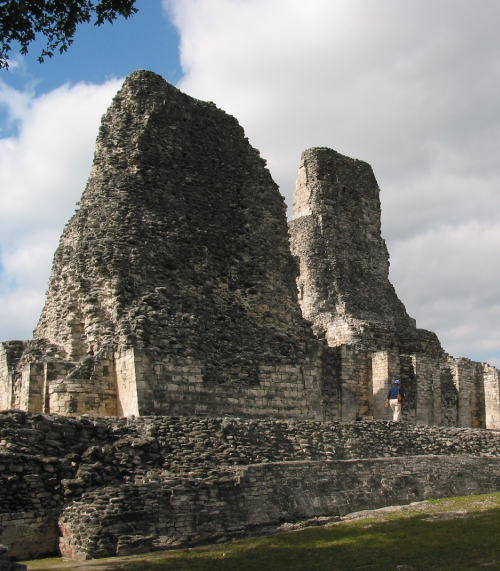 The Xpuhil archaeological zone near Xpujil in Campeche
Xpujil is a small service town on Federal Highway 186 in southeastern Campeche. It is not a resort and it is not a polished sightseeing destination in its own right. Its importance comes from position. The town sits on the corridor between Escárcega and Chetumal and gives visitors a place to make practical preparations before entering the forest.
From Xpujil, you can buy drinking water, snacks, insect repellent and other basics; check fuel; withdraw cash when an ATM is working; meet a driver; and ask accommodation staff about current local arrangements. Those services matter because Calakmul itself is remote. The archaeological zone does not provide a normal town infrastructure, and mobile reception can be limited or absent on parts of the route.
Xpujil is also close to a group of smaller Río Bec sites. Xpuhil is near the town, while Becán and Chicanná can be combined into a separate archaeological day or used as shorter alternatives after a demanding Calakmul visit. Balamkú lies farther along the route and is another possible addition when access and time allow. Staying in town gives you the flexibility to change the order instead of committing your entire trip to one very long excursion.
A useful mental model is this: an Xpujil hotel is not “beside Calakmul”; it is the place where you prepare for Calakmul. The room should make an early start and a late return manageable. Reliable air-conditioning, a private bathroom, parking or a confirmed meeting point, and a clear breakfast arrangement are more valuable than a long list of facilities that you will not use.
The town also protects you against small changes. A bus may arrive later than expected. Rain may slow the road. A rental car may need attention. You may return from the ruins too tired to continue toward Chetumal. If you are already in Xpujil, these are inconvenient problems. If you are staying in a remote property with no shop or transport contact, they can become the centre of the day.
Browse current Xpujil accommodation on Booking.com · Compare Xpujil hotels on Trip.com
The best areas to stay around Calakmul
1. Central Xpujil: best for most travellers
A central Xpujil room is the simplest choice for a first visit. “Central” is not always a precise neighbourhood boundary, so look at the map and read the current listing. The useful questions are whether you can reach food and basic supplies, whether a driver can find the property easily, and whether the room is practical for your arrival method.
Central accommodation suits travellers without a car particularly well. Intercity transport can bring you to the area, but that does not solve the final journey to Calakmul. You still need a driver, an arranged excursion or a car. Being in town gives you a realistic place to meet that service and a chance to confirm details in person.
It is also the strongest choice for families. If one person needs a quiet afternoon, another can walk for drinks or supplies. If a child is not up to another ruin, the family is not stranded at a remote lodge. The trade-off is noise: a small transport town may have highway traffic, dogs, generators and early activity. Request a room away from the road if quiet matters.
Before booking a central property, check:
- Whether air-conditioning is included in the room you are selecting.
- Whether reception can handle a pre-dawn departure.
- Whether breakfast can be served early or packed to take away.
- Whether parking is on the property or in a shared open area.
- Whether the room has the bed configuration your group needs.
- Whether recent reviews mention water pressure, cleanliness and noise.
Do not assume that a low room rate includes every useful part of the night. A cheap room that requires a taxi for breakfast and supplies may not be the cheapest complete plan.
2. Highway-edge accommodation: best for drivers
Properties close to Federal Highway 186 can be convenient when you are driving through Campeche. Luggage is easier to unload, departure toward the reserve is straightforward, and a one-night stop can be less complicated than navigating town streets.
The highway edge is not automatically closer to Calakmul. The reserve road is its own leg, and the internal approach to the archaeological zone remains long. A highway property may also be too far from food or cash services to suit a car-free traveller. Confirm the map rather than trusting a marketing label.
Ask whether the parking is secure and accessible after dark, whether the entrance is gated, and whether a larger rental vehicle fits. If the room faces traffic, noise may begin early. A room farther from the road or with a shaded parking area may be a better decision than a slightly shorter drive.
This area works well for a traveller who arrives by car from Campeche, plans to leave early, and is continuing toward Chetumal after the ruins. It is less comfortable for someone who wants to walk out in the evening or solve transport after arrival.
3. Chicanná and the Río Bec corridor: best for a forest stay
 The archaeological landscape of Becán in the Río Bec area of Campeche
The Río Bec corridor is the right direction to look if you want cabins, trees and a quieter setting. Accommodation in this area can make the forest part of the experience rather than something seen through a car window. It can also position you well for nearby sites such as Becán and Chicanná.
The compromise is service density. A forest property may have food on site, but you should not assume that a kitchen is open whenever you want dinner. Ask about meal times, packed breakfasts, water, electricity, hot water, Wi-Fi and late arrival. Ask for the exact access road and whether a normal rental car can use it comfortably in wet weather.
The corridor is usually better for two or more nights. You can arrive in daylight, settle in, visit a nearby site, and use another morning for Calakmul. If you have only one night and a complicated onward route, town accommodation is easier to recover from if something changes.
A forest setting is not a guarantee of wildlife sightings. The area is rich in habitat, but monkeys, birds and other animals remain wild. Choose a lodge for the landscape and pace, not because a listing promises a particular encounter. Follow local guidance about trails, noise and food storage.
Compare accommodation around Xpujil and the Río Bec corridor on Booking.com · See current Calakmul-area stays on Trip.com
4. Zoh Laguna and rural community bases: best for a slower itinerary
Rural bases around the Calakmul area can suit travellers who want an earlier relationship with the forest. The setting is quieter than Xpujil, and a longer stay can include birdwatching, community activities or simply time away from the highway.
The planning requirements are higher. Bring enough cash, fuel, water and food for the arrival period. Download directions before leaving a connected city. Confirm whether the property has a gate, reception hours and a dependable way to reach staff. Do not assume a taxi or replacement vehicle will be available at short notice.
This option is strongest for a traveller with two or three nights and a confirmed car or driver. It is not the first choice for a late arrival, a family member who needs quick medical access, or anyone who wants to improvise after getting off a bus. The quiet is real, but so is the distance from services.
5. Escárcega: useful as a route stop, not the best Calakmul base
Escárcega is a transport junction and can be a sensible overnight stop between Campeche city and the southern interior. It has more general services than the smaller Calakmul-area communities. If your journey arrives late or your route does not allow you to reach Xpujil, staying there can be safer than driving tired into the night.
For a dedicated Calakmul visit, however, sleeping in Escárcega adds a long approach before the reserve drive even begins. You would need an especially early start, and a delay can remove much of the cooler morning. Use Escárcega when the route requires it, not because a listing uses “Calakmul” as a regional search term.
What makes a good Calakmul hotel?
Air-conditioning and sleep
The southern Campeche climate can be hot and humid, and a Calakmul day is physically demanding. Air-conditioning is not a decorative luxury here. It is part of the recovery plan. Read recent reviews for whether units cool the room, whether they are noisy, and whether power interruptions affect them.
A fan may be sufficient during a mild spell, but it is a less predictable choice for a pre-dawn start after a hot day. If you are sensitive to heat, confirm the actual room category rather than relying on a property-wide amenity icon.
Breakfast that matches the departure
Many Calakmul departures begin earlier than a normal sightseeing day. A breakfast included in the rate is not useful if the kitchen opens after you leave. Ask whether an early meal or packed option is available. If it is not, buy fruit, bread, snacks and drinking water in Xpujil the previous evening.
Do not take food into the forest carelessly. Keep provisions sealed, take all rubbish out, and follow reserve and site instructions. Food can attract animals and change their behaviour.
Water, showers and bathrooms
Confirm whether your room has a private bathroom and what the hot-water arrangement is. In a remote region, pressure and supply can vary. This is not necessarily a reason to reject a property, but it should be part of an honest comparison.
A long shower is not the best way to finish a stay in a water-stressed landscape. Use what you need, follow the property’s instructions and refill reusable bottles before the reserve drive. There may be no reliable place to buy water after the route begins.
Parking and arrival
Drivers should confirm exactly where the vehicle will be left. Ask about an open lot, gate access, lighting and whether staff are present when you return after the ruins. Do not leave valuables visible in a rental car.
Car-free travellers should ask the hotel how guests normally reach Calakmul. A property may know local drivers, but the driver, start time, waiting arrangement, guide, entry costs and return plan are separate details. Confirm each one instead of assuming a room reservation includes an excursion.
Internet and mobile signal
Download maps, booking confirmations and transport details before leaving Campeche city or another reliable connection. Mobile service can be limited on the reserve approach and around rural accommodation. A listed Wi-Fi connection may be enough for messages but not for a work call.
If you need to work, book in town and treat connectivity as something to verify, not a promise. Keep a charged power bank and tell someone your route before leaving for the ruins.
Named properties: how to compare listings without overpromising
The Calakmul area has a changing group of independently run hotels, cabins, villas, eco-lodges and simple rooms. Some appear under different spellings or platform names. Instead of treating a hotel’s name as a quality category, compare the listing details that affect the actual visit.
A property with a pool may be pleasant after the ruins, but a pool does not compensate for a room that does not cool properly. A property with “jungle” in its name may offer a peaceful setting, but check how far it is from food and the reserve route. A hotel near the Xpujil archaeological zone may be convenient for that nearby site but still require the normal long journey to Calakmul.
When a listing says “near Calakmul,” check:
- The town or community shown on the map.
- The road used to reach it after dark or in rain.
- The drive to the reserve entrance.
- The additional drive from the entrance to the archaeological zone.
- Whether a vehicle is necessary for food and supplies.
- Whether breakfast, parking and reception match your schedule.
- Whether reviews are recent enough to describe current conditions.
Rates and availability change with dates, holidays, demand and room type. Compare the final total and cancellation rules rather than copying a price from a search result. Check current hotel names and availability on Booking.com · Compare listing photos and room details on Trip.com
One night, two nights or three?
One night: possible for a fixed road trip
One night can work if you reach the area in daylight, already have transport for the ruins, and are not attempting a second demanding transfer immediately afterward. Choose Xpujil town or an easy highway location. Buy supplies, confirm the morning departure and check the return route before sleeping.
A one-night plan becomes fragile when the arrival is late. A delayed bus, rain or a vehicle problem can leave no margin. If the next leg is toward Chetumal, Palenque or Ciudad del Carmen, calculate the whole day rather than treating Calakmul as a short stop.
Two nights: the best default
Two nights gives you a preparation night and a recovery night. You can arrive, settle in, buy supplies and confirm the route without turning the first evening into another expedition. After Calakmul, you can sleep before continuing or change the next day’s plan if the return is later than expected.
For most first-time visitors, this is the most sensible balance between cost and comfort. The extra night is not wasted time; it creates the margin that a remote archaeological visit needs.
Three nights or more: for a complete Río Bec route
Three nights suits travellers who want Calakmul plus Xpuhil, Becán, Chicanná, Balamkú or a nature-focused activity. These sites have different scales and architectural character. A longer stay lets you visit a smaller site after a tiring day instead of forcing everything into one loop.
It also lets you respond to weather. Put the longest walk on the coolest morning, use a shorter site after rain, and leave room for a slow departure. A route that looks efficient on a map can be exhausting in the heat.
Where to stay by traveller type
Budget travellers
A basic room in Xpujil can be the best budget choice because it reduces secondary costs. Being close to food, water and transport contacts may save more than a slightly lower nightly rate at a remote property. Compare air-conditioning, breakfast, parking, taxes and occupancy rules.
Budget does not mean accepting unsafe or unusable conditions. Read recent reviews for cleanliness, locks, water and cooling. If the room is hot enough to prevent sleep, the saving has compromised the main purpose of the night.
Couples
Decide whether the priority is a forest setting or an easy evening. A rural cabin may feel quieter, but a town room can leave more energy for the ruins and make dinner simpler. Look for a quiet position, dependable cooling, a shaded sitting area and a clear late-arrival policy.
The most useful romantic feature in this region may be a good night’s sleep before the jungle road. A balcony or pool is secondary if the room faces heavy traffic or the departure arrangements are unclear.
Families
Families should confirm beds, occupancy, bathroom layout and the availability of a cot rather than relying on photos. Town accommodation usually makes snacks and basic supplies easier. A child who cannot manage the full reserve walk can rest while another adult chooses a shorter nearby visit.
The reserve itself requires patience: heat, insects, uneven paths and long time in the car. A calm room with air-conditioning is more useful than an ambitious schedule. If you use a pool, supervise children closely and follow the property’s rules.
Photographers and wildlife watchers
A rural lodge can provide a quieter dawn and easier access to forest sounds, but check electricity, dry storage, vehicle access and pre-dawn gates. Do not walk into the forest alone or leave marked paths without permission. Wildlife is not a staged hotel amenity.
A town hotel can work well for expensive equipment because charging and vehicle access are more predictable. You can still reach the reserve early if the driver or car is arranged in advance.
Bus and rail travellers
Stay in Xpujil town, keep luggage manageable and confirm the last connection before committing to a room outside the centre. A station named for Xpujil does not place you at Calakmul. You still need a transfer to the reserve.
Ask the accommodation whether they can connect you with a local driver, how much notice is needed, and where you will meet. Keep a day bag with water, sun protection, insect repellent, comfortable shoes, a charged phone and your booking information.
Transport from your hotel to Calakmul
There is no normal public bus that takes visitors from a hotel directly to the archaeological zone on demand. The practical choices are a rental car, a pre-arranged local driver, or a verified guided excursion. Each has different costs and responsibilities, and current arrangements should be confirmed locally.
A rental car offers flexibility for Calakmul and the nearby Río Bec sites, but the day is still long. Fill the tank before the reserve approach, carry water and do not assume a fuel station exists beyond the last services. Drive patiently on the forest road, watch for animals and never stop in a dangerous position simply to take a photograph.
A private driver removes some navigation pressure and can be useful when you are not comfortable driving a remote route. Confirm whether the vehicle waits during the visit, whether the driver knows the current entry process, and whether the return is included. Do not assume a taxi fare quoted for town covers the full reserve journey.
Guided tours are available in the wider regional market, but inventory changes and Campeche-specific departures can be limited. If you book a tour, verify the departure point, inclusions, language, transport, entrance arrangements and return time on the live listing. Compare current Calakmul experiences on GetYourGuide · See Calakmul tour options on Viator
The hotel can help with a local contact, but that is not the same as a guaranteed tour product. Get the plan in writing where possible, carry cash for small local payments, and keep an alternative day plan such as Xpuhil or Becán if weather or transport changes.
What to do before leaving your hotel
The most useful preparation happens the evening before. Check the weather, confirm the departure point, fill your water bottles, charge phones and cameras, and buy food that can handle heat. Put sun protection and insect repellent in the day bag rather than burying them in the main luggage.
Ask about current access conditions without expecting hotel staff to know every site rule. Archaeological zones and protected areas can change operating arrangements, and the official information available locally may be more current than an old blog post. Keep enough time for queues, checkpoints and the long road inside the reserve.
Wear shoes with secure soles. The site involves uneven ground, steps and exposed walking. A hat, light long sleeves and a small towel can be more useful than fashionable clothing. Bring cash and do not count on card service or a reliable ATM once you leave town.
Do not plan a demanding dinner reservation or an onward night drive after Calakmul unless you have a strong reason. The combination of an early start, heat, walking and the return road makes tired driving a genuine concern. A second Xpujil night is often the better use of the budget.
Food and supplies near your base
Xpujil is the most convenient place to organise food because it has the largest concentration of basic services in the immediate area. Independent shops and casual eateries change, so ask locally rather than relying on an old named recommendation. Buy breakfast supplies, drinking water and snacks before the reserve day.
Remote lodges may provide meals, but confirm the schedule and whether dinner must be requested in advance. If you arrive after the kitchen closes, you may have no easy alternative. This is one reason an arrival in daylight matters.
Pack food responsibly. Avoid leaving scraps at viewpoints or feeding animals. Keep rubbish in your bag until you return to a suitable bin. The forest is not a picnic area with hotel-style waste collection.
Weather, insects and comfort
Heat is the main reason to start early. The reserve route and archaeological paths can feel much harder later in the day, especially when humidity is high. Rain can make the road and steps more demanding, while the dry season can increase dust and glare.
Mosquitoes and other insects are part of the environment. Use repellent, wear suitable clothing and check the room for screens or gaps if that matters to you. Do not choose a rural stay expecting a sealed city-hotel environment.
Keep wet clothes separate from camera equipment, and ask the property where to dry items. A shaded room, working fan or air-conditioning, and a place to rinse dusty shoes can improve the next morning more than a formal star rating.
How to combine your hotel with nearby archaeological sites
Calakmul should not be the only site considered when booking the area. Xpuhil, Becán and Chicanná create a useful contrast. They are more compact and can often be visited with less driving and walking, although current opening conditions must be checked.
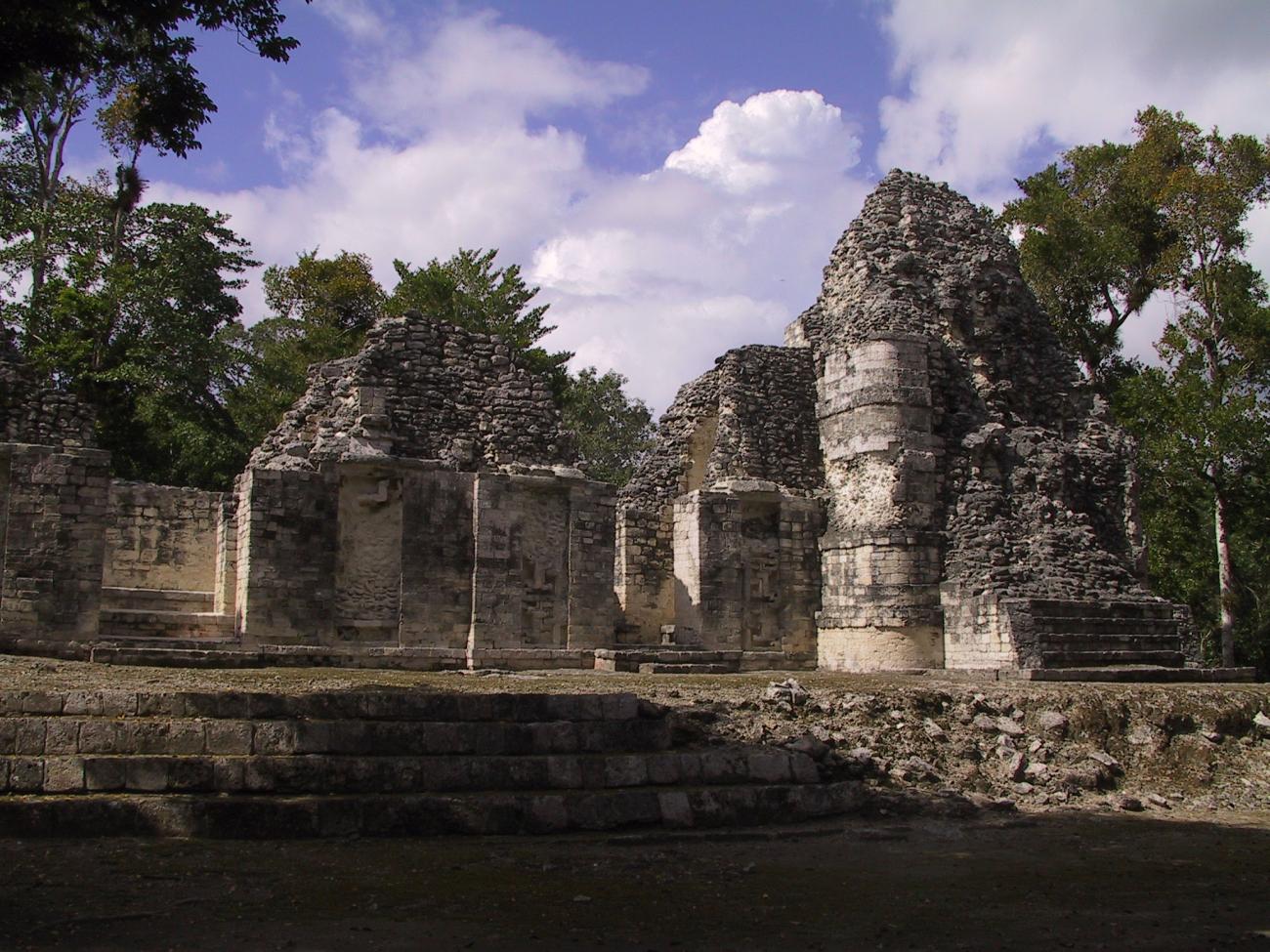 The decorated entrance architecture of Chicanná in Campeche
A three-night town itinerary could look like this: arrive and prepare on the first afternoon; visit Calakmul on the full second day; use the third morning for nearby Río Bec sites before continuing. A forest-corridor stay can reverse the order, beginning with nearby ruins and reserving the longest road for the day when your driver and supplies are ready.
Do not treat these sites as interchangeable photo stops. Calakmul is valued for its monumental scale and deep reserve setting. Becán has a concentrated core and defensive features. Chicanná is known for its decorated architectural style. Xpuhil is close to town and can be a manageable first or final stop. A hotel that allows you to experience the differences at a reasonable pace is better than one that only saves a few kilometres on one route.
Is staying inside the reserve worth it?
It can be, if the property’s exact position, access and services suit your plan. The attraction is the forest setting and the possibility of reducing part of the approach. The drawbacks are isolation, dependence on the property for food and transport, and less flexibility if conditions change.
Ask whether the hotel is actually inside the protected area, near the reserve entrance, or simply in the broader Calakmul municipality. These are not the same. Ask how far it is from the archaeological zone by the real road, whether there is mobile signal, and what happens if you arrive after dark.
For a first visit without a car, Xpujil is usually the more forgiving choice. For a traveller with a car, two nights and a strong interest in nature, a remote stay can be rewarding. The correct decision is not “closest is best”; it is “the base that matches the route and your tolerance for limited services is best.”
A practical two-night plan
On arrival day, reach your base before dark if possible. Check the room, confirm breakfast or food, buy water and snacks, and settle the Calakmul transport. If energy allows, walk around Xpujil or visit the nearby Xpuhil area only if current conditions and timing make sense.
On the Calakmul day, leave early with a full tank, water, food, sun protection, insect repellent, cash and a charged phone. Follow the official route and local instructions. Pace the walk; there is no prize for climbing every structure if you are overheating. Keep the return journey in mind.
After returning, drink water, eat, check the vehicle and sleep. Do not force an onward drive simply because it was written into an optimistic itinerary. Leave the next morning for Chetumal, Escárcega, Campeche or another destination when you are rested.
Book the second night in the same property unless a deliberate route makes a different base more useful. Moving rooms after the ruins adds packing and driving when you are already tired.
The booking decision in one paragraph
For nearly everyone, book a well-reviewed, air-conditioned room in Xpujil for two nights and arrange the Calakmul day before arrival. Move to the Río Bec corridor or a rural lodge when you have a car, want forest quiet, and are happy to organise meals and transport carefully. Use Escárcega as a route stop rather than calling it the closest base. Treat “Calakmul” in a property name as a search clue, not proof of proximity.
The best hotel near Calakmul is the one that leaves you prepared rather than isolated: a cool room, a clear arrival, enough water, a realistic departure, and a safe place to recover after the long road through the reserve. Check current Xpujil-area rates on Booking.com · Compare current availability on Trip.com
If you have time for only one improvement to your plan, add the preparation night in Xpujil. It gives the Calakmul visit the margin that the distance, weather and protected-forest conditions require.