
Ciudad del Carmen at a glance
 Sunset over Ciudad del Carmen, Campeche
Ciudad del Carmen is a working Gulf city on Isla del Carmen in southern Campeche State. It is not a smaller version of San Francisco de Campeche: the capital is built around a walled colonial centre, while Carmen is shaped by fishing, shipping, offshore industry, beaches, and the broad wetlands of Laguna de Términos. That difference is the key to enjoying it.
The city makes sense for travellers who want a coastal stop with local rhythm rather than a resort strip. You can walk around the historic centre, see the sanctuary dedicated to the city's patron, follow the waterfront, spend time at a city beach, and arrange access to mangrove and lagoon landscapes. It is also a useful overnight break on the road between Campeche and Tabasco, or a practical base if your trip begins or ends at Ciudad del Carmen International Airport.
A short visit works well, but the city rewards a slower pace. One full day is enough for the centre, waterfront, and a beach. Two nights give you room for a lagoon outing or a second coastal area without trying to compress everything into the hottest part of the day. The wider municipality is spread out, and the nature areas are not interchangeable with the urban beaches, so plan each outing around its actual location rather than assuming that every attraction is walkable from downtown.
Ciudad del Carmen is often called the Pearl of the Gulf, but the useful description is simpler: it is an island city between the open Gulf and an enormous estuarine system. That geography explains the sunsets, the seafood, the mangroves, the bridges, the humid weather, and the need to leave extra time for road transfers.
GuideBest Restaurants in Ciudad del Carmen, Campeche: Where to EatA practical guide to eating in Ciudad del Carmen, Campeche, from Gulf seafood and pan de cazón to markets, casual meals, and choosing a restaurant by neighbourhood.ExploreWhere Ciudad del Carmen is and why visit
Isla del Carmen sits between the Gulf of Mexico and Laguna de Términos. The urban area occupies the island's western and central sections, with roads continuing east toward beach areas and the mainland connection crossing the lagoon by the Zacatal Bridge. From Campeche city, the drive follows the Gulf-side corridor toward the south and takes roughly several hours depending on traffic, stops, and the exact departure point. From Villahermosa, the approach is also a road journey through lowland country. Check the current bus timetable or road conditions on the day rather than treating older online schedules as fixed.
The landscape is the main reason to add Carmen to a Campeche itinerary. The city gives access to a coastline that feels different from the broad urban malecón of Campeche city. It also sits beside a protected wetland where mangrove channels, tidal water, mudflats, and islands support fish, crustaceans, birds, reptiles, and marine mammals. Sightings are never guaranteed, especially when a visitor has only a short time, but the ecological setting is genuine even when wildlife stays out of view.
There is also a cultural reason to come. Ciudad del Carmen's history is connected to the island, maritime trade, religious devotion, fishing, and the later growth of the energy sector. The result is a city with a practical, lived-in centre rather than a purely preserved tourist quarter. Streets around the main square can be busy and ordinary; that is part of the experience. A good visit balances the compact historic sights with time beside the water.
The city suits:
- Travellers making a Campeche-to-Tabasco road trip who want a coastal overnight.
- Families looking for an urban beach day with easier services than a remote coast.
- Birdwatchers and nature-focused visitors arranging a responsible lagoon outing.
- Food travellers interested in Gulf seafood and Campeche-style dishes.
- Visitors flying through Ciudad del Carmen who want to add a day before continuing.
- Repeat visitors to Campeche who have already explored the capital's walls and forts.
It suits less well if you want an entirely walkable colonial destination, a guaranteed wildlife encounter, or a quiet beach with no urban development. Choose the city for its combination of working coast and wetland access, not for a resort fantasy.
The historic centre and the city's patron
Begin in the central streets before the heat becomes intense. The historic core is compact enough to explore on foot, although shade is uneven and sidewalks can be irregular. Start near the main square and orient yourself around the civic buildings, the waterfront-facing streets, and the religious heart of the city. Morning is a good time for photographs and a calmer walk; by late morning, the combination of sun and humidity makes a slower itinerary more comfortable.
The Church of Our Lady of Carmen, also known as the Sanctuary of Our Lady of Carmen, is one of the city's most important landmarks. The devotion is inseparable from the island's identity, and the annual celebrations around the patron bring a different atmosphere from an ordinary weekday. Treat the building as an active place of worship: dress respectfully, keep voices low, and follow any request about photography or access.
The centre is not a museum set. You will see commercial streets, local errands, taxis, school traffic, and buildings that have been altered over time. That is useful context. Carmen's history is not only something displayed behind glass; it remains tied to the port, the fishing economy, religious festivals, and the island's relationship with the lagoon. Allow yourself time to look beyond the most photographed façade.
For a self-guided walk, connect the main square with the sanctuary, continue through the surrounding central streets, and then head toward the waterfront. You do not need a rigid route. Instead, use the first part of the day to understand the shape of the island city, then reserve the hottest hours for a museum, lunch, or a shaded break. If a building is closed, do not turn the walk into a hunt for an exact opening time; schedules can change, particularly around civic events and holidays.
Museo Victoriano Nieves Céspedes
The Museo de la Ciudad Victoriano Nieves Céspedes is the most useful indoor stop for understanding local history. Mexico's cultural institutions describe its permanent display through several themes, including the pre-Hispanic past, Isla del Carmen, the region's mountains and rivers, the sea, pirates, and temporary visual-art exhibitions. The museum occupies a historic building with a former hospital history and a courtyard layout that makes it a welcome pause in hot weather.
Because official and directory listings have differed on days and hours, verify the current schedule directly through the cultural authorities or at the centre before setting your whole day around it. The same principle applies to admission information. Do not assume that an old travel listing's fee or hours are still current.
The museum is valuable even if you are not a specialist in archaeology. It gives the city a local frame: the island is not merely a beach stop, and the lagoon is not an empty blue backdrop. Displays connect the sea, regional settlement, commerce, and the cultural memory of Carmen. Read the labels slowly, then walk outside and notice how the waterfront relates to the streets you have just seen.
The malecón and waterfront
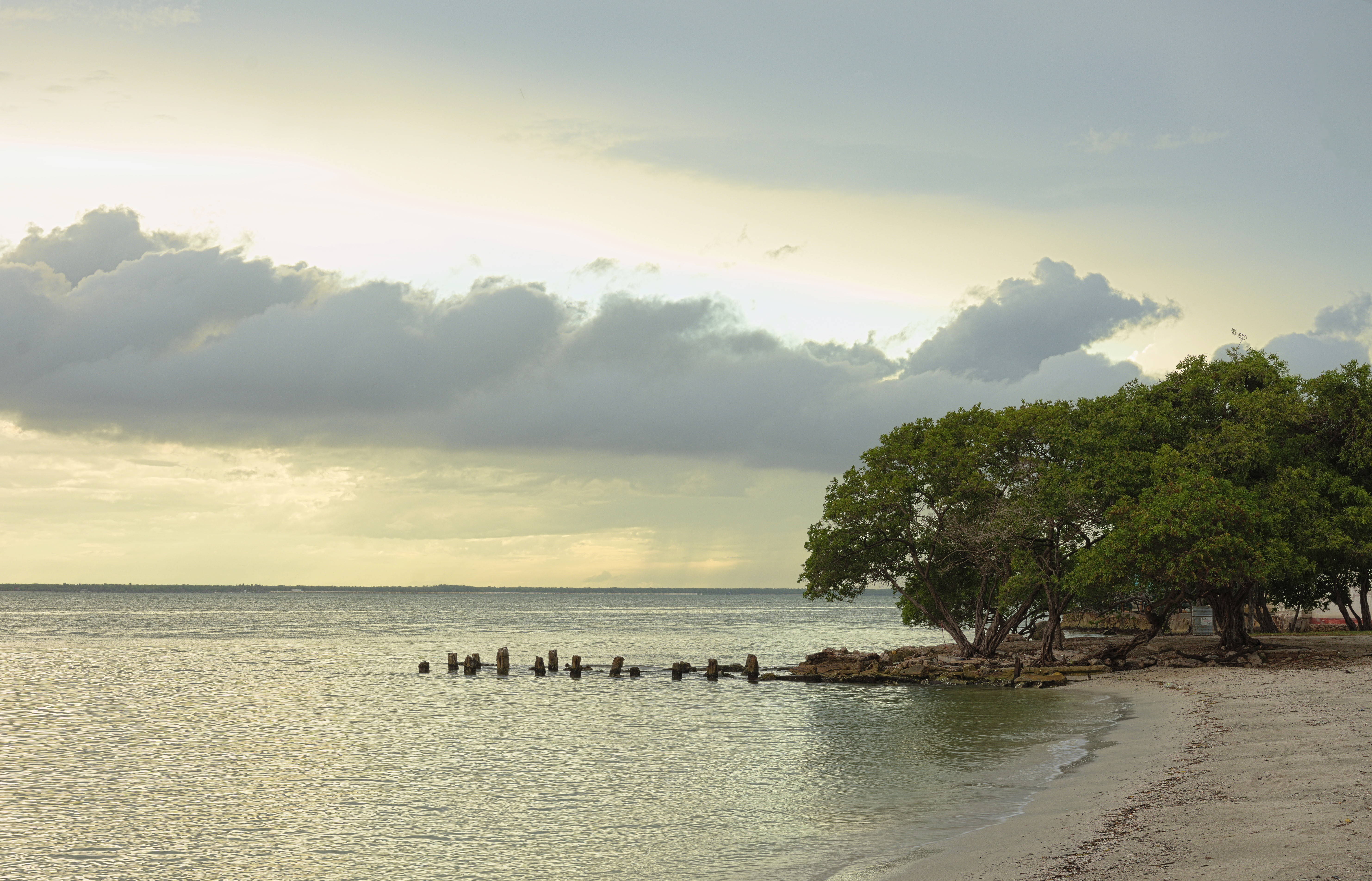 Ciudad del Carmen beach and Gulf coast
The waterfront is the city's easiest public space for a late-afternoon walk. In the central area, the malecón combines views across the water with benches, open areas, traffic, and places where residents gather. It is more of a local promenade than a single uninterrupted tourist attraction. Walk a section, pause for the light, and do not expect every stretch to have the same services.
Late afternoon is the best compromise between temperature and atmosphere. The sun can still be strong, but the light becomes softer and the breeze improves. Families and groups often make use of the public spaces, while the water shows the working character of the city: boats, channels, and infrastructure may be part of the view. That combination is precisely what distinguishes Carmen from a resort town.
Sunset is popular, but cloud cover and haze change the scene from one evening to the next. Take care near edges, steps, and wet surfaces, especially if you are photographing after dark. Keep phones and bags secure in crowded areas, and use a taxi for a longer return if the route is poorly lit or you are unfamiliar with the neighbourhood.
The waterfront also helps you decide what to do next. If you want a simple evening, stay near the central promenade and main square. If you want a beach day, use the city as your base and travel to the beach area in daylight. If you want mangroves or wildlife, treat that as a separate excursion rather than trying to combine a long boat outing with every urban sight.
Check current Ciudad del Carmen stays on Booking.com · Compare Ciudad del Carmen hotels on Trip.com
Beaches: Playa Norte and the urban coast
Playa Norte is the city's best-known urban beach and a straightforward choice when you want sand, water, and nearby city services. It is not an isolated beach. Expect other visitors, local traffic, changing water conditions, and facilities that vary by section and season. The practical advantage is convenience: you can make a beach visit part of a city stay without committing to a remote excursion.
Go earlier if swimming and walking are your priorities. The sand and exposed areas become hot, and the strongest sun is not the best time for children or anyone who burns easily. Bring drinking water, sun protection, a cover-up, and a bag for waste. Do not leave valuables unattended while swimming. Before entering the water, look at the local conditions and follow any posted or locally communicated warnings; currents, weather, and water quality are not constant.
Other beaches and waterfront areas around the island include Playa Caracol, La Manigua, Puntilla, Bahamitas, Tortugueros, Port Royal, and Punta San Julián. They are not all the same type of outing. Some are urban and easy to reach, some are better treated as a drive, and some may have limited services. Confirm the condition of the access road and the availability of food, shade, toilets, and transport before choosing a farther beach.
For a relaxed half-day, choose one beach rather than collecting names. A common mistake is to spend most of the day crossing the island in search of a supposedly better strip of sand and then arrive when the heat is at its peak. Playa Norte works for a simple city-based visit; a farther beach is more worthwhile when you have a car, an early start, and a clear reason to go.
The city beaches also deserve realistic expectations. The Gulf coast can be attractive without looking like the Caribbean postcard images used in national resort advertising. Water colour changes with weather, sediment, tides, and lagoon exchange. The appeal is the setting and the chance to see how residents use their coast, not a promise of perfect swimming conditions every day.
Laguna de Términos and the wetland landscape
 Laguna de Términos near Ciudad del Carmen
Laguna de Términos is the ecological centre of a Ciudad del Carmen visit. It is a large estuarine system where fresh and salt water influence a mosaic of mangroves, marshes, channels, low forest, and coastal habitats. The protected area is important for fish and crustaceans as well as birds, reptiles, manatees, dolphins, and other wildlife. It is not a conventional lake, and a boat trip is not simply a sightseeing cruise through guaranteed animal encounters.
The best way to visit is with a local operator who understands the channels, tides, seasonal conditions, and conservation rules. Ask what the trip actually includes: departure point, expected duration, type of boat, shade, life jackets, toilets, and whether the outing is focused on birding, mangroves, fishing, or general sightseeing. A responsible guide will not promise a jaguar, manatee, or dolphin merely to make the sale.
Wildlife watching depends on patience. Early departures usually offer more comfortable temperatures and better light, but conditions vary. Keep voices low near nesting areas, do not feed animals, avoid touching mangroves or wildlife, and do not ask a boat operator to chase an animal for a photograph. Use reef-safe or water-appropriate sunscreen where relevant, carry water in a reusable bottle, and take all rubbish back with you.
Mangroves can look repetitive from the city, but on the water their structure becomes legible. Roots shelter young fish and crustaceans; channels carry water through the wetland; open stretches provide feeding and resting habitat. A good excursion explains those connections rather than treating the reserve as scenery alone.
Access points may be in Ciudad del Carmen, Isla Aguada, or other communities around Laguna de Términos, depending on the operator and the trip. Isla Aguada is a separate town and should not be described as a neighbourhood of Carmen. If a listing advertises a lagoon tour, verify the actual meeting point and return time before booking. This matters when you are travelling without a car or have a same-day flight.
Compare nature and lagoon experiences on GetYourGuide · See current Viator options for Campeche State
GuideLaguna de Términos, Campeche: Complete Visitor GuideHow to visit Laguna de Términos in Campeche for wild dolphins, mangroves, birdwatching, boat trips, beaches, and practical coastal planning.Explore
Isla Aguada as a separate coastal stop
Isla Aguada sits at the eastern side of the lagoon system and is often included in wildlife and coastal itineraries. It is a town in its own right, not a beach district that you can casually walk to from central Ciudad del Carmen. Its relationship with Laguna de Términos makes it a logical base for some boat trips, while Carmen offers more urban services and transport connections.
Choose Isla Aguada when the lagoon outing is the centre of your day, when you want a smaller coastal town, or when a verified operator departs there at a practical time. Choose Ciudad del Carmen when you value museums, a larger range of accommodation, the urban waterfront, or airport access. The two places can be combined on a road trip, but leave enough time for the return journey and do not assume that a late boat trip will connect neatly with an intercity bus.
If you are travelling by public transport, ask exactly where a tour departs and how you will get back. A low headline price is not useful if the meeting point requires a taxi unavailable at the end of the day. Cash can be important in smaller communities, and mobile coverage may be inconsistent around water and mangrove channels.
Food and what to try
Ciudad del Carmen is a strong place to eat Gulf seafood, though the best meal is often found by looking at where local residents are eating rather than relying on a copied list of venue names. Menus commonly reflect the coast: fresh fish, shrimp, cocktails, fried seafood, grilled preparations, and dishes influenced by the wider Campeche and Gulf tradition. Ask what arrived that day and whether a dish is locally typical or simply a general Mexican restaurant staple.
Campeche specialities worth seeking include pan de cazón, a layered preparation traditionally made with tortillas, beans, shark or another locally available fish, and tomato-based sauce. Availability and preparation vary, and the fish used may change. Other coastal dishes can include escabeche preparations, coconut shrimp, grilled fish, and seafood soups. If you have allergies, explain them clearly in Spanish; shared fryers and sauces can make cross-contact possible.
Street and market food requires ordinary care rather than fear. Choose stalls with a steady flow of customers, visible ingredient turnover, and food cooked hot to order. Raw shellfish deserves extra caution in hot weather. Drink sealed bottled water or water from a trusted source, and carry small pesos for markets, buses, and minor purchases. Restaurant hours and menus change, so treat current local advice as more reliable than an old blog post.
A useful eating rhythm is breakfast in the centre, a lighter lunch after the beach or museum, and an early seafood dinner before a waterfront walk. The heat can make a heavy midday meal uncomfortable, especially if you are also planning a boat trip. If you are staying in an apartment, a market visit can be an easy way to assemble fruit, bread, and drinks for the next day's excursion.
How to arrive
By bus
ADO and other long-distance services connect Ciudad del Carmen with major cities in Campeche State and the wider southeast. Exact operators, classes, departure times, and fares change, so check the official carrier or the terminal counter for your travel date. The bus is usually the simplest choice if you are going directly to the city and do not need to visit beaches or lagoon communities along the way.
The terminal is not necessarily beside your accommodation or the waterfront. Have the address or map pin of your lodging ready, and use an authorised taxi or a reputable ride service where available. If you arrive late, do not plan an ambitious walking transfer with luggage. Heat, traffic, and the city's spread-out layout can make a short-looking route less practical than it appears on a map.
By plane
Ciudad del Carmen International Airport serves the city and is especially useful for domestic connections. Flights and routes are subject to airline schedules and seasonal changes. Confirm baggage rules and ground transport before departure. The airport is outside the historic centre, so include a transfer buffer in both directions.
The airport is convenient for a one-night city stay, but it is not a reason to skip the geography. If your flight arrives early, you can visit the centre and waterfront; if it arrives late, stay near your accommodation and explore in daylight. Travellers connecting to a boat excursion should allow generous time because tour departures and flights do not always align.
By car
A car is useful for combining Carmen with Isla Aguada, beaches, and the Campeche–Tabasco corridor. It is less important if your plan is only the centre, museum, waterfront, and Playa Norte. Roads around the city can be busy, and unfamiliar drivers should allow extra time for bridges, traffic lights, topes, and local driving habits.
Fill the tank before a long excursion, keep water in the vehicle, and avoid night driving on unfamiliar rural roads. The approach through the Zacatal Bridge is a memorable part of the journey, but do not stop in unsafe locations to take photographs. For a beach or wetland day, confirm parking and access conditions locally. Some map pins lead to a roadside entrance rather than a developed visitor facility.
Getting around Ciudad del Carmen
The central area is walkable in sections. Use walking for the main square, sanctuary, museum, and nearby waterfront, then switch to a taxi for beaches or a distant hotel. Sun and humidity are the main constraints, not just distance. A route that looks easy at 10 a.m. can feel exhausting at 1 p.m.
Taxis are practical for visitors, but agree on the destination clearly and carry the accommodation address. If you use a local taxi from a terminal or airport, follow the posted system and ask your hotel for current advice. Public buses and colectivos may be useful for residents but can be confusing for a first-time visitor with luggage or a strict timetable.
Cycling can work for confident riders on selected waterfront stretches, but it is not automatically the best way to cover the island. Heat, traffic, bridge approaches, and the lack of shade make a full-day cycling plan demanding. For families, a taxi to the beach and a walk once there is often easier.
GuideBest Restaurants in Ciudad del Carmen, Campeche: Where to EatA practical guide to eating in Ciudad del Carmen, Campeche, from Gulf seafood and pan de cazón to markets, casual meals, and choosing a restaurant by neighbourhood.ExploreWhere to stay and how many nights
Stay near the central area if your priorities are the museum, sanctuary, main square, evening walks, and access to everyday food. Choose a beach-oriented hotel or a location closer to the eastern side of the island if you care more about the coast and have transport. For a lagoon trip, the correct base depends on the operator's meeting point; ask before booking rather than assuming every tour leaves downtown.
One night is enough for a transit stop, but it creates a tight schedule. Arrive in the afternoon, walk the waterfront, sleep, and leave after breakfast. Two nights are better for a first visit because they allow a city day and a separate nature or beach day. Three nights make sense if you are using Carmen as part of a broader road trip, want a slower beach schedule, or are building in weather flexibility for a boat outing.
When comparing rooms, look beyond the headline rate. Check air conditioning, parking, breakfast timing, cancellation terms, and whether the property is near the actual area you want. A cheap room far from the waterfront may cost more in taxis, while a beach location may be inconvenient for the museum and bus terminal.
Check current Ciudad del Carmen accommodation on Booking.com · Compare hotel availability on Trip.com
A practical one-day itinerary
Start with breakfast and a walk through the central streets. Visit the sanctuary if open and appropriate, then continue to the Museo Victoriano Nieves Céspedes. Keep the museum visit flexible because current opening days may differ from older listings. Afterward, find a cool place for lunch and rest during the strongest heat.
In the afternoon, travel to Playa Norte or another verified urban beach. Swim only when conditions are suitable and keep the visit simple. Return toward the central waterfront for sunset. If you want seafood, eat before the walk or choose a place with a current local recommendation rather than chasing a famous name from an outdated guide.
This itinerary is deliberately modest. It leaves space for traffic, a closed museum, a slow lunch, and weather. Trying to add Isla Aguada and a full lagoon tour to the same day turns the visit into transport logistics.
A better two-day plan
On day one, explore the centre, museum, sanctuary, and waterfront. End with a low-key dinner and an early night. On day two, start with either a lagoon excursion or a beach day. Choose the boat if wetlands and wildlife are the reason you came; choose the beach if you want swimming and a flexible schedule.
If your boat trip departs from Isla Aguada, treat the transfer as part of the day. Confirm the meeting point, return time, weather policy, and what is supplied. After the outing, return to Carmen only if the transport arrangement is dependable. Otherwise, staying closer to the departure community may be more comfortable for that night.
A two-day plan also gives you a weather backup. Heavy rain can make a beach less pleasant and a boat trip less predictable. The museum and centre provide a useful alternative, while the waterfront can still work between showers.
Weather, packing, and practical cautions
Ciudad del Carmen is hot and humid for much of the year. Lightweight clothing, a hat, sunscreen, insect repellent, and a refillable water bottle are more useful than elaborate hiking gear for a normal city visit. A small dry bag helps on boat trips and beach days. Bring sandals that can get wet and closed shoes for uneven sidewalks or longer walks.
Rain can arrive quickly. Protect documents and electronics, and do not treat a brief sunny spell as proof that a boat outing will remain calm. The wet season can make roads, trails, and access points muddy. In the dry season, heat and glare become the main issue.
Mosquitoes are part of the wetland environment, especially around mangroves and at dusk. Repellent is sensible, and long lightweight sleeves help on a boat. Do not use wildlife as a reason to enter restricted mangrove areas or approach nests.
Keep plans flexible around local holidays and the celebrations for Our Lady of Carmen. Religious events can make the centre busier and change access patterns. That is a reason to check locally, not a reason to avoid the city.
Is Ciudad del Carmen worth visiting?
Yes, if you want to see a different side of Campeche State. The city is worth visiting for the combination of an active Gulf city, a practical waterfront, urban beaches, local history, and access to Laguna de Términos. It is not the best choice for travellers seeking a concentrated colonial sightseeing circuit or a guaranteed wildlife spectacle.
The strongest visit has a clear emphasis. Choose the centre and food if you have one day. Choose the lagoon if nature is the priority. Choose a beach if you want a low-pressure coastal pause. Add Isla Aguada only when its location fits your route. This approach respects the island's scale and prevents the common mistake of treating every attraction as though it sits beside the main square.
Use Ciudad del Carmen as a real coastal city rather than a checklist stop: walk before the heat, listen to the history in the museum, watch the water from the malecón, eat what the Gulf provides, and give the wetland enough time to show itself. Two nights, with one flexible day for the coast or lagoon, is the most balanced introduction.
GuideBest Restaurants in Ciudad del Carmen, Campeche: Where to EatA practical guide to eating in Ciudad del Carmen, Campeche, from Gulf seafood and pan de cazón to markets, casual meals, and choosing a restaurant by neighbourhood.ExploreFrequently asked questions
Is Ciudad del Carmen safe for tourists?
Use normal urban precautions: keep valuables discreet, use established transport, avoid isolated waterfront areas late at night, and ask your accommodation which routes are comfortable after dark. Boat trips and beaches require a separate set of precautions around water, weather, and sun.
Can you visit Ciudad del Carmen without a car?
Yes, if you focus on the centre, museum, waterfront, and an urban beach reached by taxi. A car becomes more useful for Isla Aguada, farther beaches, and independent wetland access. For a boat trip, book only after confirming the meeting point and return transport.
How long should you stay?
Plan one full day for the centre and beach. Two nights are a better first visit if you want a lagoon outing or weather flexibility. Add time if Carmen is part of a longer road trip.
Is Laguna de Términos inside the city?
The lagoon system borders Ciudad del Carmen, but its protected wetlands and access points extend far beyond the urban area. Confirm the exact departure community for any excursion, especially if the listing mentions Isla Aguada or another town.
What is the best time of day for the malecón?
Late afternoon and sunset are generally the most comfortable and atmospheric. Morning is better for a longer walk before the heat builds.
Is Playa Norte a resort beach?
It is an urban beach used by residents and visitors, not an all-inclusive resort zone. Services, crowds, water conditions, and cleanliness can vary, so check locally on the day.
Can you combine Ciudad del Carmen with Campeche city?
Yes, by bus or car, but do not plan both cities as a single compact walking destination. Their attractions are separated by a substantial road journey. Give each city its own overnight when possible.
Are there wildlife tours from Ciudad del Carmen?
There are nature and lagoon outings in the wider area, but availability and departure points vary. Compare current operators through a reputable platform or local accommodation, and ask about conservation practices before paying.
A sensible way to leave
If Ciudad del Carmen is a stop rather than your final destination, leave with extra time for the bridge and the city's traffic. For an airport departure, confirm the transfer the night before. For a bus, reach the terminal early enough to handle a ticket change or a taxi delay. For a road trip, fill up, carry water, and make the next destination realistic.
Ciudad del Carmen works best when you let its geography set the pace. The city, beach, lagoon, and smaller coastal communities are connected, but they are not one attraction. Build around one main experience each day, keep a weather alternative, and you will see more of the real Campeche coast with less time spent rushing between map pins.
Ciudad del Carmen is not a place to rush through on the way to somewhere else. Give it a waterfront evening and a full day, and the island's working coast, wetland edge, and local history begin to make sense. Plan around one main experience each day, verify the details that change, and make room for the coast to be ordinary as well as beautiful.