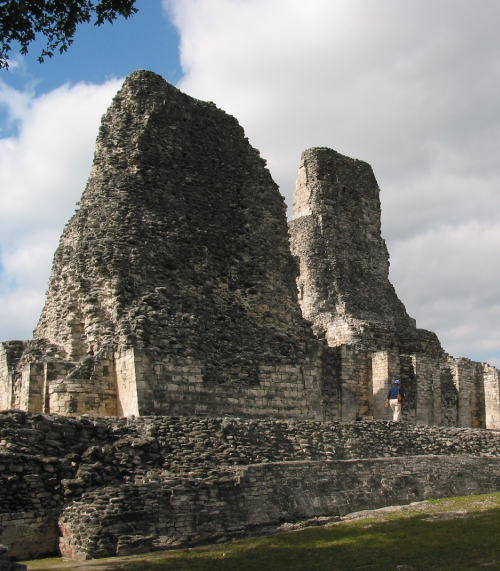
The Calakmul Biosphere Reserve is the wild setting behind one of Campeche’s most remarkable journeys. In the southeast of the state, this immense protected forest surrounds the ancient Maya city of Calakmul and connects the archaeological visit to a living landscape of trees, seasonal water, birds, monkeys, big cats, and long stretches of quiet road. The ruins are the headline attraction, but the reserve explains why the visit feels so different from a stop at a more accessible Maya site.
This is not a national park with a town at the gate, a restaurant at every bend, or a short trail from a car park. Calakmul is remote by design and by geography. The practical base is Xpujil, while the reserve approach begins near Conhuás on Federal Route 186. Once you leave the highway, you are committing to a long forest road with limited services and an early start. That effort is part of the experience, but it also means you need to prepare more carefully than you would for a city attraction.
The reserve protects the largest remaining block of tropical forest in Mexico. UNESCO’s World Heritage description treats the ancient Maya city and protected tropical forests as one connected cultural and natural property, rather than separating the monuments from the ecosystem around them. The Maya city grew within this forest, depended on its water and resources, and represented animals and plants in sculpture, ceramics, ritual, and political imagery. Today, a responsible visit keeps those connections visible: wildlife is not a bonus staged for visitors, and the jungle is not scenery to be crossed carelessly.
 Forest landscape in the Calakmul Biosphere Reserve in Campeche
What the Calakmul Biosphere Reserve protects
The reserve was established in 1989 and covers more than 7,000 square kilometres in Calakmul Municipality. Its forest is not uniform. Low, medium, and taller seasonal forests alternate with clearings, wetlands, savannah-like areas, and old agricultural spaces. The differences can be subtle from a vehicle, but they matter for wildlife. Water is scarce and seasonal in much of the landscape, so aguadas and other natural or modified water sources become important meeting points for animals.
The reserve is part of the wider Selva Maya, a forest system that continues across southern Mexico and into Guatemala and Belize. Thinking of it as an isolated green island understates its importance. Forest connectivity gives animals room to move, allows plants to disperse, and helps populations survive in a region where roads, farming, fire, and settlements have changed the surrounding landscape. The border with Guatemala is not a wildlife boundary, even though it is a national boundary for people and governments.
You may see the reserve described through lists of charismatic species: jaguar, puma, ocelot, margay, jaguarundi, Baird’s tapir, white-lipped peccary, spider monkey, howler monkey, coati, ocellated turkey, toucans, parrots, and many raptors. These species are genuinely associated with the forest, but seeing them is never guaranteed. A visitor who arrives expecting a safari can miss the reserve’s quieter signs: alarm calls, tracks in damp soil, movement high in the canopy, a turkey crossing the road, or a troop of monkeys heard before it is seen.
UNESCO identifies the region as one of the most important areas for mammal diversity in the Maya region. It contains five of Mexico’s six wildcat species and important populations of threatened fauna. That does not mean the reserve is a wildlife park where animals are habituated to people. The opposite is closer to the truth. Most animals avoid vehicles and groups, and the forest can appear empty even when it is full of life.
The Maya archaeological landscape is equally extensive. Calakmul is the best-known site, but the reserve and its surrounding region contain many ancient settlements, roads, reservoirs, platforms, and lesser-known centres. Some have been excavated and opened in limited ways; others remain covered by vegetation. The visible ruins are a carefully managed window into a much larger city and a much larger human landscape.
Where the reserve is and how the access works
The reserve lies in southern Campeche, between the Escárcega area to the west and the Chetumal corridor to the east. Xpujil is the most useful overnight base because it sits on Federal Route 186 near the Río Bec archaeological sites and has the region’s main concentration of basic services. Escárcega is the western transport hub. Campeche City is much farther away and works better as the beginning or end of a multi-day route than as a same-day wildlife base.
The Calakmul access junction is on Route 186 near Conhuás. From the highway, the road enters the forest and continues for many kilometres toward the archaeological zone. The reserve authority describes private transportation as the practical way to reach the area, and its visitor information identifies interpretive trails such as El Tapir, El Ramonal, and the Dormitory of the Monkeys. The specific operating arrangements, guide requirements, and access conditions can change, so confirm them with CONANP, INAH, or your accommodation shortly before travel.
The road is not simply a final transfer between two points. It is where you begin to read the reserve. Forest edges, bends, clearings, road shoulders, and quiet stretches can all produce sightings, particularly early in the day. Do not stop in unsafe places, block traffic, chase animals, or ask a driver to approach wildlife aggressively. The best observation is usually brief and respectful.
A map may make the distance look manageable, but map distance does not show heat, road surface, gate procedures, waiting time, archaeological walking, or the return journey. Build the day around the official opening and entry arrangements rather than assuming you can arrive whenever you like. CONANP currently lists early-morning access for the protected area and says that visitors on the interpretive trails must be accompanied by a certified guide; verify current details because reserve and archaeological-zone rules can differ.
The best base: Xpujil or a more remote stay?
For most independent travellers, Xpujil is the sensible base. It gives you access to food, fuel, cash services, accommodation, and local transport contacts without placing you deep in the forest after dark. It also gives you flexibility: you can spend one day on Calakmul and another on the closer Río Bec sites, or pause if rain makes the reserve road unattractive.
Xpujil is not a resort town. Expect practical rather than polished. Some travellers appreciate the quiet and the early nights; others find the limited evening choice inconvenient. If wildlife, archaeology, and road-trip logistics are the purpose of your trip, its modest scale is an advantage. If you want a wide choice of restaurants, nightlife, or a beach promenade, stay in Campeche City or another coastal base and treat the reserve as a separate expedition.
Remote jungle lodging can reduce the morning transfer, but it does not remove the need to confirm transport, meals, water, electricity, and road conditions. Search current Calakmul-area accommodation on Booking.com and compare Xpujil-area stays on Trip.com before choosing. Do not assume a property shown on a map has a restaurant, fuel, reliable signal, or a vehicle available for the reserve road.
A good overnight plan is usually more valuable than a luxurious one. Arrive before dark, buy water and food in town, confirm the next morning’s departure, and ask whether the access road has recently been affected by rain, fire, fallen trees, or maintenance. If you are travelling without a car, establish the complete return plan rather than arranging only the outbound leg.
Wildlife you might encounter
Monkeys in the canopy
Howler monkeys are among the most noticeable animals because their calls can travel through the forest long before you see them. The sound is deep, distant, and sometimes startling, especially in the early morning when the road and trails are quiet. Spider monkeys are more active and acrobatic, often moving through the upper canopy in groups. Look up, but do so from a safe position and without standing beneath a moving branch or blocking a trail.
Do not feed monkeys or respond by making calls. Food changes animal behaviour, increases conflict, and can make visitors dangerous to approach. Keep snacks sealed and do not leave fruit, wrappers, or bottles in a vehicle with open windows. A guide can help you distinguish a natural call from a nearby group and can point out movement that an untrained eye would miss.
Big cats and smaller predators
Calakmul is known as habitat for jaguars and several other feline species, but a normal visitor should treat a sighting as exceptional. The animals are mostly nocturnal or crepuscular, use large territories, and avoid groups. A quiet morning road may offer tracks or a fleeting glimpse, but there is no reliable public “jaguar spot.” Be suspicious of any promise that guarantees one.
The right approach is to observe without pursuit. Never leave a vehicle to follow a cat, crowd an animal, or encourage a driver to cut across vegetation. If you see tracks, photograph them only from the road or trail and leave them undisturbed. A local naturalist or certified guide can explain whether a print is fresh without turning the moment into a chase.
Tapirs, peccaries, and coatis
Baird’s tapir is one of the reserve’s most important large mammals and one of the hardest to see. Tapirs need water and dense cover, and their movements are often most likely near quiet forest edges or water sources. White-lipped peccaries travel in groups and can be powerful, noisy animals; give them plenty of space and do not attempt close photographs.
Coatis are more adaptable and may appear near areas used by people. That does not make them pets. Keep distance, avoid feeding, and secure food. Animals that learn to associate visitors with snacks can lose their natural wariness and become vulnerable to conflict or injury.
Birds and reptiles
Birding is often the most realistic way to experience the reserve’s wildlife. Ocellated turkeys, curassows, toucans, parrots, motmots, woodpeckers, raptors, and smaller forest birds can appear along the road or around clearings. The colours are easier to appreciate with patience than with a rushed checklist. Carry binoculars if you have them, but do not let equipment make you stop watching the road or trail beneath your feet.
Reptiles are present as well, including snakes and lizards. Most will avoid you. Stay on designated paths, watch where you place your hands, and do not move branches or stones to search for animals. If a snake crosses the road, wait for it to move rather than trying to photograph it from close range.
 An ocellated turkey crossing a road in the Calakmul Biosphere Reserve
How to plan a wildlife-focused visit
A wildlife visit begins before the reserve gate. Choose an overnight base that allows an early departure, prepare food and water the evening before, and keep the schedule loose enough for stops. The hottest part of the day is uncomfortable for walking and often quieter for visible wildlife, while early morning and late afternoon can be more productive. Do not extend the day beyond official access times simply because the forest feels active.
A vehicle with good ground clearance is useful, but a normal reliable car may be adequate when road conditions are good. Ask locally about current conditions rather than assuming a vehicle advertised as suitable for “jungle roads” solves every problem. During and after heavy rain, mud, standing water, fallen branches, and reduced visibility can change the calculation. A spare tyre, full tank, charged phone, paper or offline map, and enough drinking water are sensible precautions.
Guides are valuable for more than animal names. A knowledgeable guide can identify habitat changes, explain Maya use of water and forest resources, interpret calls, and make decisions about where it is safe and legal to stop. If you book an organised excursion, compare what is actually included: transport from which town, reserve and archaeological entries, guide qualifications, food, language, time at the ruins, and the return schedule. Inventory is limited and can be seasonal, so search Calakmul activities on GetYourGuide and Calakmul options on Viator, then confirm the final itinerary directly before paying.
A specialist birding or wildlife guide may work differently from a standard archaeological excursion. They may start earlier, spend longer at one water source, and prioritise listening over covering every monument. Ask whether the activity is inside the reserve, around Xpujil, or on private community land, because the rules, access, and habitat can differ. Do not assume that a tour called “Calakmul wildlife” includes a guaranteed sighting or a visit to the archaeological zone.
Combining the reserve with Calakmul ruins
The strongest reason to visit the reserve is that nature and archaeology are inseparable here. Set aside enough time for the ancient city itself rather than treating it as a photo stop between wildlife drives. The walk can be strenuous in heat and humidity, and the forest makes distances feel longer. Bring water, sun protection, closed shoes with grip, and clothing that dries reasonably quickly.
At the archaeological zone, the central structures rise above the canopy and provide the landscape’s defining views. The climbable areas and trail access can change, so follow current instructions and do not climb a structure that is closed. From the upper levels, the forest looks continuous, but that apparent emptiness is the result of protected habitat, not a lack of life. Listen for birds and monkeys, and allow time to notice how the city’s plazas open and close around vegetation.
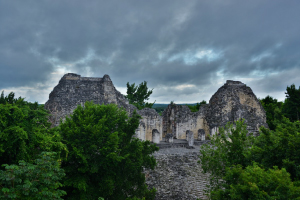 Becán archaeological site on the Río Bec route near Xpujil
The famous stelae and carved monuments deserve slower attention than a quick circuit allows. Their inscriptions and imagery belonged to a political world of rulers, dynasties, alliances, conflict, and ritual. Some monuments have weathered badly, while others are better understood through museum displays and archaeological interpretation. Do not touch carvings, sit on fragile masonry, or use drones without the required permissions.
A full reserve day can combine the approach, wildlife observation, the archaeological zone, and the return to Xpujil, but it is demanding. A two-day plan is more comfortable: use one day for Calakmul and a second for nearby Río Bec sites, community activities, or a slower nature-focused outing. This also gives you a buffer if rain or transport problems affect the first plan.
Nearby archaeological sites and forest options
Xpujil’s location makes it possible to compare several forms of Maya architecture without repeating the same visit. Xpuhil is close to town and known for its distinctive three-towered structure. Becán has a defensive ditch and a different spatial feel. Chicanná is associated with richly decorated architecture, while Balamkú is known for its sculpted frieze. These sites are not substitutes for Calakmul; they are useful companions that show how varied the Río Bec region was.
Visit the smaller sites on a separate day if you want to read details, photograph architecture without rushing, and avoid arriving at Calakmul already tired. Their access conditions and opening arrangements should be checked individually with INAH. Carry cash for rural areas when appropriate, but do not rely on a single assumption about fees or payment methods because procedures can change.
Nature activities beyond the main archaeological road may be organised by local communities or conservation projects. These can include birding, forest walks, interpretation around water sources, and guided observation near Xpujil. The quality and legality of offerings vary, so ask who operates the activity, where it takes place, what permissions apply, how many people join, and how the activity supports the local community. A smaller, slower walk with a clear conservation purpose is usually a better fit than a loud vehicle circuit promising guaranteed wildlife.
Weather, heat, rain, and fire
Calakmul is hot and often humid. Shade helps, but the forest can still feel close and heavy when there is little wind. Start early, drink regularly, and do not wait until you feel unwell to rest. Heat affects children, older travellers, and people unused to tropical exertion especially quickly. Plan short pauses before climbs and keep the group together.
The rainy season can make the forest greener and bird activity rewarding, but it also introduces uncertainty. Storms may affect the road, trails, visibility, and the timing of a return. Wet stone and soil are slippery. Lightning is a reason to leave exposed high points and follow staff instructions. Ask for current road conditions in Xpujil rather than relying only on a forecast for the nearest town.
Dry conditions bring their own concerns. Forest fires can affect air quality, access, and wildlife behaviour. Smoke may travel from distant areas, and official closures can be necessary even when the archaeological zone itself appears unaffected. Check official reserve and INAH notices close to departure and respect a closure without trying an unofficial route.
Mosquitoes and other insects are part of the forest. Use repellent, wear light long sleeves if comfortable, and check yourself for ticks after walking. Choose footwear that protects your feet and has a secure sole. The objective is not to eliminate every encounter with nature; it is to stay comfortable enough to pay attention and safe enough to leave no unnecessary impact.
What to carry into the reserve
Pack more water than you think you will need, food that tolerates heat, sun protection, insect repellent, a small first-aid kit, and a rubbish bag so everything leaves with you. Add binoculars, a power bank, offline maps, and a headlamp if your accommodation or transport plan could involve an early departure. Keep identification and money protected from rain.
Wear clothes suited to walking rather than photographs alone. A hat, breathable shirt, and closed shoes are more useful than sandals on uneven forest paths. Long trousers can reduce scratches and insect exposure. Avoid strong perfume, loud speakers, drones, and disposable items that can become litter.
Do not count on buying lunch, drinks, fuel, or medication inside the reserve. Services may be absent or limited, and a mobile signal may not be available. Fill the tank and buy supplies in the last practical town. If you are travelling with children, explain that toilets, shade, and snacks are not available at every point and plan breaks before entering the remote section.
Responsible wildlife watching
Responsible observation is simple but non-negotiable. Stay on authorised trails and roads, follow guide and ranger instructions, keep voices low, and never feed animals. Do not use playback calls around birds or mammals unless a qualified research or conservation activity specifically permits it. Playback can disrupt feeding, breeding, and territorial behaviour, especially when many visitors repeat it.
Give animals the right of way. If a group blocks a road, wait quietly. Do not surround it with vehicles or try to force movement. If an animal appears stressed, back away. Keep dogs out of protected forest unless regulations explicitly allow them; a pet can disturb wildlife or become vulnerable itself.
Photography should preserve distance and habitat. A long lens or binoculars is better than stepping closer. Do not place cameras on monuments, remove leaves to make a “clean” composition, or take souvenirs. The forest’s value depends on thousands of small interactions remaining undisturbed, not on one perfect photograph.
Tourism can support conservation and local livelihoods, but only when visitors pay attention to how activities operate. Choose guides who explain rules, carry waste out, use established routes, and speak realistically about sightings. Be cautious with operators who promise rare animals, encourage touching wildlife, or treat the reserve as an off-road playground.
Is the Calakmul Biosphere Reserve worth the effort?
It is worth the effort if you want a trip built around forest, archaeology, and patience. The reserve offers a sense of scale that a short attraction cannot reproduce. You may spend hours seeing no large mammal and still leave with a better understanding of how the Maya city was embedded in its environment. The road is long, the heat is real, and the services are limited; those are not flaws to hide but conditions to plan for.
It may not suit a traveller with only one free afternoon, a strong dislike of long drives, or a preference for guaranteed wildlife and easy facilities. Campeche City, Edzná, or a smaller coastal stop may be a better use of limited time. Do not add Calakmul simply because it appears as a pin on a route map. Add it when the journey itself matches what you want from the trip.
The most balanced plan is to sleep near Xpujil, leave early, follow current reserve and archaeological rules, combine the ruins with careful wildlife observation, and keep a second day available for the Río Bec area or a local nature activity. Check accommodation on Booking.com, on Trip.com, and compare only tours whose meeting point and inclusions you can verify. In Calakmul, a slower itinerary is not wasted time: it is the best way to see that the forest is the destination, not just the road to the ruins.
GuideCalakmul Travel Guide: Maya City Above the JungleCalakmul is a vast Maya city inside a biosphere reserve near Campeche's southern border, best approached with an overnight near Xpujil rather than a rushed day from the capital. This guide explains driving times, reserve fees, what to expect at Structure II and the stelae groups, wildlife etiquette, and how Calakmul compares to easier day trips like Edzná. It covers dry-season road notes, guide options, and how to slot Calakmul into a longer Campeche itinerary when you have two or more days for the jungle south.Explore
A practical decision guide
Choose an overnight in Xpujil when you want the simplest balance of services, archaeology, and reserve access. Choose a more remote lodging option only when it clearly provides the transport, food, and support you need. Choose a rental car when you are comfortable with remote driving and want to combine several sites. Choose a driver or guide when navigation, road fatigue, or wildlife interpretation matters more than having complete control of the schedule.
Choose a single long day only when time is genuinely limited and you have checked the departure and return details. Choose two days when wildlife, photography, children, heat, or rain makes flexibility important. Choose the dry season for more predictable road conditions, but remember that heat and visitor demand can be higher. Choose the green season when you accept weather uncertainty and will confirm conditions locally.
Whatever option you choose, keep the central fact in view: Calakmul is a protected living forest with an ancient city inside it. The reserve is not a backdrop for a guaranteed encounter, and wildlife is not part of the ticket. Arrive prepared, move quietly, and let the landscape set the pace.
Frequently asked questions
Can you visit the biosphere without visiting the ruins?
Yes, but access depends on the specific reserve area, trail, community activity, and current regulations. The archaeological zone is only one part of the protected landscape. Confirm where a nature activity takes place and whether a certified guide or special transport is required.
Will you see a jaguar?
Almost certainly not on a normal visit, and no responsible operator can guarantee one. The reserve is important jaguar habitat, but the cats are elusive and avoid people. Treat tracks, calls, and a distant glimpse as meaningful evidence of a healthy forest rather than expecting a staged sighting.
Is Calakmul safe for independent travellers?
The main challenge is remoteness rather than an urban tourist environment. Prepare your vehicle, fuel, water, navigation, weather plan, and return timing. Follow official rules, avoid travelling after dark on the reserve road, and tell your accommodation when you expect to return.
Should you stay in Campeche City or Xpujil?
Stay in Xpujil for a practical Calakmul visit. Stay in Campeche City for the walled centre, Gulf waterfront, and a broader choice of urban services. A route that uses both bases is more realistic than trying to make the reserve a rushed day trip from the capital.
Can you bring a drone?
Do not fly a drone without confirming the permissions required by the archaeological and protected-area authorities. Archaeological sites and protected forests have separate conservation and safety concerns. If you cannot obtain the necessary authorisation, leave the drone packed away.
What is the single best preparation?
Confirm the next morning’s access and transport locally the evening before, then leave early with water, food, fuel, and an itinerary that allows delays. That one step prevents many of the problems caused by treating a remote reserve like an ordinary attraction.
Calakmul rewards visitors who accept its scale. Come for the ancient city, but make room for the forest, the calls above the road, the long pauses, and the possibility that the most memorable wildlife encounter will be a sign rather than a photograph.