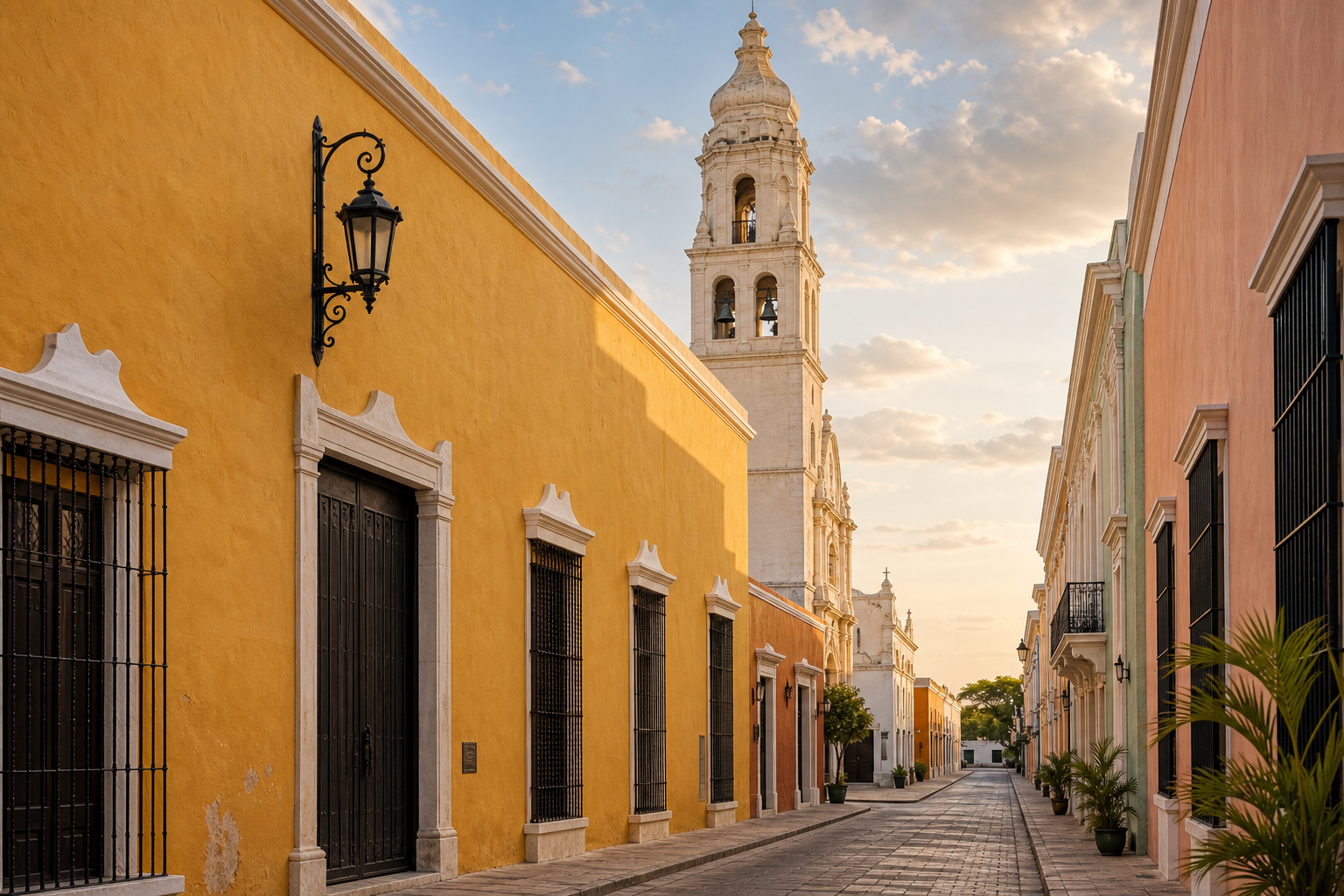

Campeche’s historic center, the Centro Histórico, is a compact UNESCO World Heritage site where centuries of history unfold along pastel-colored streets and imposing stone walls. Unlike sprawling cities that require cars or transit to see the sights, Campeche’s walled city is best explored on foot. Everything of interest lies within a 2-kilometer radius, making it ideal for a leisurely self-guided walking tour that fits into a morning or afternoon.
This guide outlines a relaxed walking route covering the highlights of the Centro Histórico in about 2–3 hours, with flexibility to linger at spots that catch your eye. The route avoids retracing steps and focuses on the most significant plazas, churches, bastions (fortified corners of the wall), gates, and the picturesque Calle 59. You’ll finish near the waterfront, where you can optionally continue to the malecón for sunset views. No car, tour guide, or extensive planning is needed—just a comfortable pair of shoes, water, and curiosity.
Your Route Through Four Centuries of Campeche
Begin at the Plaza de la Independencia, the geographic and social heart of the walled city. From there, head east along Calle 59 to admire the colorful facades before doubling back west to visit key bastions and gates. The route loops through the southern and western sections of the wall, then returns east via the northern bastions before exiting near the Puerta de Mar (Sea Gate) onto the malecón. Total walking distance is approximately 3–4 kilometers, easily manageable at a leisurely pace with stops.
Feel free to adjust the order based on your interests or opening hours of specific sites. If you prefer to start with the bastions, begin at Puerta de Tierra and work clockwise. The route described below assumes a counterclockwise loop starting at the main plaza.
The Stops That Bring the Walled City to Life
Plaza de la Independencia and the Cathedral
The plaza is the city’s main square, shaded by laurel trees and bordered by important buildings. Construction began in the mid-16th century, and the space has served as a marketplace, parade ground, and gathering spot ever since. Today, it’s where locals enjoy evening paseos, vendors sell snacks, and tourists orient themselves.
The Catedral de Nuestra Señora de la Inmaculada Concepción anchors the eastern side. Its twin bell towers and restrained Baroque facade date primarily to the 17th and 18th centuries, though the foundation is one of the oldest on the peninsula (1540). Step inside for cool relief and to see the simple, dignified interior—note the side chapel housing the Black Christ of San Román, a revered ebony crucifix linked to a neighboring barrio.
On the plaza’s north side, the Centro Cultural Casa Número 6 offers a free glimpse into an 18th-century merchant’s home. Period furniture, hand-painted Puebla tiles, and an open interior courtyard reveal how Campeche’s elite lived during its prosperous trading era. Allow ten minutes to appreciate the scale and layout.
Calle 59: Campeche in Full Colour
Calle 59 runs north-south through the centro, pedestrian-only for several blocks. Its pastel facades—shades of terracotta red, sunshine yellow, sky blue, soft green, and blush pink—are the result of a 1990s restoration project that matched hues to historical records from the 1700s. The effect is vivid yet authentic, especially in the golden hours just after sunrise or before sunset.
Most ground floors hold restaurants, café-bars, and small hotels. This is the natural place for lunch or a coffee break. Note that the street is more heavily patrolled than others, but still exercise normal precautions with valuables.
Baluarte de la Soledad
Continuing south along the wall from Calle 59, you’ll reach the Baluarte de la Soledad on the southwestern corner. This bastion houses the Museum of Maya Architecture, featuring stelae from Edzná, Calakmul, and Chenes regions, intricate Puuc-style Chaac masks, and jade artifacts. The museum charges a modest entrance fee (around 75 MXN) and is closed on Mondays. Climbing to the top of the bastion’s walls provides panoramic views of the city’s red-tiled roofs.
Baluarte de Santiago and the Botanical Garden
Just west of La Soledad, the Baluarte de Santiago contains the Xmuch’haltún Botanical Garden, a tropical oasis nestled inside the fortress walls. Shaded pathways wind among native plants, offering a tranquil break from the sun. Admission is free, and the garden is a pleasant spot to rest for 15–20 minutes before continuing along the wall.
Baluarte de San Pedro and San Juan
Further west, the Baluarte de San Pedro and Baluarte de San Juan are smaller, quieter strongholds. San Pedro often hosts rotating art exhibitions, while San Juan provides direct access to a well-preserved section of the original wall—ideal for understanding the fortifications’ height and thickness. Both are free to visit and typically require only 10–15 minutes each.
Puerta de Tierra: The Land Gate
At the northwestern corner of the walled city stands the Puerta de Tierra, the best-preserved of the original city gates. Built in 1732, its defensive stonework includes embrasures, gunpowder storage alcoves, machicolations, and a ravelin fronted by a dry moat. The gate is open daily (roughly 8:00–21:00) and free to enter. A guard can often unlock the staircase to the parapet walk—climb it for the clearest single view of the wall’s purpose, looking west toward the cathedral towers and east toward the modern city.
On Fridays and Saturdays at 20:00, the Puerta de Tierra hosts the sound-and-light show El Lugar del Sol, dramatizing the pirate attacks that shaped Campeche’s history. Entry is free, but seating is limited; arrive early-arrival only.
Baluarte de San Carlos
Heading east along the northern wall, you’ll arrive at the Baluarte de San Carlos on the northeast corner. This bastion is home to the City Museum, which covers Campeche’s colonial history, pirate raids, and includes a scale model of the original walled city. The rooftop offers excellent views over the centro and the Gulf. Entrance is free, and the museum is worth 30–45 minutes of your time.
Step Out Toward the Gulf at Puerta de Mar
From San Carlos, descend toward the eastern wall to reach the Puerta de Mar (Sea Gate). This reconstructed gate frames views of the Gulf of Mexico and marks the historic entry point for sea-borne goods. While not as imposing as the land gate, it provides a pleasant transition to the malecón.
Add a Gulf Sunset on the Malecón
If time and energy permit, continue south along the malecón from Puerta de Mar. The waterfront promenade features benches, sculptures, exercise areas, and shaded spots. It’s noticeably cooler than the walled streets thanks to the sea breeze—ideal for an evening stroll. Street-food stalls selling marquesitas, elotes, and fresh coconut appear after sunset. The best photo spot for the giant “CAMPECHE” letters and sunset over the Gulf is a few blocks south of the gate.
Walk the Historic Centre Well
Timing: Start your walk between 8:00 and 9:00 AM to avoid the midday heat, or begin after 4:00 PM for cooler temperatures and golden-hour light on Calle 59. The full route takes 2–3 hours at a leisurely pace with stops; add another hour if you include the malecón extension.
What to Bring: Comfortable walking shoes with good grip (cobblestones can be uneven and slippery when wet), a hat, sunscreen, plenty of water, and cash for small entrance fees or museum donations. While many establishments accept cards, smaller vendors and bastion museums often prefer pesos.
Opening Hours: Most sites in the centro are accessible during daylight hours. Bastion museums typically open around 9:00 or 10:00 AM and close by 5:00 or 6:00 PM. The Puerta de Tierra guard may not always be available to unlock the parapet walk, but the view from the gate itself is still worthwhile.
Safety: The centro is heavily patrolled by tourist police and feels safe day and night. Keep an eye on your belongings in crowded areas like Calle 59 and the plaza, as you would in any tourist destination. Evening walks along the malecón are popular with families and couples.
Accessibility: The route involves walking on uneven stone and occasional stairs to bastion parapets. Those with mobility issues may find some sections challenging, but the main plazas, Calle 59, and the malecón are generally accessible.
Taste Campeche Along the Route
The Centro Histórico offers plenty of options for refreshment along or near the walking route.
On Calle 59: Numerous café-bars and restaurants line this street, serving everything from coffee and light bites to full meals. Look for places with outdoor seating to enjoy the colorful facades.
Near the Plaza: Several restaurants face the plaza, offering regional dishes like pan de cazón (layered tortilla casserole with shark meat) and fresh seafood. Casa Vieja del Río, on the plaza’s north side, is a reliable choice for moderate prices.
Mercado Principal: A few blocks south of the plaza, this bustling market is ideal for an authentic, affordable meal. Food stalls serve panuchos, salbutes, tamales, and fresh fruit with chili (roughly 70–110 MXN). Visit before midday to avoid the intense heat inside the covered market.
On the Malecón: If you extend your walk to the waterfront, you’ll find seafood restaurants and casual stalls serving camarones al mojo de ajo and other coastal favorites. The malecón comes alive in the evening with families enjoying the breeze.
Sleep Inside the Story
To make the most of your walking tour, consider staying inside the walls. Hotels in the Centro Histórico put you steps away from the plaza, Calle 59, and the bastions, allowing you to start your walk early and return easily for breaks. Options range from budget-friendly guesthouses to restored colonial haciendas. Staying centrally also means you’re close to the ADO bus terminal (about 10–15 minutes by taxi) and the Tren Ligero light rail station (if arriving via the Tren Maya).
Turn the Walk into a Full Campeche Day
The Centro Histórico walking tour pairs well with other Campeche experiences:
- Museums: After your walk, visit the Museo Arquitectónico Maya Campeche (inside Baluarte de la Soledad) or the Museo Arqueológico de Campeche (in Fuerte de San Miguel, a short taxi ride away).
- Food Tours: Combine your walk with a guided food tasting to sample local specialties like pan de cazón and relleno negro.
- Evening Entertainment: Check if the Puerta de Tierra sound-and-light show is running (Fridays and Saturdays at 20:00) for a cultural finale to your day.
- Day Trips: Use the Centro Histórico as your base for half-day trips to Edzná ruins (about 45 minutes by car) or the beaches of Seybaplaya (about 30 minutes).
Why Campeche Is Best Discovered on Foot
Campeche’s Centro Histórico is a rare gem where the past feels tangible yet the present vibrates with life. Walking its streets at your own pace lets you absorb the layers of history—from Maya foundations to colonial grandeur to pirate legends—without the rush of a guided tour. Whether you have two hours or a half-day, this self-guided route offers a flexible, enriching way to connect with the soul of Mexico’s only fortified colonial city. Take your time, let the colorful streets guide you, and discover why Campeche’s walled center has earned its place as a UNESCO World Heritage site.