
Discovering Campeche's Living UNESCO Heritage
Campeche's historic center isn't just a preserved colonial town—it's a living, breathing city where centuries of history unfold along walkable streets, behind formidable stone walls, and within vibrant plazas. Designated a UNESCO World Heritage site in 1999, the Ciudad Amurallada (Walled City) of San Francisco de Campeche stands as Mexico's only fortified historic center, offering visitors an authentic glimpse into Caribbean colonial life without the crowds of more famous Mexican destinations.
Unlike reconstructed heritage sites elsewhere, Campeche's historic center remains a functioning neighborhood where locals live and work among the very structures that earned it international recognition. The pastel-hued buildings lining cobblestone streets tell stories of maritime trade, pirate attacks, and cultural fusion, while the imposing fortifications that once repelled buccaneers now frame daily life in this Gulf of Mexico port city.
Why Campeche Earned UNESCO Recognition
UNESCO recognized Campeche for two complementary reasons that remain evident today. First, the city exemplifies the urban planning model of a Baroque colonial port town, featuring its distinctive checkerboard street grid that facilitated both defense and daily commerce. Second, and more visibly striking, its extensive fortification system—designed specifically to protect against Caribbean pirate raids—represents a remarkable example of military architecture adapted to the New World.
What makes Campeche special among Mexico's UNESCO sites is how these defensive elements integrate with urban life. The walls aren't merely preserved monuments; they form the literal boundaries of neighborhoods where children play along bastion walls and grandparents chat in plazas that have served as community gathering points since the 16th century. This living continuity between past and present earned Campeche its place on the global heritage list.
Walking the UNESCO Streets
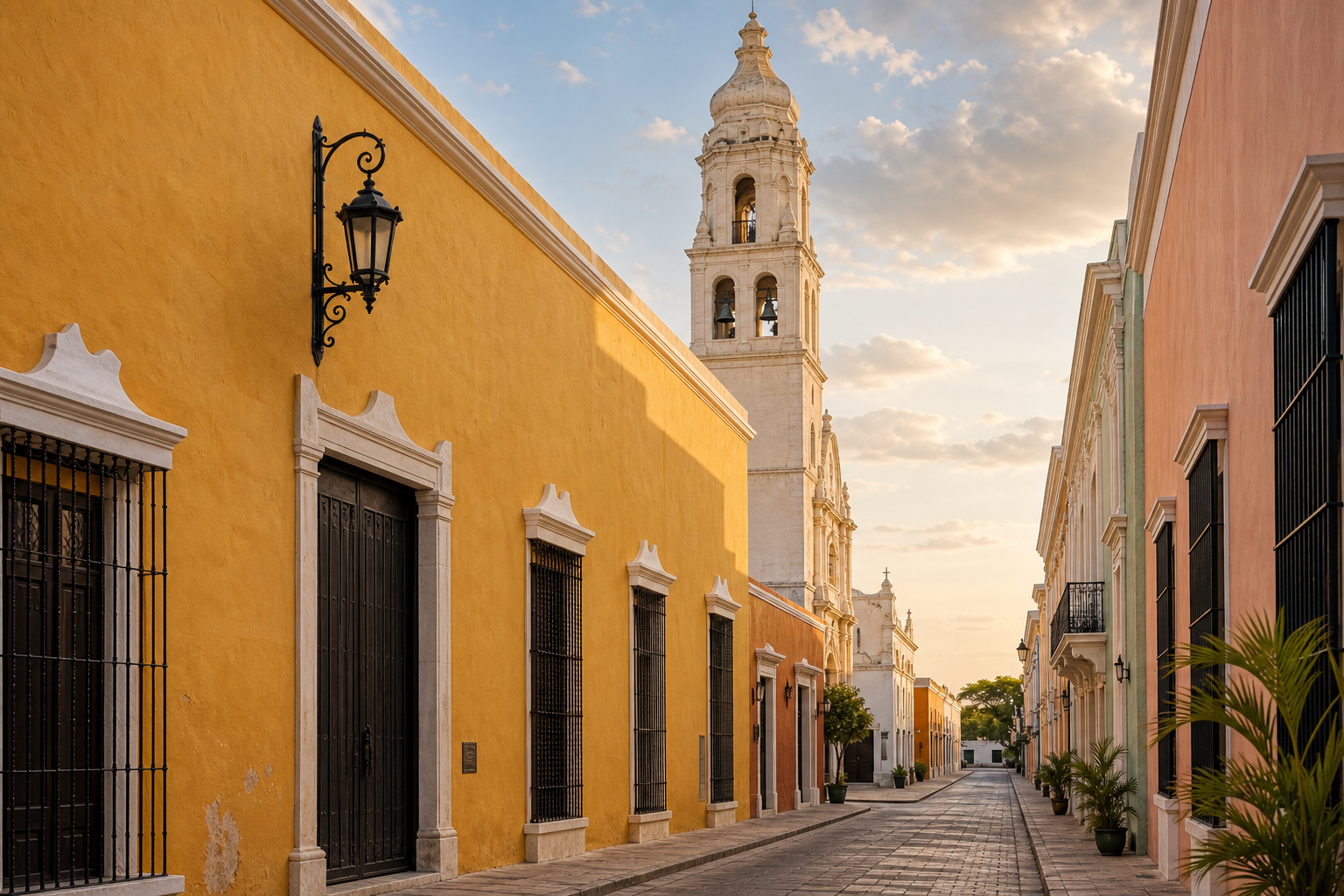
The true character of Campeche's historic center reveals itself at street level, where pastel facades and cobblestone underfoot create an immersive historical experience. While the entire centro histórico follows the original Spanish grid plan, certain streets have become synonymous with the city's charm.
Calle 59: The Pedestrian Spine
Arguably Campeche's most famous thoroughfare, Calle 59 runs approximately 600 meters from Puerta de Mar (Sea Gate) to Puerta de Tierra (Land Gate), forming the primary pedestrian artery through the walled city. This vibrant corridor isn't just a convenient route—it's a destination in itself. Lined with meticulously restored colonial buildings painted in cheerful hues of pink, yellow, blue, and green, Calle 59 hosts the highest concentration of restaurants, bars, art galleries, and boutique shops in the historic center.
What makes Calle 59 special is its evolution from a purely residential colonial street to today's bustling pedestrian promenade. By day, visitors admire the intricate architectural details of 17th and 18th-century homes; by night, the street transforms as restaurant tables spill onto the cobblestones under strings of lights, creating one of Campeche's most beloved evening atmospheres. Notable landmarks include the delicate Capilla de San Francisquito and the iconic statue of "La Pregonera"—a tribute to local women who once sold mangos from baskets on these streets.
Parallel Thoroughfares: Calles 55 and 53
Running parallel to Calle 59, Calles 55 and 53 offer complementary perspectives on colonial life. Calle 55 provides a quieter alternative with its mix of residential buildings and smaller establishments. Calle 53 connects several important plazas and provides access to the Campeche Cathedral's side entrances. Together, these three parallel streets create the walkable heart that makes exploring Campeche's centro histórico so rewarding on foot.
The Mighty Walls: Fortifications Against Pirates
Perhaps the most striking feature distinguishing Campeche from other colonial Mexican towns is its extensive fortification system. Constructed primarily between 1686 and 1704 in response to relentless pirate attacks, the original walls stretched an impressive 2,560 meters (over 1.5 miles) in an irregular hexagon shape designed to follow the coastline and maximize defensive capabilities.
Built using local limestone (cantera) and a mortar called sascab, the walls represented a significant engineering feat. While approximately 500 meters of the original wall remain today—primarily along the northern and eastern sections—these surviving segments powerfully convey the scale and purpose of the original defenses.
Walking along the remaining wall sections offers unique vantage points over both the historic interior and the modern city beyond. In places where the full height is preserved, visitors can walk along the former patrol path (adogado) that guards once used to scan the horizon for approaching sails—a tangible connection to the constant vigilance required in this Caribbean port.
The Eight Bastions: Cornerstones of Defense
At the corners of Campeche's hexagonal wall system stood eight bastions (baluartes), projecting outward structures that allowed defenders to fire along the walls' faces, eliminating blind spots where attackers could seek shelter. Each bastion bears the name of a saint and tells its own story of adaptation from military fortification to civilian use.
Baluarte de San Carlos: The Pioneer Fortress
Constructed first among the bastions beginning in the 1660s, San Carlos now houses the City Museum, offering exhibits on Campeche's colonial history and maritime heritage.
Baluarte de San Francisco and San Juan: Gate Guardians
These two bastions flank Puerta de Tierra (Land Gate) and were critical for protecting the city's main land entrance. San Juan currently hosts temporary cultural exhibitions, while San Francisco forms part of the Puerta de Tierra light and sound show venue.
Baluarte de la Soledad: The Largest Fortress
The largest of the eight bastions, La Soledad protects Puerta de Mar (Sea Gate) and now contains the Museum of Maya Architecture, featuring regional architectural styles from Chenes, Río Bec, Puuc, and Petén areas.
Baluarte de Santa Rosa: Cultural Space
Once the first bastion completed, Santa Rosa now houses the Campeche Picture Gallery, showcasing works by local artists.
Baluarte de San Pedro: Former Inquisition Prison
This bastion served as a prison during the Spanish Inquisition and now offers visitors a glimpse into this darker chapter of colonial history through preserved cells and exhibits.
Baluarte de Santiago: Botanical Garden
Reconstructed as the Xmuch'haltún Botanical Garden, Santiago features native regional plants in a peaceful setting perfect for quiet contemplation.
Baluarte de San José: The Lost Bastion
While San José was largely demolished in the 20th century to make way for urban development, its historical importance as part of the original defensive system remains significant to understanding Campeche's complete fortification network.
The Gates: Entrances to a Fortified City
Puerta de Tierra: The Main Land Entrance
Constructed in 1732, Puerta de Tierra features original elements including gunpowder storage chambers, embrazures (cannon openings), and a surrounding moat. The interior houses historical artifacts including an 18th-century bronze cannon and a 1705 map of the walled enclosure. Visitors can climb to the top of the adjoining wall for panoramic views of Calle 59 and the historic center. The gate is famous for its Friday and Saturday evening "Lugar del Sol" light and sound show, which tells the story of colonial Campeche.
Puerta de Mar: The Sea Gate
Built in 1710 to protect the city's main maritime entrance, Puerta de Mar sits between the baluartes of La Soledad and San Carlos. While the original structure was destroyed in the 19th century, the current reconstruction occupies the historical site and connects to the adjacent wall system, allowing visitors to appreciate its strategic importance as the gateway for maritime trade and travel.
The Heart of the City: Plaza de la Independencia
No visit to Campeche's historic center is complete without experiencing the Plaza de la Independencia, locally known as the Parque Principal. This spacious green space has served as the city's main square since its founding in 1540, evolving from a military parade ground (Plaza de Armas) to today's vibrant community gathering place.
Surrounded by important buildings including the Campeche Cathedral, City Hall, and the historic Casa No. 6 cultural center, the plaza features a picturesque central kiosk that hosts musical performances and community events. The surrounding colonial buildings—painted in the characteristic pastels of Campeche—create a beautiful architectural frame for daily life in the city.
The plaza truly comes alive in the late afternoon and evening as temperatures cool, filling with families enjoying ice cream, couples strolling hand-in-hand, and groups playing traditional games. Early mornings offer softer light for photography and a quieter atmosphere for those seeking contemplation amidst the colonial beauty.
GuideBaluarte de la Soledad & Museo de Arquitectura Maya: Visitor GuideA practical guide to Baluarte de Nuestra Señora de la Soledad and the Museo de Arquitectura Maya in Campeche’s walled centre, including its fortifications, Maya collections, access, timing, and how to combine the visit with a walk through the historic city.Explore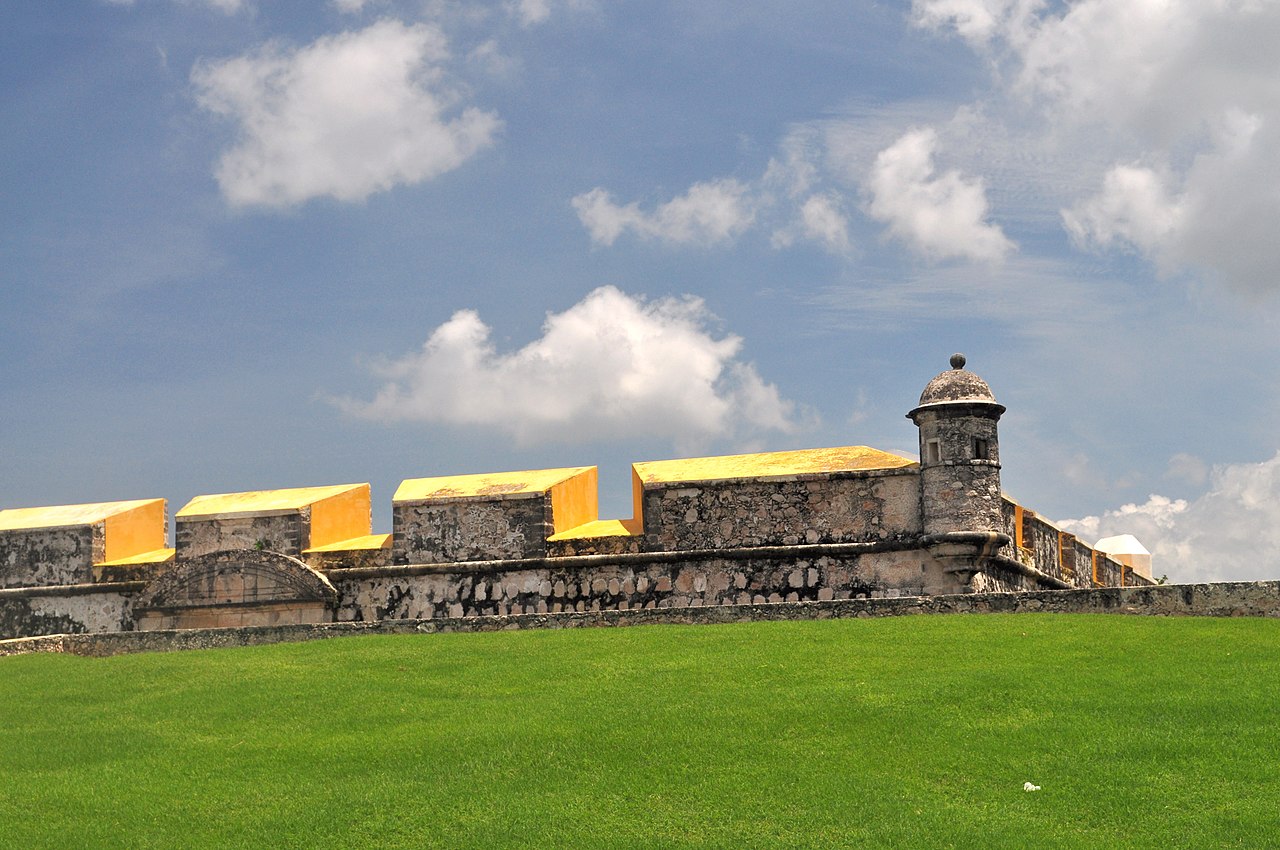
Practical Information for Visitors
Best Time to Visit:
Campeche has a tropical climate with a distinct rainy season (June to October) and dry season (November to May). The most pleasant time to explore the historic center is during the dry season, particularly November through February when temperatures are cooler and rainfall is minimal. Early mornings (7-9 AM) and late afternoons (4-6 PM) offer the most comfortable temperatures for walking and the best light for photography.
Getting Around:
The historic center is best explored on foot. Most attractions are within easy walking distance of each other, and the compact, flat layout makes for pleasant strolling. Comfortable walking shoes are essential for navigating the cobblestone streets. Taxis are readily available and inexpensive for trips to sites outside the walled city, such as the forts of San Miguel and San José el Alto.
What to Bring:
- Sunscreen and a hat (the sun can be intense, even on cloudy days)
- Comfortable walking shoes with good grip for cobblestone surfaces
- Light, breathable clothing (cotton or linen works best in the humidity)
- Insect repellent (particularly important during rainy season evenings)
- A reusable water bottle to stay hydrated
- Cash for smaller establishments that may not accept credit cards
Photography Tips:
- Early morning (just after sunrise) offers soft, warm light with fewer crowds
- Late afternoon (golden hour, roughly 4-6 PM) provides beautiful long shadows and warm tones
- The Plaza de la Independencia is particularly photogenic in the evening when buildings are illuminated
- For wall and bastion shots, mid-morning light often provides the best illumination without harsh shadows
Respectful Visiting:
Remember that the historic center is a living neighborhood. Keep noise levels reasonable, especially early mornings and late evenings. When visiting religious sites like the cathedral, dress modestly (shoulders covered, no shorts). Always ask permission before photographing individuals, particularly in more residential areas.
Why Campeche's Heritage Matters Today
Campeche's UNESCO-recognized historic center offers more than just a picturesque backdrop for vacation photos—it provides valuable lessons in urban resilience, adaptive reuse, and community continuity. The very walls that once kept pirates out now help define a neighborhood where the past isn't just remembered—it's experienced daily in the rhythm of footsteps on cobblestone, the murmur of conversations in plazas, and the quiet pride of residents who call this extraordinary place home.
What makes Campeche particularly special is how successfully it balances preservation with modern life. Unlike some heritage sites that feel like museum pieces, Campeche's centro histórico functions as a genuine neighborhood where children attend school in historic buildings, families celebrate birthdays in centuries-old homes, and local entrepreneurs run businesses in spaces that have served the community for generations.
This living continuity ensures that Campeche's historic center remains authentic and relevant—not a frozen snapshot of the past, but an evolving community that honors its heritage by continuing to live within it. The investment in maintaining these structures isn't merely about tourism economics; it's about preserving cultural identity and community cohesion in a rapidly changing world.
Whether you're tracing the same stones that once gripped the hands of Spanish soldiers, savoring coffee in a plaza that has hosted community gatherings for nearly five centuries, or simply getting delightfully lost in the pastel-hued streets, Campeche's UNESCO-recognized historic center offers a rare opportunity: to walk through living history where every stone tells a story and every corner invites discovery.
Words: 1,998