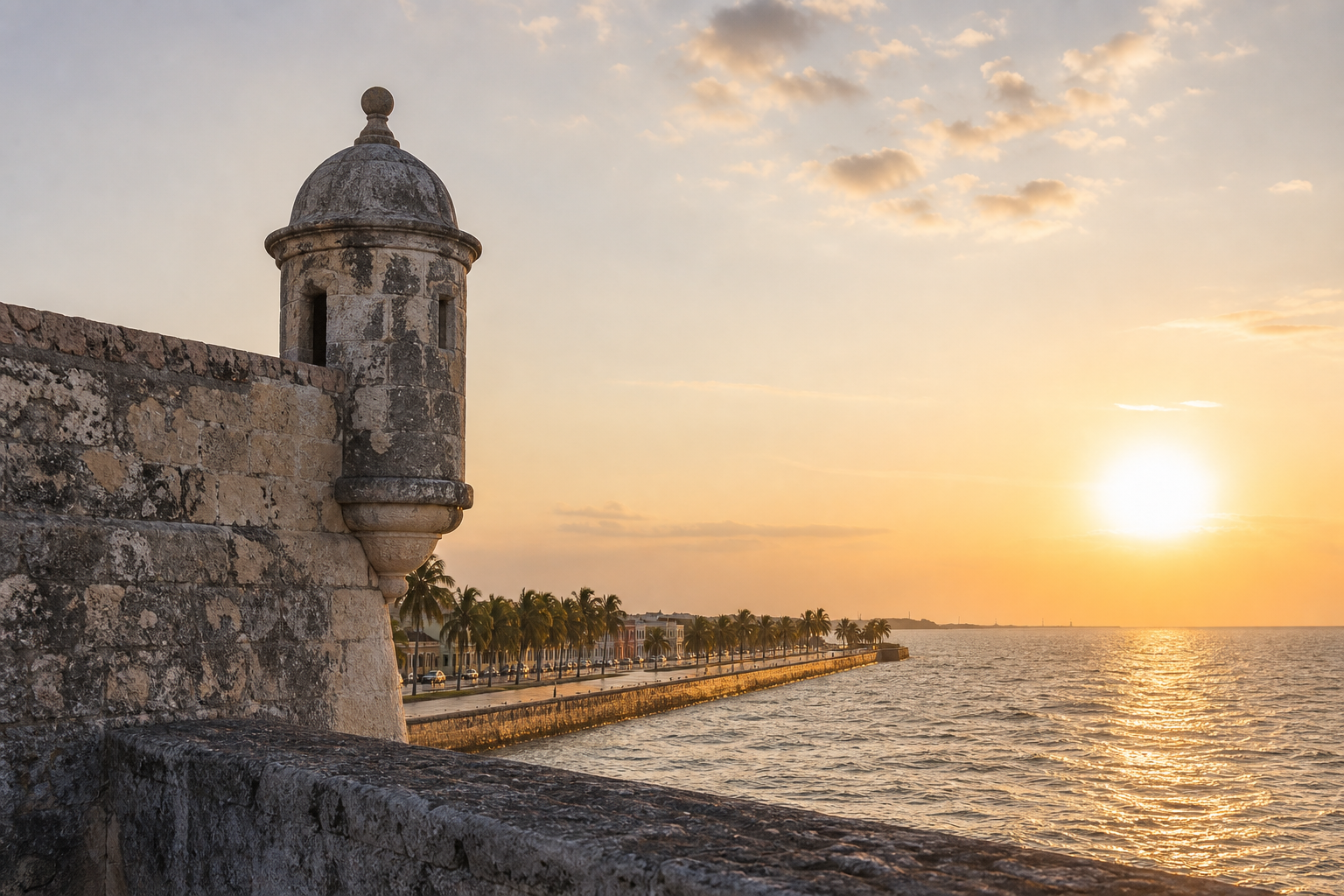

Campeche sits at the safest end of Mexico's risk spectrum. The state consistently ranks alongside Yucatán as the two safest in the country — the only two U.S. State Department Level 1 destinations, meaning travelers need only exercise normal precautions. That is a meaningful distinction when many other Mexican states carry "reconsider travel" or "do not travel" advisories.
But "safe" is not a blanket, and understanding the actual risk profile helps you travel smarter. Here is what safety looks like on the ground in Campeche.
The Numbers in Context
Campeche state recorded approximately 61 homicides in 2025, giving it a rate of roughly 6.4 per 100,000 people — well below the Mexican national average and comparable to many mid-sized U.S. cities. The violence that does occur tends to be concentrated in specific corridors linked to drug trafficking logistics along the Gulf coast, not in the tourist-facing historic center or archaeological zones.
The U.S. State Department's Level 1 classification for Campeche reflects a simple reality: the state lacks the cartel territorial competition that drives violence in other regions. Its distance from the U.S. border and major trafficking corridors works in its favor.
The Walled City: Where You Will Spend Most of Your Time
San Francisco de Campeche's historic center — the UNESCO-protected centro amurallado — is compact, well-lit, and heavily patrolled. Police presence is visible throughout the day, particularly around the main plazas, Calle 59, the malecón, and the fortress museums. Tourist police (Policía Turística) operate in the center and can assist visitors with directions as well as emergencies.
Walking during the day feels relaxed. Locals and visitors move freely through the colonial streets, and the compact layout means you are rarely far from a populated area. Evening is similarly calm — restaurants and bars in the centro stay active until around 11 p.m., and the malecón draws couples and families after dark without concern.
Standard urban precautions apply: keep phones out of sight in crowded markets, wear your bag across your body, and stay aware of your surroundings. These are habits for any city, not specific warnings for Campeche.
After Dark
Campeche is not a late-night city. Activity concentrates in and around the historic center, and streets outside this zone empty quickly after 11 p.m. The practical advice is straightforward — plan your evening so you are back in the centro by midnight, or arrange registered transportation (taxi or hotel car) if you are going further.
Avoid peripheral residential neighborhoods after dark, not because of targeted threats to tourists but because these areas have less lighting, fewer people, and a different risk profile. There is no tourism reason to visit them at night anyway.
Archaeological Sites and Rural Areas
Edzná, Calakmul, and the Río Bec ruins are safe to visit during normal tourist hours. Organized tours are the most straightforward option and widely available from Campeche City and Xpujil. If you are driving independently, stick to marked roads, fuel up before leaving the main towns, and do not wander off the established tourist circuit into remote jungle areas.
Calakmul's remote location means long drives on single-lane roads. The risk there is traffic and road conditions, not crime. Drive during daylight, carry water and extra fuel, and let someone know your route if you are going independently.
Petty Crime: The Real Concern
The primary safety risk for visitors is low-level opportunistic crime — pickpocketing in crowded markets, bag snatching, or theft from unattended belongings on the beach. This is manageable with basic vigilance:
- Keep valuables in your hotel safe when possible.
- Carry only the cash you need for the day.
- Use a cross-body bag in markets and bus stations.
- Do not leave phones or bags unattended at outdoor restaurants or on the beach.
These are not Campeche-specific warnings. They apply in any tourist destination worldwide.
Solo Travelers and Women Traveling Alone
Campeche is considered a safe destination for solo travelers, including women traveling alone. The city's small scale, visible police presence, and low violent crime rate make solo exploration practical. Standard precautions for women traveling alone in Mexico apply: use registered transportation at night, avoid isolated areas after dark, and do not accept drinks from strangers.
Locals in southeastern Mexico are accustomed to seeing tourists and generally pay little attention to people traveling independently.
Transport Safety
The ADO bus station area warrants basic awareness — as with bus stations anywhere, keep your belongings close and use only official taxis or pre-arranged transfers when arriving after dark. Within the city, registered taxis (sitio taxis) are safer than street hails. Ride-hailing apps operate in Campeche City, though availability can be inconsistent.
If you are renting a car, the main highways in Campeche are in reasonable condition. Avoid driving at night outside the city — wildlife, unlit vehicles, and uneven road surfaces make it less safe than daytime driving.
Emergency Contacts
Save these numbers before you travel:
- Emergency (Police, Fire, Ambulance): 911
- Tourist Police: +52 981 811 9901
- Civil Protection: +52 981 816 7733
- Red Cross: +52 981 811 9466
- Hospital General de Campeche: +52 981 811 9100
- U.S. Consulate (Mérida, nearest): +52 999 942 5700
Hospital General de Campeche is located on Calle 10 between Avenida Circuito and Avenida Central. For serious medical emergencies, medevac to Mérida (approximately two hours by road) may be required.
The Bottom Line
Campeche does not require the defensive instincts that travel in other parts of Mexico demands. The walled center, the malecón, the main archaeological sites, and the tourist-facing towns all sit well within the "normal precautions" category. Travel with common sense, keep your belongings secure, and you will find it a genuinely relaxed destination.
The biggest practical risks in Campeche are not crime-related. Heat and sun exposure, driving conditions on rural roads, and hurricane season (June through November) deserve more attention than personal safety. Prepare for those, and Campeche rewards with one of the most tranquil travel experiences in Mexico.