Campeche is a good city for eating with your feet still tired from walking. The historic centre is compact, the Gulf is close, and regional dishes are available in settings that range from market counters and casual antojito stalls to polished seafood dining rooms. You do not need a complicated reservation strategy to eat well here, but you do need to understand the city’s rhythm: breakfast and lunch can be more useful than a late dinner, popular streets are busiest after sunset, and a restaurant that looks open online may have changed its hours.
The most useful way to plan food in San Francisco de Campeche is by meal and neighbourhood rather than by chasing a single ranking. Start with the local dishes that explain the state, use the markets for an everyday meal, choose the historic centre for atmosphere, and leave room for seafood or a long lunch outside the walled core. Names and menus change, so this guide concentrates on established places and practical ways to choose. Confirm current opening hours, payment methods and availability locally before setting out.
What Campeche food is known for
Campeche’s cooking reflects its Gulf coast, Maya ingredients, Spanish colonial history and long fishing tradition. It overlaps with the wider food culture of the peninsula, but it has its own strong seafood identity. Fish, shrimp, octopus, crab and dogfish appear beside corn, black beans, tomato, habanero, recados and citrus. The result is food that can be bright and fresh, smoky and spicy, or slow-cooked and deeply seasoned.
The dish most visitors should try first is pan de cazón. Despite the name, it is not bread. It is a layered preparation of corn tortillas, black beans and shredded cazón, usually covered with tomato sauce and served with habanero or another chile. The texture is soft rather than crunchy, and the flavour depends on the balance between the beans, fish and sauce. It is filling enough for lunch and distinctive enough to justify making it the first local speciality you order.
Other dishes worth looking for include pámpano in escabeche, seafood cocktails, shrimp prepared with regional seasonings, fish cooked in local styles, dogfish empanadas, stuffed x’catic chiles and octopus. Menus vary by season and supply. A dish described as a local classic may not be available every day, especially outside the city. Ask what the kitchen recommends today rather than assuming every item on an old blog list is still served.
The state’s food also includes substantial inland cooking. Pork, poultry, beef stews, tamales, relleno negro, sopa de lima and beans can be as relevant to a meal in Campeche as seafood. If you eat only ceviche and fried fish, you will miss the connection between the port, the market and the kitchens of the wider state.
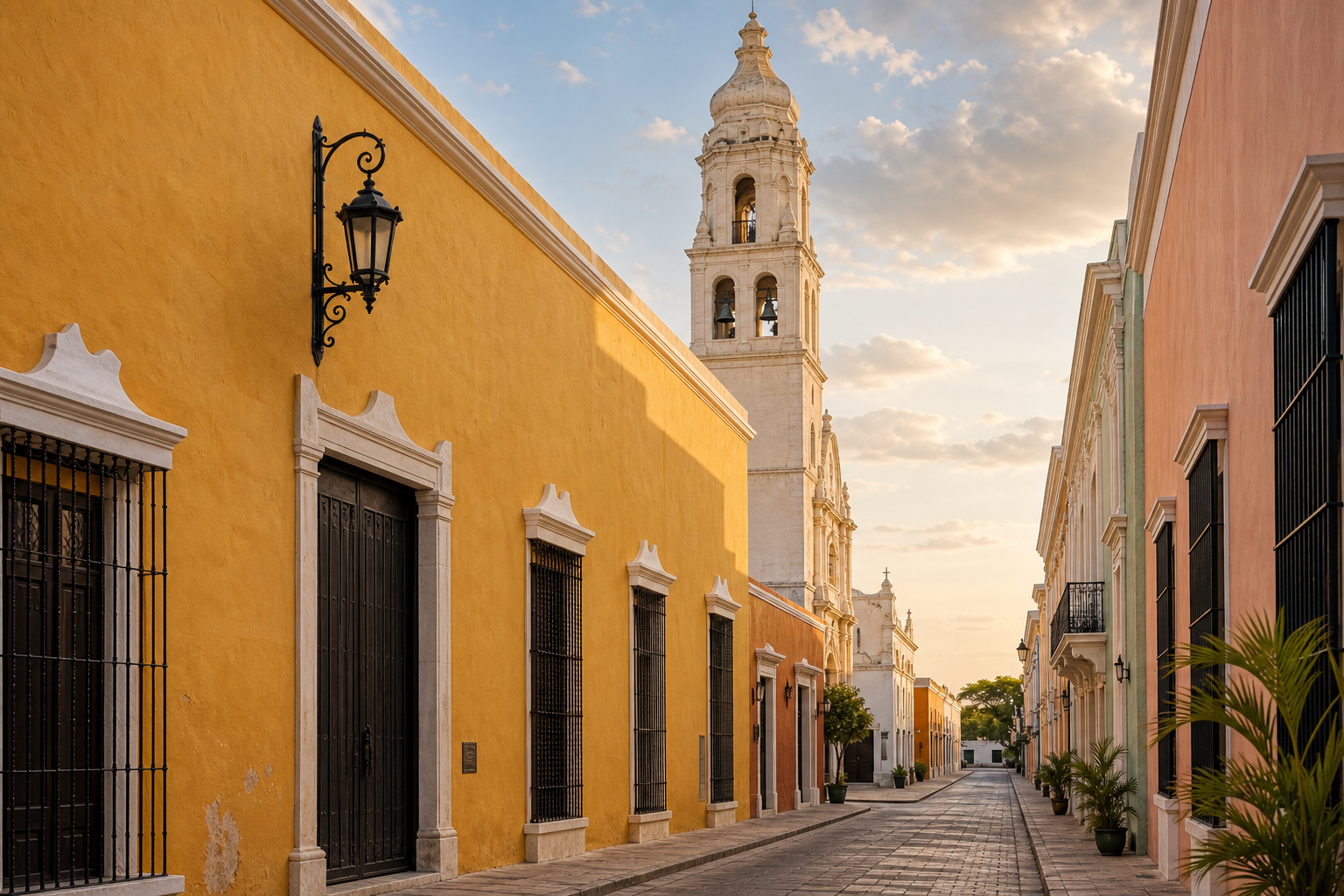
 Calle 59 in Campeche’s colonial quarter, where many central restaurants and cafés are located
Where to eat in Campeche: the short answer
 The old city wall and colonial houses surrounding Campeche’s historic centre
For a first visit, divide your meals between four useful zones. The streets around Calle 59 are the easiest introduction to restaurants in the walled city, with colonial façades, pedestrian space and plenty of choice. The central market is better for an everyday breakfast or lunch and for seeing what residents are buying. The waterfront and the roads leading toward the malecón suit seafood, sunset and a slower evening. Neighbourhoods just outside the walls often contain established restaurants with larger dining rooms and a more local pace.
Calle 59 is convenient, not automatically superior. Its location and atmosphere make it popular, and menus range from regional cooking to Mexican and international food. Read the menu before sitting down, especially if you are looking for a genuinely Campeche dish. A table on the street can be pleasant after dark, but the same area may feel hot and exposed at midday.
The market is the better test of your appetite and schedule. Go in the morning or around the local lunch period, carry small peso notes, and look for busy stalls with a clear turnover of food. You may need basic Spanish to ask what a dish contains. Pointing at a plate is often enough, but ask about seafood, chile and portion size if you have allergies or dietary limits.
For a special seafood meal, look beyond the most photographed streets. A taxi or short ride toward the modern waterfront districts can lead to dining rooms known for fish and shellfish. These are useful choices when you want a quieter meal, air conditioning or a menu that treats seafood as the main event rather than one option among many.
Marganzo: a practical first stop for regional dishes
Marganzo is one of the best-known names for traditional Campeche cooking in the historic centre. It is associated with regional recipes, fish and seafood, and a menu designed to introduce visitors to local flavours without requiring a trip outside the walls. Pan de cazón, seafood preparations and other Campeche-style dishes are the kinds of choices to look for here.
The advantage is clarity. If this is your first meal in the city, you can order several recognisable regional preparations and compare them. It is a useful place for travellers who want a sit-down introduction rather than a market counter. The drawback is that popularity and location can mean a busier, more visitor-oriented experience. Treat the menu as a starting point, not as proof that every dish will suit your taste.
Arrive with enough time to read the menu and ask which dishes are available that day. Seafood supply, kitchen preparation and seasonal specials change. If you are travelling with someone who does not eat fish, check the non-seafood options before choosing the restaurant. A regional restaurant does not mean every plate is seafood, but the kitchen’s strengths are likely to be concentrated there.
Marganzo is especially convenient after a morning walking around the cathedral, plaza and city walls. You can make lunch the main meal, rest during the hottest part of the afternoon, and return to Calle 59 or the malecón later. That rhythm works better than trying to fit a formal lunch between every attraction.
La Pigua: a seafood-focused meal outside the walled centre
La Pigua is a long-established seafood restaurant in Campeche City and a logical choice when the meal itself is the destination. It is known for fish and shellfish preparations, including regional flavours, and has a more formal feel than a market or casual antojito counter. Visitors often choose it for a special lunch or dinner rather than a quick snack.
This is the sort of restaurant where you should ask about the catch and current recommendations. Look for local fish, octopus, shrimp or crab preparations, but do not assume a particular species or dish will be available. A menu can include imported or non-local ingredients as well as Gulf seafood. If sustainability matters to you, ask what is in season and where the seafood comes from.
La Pigua is outside the pedestrian heart of the historic centre, so plan the return journey rather than assuming you will wander back immediately. The distance is manageable by taxi, but heat and traffic can make walking less appealing than it looks on a map. It pairs well with an evening on the malecón if you arrange transport and timing sensibly.
Because it is a higher-priced option than market eating, check the current menu and payment arrangements before you go. The point is not to compare a formal seafood dining room with a market stall on the same terms. Choose La Pigua for service, a broader seafood menu and a deliberate meal; choose the market for speed, value and everyday atmosphere.
Check current Campeche City activities on GetYourGuide · See current Campeche tours and food-related experiences on Viator
La Parrilla Colonial and the Calle 59 dining circuit
The Calle 59 area contains several restaurants in restored or adapted colonial buildings. La Parrilla Colonial is a familiar option for travellers who want Mexican, peninsular and seafood dishes in a central setting. Its role in an itinerary is simple: it gives a group with mixed preferences a broad menu and keeps the evening walkable.
That breadth is also the reason to read carefully. A large menu may include regional specialities, but it can also spread across cuisines. If you came specifically for pan de cazón or local seafood, ask which dishes are prepared in the Campeche style. If one person wants meat and another wants fish, a broad menu can be useful; if everyone wants a focused seafood meal, a specialist restaurant may be a better fit.
Calle 59 works best as a progressive evening rather than one rushed stop. Have a light drink or snack, choose dinner after looking at menus, then walk toward the plaza or the waterfront. Avoid blocking the pedestrian way while studying menus, and be aware that music and crowds can make conversation difficult later at night.
The street’s popularity means that some restaurants update their names, menus or operating patterns. Use the current sign, the posted menu and local recommendations on the day. Do not rely on an old address or an online listing that gives no recent activity.
 A colonial street scene in Campeche’s historic centre, close to the city’s central dining areas
The central market: the best place for an everyday meal
Campeche’s principal market is more useful than a tourist attraction with a single signature dish. It is where you can see produce, meat, fish, tortillas, prepared food and household shopping in the same place. Go for breakfast or lunch when stalls are active. The exact offer depends on the day, but the market is a sensible place to ask what is being cooked locally.
Market eating requires a little more attention than a restaurant reservation. Look for clean, busy stalls and food that is being served hot or turning over quickly. Keep your belongings close without making the situation feel tense. Ask before photographing vendors or customers. If you do not speak much Spanish, learn the names of a few foods and use simple questions: “¿Qué recomienda?”, “¿Tiene picante?” and “¿Cuánto cuesta?”
You may find tacos, tortas, soups, stews, eggs, antojitos and regional plates rather than a curated tasting menu. A breakfast of eggs, beans, tortillas and coffee can be more revealing than a late brunch aimed at visitors. At lunch, ask whether the day’s special contains seafood, pork or a particular chile. Portions may be generous, and a shared order can help if you want to sample several things.
Cash is the safe assumption at market stalls. Carry small notes and coins, and avoid presenting a large bill for a small purchase. Bring your own water or buy it nearby, especially if you plan to continue walking. The market can be hot, crowded and noisy; that is part of its everyday character, but it may not suit a traveller looking for a quiet, air-conditioned meal.
Casual regional food and antojitos
Not every good Campeche meal needs a named restaurant. Look for places serving panuchos, salbutes, empanadas, tamales, tacos, tortas and local stews. The difference between a snack and a meal is often simply how many small plates you order. An antojito crawl can be a good alternative to a formal dinner when the heat has reduced your appetite.
Panuchos and salbutes are familiar across the peninsula, but fillings and seasoning vary. Ask for a local preparation rather than assuming the most recognisable version is identical everywhere. Dogfish empanadas are worth looking for when available. They offer the flavour of cazón in a portable format and can be easier to try than a full pan de cazón.
A casual counter is also where dietary communication matters most. “Sin chile” does not always mean no spice in every salsa, and a dish may be cooked in the same oil as seafood or meat. Vegetarians should ask specifically about beans, stock, lard and fillings. Vegan choices are possible but should be confirmed dish by dish rather than inferred from a menu heading.
When ordering street food, follow the busy period. A stall with a queue may have fresher turnover, but do not turn a working food stand into a photo set. Stand clear of the serving area, pay promptly and let the vendor explain the options. If a place has no visible prices, ask before ordering more than one item.
Chocolate, coffee and something sweet
Campeche’s restaurant scene is not only about lunch and seafood. Cafés and chocolate shops around the historic centre are useful for a slower breakfast, a mid-afternoon break or a final stop after dinner. Traditional chocolate can be served hot, with water or milk, and may be flavoured with vanilla or chile. It is richer than a standard coffee break, so share if you plan to keep walking in the heat.
Chocol Ha is a well-known central stop associated with chocolate, coffee, breakfast and sweets. Its location makes it easy to combine with Calle 59. Ask about the current preparation and whether the patio or indoor seating is more comfortable. Chocolate is a drink, not a reason to skip water; Campeche’s humidity can catch up with you quickly.
Look for local ice cream and sorbets as the afternoon cools. Citrus, coconut and seasonal fruit flavours make sense in a Gulf-coast city, but availability changes. A small portion is a practical way to sample something new without committing to a large dessert after a heavy meal.
For breakfast, cafés may offer eggs, fruit, bread, coffee and Mexican dishes. The schedule can be earlier than dinner service, while some evening-focused restaurants do not open until later. If breakfast matters to your itinerary, ask your hotel where people are eating that morning rather than assuming yesterday’s dinner place serves it.
Check current hotel rates in Campeche City on Booking.com · Compare Campeche stays on Trip.com
Seafood beyond the famous names
Campeche’s coastline is long, and the city is only one part of the state’s seafood culture. If you have several days, consider eating seafood in Champotón, Ciudad del Carmen or another coastal base rather than expecting every coastal flavour to be reproduced in the historic centre. Those trips need their own transport and timing, but they can broaden your understanding of the state.
In Campeche City, choose a seafood restaurant according to the kind of meal you want. A ceviche or cocktail is light but may not be enough after a long day. Fried fish is familiar and often practical for families. Grilled or sauced fish gives the kitchen more room to show regional seasoning. Octopus, shrimp and crab can be excellent, but prices and availability fluctuate, so ask before ordering a large shared plate.
Raw seafood deserves the same caution you would use anywhere in a hot climate. Choose places with strong turnover, keep chilled dishes cold, and do not let a cocktail sit in the sun while you take photographs. If you have a sensitive stomach, a cooked dish is the more conservative choice. Lime juice changes texture and flavour; it does not replace refrigeration.
The malecón is good for atmosphere, especially near sunset, but the best view does not guarantee the best kitchen. Walk first, compare menus, and choose a place that matches your priorities. You can enjoy the waterfront before or after eating without paying for a view you do not actually need.
Food for families and mixed groups
Campeche is manageable for families because meals can be spread across short walks, markets and casual restaurants. Children who do not want seafood can usually find rice, eggs, chicken, quesadillas, pasta or simple tacos, but confirm ingredients and spice. A shared order of panuchos or empanadas is a lower-risk introduction than ordering an unfamiliar main dish for everyone.
The heat is the bigger planning issue. Schedule the main meal earlier, carry water, and avoid making a child cross the entire walled city at the hottest time. Restaurants with indoor seating or fans can be more comfortable than a picturesque open-air table. Ask for sauces on the side if younger travellers are sensitive to spice.
Families staying in the historic centre can use the market for breakfast, a sit-down restaurant for lunch and a short evening walk for dessert. That plan avoids relying on late-night dining. If you are driving, check parking and the return route before choosing a restaurant in a pedestrian street.
For allergies, use clear Spanish terms and repeat the concern when ordering. Seafood stock, lard, nuts and shared cooking surfaces may not be obvious from the menu. Bring a translated allergy card if the issue is serious. Restaurant staff can help, but the final decision about risk belongs with the traveller.
Vegetarian and vegan eating
A plant-based diet is possible in Campeche, but the easiest approach is to ask about ingredients rather than search only for a dedicated restaurant. Beans, rice, vegetables, tortillas, fruit, eggs and some antojitos can provide a meal. Refried beans may contain lard, and soups may use chicken stock, so ask directly.
“Vegetariano” is generally understood, but clarify whether fish and seafood are excluded. “Sin carne, sin pollo, sin pescado y sin mariscos” is more precise. For vegan food, add “sin huevo, sin leche y sin queso.” A salsa may contain animal ingredients less often than a broth or bean preparation, but confirmation is still worthwhile.
Markets can be flexible because you can see ingredients, while formal restaurants may be better for explaining a request. If the kitchen cannot accommodate you safely, thank the staff and choose another place. Do not rely on removing meat from a finished dish if the base stock or cooking fat is unclear.
How to choose a restaurant without a stale ranking
Online rankings are useful for finding names, but they age quickly. A restaurant may close, change ownership, shorten its hours or move its menu toward tourists. Before you go, check recent reviews and the restaurant’s current social page if it has one. On arrival, look for a current menu, active kitchen and enough customers to indicate turnover.
Ask a hotel receptionist, market vendor or taxi driver a specific question rather than “What is the best restaurant?” Try: “Where would you eat pan de cazón today?” or “Where can I find a good local lunch near here?” Different people will give different answers, which is more useful than treating one ranking as objective truth.
Do not choose solely by the number of photographs. A crowded terrace may be full because of location, while a quiet dining room may be between meal periods. Consider distance, heat, dietary needs, budget and whether you want a quick plate or a long evening. Campeche rewards this practical approach because its food culture is spread across several kinds of places.
A one-day eating plan in Campeche
Start with breakfast near the market or in the historic centre. Order something substantial enough for a morning walk, and buy water before heading toward the cathedral, plaza and walls. The city’s main sights are close, but shade is not guaranteed on every street.
Make lunch your regional meal. Choose pan de cazón, a local fish preparation or another dish recommended by the kitchen. If you are unsure about cazón, share one portion and add a second dish. That gives you a fair impression without turning one unfamiliar texture into the entire meal.
Use the hottest part of the afternoon for a museum, hotel rest or a long chocolate and coffee break. Return to the streets when the light softens. Walk Calle 59, inspect menus and decide whether you want a central dinner or a seafood meal farther out.
Finish with the malecón if the weather is comfortable. A sunset walk is a good conclusion to a food-focused day, but it is not a substitute for planning the return journey. Taxis, traffic and restaurant closing times vary; ask locally if you are staying beyond the busiest centre.
GuideBest Hotels in Campeche: Where to Stay in the CityExplore
A two-day food plan
With two days, keep the first day inside or near the historic centre. Combine the market, regional lunch, chocolate and a Calle 59 dinner. This gives you a baseline before you spend more on seafood or travel farther.
On the second day, choose between a formal seafood meal and a food-related excursion. If you want a special dinner, reserve or confirm locally and allow for a slow meal. If you want to understand the state, use the day for Edzná or another nearby route and ask where to eat along the way. Do not plan a long archaeological visit, a distant coastal detour and a late formal dinner as if they were all next door.
A second day also lets you retry a dish in a different setting. Pan de cazón from a market or casual kitchen may have a different balance of sauce and beans from a restaurant version. That is not necessarily a question of authenticity; regional food is made by people, and variation is part of the point.
Service, tipping and payment
Carry Mexican pesos, especially for markets, small cafés and casual stalls. Larger restaurants commonly accept cards, but a card terminal can be offline or a minimum may apply. Ask before ordering if payment is important to your plan. Keep a reserve of cash rather than assuming the nearest ATM will be convenient.
Service pace can be slower than travellers expect, particularly during a full lunch or when seafood is cooked to order. That is not always poor service. If you have a train, bus or tour, tell the server early and choose a simpler meal. Do not order a multi-course seafood lunch immediately before a fixed departure.
Tipping customs follow Mexico’s general pattern: a voluntary gratuity is common when service is good, and the amount should reflect the experience and your budget. Check the bill for included service and ask about any unclear charge. At a market counter, follow the local practice rather than treating it like a formal restaurant.
Staying near the food
The historic centre is the easiest base for breakfast, dinner and evening walks. You can return to a room during the hottest hours and avoid arranging transport for every meal. The trade-off is that central streets can be noisy, and some restaurants are aimed at visitors rather than residents.
A base outside the walls can offer larger rooms, parking or a quieter night. It works well if you plan seafood restaurants, the malecón or day trips by car. The cost is less spontaneity: you will need a taxi or vehicle for many meals, and a late return should be planned.
If your itinerary includes Edzná or longer drives, choose accommodation according to the whole route rather than only the restaurant scene. A beautiful dinner does not justify a difficult early departure if you have underestimated distance and heat. Browse current Campeche City accommodation on Booking.com · Compare available rooms on Trip.com
What not to expect
Campeche is not a resort strip with identical restaurants open all day. Some good places close between lunch and dinner. Some local kitchens sell out of a dish. Some online recommendations are out of date. The city’s food is better when you allow for those limits.
Do not expect every restaurant to explain the history of each dish, and do not treat a market as a performance. Ask respectfully, eat what is available, and accept that a small town or neighbourhood kitchen may not work on a visitor’s timetable. If a restaurant is quiet, that is information to consider, not automatic proof that it is bad.
Also do not use “authentic” as a substitute for hygiene, comfort or personal preference. A well-run central restaurant and a busy market stall can both be worthwhile. Choose the setting that lets you enjoy the food responsibly.
Eating your way around the city
A restaurant list is useful only if it helps you make decisions. In Campeche, the best choice changes with the hour, the weather and the reason you are eating. A visitor arriving from a ruin site may want shade and a cold drink before thinking about a formal plate. Someone staying inside the walls may prefer a short walk and an early dinner. A family may need familiar food and quick service, while a seafood enthusiast may be happy to travel for one carefully chosen meal.
Use the historic centre for variety and atmosphere, the market for a direct look at everyday food, and the waterfront or outer neighbourhoods when the restaurant itself is the destination. That division keeps the city’s geography honest. Campeche’s malecón is the Gulf-facing waterfront of the capital, not a separate beach resort, and the dining experience there should be planned as part of the city rather than as an all-day coastal excursion.
The city is also a useful place to compare levels of formality. A market meal shows how people eat during the day and usually keeps the focus on the food rather than the room. A Calle 59 restaurant adds architecture, lighting and an easy evening walk. A seafood specialist outside the walls makes the meal the main event. None is automatically more authentic than the others. They answer different travel needs.
If you are travelling during a busy festival, holiday or weekend, decide which meal matters most and confirm it first. Leave the other meals flexible. This is especially useful when a restaurant closes between services or when a popular place has a queue. A flexible breakfast or market lunch can absorb a change without damaging the rest of the itinerary.
Final recommendation
For a first visit, eat one substantial local lunch in the historic centre, try pan de cazón or another Campeche speciality, visit the market for breakfast or a snack, and reserve one meal for seafood beyond the most obvious tourist street. Add chocolate or a fruit sorbet in the afternoon, then walk the malecón when the heat drops. That sequence gives you the city’s everyday food, its regional identity and its Gulf connection without pretending that one restaurant can represent all of Campeche.