Pan de cazón is the dish that most clearly connects a plate in Campeche with the Gulf coast around it. It is made with corn tortillas, black beans, shredded cazón and a tomato-based sauce, usually with chile available on the side or worked into the preparation. The name can confuse first-time visitors: there is no loaf of bread in the traditional dish. The tortillas form the layers, while the fish provides the filling.
That simple description does not quite capture the experience. A good serving arrives as a soft, warm stack with the earthy taste of beans, the mild, firm texture of the fish and the acidity of tomato. It is substantial without being a stew, familiar if you already know panuchos or enchiladas, but distinct enough to deserve its own stop. In San Francisco de Campeche, it can be a sit-down lunch in the walled centre, a regional special on a broader menu, or part of a food-focused walk through the city.
This guide explains what pan de cazón is, how the dish is assembled, what to ask when ordering, and how to fit it into a realistic Campeche food itinerary. Restaurant menus and opening patterns change, so use the current menu and ask locally what is available that day. The aim is to help you recognise the dish and choose the right setting, not to promise that one kitchen will always serve one identical version.
What is pan de cazón?
The classic preparation is built in layers. A tortilla is softened or lightly fried, spread with black beans, and covered with cooked, shredded cazón. Another tortilla and another layer of filling may be added before the stack is covered with tomato sauce. The result is often finished with sliced avocado, onion, habanero or another garnish, although presentation differs between kitchens.
Cazón is a small shark or dogfish used as food in the Gulf of Mexico. In a kitchen it is treated much like a firm, delicate fish: it is cooked, separated into flakes and seasoned before becoming the centre of the dish. The flavour should not be aggressively fishy. The beans and tomato do much of the work, which is why pan de cazón can appeal even to travellers who are cautious about stronger seafood.
The tortilla matters as much as the fish. Corn gives the dish its foundation and absorbs the tomato sauce, while beans add body and a slightly sweet, earthy counterpoint. The layers are usually soft rather than crisp. If you expect a crunchy tostada or a dry stack, the texture may surprise you. Think of it as a warm tortilla-and-fish preparation with the structure of a small layered casserole.
There is no single universal plating rule. Some servings are compact and carefully stacked; others are more generous and spread across the plate. Tomato sauce may be smooth, chunky, mild or noticeably hot. Cazón may be finely shredded or left in larger flakes. Those variations are normal. A local dish develops through household practice, restaurant style and the ingredients available to the cook.
 A serving of pan de cazón made with fried tortillas and shredded shark meat in Campeche
Why the name can be misleading
English-language menus sometimes translate pan de cazón as “dogfish bread” or “shark bread.” Those translations describe the fish but can make the dish sound like a sandwich or a baked loaf. In Spanish, pan can suggest bread, but the important visual idea is the layered form. Tortillas act as the plates or sheets that hold the beans and fish together.
When you see the dish on a menu, do not look for a bread roll. Look for a stack or layered tortilla preparation covered in red sauce. If you are unsure, ask the server whether it is made with tortillas, beans and cazón. That question is useful because menus sometimes use the name for a variation, and a restaurant may be serving a seasonal or modern interpretation rather than the most familiar home-style version.
The dish also should not be confused with a fish taco, a seafood enchilada or a panucho. It shares ingredients and techniques with other foods from the peninsula, but its combination of shredded cazón, beans and stacked tortillas is the defining feature. A panucho has a crisp or fried tortilla filled with beans; pan de cazón is generally softer and is served as a composed plate with sauce.
The word cazón itself can also cover more than one local usage. Fisheries, markets and kitchens may distinguish species differently, and availability is not identical every day. If a restaurant tells you the fish has been substituted, decide whether that matters to you before ordering. A substitution can still make a good dish, but it is better to know what is on the plate than to assume the name guarantees a particular species.
The history is local, but the exact origin is not a neat story
Campeche’s cultural authority describes pan de cazón as part of the state’s gastronomic heritage and highlights the way it combines corn tortillas, cazón, tomato and habanero. That description is more useful than a dramatic claim about one inventor or one precise date. The dish belongs to a coastal food tradition shaped by fishing, maize cookery and household adaptation.
The exact moment when pan de cazón first appeared is not firmly documented. That uncertainty is worth keeping. Food traditions often develop gradually: people combine ingredients that are available, a preparation becomes familiar, and later generations give it a stable name. Travellers will sometimes hear confident stories about a single origin, but the safer historical explanation is that the dish reflects long-running relationships between the Campeche coast, corn, beans and fish.
Nineteenth-century travel accounts and later regional writing helped make the preparation visible outside everyday kitchens. They also remind you that cazón was not always treated as a luxury ingredient. Small coastal sharks and other fish were practical food for fishing communities, and cooks developed ways to make a modest catch satisfying. Beans and tortillas stretch the fish into a filling meal without hiding its identity.
That background changes how the dish is best approached. Pan de cazón is not simply a novelty for visitors photographing a colourful plate. It is an example of how a region’s pantry and coastline shape daily cooking. You do not need to turn lunch into a lecture, but noticing the connection between fish, maize and the Gulf makes the dish more meaningful.
The dish is associated especially strongly with Campeche State, even though related preparations and the use of cazón appear elsewhere in the peninsula and Gulf region. Avoid insisting that every version outside Campeche is identical. If you are travelling through the state, this is the place to try the dish in the context that gives it its strongest local meaning.
What it tastes like
The first flavour is usually tomato, followed by beans and the savoury taste of the fish. The tortilla softens under the sauce and gives the dish a comforting, almost casserole-like texture. Depending on the cook, epazote, onion, garlic or local seasoning may sit in the background. Habanero can be subtle or forceful, so ask before adding extra salsa.
Cazón itself is generally firmer and less oily than many fish served fried. Shredding distributes it through the stack, so the meal does not depend on one large fillet. A well-balanced plate should let you identify the fish without making it dominate the beans and sauce. If the filling is dry, the sauce and garnishes become especially important; if the sauce is too thin, the tortilla can lose its structure.
Texture is part of the appeal. The beans should be smooth enough to spread, the fish should remain recognisable in flakes, and the tortillas should hold together without becoming hard. Avocado adds coolness and fat, while pickled onion or chile can sharpen the plate. These contrasts are helpful in Campeche’s heat, when a heavy fried meal can feel less appealing than a sauced tortilla dish.
Spice levels vary. A red tomato sauce is not automatically mild, and a dish that looks calm may arrive with a hot habanero garnish. Ask for chile separately if you prefer to control the heat. If you have a low tolerance, say so clearly: poco picante means little spice, while sin chile is a stronger request, though shared preparation surfaces can still affect the result.
The dish is filling. One serving can work as a complete lunch, especially if you also order water or a simple drink. It is not the best choice if you want to sample six different plates in one sitting. Share one serving when possible, then use the rest of the meal for a lighter seafood dish, an empanada or a dessert.
Where to try it in San Francisco de Campeche
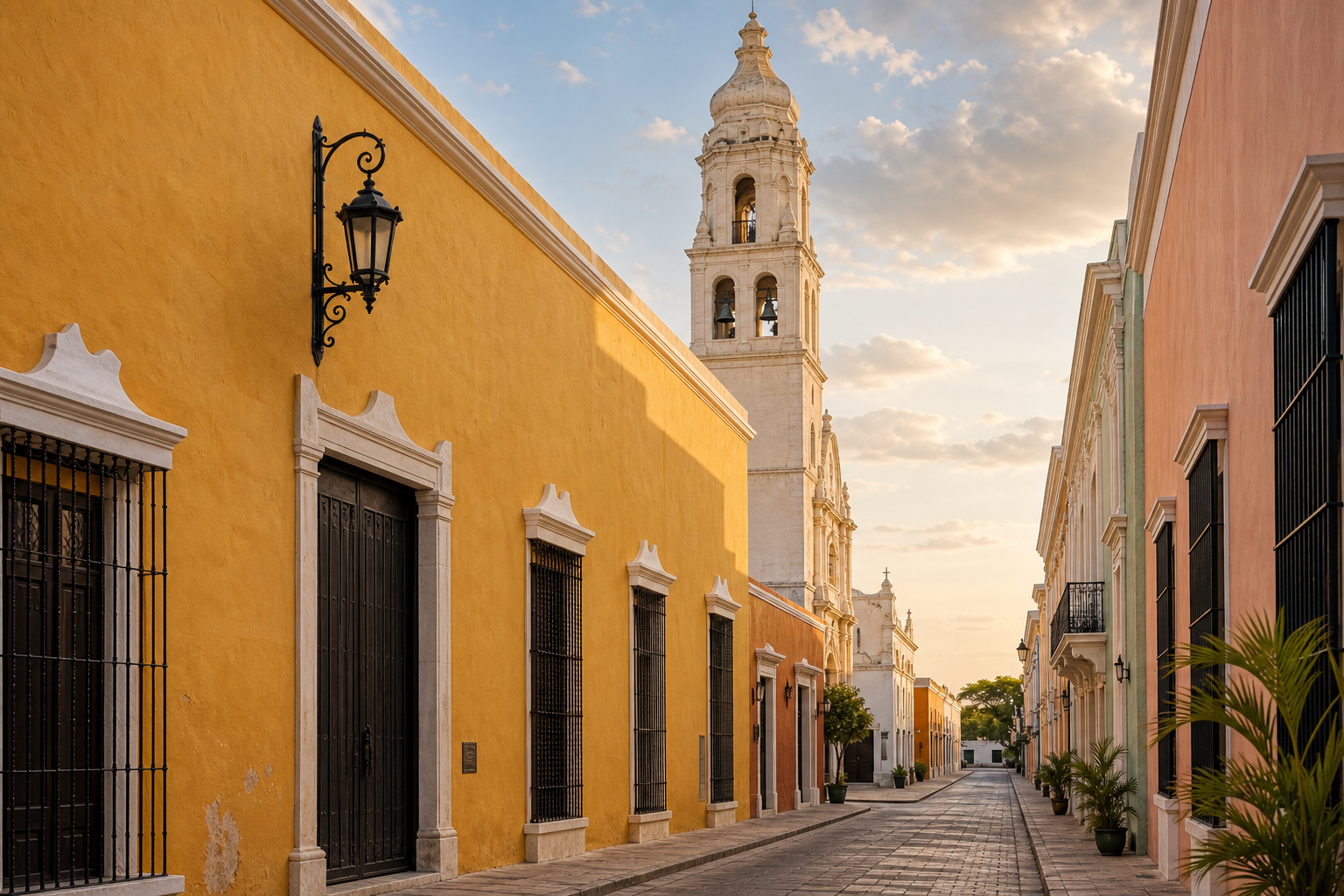
The most practical place to start is the historic centre, where regional restaurants sit within walking distance of the cathedral, Plaza de la Independencia, Calle 59 and the city walls. This area gives you the easiest combination of food and sightseeing. You can order pan de cazón at lunch, rest during the hottest hours and continue toward the malecón later rather than building a separate journey around one plate.
A central restaurant with a regional menu is useful for first-time visitors because you can ask about the preparation and compare it with other Campeche dishes. Choose a place that clearly describes its local food and has current activity, rather than relying on an old list of “best restaurants.” Menus and ownership change. If pan de cazón is not available, ask whether the kitchen has another cazón preparation, such as empanadas, or what fish dish is most representative that day.
The central market and nearby everyday food areas are another route, especially if you want a less formal meal. A market comedor may offer a short menu of breakfast and lunch plates rather than a polished description. Go during an active meal period, look for clean and busy stalls, and ask before photographing. Availability can be less predictable than in a restaurant, but the setting gives you a better sense of how prepared food fits into the city’s daily rhythm.
A seafood-focused restaurant outside the walled centre can make sense when the fish itself is your priority. Such places may have broader menus and more formal service, but they are not automatically better for pan de cazón. Check that the dish is actually available and decide whether you want a restaurant known for a regional speciality or a dining room focused on the day’s seafood supply.
For a bookable food experience, a current marketplace listing can help if you prefer a guide to explain ingredients and local eating customs. Compare current Campeche food and gastronomy tours on GetYourGuide and see Campeche food-tour inventory on Viator. Listings change, so confirm the meeting point, language, included tastings and whether a specific pan de cazón tasting is promised before paying.
Eating it at a restaurant: what to ask
Start by asking whether pan de cazón is available today. This sounds obvious, but seafood supply and kitchen preparation change. A menu can keep a popular dish listed even when the cook has run out of cazón or is serving a different fish. “¿Tiene pan de cazón hoy?” is enough. If the answer is no, ask what local fish or Campeche speciality is currently being prepared.
Ask whether the sauce is spicy and whether chile comes on the side. You can also ask how large the portion is, particularly if you plan to share. The dish is often more substantial than visitors expect, and a shared serving can leave room for another local preparation. If you have allergies, ask about stock, shared fryers and garnishes rather than relying on the word “vegetable” or “seafood.”
If you want to understand the plate, ask what fish is being used and how it is cooked before shredding. The answer may be brief; service in a busy dining room is not a cooking class. Listen for whether the kitchen uses cazón, another local fish or a substitute. There is no need to reject a variation automatically, but the distinction matters when the purpose of your order is to taste the traditional preparation.
Take a moment to separate the components on the first bite. Taste the beans and tortilla together, then try the fish with sauce and garnish. This makes it easier to notice whether the kitchen has kept the fish moist and whether the tomato balances the beans. Add habanero gradually. A little can brighten the dish; too much can flatten every other flavour.
Payment and service details are ordinary but useful. Carry some cash for markets and casual counters, even when restaurants accept cards. Check whether a service charge has already been added, and keep the receipt if you are splitting a bill. Do not assume that a central restaurant will have the same hours every day, especially around holidays or local events.
 A fish-market scene in Campeche, showing the coastal food context behind regional dishes
Market eating and the everyday context
The market is not a museum display of “authenticity.” It is a working place where people shop, eat quickly and carry on with the day. That makes it valuable, but it also means you should adapt to the setting. Tables may be close together, menus may be spoken rather than printed, and payment may be cash only. You may not find pan de cazón on every visit, so go with a wider appetite.
Look for food that is turning over steadily and is served hot. Busy does not guarantee quality, but a working counter gives you more information than an empty tray. Ask what was prepared that morning and whether a dish contains seafood, pork or chile. If you do not speak much Spanish, learn a few phrases and use gestures politely. Vendors are accustomed to helping visitors who are trying.
Do not photograph people, food preparation or stalls without asking. A market worker may be serving a queue, so keep questions short and move aside while deciding. Bring small notes, keep your phone secure and carry water. Heat, noise and strong food smells can be tiring, especially after a morning walking on the walls.
If pan de cazón is not available, a market lunch can still build the same food map. Look for fish, shrimp, empanadas, panuchos, salbutes, tamales or a soup of the day. A small order lets you compare textures and seasoning without turning the meal into a competition. The point is to understand what Campeche cooks do with corn, seafood, beans and chiles in different forms.
Market eating also helps explain why pan de cazón feels like a complete meal. Corn and beans are not decorative sides. They provide the calories and texture that make a modest portion of fish satisfying. In a coastal state, seafood may be central to identity without appearing in every meal. The market makes that balance visible.
What to eat alongside pan de cazón
Keep the side dishes light unless you are sharing. A simple salad, avocado, pickled onion or a small serving of rice can work, depending on the restaurant. Extra tortillas may be offered, but the dish already has a strong corn base. If you are trying several foods, order a smaller side rather than building a plate that becomes too heavy in the afternoon heat.
A fresh agua fresca, bottled water or unsweetened drink is practical in Campeche’s humidity. Ask what is in a house drink and whether it has added sugar. Citrus and fruit flavours suit the dish, but there is no rule that you need a particular beverage. If you order a beer, drink water as well and give yourself time before walking in the sun.
For a second taste of cazón, look for an empanada rather than another full pan de cazón. The fried pastry changes the texture and gives you a useful comparison. A fish soup or grilled local fish can show the ingredient more directly, while pan de cazón shows how it works with beans and tortillas. This progression is more informative than ordering the same preparation twice.
Dessert is best saved for later. Campeche’s historic centre has cafés and sweet shops where you can take a break after the meal. Chocolate, coffee, sorbet or fruit can reset the palate, but a heavy dessert immediately after pan de cazón may be uncomfortable. Walk slowly, find shade and return to food when you are hungry again.
If you are eating with someone who does not eat fish, choose a restaurant with a broader menu rather than assuming the group can share one dish. Beans and tortillas are not automatically vegetarian if they are cooked with lard or broth. Ask clearly about ingredients. A mixed group can still eat well in Campeche, but the menu choice should be made before everyone is seated.
Food allergies and dietary limits
Pan de cazón is not suitable for a fish-free diet, and the dish may be prepared in a kitchen that handles shellfish. Tell the server about allergies before ordering, not after the plate arrives. Use simple, direct language and confirm whether the sauce, beans and garnishes are separate preparations. If the kitchen cannot answer confidently, choose another dish.
For vegetarians, the beans and tortillas may look like a possible meal, but the traditional dish includes fish and the beans may contain animal fat. Ask whether a vegetarian version can be prepared separately. Do not describe a dish as vegetarian based only on its visible ingredients. In a market, this question may require more patience than in a sit-down restaurant.
For gluten-free travellers, corn tortillas are usually the relevant base, but cross-contact and packaged ingredients still matter. Ask about flour tortillas, breaded items and shared cooking surfaces. “Maíz” means corn, but a plate can still include a sauce thickened with something else or arrive with a flour-based side.
For spice sensitivity, request the chile on the side and taste the tomato sauce carefully. Habanero is powerful, and a small garnish can affect the whole plate. If you need a completely mild meal, pan de cazón may not be the easiest choice unless the kitchen can prepare it to order. Carry any essential medication and do not rely on a translation app alone for a severe allergy.
How pan de cazón fits into a Campeche itinerary
A food-first morning works well in Campeche City. Start with breakfast near the market, walk through the historic centre while the streets are cooler, and make pan de cazón your main lunch. After eating, take a slower afternoon in a shaded room or museum before going toward the malecón near sunset. This schedule respects the heat and gives the dish enough attention.
If you have one full day, do not spend it travelling across the state just to find a particular plate. Campeche City has enough regional food context to make the dish worthwhile, and the walled centre, market and waterfront are close enough to combine. Use the rest of the day for architecture, forts, the cathedral and the Gulf view rather than rushing between distant restaurants.
With two or three days, add a meal in a different setting. You might compare a central regional restaurant with a market lunch, then try seafood in a modern waterfront area. This shows how the same coastal identity appears in visitor-oriented dining, everyday cooking and specialist seafood menus. Keep the comparison qualitative; menu changes and seasonal supply make exact rankings unreliable.
A wider Campeche road trip gives you more chances to eat local food in coastal and inland towns, but do not assume every town serves pan de cazón. The state is geographically large, and a long drive can make an improvised lunch difficult. Plan around reliable meal stops, keep water in the vehicle and treat local recommendations as more current than an old online list.
The dish also pairs naturally with a day of city history. Campeche’s walls and maritime past can make you think about the Gulf as a source of food as well as a route for ships and attacks. That connection is not a claim that pan de cazón was created by pirates or that one historical event explains the recipe. It is simply a useful way to see the city’s food and waterfront as parts of the same place.
Where to stay if food is a priority
Staying inside or near the walled centre makes food exploration easiest. You can return to your room during the hottest part of the day, walk to an evening meal and avoid arranging transport after every drink or dessert. The trade-off is that central streets can be busier, and some rooms in older buildings may be less insulated from street noise.
A stay near the wider waterfront or outside the historic core can suit travellers who prefer parking, larger rooms or a quieter modern setting. You may need a taxi or short ride to reach the market and central restaurants. That is not a major problem if you plan meals together, but it is worth considering if you want to try several places without driving.
Do not choose accommodation solely because an old review mentions one restaurant nearby. Confirm the current location, cancellation conditions, air conditioning and breakfast arrangement. For a food-focused trip, a reliable place to cool down and store water can matter more than a small difference in walking distance.
Check current Campeche City hotel rates on Booking.com · Compare Campeche stays on Trip.com
Buying ingredients and understanding the dish at home
You can learn a lot by looking at the ingredients separately. At a market, notice the tortillas, black beans, tomatoes, onions, chiles and fish sold for everyday cooking. The dish depends on preparation, not on a rare list of ingredients. That is why versions can be made in homes and restaurants with slightly different seasoning while remaining recognisable.
A home cook usually has more control over the fish’s freshness, the thickness of the sauce and the amount of chile. Restaurant cooks may prepare the fish in batches and assemble plates during service. Neither approach is automatically more traditional. Ask how the kitchen makes its version if the cook or server has time to explain, but respect that a busy restaurant is not a demonstration kitchen.
Do not buy raw seafood to carry through a hot afternoon. If you are staying in a place with a kitchen and want to cook, shop close to preparation time and use proper refrigeration. Visitors who only want to reproduce the flavour can learn the method without treating a travel kitchen as a substitute for local food handling.
Recipes outside Campeche sometimes replace cazón with cod, swordfish or another firm fish. That can be practical where cazón is unavailable, but it changes the dish. If you are writing down what you ate, record the fish used rather than calling every layered tortilla-and-fish plate the same thing. Food names carry geography and memory as well as technique.
Responsible seafood choices
Cazón is a shark, so seafood responsibility deserves a quiet mention. Availability and fisheries conditions can change, and travellers should not assume that a traditional name guarantees an environmentally neutral choice. Ask what the kitchen is serving if sustainability is important to you. A restaurant may be able to explain whether it is using cazón or another fish and what is available locally.
There is no need to interrogate a market vendor or turn lunch into a debate. Avoid demanding a species that is not available, and do not encourage waste by ordering more than the table can eat. Shared portions, asking for current catch and accepting a seasonal alternative are practical habits.
If you choose a substitute, ask what it is and enjoy it on its own terms. The culinary idea remains connected to tortillas, beans, fish and sauce, but the ecological and flavour profile can differ. Honest menus are better for travellers than a vague promise of authenticity.
Pan de cazón compared with other Campeche foods
Pan de cazón is the best choice when you want the dish that most directly combines Campeche’s coastal fish with a maize-and-bean structure. Pámpano in escabeche is a different experience: fish and acidic seasoning take the lead, usually with less of the layered softness that defines pan de cazón. A seafood cocktail is colder, brighter and more refreshing in the heat.
Dogfish empanadas are a useful snack comparison. They put the same broad ingredient in a fried pastry, so you notice the savoury filling without the beans-and-sauce combination. Panuchos and salbutes are better for sampling several small plates, but their tortilla texture and toppings lead in another direction.
Inland dishes such as tamales, stews and pork preparations show that Campeche cooking is not only maritime. If you have several meals in the state, alternate seafood with inland specialities. This prevents the common mistake of treating Campeche as a generic beach destination where every meal is fried fish.
The comparison also helps families and cautious eaters. One person can try pan de cazón while another orders a meat or vegetable plate, then the table can share a small empanada or regional side. A broad menu is valuable when the group has different appetites, but order the signature dish early in the trip rather than waiting until the final meal.
GuideCampeche Carnival: Complete Guide to Carnaval de CampecheExplore
Common mistakes to avoid
The first mistake is assuming the name means bread. The second is expecting every restaurant in the state to serve it every day. The third is ordering a large menu of seafood without asking what is fresh. The fourth is adding habanero before tasting the sauce. All four are easy to avoid with one minute of conversation.
Do not judge the dish only by a photograph. A flat, rustic serving may taste better than a carefully styled plate, and a colourful tourist menu may not offer the most local preparation. Read what is included, ask about the fish and notice whether local diners are ordering the same food.
Do not schedule pan de cazón immediately before a long drive if you know rich meals make you uncomfortable. The dish is filling, and Campeche heat can magnify that feeling. Give yourself time, carry water and use a slower afternoon after lunch.
Do not treat a food tour listing as a guarantee of one dish unless the current description says so. Check the current GetYourGuide Campeche food-walking listings and review Viator’s Campeche food-tour options, then read the inclusions and recent notes. A gastronomy tour may focus on several tastings, a market, history or regional products rather than pan de cazón specifically.
Finally, do not turn “authentic” into a demand for one correct version. The dish has household and restaurant variations. What matters is that the preparation is described honestly and that you approach it as Campeche food rather than as a performance arranged only for visitors.
 Empanadas de cazón served in Campeche, another way to taste the state’s dogfish tradition
A simple pan de cazón tasting plan
For a first food day, begin with a light breakfast and visit the market while it is active. Look at the fish stalls and prepared-food counters without feeling obliged to eat a full meal. Ask whether pan de cazón or empanadas are available. If the market is not serving the dish, note what locals are eating and save the signature plate for a regional restaurant.
At lunch, order one serving of pan de cazón for the table and ask for chile on the side. Taste it before ordering additional food. Notice the tortilla, bean, fish and sauce balance, then decide whether you want a second small plate. This approach is better than ordering several heavy dishes at once.
In the afternoon, walk or visit a museum only after cooling down. The historic centre’s colours and walls are enjoyable, but heat can make a full stomach feel heavier. Later, choose a lighter seafood dish, fruit, chocolate or a drink. The next day, compare the dish with an empanada or fish preparation if you still want to explore cazón.
If you are staying longer, ask a local server or host which regional dish is currently good rather than repeating a fixed online ranking. Food availability is part of the experience. A restaurant may be out of cazón but have excellent fish, shrimp or an inland preparation that says more about that day’s kitchen.
This plan also works for budget travellers. A market snack, a shared signature dish and an evening walk can provide a complete food day without turning every meal into a formal restaurant expense. Carry cash, use refillable water where safe and choose portions deliberately.
Is pan de cazón worth trying?
Yes, if you want one dish that explains how Campeche’s coastline and everyday staples meet. It is not the most visually dramatic food in the state, and it may look like a simple stack of tortillas. Its value is in the combination: fish is made filling with beans and corn, tomato brings brightness, and chile lets you adjust the heat.
It is especially worthwhile for travellers who enjoy regional food, seafood and dishes with a clear sense of place. It may be less suitable if you dislike soft textures, cannot eat fish or need a kitchen with strict allergy controls. In those cases, ask about the ingredients and choose another Campeche speciality rather than ordering reluctantly.
Make it a lunch in San Francisco de Campeche, ask what is available today, and leave room to compare the dish with a market preparation or another seafood plate. That is enough. You do not need to find a mythical “original” version or build your itinerary around an unverified restaurant name. A careful order in the right setting will give you a more useful taste of Campeche than a rushed checklist.
When the plate arrives, start with the beans, tortilla and fish together, add chile slowly, and remember that the dish is a living part of the state’s coastal cooking rather than a single fixed recipe. That is the best reason to try pan de cazón in Campeche.
 Pescado tikin xic served in Campeche, a lighter coastal alternative for a second meal
Practical questions
Is pan de cazón spicy?
It can be. Tomato sauce may be mild, but habanero or another chile is often served with the dish. Ask for chile on the side and taste before adding it.
Does pan de cazón contain bread?
Traditional pan de cazón is layered with corn tortillas, not a bread loaf. The name refers to the dish’s layered form and should not be read as a sandwich description.
Can I find it outside Campeche City?
You may, particularly in coastal parts of Campeche State, but availability varies. San Francisco de Campeche is the easiest base because it has the broadest visitor-facing restaurant range and market access.
Is cazón the same as ordinary fish?
Cazón refers to a small shark or dogfish used as food. Ask the kitchen what it is serving because substitutions and local usage can vary.
Should I book a food tour?
A food tour is useful if you want context, translation help and several tastings. Check the current itinerary and inclusions; do not assume pan de cazón is guaranteed unless it is explicitly listed. Independent travellers can also try the dish by asking at a current regional restaurant or market counter.
Where should I stay for food?
The historic centre is the simplest base for walking to central restaurants, the market and evening streets. The waterfront and modern districts can offer different dining settings but usually require a short ride to the walled centre. Compare current options on Booking.com for Campeche City and Trip.com’s Campeche hotel listings.
What if I cannot find pan de cazón?
Ask for cazón empanadas, a current local fish preparation or another Campeche speciality. Menus change, and an honest alternative is better than a dish described as pan de cazón when the kitchen is using a completely different preparation.
Pan de cazón is best approached with curiosity and a little flexibility. Find it in Campeche City when it is available, ask what is in the plate, control the chile, and let the rest of the meal show you how the state’s coastal cooking extends beyond one signature dish.