Printable guide
Car Rental in Campeche: Prices, Driving Tips & Best Options
Published

Campeche is one of the Mexican states where a rental car can change the shape of a trip. It is not essential for the compact historic centre, and you can reach several major towns by bus. But the state spreads across long distances, with archaeological sites, reserve roads, small coastal communities, and craft towns that do not connect neatly by public transport. A car is most useful when your plan includes Calakmul, the Río Bec sites, the Ruta de los Chenes, inland caves, or several Gulf-coast stops.
It is also easy to rent a car for the wrong reason. If your itinerary is three nights inside Campeche City followed by a bus to Mérida, a car adds a deposit, parking decisions, insurance questions, and a vehicle you may barely use. If you want to drive to Xpujil, explore Becán and Chicanná, and set out early for Calakmul, those same complications may be worthwhile.
This guide explains how to decide, what to check at the counter, how to budget without relying on a headline rate, and what driving in Campeche actually feels like. Rates and inventory change by date, vehicle, insurance, and pickup location, so use the figures below as planning ranges rather than quotes.
 Route 186 through the Calakmul Biosphere Reserve
The short answer: do you need a car?
Rent one if your route is built around several rural stops rather than one city. The strongest cases are:
- Calakmul and the Río Bec corridor. The archaeological sites are separated by long stretches of highway and local roads. From Xpujil, Calakmul is still a substantial outing, while Becán, Chicanná, Balamkú, and other sites sit in different directions. A car gives you control over departure time and lets you return before dark.
- The Ruta de los Chenes. Hopelchén, Dzibilnocac, Santa Rosa Xtampak, and Hochob are not a simple hop-on, hop-off circuit. Public transport may get you toward a town, but connections between sites are infrequent and require local planning.
- Cenotes, caves, and rural nature. Places away from the main highway are rarely practical by scheduled bus. This includes the kind of stops where you need to confirm local access rather than assume a map pin means a public attraction with a timetable.
- A multi-stop coast itinerary. Campeche City, Champotón, Seybaplaya, Sabancuy, Isla Aguada, and Ciudad del Carmen can be linked by road, but buses are more useful for point-to-point travel than for spontaneous stops.
You probably do not need one for Campeche City itself. The walled centre, plazas, museums, Calle 59, the malecón, and the city’s forts are much easier on foot or by taxi. You also do not need a car for a simple Campeche–Mérida or Campeche–Ciudad del Carmen transfer. ADO and other intercity services cover the main corridor, and the Tren Maya gives travellers another option on selected routes and dates.
The middle ground is often best: spend the city portion without a car, then rent only for the rural segment. This avoids paying for several unused days and means you pick up the vehicle when you are ready for the long roads.
GuideCampeche Car Rental Guide: When You Need a Rental CarPractical guide to renting a car in Campeche State — which destinations require one, which don't, what insurance you actually need, and how to avoid the common traps at the rental counter.ExploreWhere to pick up a rental car
The practical choices are Campeche International Airport and downtown Campeche City. Airport pickup is convenient after a flight and may offer longer counter coverage, but convenience does not automatically mean a lower total price. Downtown pickup can suit travellers arriving by bus or staying in the historic centre. Compare the complete reservation, including taxes, mandatory liability, optional protection, deposit rules, fuel policy, and return location.
Major international brands appear in airport and city searches, while local agencies may quote a different structure. Do not choose on the brand name alone. Read the rental conditions for the exact location and date, then contact the office if the online terms are vague. Ask whether the quoted rate includes Mexican third-party liability, whether a foreign credit-card policy is accepted for damage protection, and what card limit is needed for the deposit.
Campeche Airport is close to the capital, so you can also compare the cost of taking an official airport taxi into town and collecting downtown. The saving is not guaranteed; it depends on the rental rate, taxi fare, opening hours, and whether a downtown office has the vehicle class you need. If your flight arrives late, airport pickup may be simpler. If you arrive at the ADO terminal and plan to sleep in the centre, downtown pickup avoids an extra airport transfer.
Compare current Campeche City accommodation on Booking.com · See Campeche hotel inventory on Trip.com
What car rental costs in Campeche
The number shown in a search result is usually the beginning of the calculation, not the final trip cost. A small economy vehicle can appear inexpensive in a quiet travel week, while a holiday booking, automatic transmission, young-driver charge, airport fee, or protection package changes the total. A compact car is often enough for paved highways, but an SUV may be more comfortable for long days and rougher local approaches. Higher clearance is not a guarantee that a vehicle is permitted on every road, so ask before taking a car into a reserve or onto an unpaved route.
Planning ranges collected for Campeche rentals put economy cars roughly around MXN 230–700 per day before the full combination of extras, compact cars around MXN 320–900, and SUVs around MXN 640–2,350. These are broad low- and high-season ranges, not a promise for a particular date. December and some summer periods can be expensive; September is often described by rental aggregators as cheaper, but weather and road conditions matter more than a low rate if your itinerary depends on remote access.
Build a trip estimate in separate lines:
- The base vehicle rate.
- Mexican third-party liability or the portion already included.
- Damage protection and any deductible.
- A deposit hold on your physical credit card.
- Fuel for the actual route.
- Tolls, parking, and possible one-way fees.
- Young-driver or additional-driver charges.
- A reserve for a changed return time or unexpected overnight.
Booking early can improve vehicle choice, especially if you need an automatic transmission or want to return at a different location. It does not remove the need to check the counter conditions. Save the reservation page and the insurance wording offline. If the online quote and the printed contract differ, pause before signing and ask for the difference in writing.
Mexican insurance: the question that matters most
Mexican third-party liability is the central insurance issue. A home-country policy or credit-card benefit may help with damage to the rental vehicle, but it generally does not replace the Mexican liability cover required by the rental company. Ask exactly what the base rate includes and what the liability limit is.
Loss Damage Waiver or Collision Damage Waiver concerns the rental car itself. Some credit cards offer coverage, but agencies may require a letter, may not accept every card benefit, or may place a large hold when you decline their protection. Check the benefit for Mexico before travelling. Ask whether it covers tyres, glass, underside damage, towing, and driving on the roads you plan to use. Do not assume that “full coverage” in an email means zero responsibility in every situation.
Supplemental liability raises the liability limit. Personal accident cover and roadside assistance are separate questions. You can compare the price of each option, but the cheapest counter total is not automatically the cheapest risk. For planning, travellers commonly set aside roughly MXN 300–600 per day for a more complete combination of liability, damage protection, and supplemental cover, then confirm the real quote for their reservation.
Bring a physical, personalised credit card in the main driver’s name. Debit cards are often not accepted for a large deposit, and a virtual card may create a problem even when the reservation was paid online. Keep enough available credit for the hold. Ask when the hold will be released after return; the timing can depend on the bank, not only the rental desk.
Documents and the pickup inspection
At pickup, expect to show a passport, a valid driver’s licence, the reservation, and the card used for the deposit. A licence in a Roman alphabet is usually the least complicated. An International Driving Permit may be useful when the licence uses another script or when a local office requests additional documentation. Keep your immigration document or entry record available if the agency lists it among its requirements.
The inspection is not a formality. Walk around the vehicle in daylight and photograph every panel. Include the roof, wheels, tyres, windshield, mirrors, bumpers, underside if visible, dashboard, seats, and luggage area. Photograph the odometer and fuel gauge. Make sure scratches, dents, warning lights, missing tools, and the spare tyre are recorded on the agreement or damage diagram. Upload the images to cloud storage or send them to yourself so they retain a timestamp.
Ask the agent to demonstrate the spare-wheel equipment, hazard lights, headlights, indicators, air conditioning, and the locking system. On a long Campeche drive, a weak tyre, missing jack, or air-conditioning problem is more than an inconvenience. Confirm the fuel policy and return procedure. If the office is closed for your return, ask how the key handover and inspection work; do not rely on an unwritten verbal promise.
Read the contract before leaving the lot. Check the driver names, return location, fuel level, mileage policy, permitted territory, insurance selections, deductible, and emergency number. If the agent adds a product you declined, ask for it to be removed before signing. Keep the final contract, inspection sheet, and photographs together.
Which routes suit a rental car?
Campeche City to Calakmul
This is the classic rental-car route, but it is not a casual day drive. The route heads east and south via the federal highway network toward Escárcega and Xpujil, followed by the access road into the Calakmul area. The exact distance and time depend on your starting point, stops, traffic, weather, and the current condition of the final approach. Start early and plan to sleep near the ruins or in the Xpujil area rather than treating the journey as a city day trip.
The reserve access has no fuel station. Fill the tank before entering the remote section, carry water and food, download maps, and do not count on a phone signal. The road is also a place to slow down for wildlife and pedestrians, not a section to rush in order to recover time. If you leave too late, turn the plan into an overnight rather than driving after sunset.
Xpujil and the Río Bec sites
Xpujil is a useful base because it puts you close to several archaeological sites and the Highway 186 corridor. A car makes it easier to combine sites, but each visit still requires time for walking, heat, and site conditions. Do not schedule four ruins simply because the map makes them look close. Add time for fuel, lunch, entrances, slow traffic, and a possible wrong turn.
If you do not want to drive the reserve road, compare a verified local excursion instead. Check the current Calakmul tour listing on GetYourGuide and review the Calakmul tour from Xpujil on Viator. Product schedules, pickup areas, language, inclusions, and cancellation terms change, so read the live listing rather than assuming every tour includes the same sites.
Edzná
A car is optional for Edzná. It can be useful when you combine the archaeological site with another inland stop, but it is unnecessary if Edzná is your only excursion from the capital. Check current local transport and site information before relying on an early departure. A rental becomes less attractive when the only reason for having it is a single nearby ruin and your accommodation does not offer parking.
Ruta de los Chenes
This is where independent driving becomes valuable. The route is rural, signage can be intermittent, and services are less predictable than in the capital. Use offline maps, fill up before leaving the larger towns, and avoid building a schedule that depends on arriving at a small site at the exact end of the day. Check current archaeological-site information before setting out because access and opening arrangements can change.
Gulf coast and Laguna de Términos
A car gives you flexibility between Champotón, Seybaplaya, Sabancuy, Isla Aguada, and Ciudad del Carmen, but the coastal highway deserves patience. Some sections are busy, some have potholes or topes, and heavy rain can affect shoulders and low-lying areas. If your aim is simply to travel from Campeche City to Ciudad del Carmen, compare a bus first. If you want to stop, photograph, eat locally, or change the route, the car earns its cost.
Driving conditions and road behaviour
 The walled historic centre of Campeche, your destination
Federal Highway 180 is the main coastal route. It is useful but varies by section, with divided road near some cities and ordinary two-lane road elsewhere. Federal 180D is the toll alternative on the Campeche–Champotón corridor and is generally smoother and faster, but you still need pesos or a working payment method and should confirm the current toll before departure.
Highway 186 is the backbone of the Escárcega–Xpujil–Chetumal corridor. It is generally more straightforward than the smaller Chenes roads, but it is long, rural, and has stretches with limited services. Highway 261 connects Campeche and inland destinations. Highway 269 through the Chenes region is narrower and less forgiving; treat it as a daylight route and check weather before committing.
Topes are part of the drive. They may be painted, signed, unmarked, or almost invisible in shadow. Slow as you enter every built-up area, watch the vehicles ahead, and do not follow a fast local car as proof that the road is clear. Motorcycles, bicycles, pedestrians, livestock, and parked vehicles can appear at the edge of the lane.
Avoid night driving outside the city. Unlit topes, people walking on the shoulder, livestock, potholes, stopped vehicles, and wildlife all become harder to see. On the Calakmul corridor, the darkness and lack of services make a late arrival especially stressful. Plan to reach your base before sunset and keep a buffer for fuel and food stops.
Rain changes the calculation. Water can collect near coastal and low-lying stretches, shoulders can soften, and a local road may be slower than a map estimate suggests. Drive through standing water only when you can judge its depth and the road surface. If conditions deteriorate, stop in a town rather than attempting a remote section in a hurry.
GuideDriving in Campeche: Road Conditions, Safety, and DistancesPractical guide to driving in Campeche State — highway conditions, topes, fuel gaps, wildlife hazards, checkpoint etiquette, and distance tables for every major route.Explore
Fuel, tolls, maps, and cash
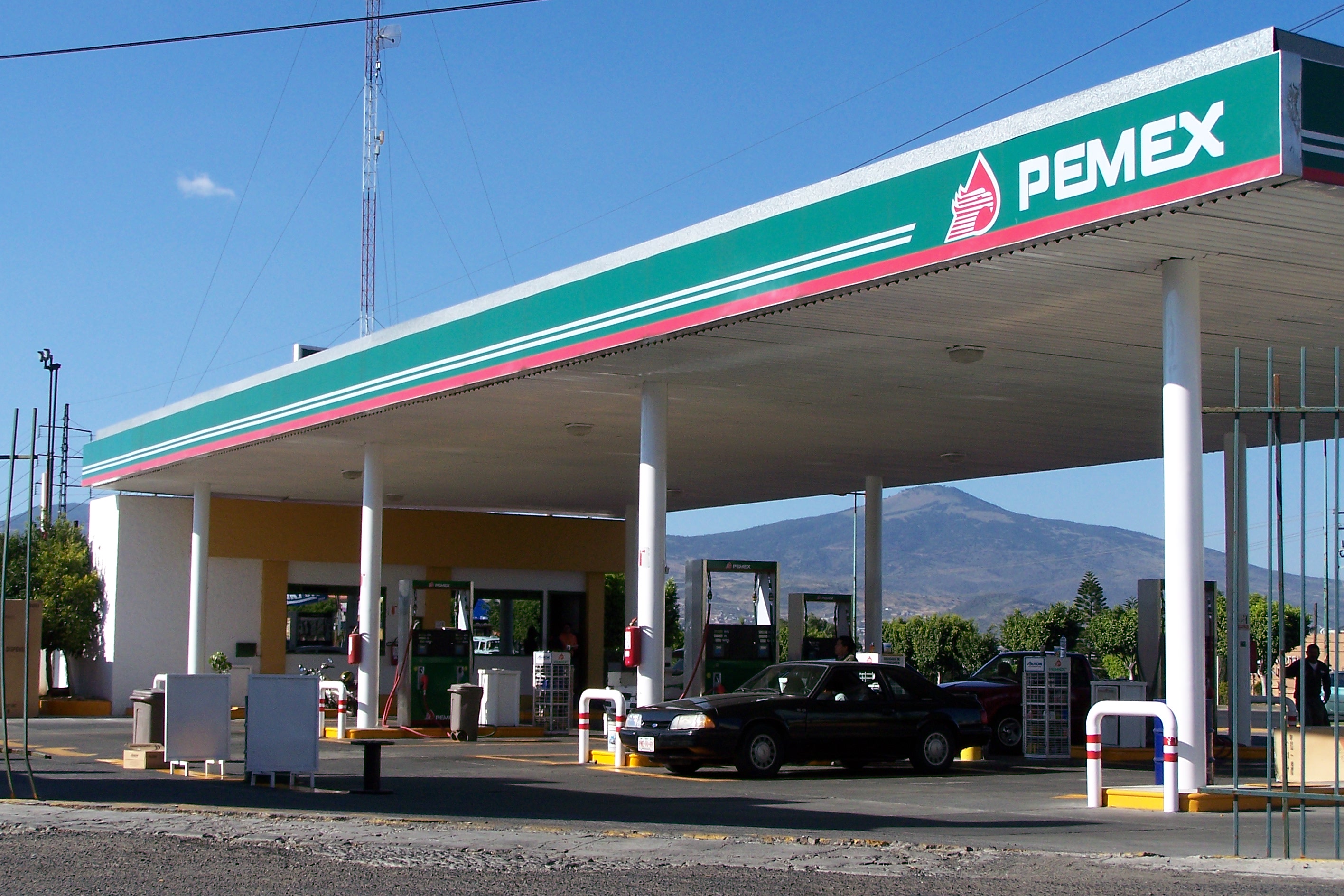 A Pemex gas station — the dominant fuel brand across Campeche and all of Mexico
Pemex is common across the state, alongside private fuel brands. Fill up in Campeche, Champotón, Escárcega, or Xpujil before a remote leg. The stretch between reliable stations can be long, and the Calakmul reserve road has no fuel station. A half tank is not a safe assumption for a full day of detours.
Stations are generally full-service: an attendant pumps the fuel. State the bill denomination clearly when paying cash, watch the pump reset, and check the receipt. Card readers can fail in rural areas, so carry pesos for fuel, tolls, parking, food, and site-related expenses. Keep small notes separate from the main wallet.
Download an offline map for the entire route before leaving coverage. Mark your accommodation, fuel stops, archaeological sites, and a fallback town. Do not rely solely on a pin for a remote attraction. Confirm the road name and final approach in advance, and ask your accommodation whether the route is passable after rain.
Rental car versus bus, taxi, or tour
A bus is usually better for a direct Campeche–Ciudad del Carmen journey, a city-to-city transfer, or an itinerary where you sleep in a few major hubs. It removes parking and lets you rest during the long highway sections. The disadvantage is flexibility: a bus will not wait while you explore a small town or take a detour to an unadvertised viewpoint.
A taxi hired for a full day can make sense for one difficult site, especially when shared among several travellers, but agree on the complete arrangement before departure. Clarify whether fuel, waiting time, entrance fees, and return are included. Do not treat an unmetered quote as a standard fare. For remote areas, ask your accommodation or local tourism office which current options actually operate.
A guided tour is useful when the road, site history, or reserve logistics would make independent travel stressful. It can also solve the problem of a one-way itinerary when a rental’s drop fee is high. Compare the live product, not just the title: check pickup place, language, group size, physical demands, meals, entrance fees, and return time. Compare Campeche-area activities on GetYourGuide · See current Campeche inventory on Viator.
GuideCampeche to Edzná: How to Get There by Bus, Taxi, Car & TourExplore
How the Tren Maya changes the decision
The train reduces the need for a car on some intercity legs and can be convenient for Edzná or connections toward Escárcega and Xpujil, depending on the current timetable and station arrangements. It does not remove every last-mile problem. Calakmul, Becán, Chicanná, and other sites still require a taxi, tour, or private vehicle from the relevant station or base.
Treat station names carefully. A station labelled for a major attraction may not place you at the entrance, and a remote station may have few onward services. Verify the station, arrival time, transfer, and return plan before buying a ticket. If you are using the train for one part of a route and a rental for another, check whether the rental office is open when you arrive and whether a one-way return is permitted.
Parking and city driving
Campeche’s historic centre is compact, with narrow streets, one-way systems, cobbles, pedestrians, and limited curb space. If you rent a car for a regional loop, choose accommodation with confirmed parking or leave the vehicle in a secure location and walk. Do not assume that a hotel listing’s “parking nearby” means a reserved space.
Move slowly in the centre and be cautious when leaving a garage onto a narrow street. Photograph the location where you leave the car, remove luggage from sight, and do not leave passports or rental paperwork in the cabin. The malecón is easier for driving than the oldest streets, but pedestrian activity and evening traffic still require attention.
A sensible rental-car itineraries
For a short trip, use the first and last nights in Campeche City without a vehicle, then rent for two or three nights. One day can cover the transfer toward Xpujil with a realistic stop; the next can focus on Calakmul; a third can cover one or two Río Bec sites before returning or continuing east. This is calmer than attempting Calakmul as a rushed round trip from the capital.
For a coast-focused route, compare a bus to Champotón or Ciudad del Carmen with a rental beginning there. A car is most valuable when you have several planned stops and enough time to wait out rain or a slow road. For a Chenes itinerary, use a larger town as your supply point, leave early, and keep the schedule loose.
For a city-and-ruins trip, do not rent from the first morning simply because the airport is convenient. Walk Campeche City, visit the historic centre, and learn how hot the afternoons feel. Pick up the car when you are ready to leave. That small decision often saves a day of rental, a day of parking, and an unnecessary counter negotiation.
GuideCampeche Car Rental Guide: When You Need a Rental CarPractical guide to renting a car in Campeche State — which destinations require one, which don't, what insurance you actually need, and how to avoid the common traps at the rental counter.ExploreA realistic budget worksheet
Before reserving, write the route on paper and estimate the car’s total cost rather than comparing daily rates in isolation. A two-day rental for a nearby excursion may be cheaper than a three-day rental that includes a rest day, but a longer booking can sometimes reduce the daily rate. Compare both totals. Add the distance of every leg, not only the distance between overnight bases. A wrong turn, a fuel stop, and a return to town all consume fuel.
For a remote archaeological itinerary, allow a margin for an extra night. Fatigue is a real cost: if rain, a delayed pickup, or a late site visit makes the planned return unsafe, the sensible decision is to sleep near the route. Keep enough available credit for the security hold even when the rental has been prepaid. Ask whether the hold is reduced by selecting the agency’s protection, and whether any deductible remains after a claim.
Separate fixed and uncertain expenses. The vehicle, taxes, and required cover belong in the fixed column. Fuel, tolls, parking, food, and an additional driver belong in the variable column. One-way returns and out-of-hours handovers may add a fee that is not obvious in the first search result. Screenshot the final quote, including the currency, and make sure you know whether the displayed amount is per day or for the complete rental.
A rental shared by three or four travellers can compare well with several bus tickets plus taxis, but only if everyone is comfortable with the driving days. A solo traveller may find a verified group excursion or bus-and-base itinerary simpler. Do not choose the car merely because it appears to offer freedom; choose it when the freedom solves a real transport gap in your plan.
Final checklist for a confident pickup
Before leaving the office, have the contract, inspection record, emergency number, and return instructions saved offline. Confirm your fuel level, tyre condition, spare, jack, lights, air conditioning, and warning lights. Set navigation before pulling into traffic. Keep water in the car, tell someone your rough route, and fill up before the long rural sections.
During the drive, slow for every settlement, pass only when visibility is clear, and avoid night travel. If a warning light appears, stop somewhere safe and contact the rental company. If you have a breakdown on a federal route, Ángeles Verdes roadside assistance may be reachable at 078, while 911 is the national emergency number; verify current service details before relying on them.
For the return, photograph the vehicle, fuel gauge, odometer, and parking position again. Ask for a signed return receipt or an email confirming the inspection. Keep the credit-card slip and final contract until the deposit release is visible. The best rental experience in Campeche is not the one with the lowest headline rate; it is the one that leaves you with enough cover, enough fuel, enough daylight, and enough time to enjoy the state beyond the highway.
If your route is only Campeche City and one intercity transfer, skip the car. If it includes Calakmul, Río Bec, Chenes villages, or several remote coastal stops, compare a carefully insured rental against a verified tour and a point-to-point bus plan. Choose the option that matches the roads and distances you will actually travel, then keep every rural driving day deliberately shorter than the map makes it look.
Check current Campeche City hotel rates on Booking.com · Compare Campeche stays on Trip.com
Frequently asked questions
Can I rent a car in Campeche City instead of at the airport?
Yes, downtown offices may be available, but location, hours, fleet, and deposit terms vary. Compare the complete quote with airport pickup and confirm the exact return process before paying.
Is an SUV required for Calakmul?
Not automatically. Road conditions, weather, rental restrictions, and the exact route matter. Ask the agency whether your vehicle is permitted on the planned approach and choose clearance and comfort based on the current conditions rather than assuming four-wheel drive solves every problem.
Is it safe to drive in Campeche?
Daylight driving on the main routes is manageable for an alert driver. The larger concerns are topes, potholes, livestock, wildlife, fatigue, rain, and long distances without services. Avoid night driving in remote areas, carry documents and water, and download offline maps.
Can I use my credit-card insurance?
Possibly for some damage risks, but it may not replace Mexican third-party liability and the rental company may require proof or a deposit. Obtain the card issuer’s Mexico-specific terms in writing before declining the agency’s protection.
Should I rent a car for Campeche’s historic centre?
No. Walking and taxis are simpler. Rent only when the rest of your itinerary benefits from independent transport.
What is the best base for visiting Calakmul by car?
Xpujil is the practical base for Calakmul and the Río Bec sites. Confirm accommodation, fuel, and the next day’s access before leaving the main highway. Do not assume the archaeological-site station has taxis, hotels, or supplies.