
Edzná is one of the easiest major Maya archaeological sites to visit from San Francisco de Campeche, but “easy” depends on the transport choice. The ruins are close enough for a half-day outing, yet far enough from the walled centre that you should decide how you are returning before you leave. A local bus or colectivo keeps the trip inexpensive. A taxi removes the uncertainty of the return journey. A rental car gives you the most control over timing and makes it possible to add another stop in the countryside. A guided visit costs more, but it can be the least complicated option if you want transport and interpretation handled together.
The site lies in Campeche State, roughly an hour from the city by road, on the highway toward the inland communities east of the capital. INAH’s current visitor information places the entrance on the Campeche–Edzná road near the Federal Highway 188 junction and lists daily opening from 08:00 to 17:00, with last access at 16:30. Check the official listing before travel because archaeological-site schedules and fees can change. The same INAH listing currently shows separate national and foreign visitor fees, so budget in pesos and confirm the amount at the gate rather than relying on an old blog post.
This is a practical route guide rather than a recommendation to force every option into every itinerary. If the bus timing works for you, it is a sensible independent day trip. If you have children, mobility concerns, limited Spanish, or a fixed evening plan in Campeche, a taxi or verified tour may be worth the extra cost. The important thing is to allow enough time for the ruins themselves instead of treating the journey as a quick photo stop.
The route at a glance
Edzná is not in Campeche’s historic centre and it is not on the city’s urban bus network. The journey leaves the built-up area and follows a state road through low-density countryside before joining the Federal Highway 188 corridor. INAH describes the approach from Campeche via the roads connecting Pocyaxum, Nohacal, and Tixmucuy; at the Highway 188 junction, the route continues east for approximately 10 kilometres to the archaeological site. Road distances quoted by different services vary because they use different departure points, but a journey of around 50–55 kilometres from Campeche is a useful planning figure.
By car or taxi, allow about an hour each way in ordinary conditions. A colectivo or second-class bus may take longer because it can stop for passengers or follow a less direct route. A tour may advertise a shorter drive from a central pickup, but the total activity still needs several hours once pickup, entry, orientation, and the site visit are included.
The route is manageable in a morning, but heat changes how it feels. Edzná has broad plazas and exposed stone, with limited shade in the most important architectural areas. An early departure is more comfortable and leaves a margin if the bus is delayed, you need to find the return pickup point, or you want lunch back in Campeche. Do not plan a tight connection to an afternoon flight, long-distance bus, or train without leaving substantial extra time.
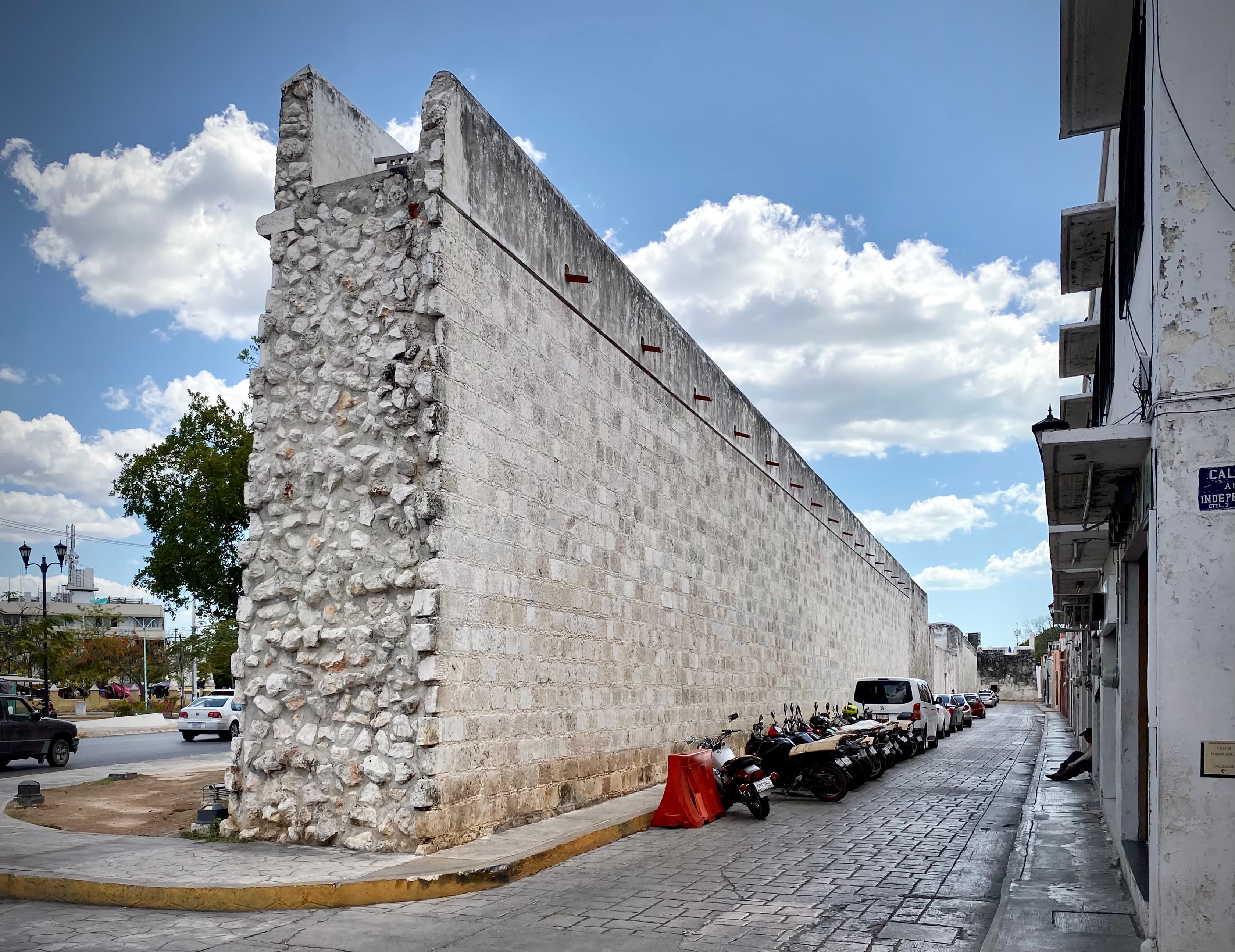
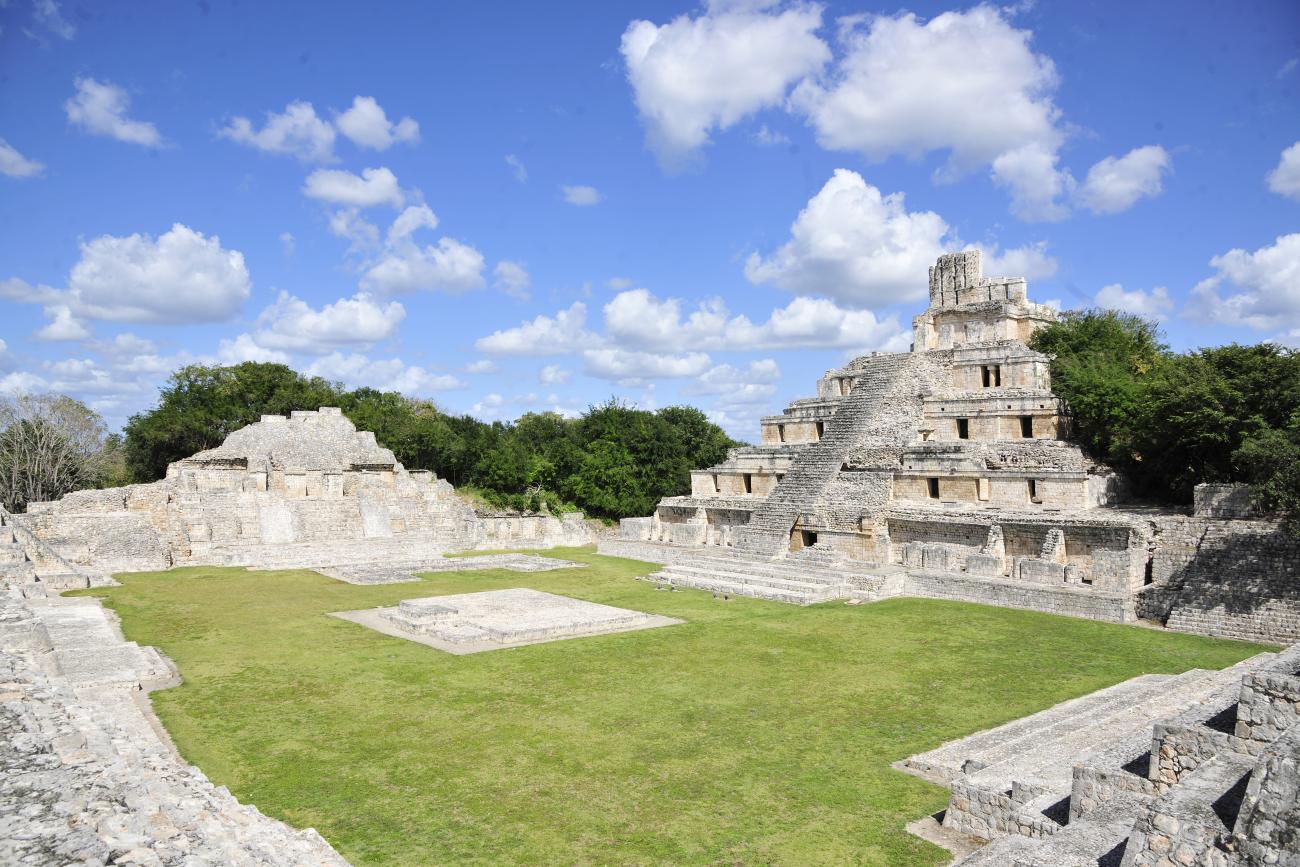 The approach road and archaeological landscape around Edzná in Campeche
Need transport? Book a transfer on WhatsApp.
By local bus or colectivo: the low-cost option
Independent public transport is attractive because Edzná is close to Campeche compared with the state’s jungle sites. It is also the option that needs the most attention to current departure details. Services can be described online as a bus, colectivo, or second-class route, and the departure point, frequency, and fare may change. Treat online timetable pages as a starting point, not a guarantee. Ask at the Campeche bus terminal, a staffed local transport counter, or your accommodation on the day before the visit, then confirm the return plan at the same time.
Several traveller reports place Edzná-bound shared transport near the market area outside the historic centre, while other route listings show second-class departures from Campeche toward Edzná. That difference is exactly why it is unwise to walk to a remembered corner based on an old article and assume the service still leaves there. The market and bus-station areas are not interchangeable. Confirm the precise departure point, the wording to use with the driver, and whether the vehicle goes to the archaeological entrance or only to a nearby junction.
When you board, say “Edzná, zona arqueológica” clearly and keep the site name written on your phone. Ask whether the driver will stop at the entrance or at the highway junction. If the vehicle drops you near a junction rather than inside the access road, you may have a short walk, but the shoulder and traffic conditions can be uncomfortable in heat. Do not assume a taxi will be waiting at the site or at the road after your visit.
A current route listing has shown a morning Campeche-to-Edzná service with a journey of roughly an hour and a fare in the tens of pesos, but schedules and amounts are not stable enough to present as a promise. Carry small bills and coins, and budget more than the advertised one-way fare in case you need a local connection or a taxi for part of the return. Cash remains the practical default for small transport and rural stops.
Planning the return by public transport
The return is the part that catches out visitors. A vehicle that leaves Campeche in the morning may not operate at the same frequency in the afternoon, and a driver may be unwilling to stop for a passenger waiting at the roadside if the vehicle is full. Before entering the site, ask staff or other local travellers where the return vehicle is normally hailed. Keep enough daylight for the walk from the entrance to any pickup point.
If the driver drops you near the access road, return to the same clearly identifiable point unless a local transport worker tells you otherwise. Stand where a vehicle can see you and use a clear hand signal. Do not wait deep inside the archaeological-site parking area assuming every bus will enter. If no vehicle appears after a reasonable wait, use the backup money you carried for a taxi and call your accommodation or a local taxi stand for help. Mobile coverage can be inconsistent, so download the map and save the location before leaving Campeche.
Public transport suits travellers who are comfortable with flexible timing. It is less suitable if you need to be back in the city by a precise hour, are travelling with large luggage, or become stressed when a rural service does not follow a published timetable. The savings are real, but the trip requires a little patience and local confirmation.
By taxi: simple, but agree the terms first
A taxi is the most straightforward private way to reach Edzná without driving. You can ask your accommodation, a taxi stand, or a trusted local contact to arrange the ride. The useful question is not only “How much to Edzná?” but also “Does the fare include waiting time and the return?” A one-way drop-off is not enough unless you already have a verified return arrangement.
For a day trip, ask for a round trip with an agreed waiting period. Put the arrangement in writing on your phone in Spanish if necessary: destination, return to Campeche, approximate departure and return, whether the driver waits, and whether any toll or parking charge is included. Do not pay the entire amount until you understand the terms. Taxi pricing can depend on the vehicle, pickup area, waiting time, and whether the trip is arranged through a hotel or a street stand, so current local quotes are more useful than a fixed figure copied from an old guide.
A taxi is particularly useful for two or three people who value time more than the lowest fare. It also works well for an early start, when you want to arrive before the strongest heat, or for travellers who do not speak much Spanish. A driver who knows the route can also help you avoid confusion at the Highway 188 junction. That does not make the driver an archaeological guide: agree separately if you want a guided explanation, and never assume a driver is authorised to guide inside the site.
The main drawback is dependence on one person and one agreement. Save the driver’s number, photograph the car or note its plate, and carry enough cash for the return. If the driver proposes a long stop at another attraction, confirm whether that changes the price and the time. Keep the day focused unless you have deliberately hired a full-day vehicle.
By rental car: the best choice for flexible exploration
Driving yourself gives you control over the start time and the length of the visit. From central Campeche, follow the signed route toward Edzná and the Federal Highway 188 connection, then continue to the archaeological entrance. Use an offline map before leaving because rural signal can be uneven and map apps may choose different approaches. The road is not a jungle expedition like the access route to Calakmul, but it is still a regional drive where pedestrians, bicycles, motorcycles, animals, speed controls, and unexpected roadworks deserve attention.
A compact car is generally adequate for the paved approach in normal conditions. The question is not whether the road feels adventurous; it is whether the vehicle is insured correctly and whether you are comfortable driving outside the city. Photograph the rental car before leaving, check the spare-tire situation, and understand the agency’s roadside-assistance rules. Avoid returning after dark if you are unfamiliar with the route. The heat can make a morning visit feel short, but the drive back in late afternoon may coincide with glare, fatigue, and local traffic.
Fill the tank in Campeche and do not depend on finding fuel at the archaeological site. Bring water for the road, but remember that INAH rules may restrict food inside the site. Eat before entering or after leaving, and take rubbish back with you. Parking is available according to the official site information, but conditions and capacity can change during busy periods.
A car becomes more useful if your wider plan includes the villages and archaeological sites of the Chenes area, a second Campeche City museum, or a countryside lunch stop that you have independently verified. Do not add a string of named haciendas or private properties simply because a map shows them; opening arrangements are not always public, and some access requires advance permission. For a first visit, Edzná alone is a complete half-day outing.
How long should you allow by car?
For a direct visit, reserve a full morning or a relaxed half day. The drive takes around an hour in each direction, while the site itself deserves at least two hours if you want to understand the layout rather than see only the tallest building. Add time for the entrance process, photographs, walking between plazas, heat breaks, and the possibility of slower traffic.
A common mistake is leaving Campeche late, rushing through Edzná, and then trying to fit a second remote attraction into the same afternoon. That approach can turn an enjoyable archaeological visit into a hot sequence of parking lots. Start early, visit Edzná with enough time to read the signs and look at the hydraulic features, then return to the city for lunch and an evening walk on the malecón or inside the walled centre.
GuideCampeche Car Rental Guide: When You Need a Rental CarPractical guide to renting a car in Campeche State — which destinations require one, which don't, what insurance you actually need, and how to avoid the common traps at the rental counter.Explore
By guided tour: the least complicated package
A guided Edzná visit makes sense when you want door-to-door transport, historical context, or a fixed plan. Current marketplace inventory includes verified Edzná products from Campeche, including Edzná with a local: an archeo Mayan adventure on GetYourGuide and Edzná, the house of the Itzaes on Viator. Check the live listing for pickup area, language, duration, cancellation terms, what is included, and whether entrance is paid separately. Do not assume every listing uses the same transport or guide arrangement.
A tour is not automatically better than public transport. Its strengths are clarity and interpretation: the guide can connect the Great Acropolis, the Building of the Five Floors, the sacbé network, and water management into one story. The trade-off is less control over how long you stay at each structure. Ask whether the outing is private or shared, how many hours are spent at Edzná, and whether the itinerary includes a city tour or another stop. A product that combines several places may be useful, but it gives you less time at each one.
For travellers who want a local experience without arranging every detail, a small-group or private product can be a reasonable middle ground. Read recent reviews for practical clues about pickup reliability and communication, not only the star rating. Confirm the meeting location the evening before, especially if your accommodation is inside narrow historic-centre streets where a large vehicle may not enter.
If your main goal is archaeology, choose a product whose description gives Edzná meaningful time. If your goal is a broad introduction to Campeche, a combined city-and-site itinerary may fit better. In either case, bring water, sun protection, and shoes suitable for uneven ground; a guide does not remove the heat.
Staying in Campeche before or after the visit
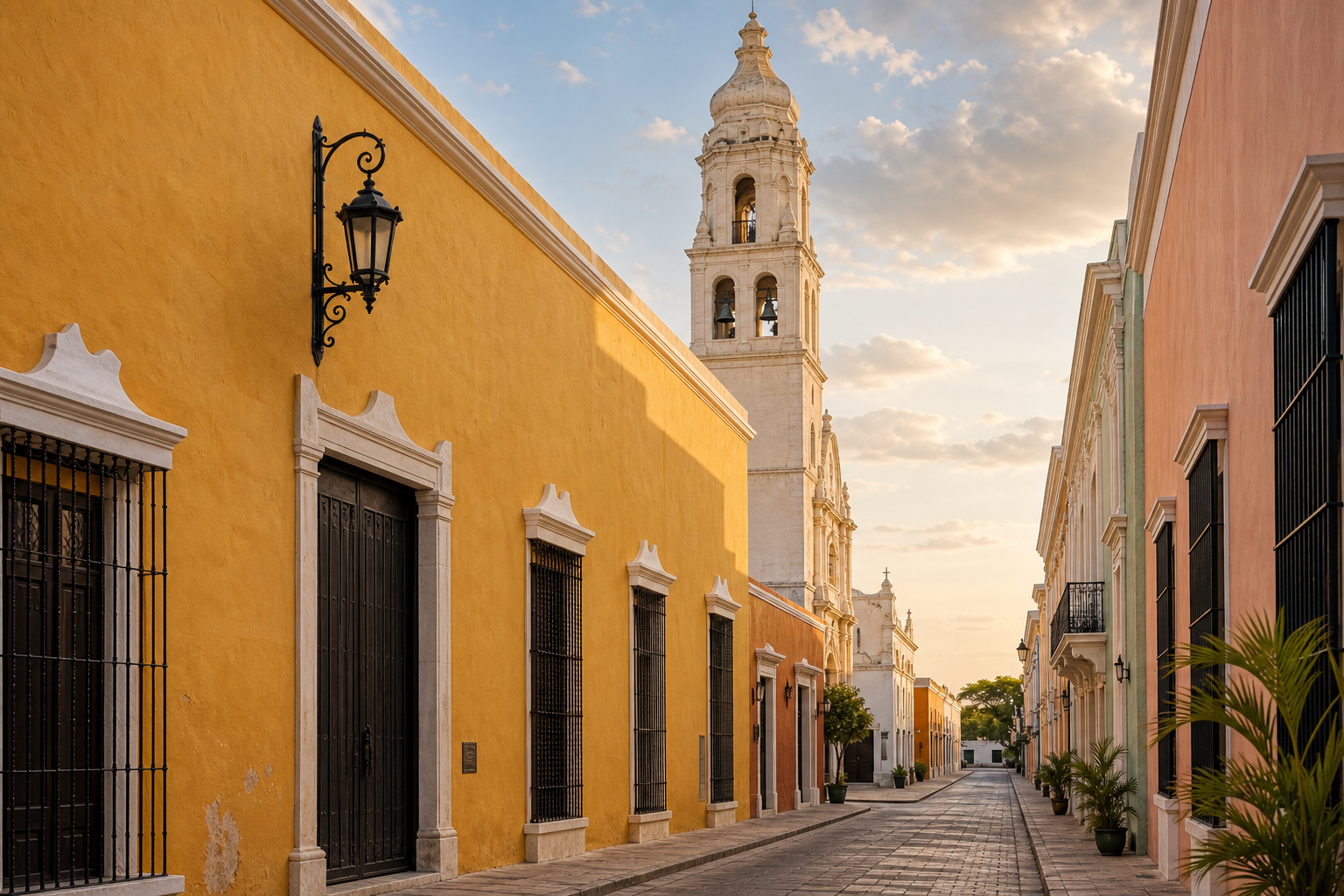
Most visitors use San Francisco de Campeche as their overnight base. That is practical because the city has the widest choice of rooms, food, taxis, and transport information, and Edzná is close enough for a morning departure. Staying inside or near the historic centre is convenient for walking, but confirm where a taxi or tour vehicle can meet you. A narrow colonial street may be pleasant on foot but awkward for a pickup.
You can check current Campeche accommodation rates on Booking.com and compare Campeche stays on Trip.com. Search with your exact dates rather than relying on a displayed sample rate. Air conditioning is valuable in the warm season, and secure luggage storage helps if you are travelling onward after Edzná.
There is also accommodation in the wider Edzná area, including newer listings near the train corridor, but it is a more isolated choice. Before booking, verify the property’s exact location, how you will arrive without a car, whether taxis are available, and where you will eat. A rural room can be useful for a longer route through inland Campeche, but it is not automatically a better base for a single Edzná visit. For most first-time visitors, Campeche City keeps the logistics simpler.
GuideCampeche Travel Guide: Everything You Need to Know Before You VisitExplore
What to see once you arrive
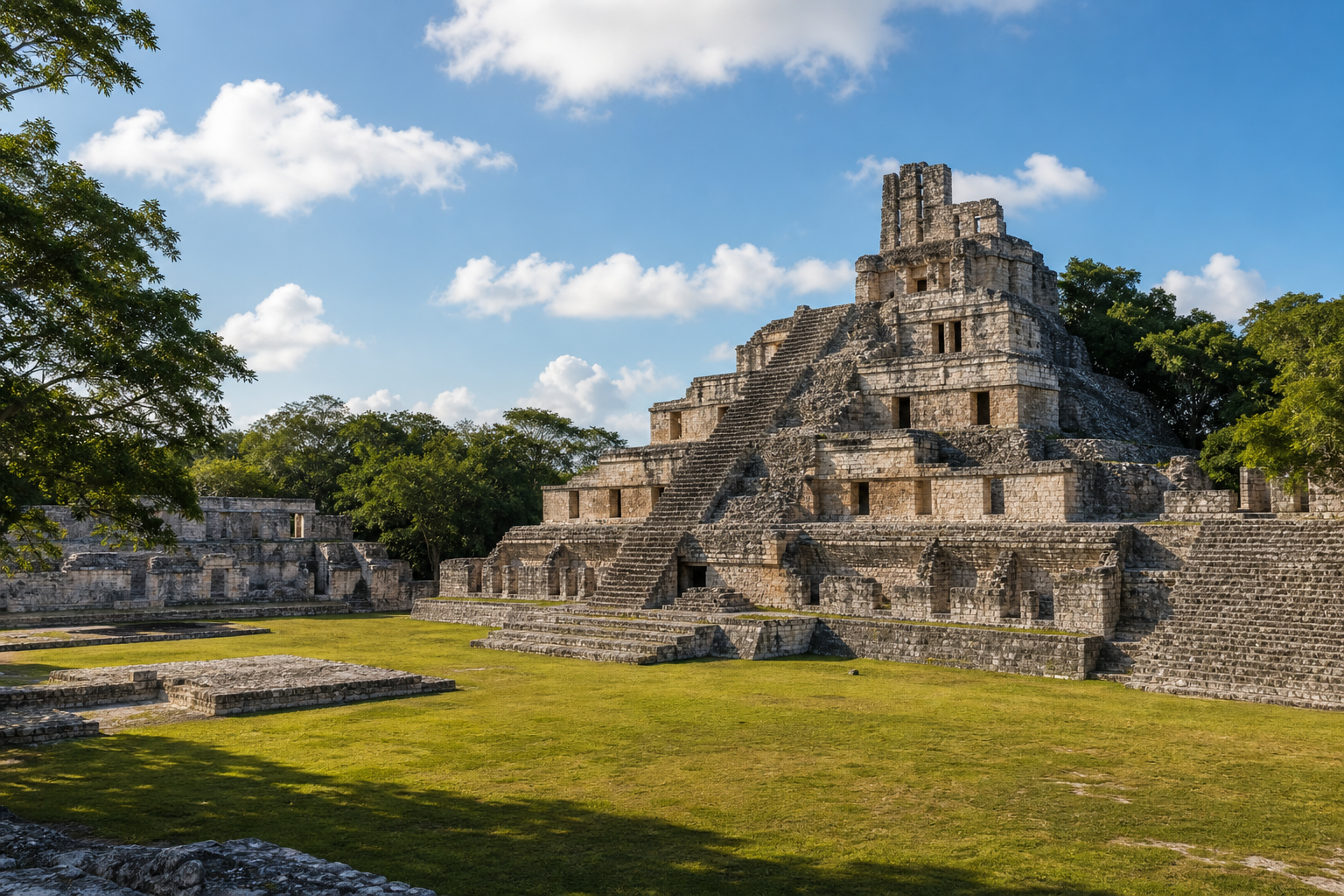
Edzná was a major Maya centre whose visible architecture reflects long occupation and changing regional connections. The site is especially useful for travellers who want to see how Maya cities managed water as well as how they organised plazas, elevated platforms, temples, and causeways. INAH describes a sophisticated system for collecting and storing rainwater and a drainage network, an important reminder that the broad plazas were part of an engineered landscape rather than simply open spaces between monuments.
Begin by orienting yourself instead of walking straight toward the most prominent pyramid. Look at how the buildings frame the central areas and notice the changes in level. The Great Acropolis is the architectural focus for many visits, while the Building of the Five Floors gives Edzná its immediately recognisable profile. Depending on current conservation rules, access to steps and upper levels may be restricted. Follow barriers and staff instructions; a good photograph is never worth climbing a closed structure.
The Templo de los Mascarones is another important stop. INAH identifies its modeled stucco masks with solar imagery and places the structure within the site’s earlier architectural history. The masks are fragile, so view them carefully and do not touch the surfaces. The site’s archaeological story is not only about a single pyramid. Allow time for the smaller platforms, the plaza edges, the sacbé alignments, and the relationship between monumental architecture and water control.
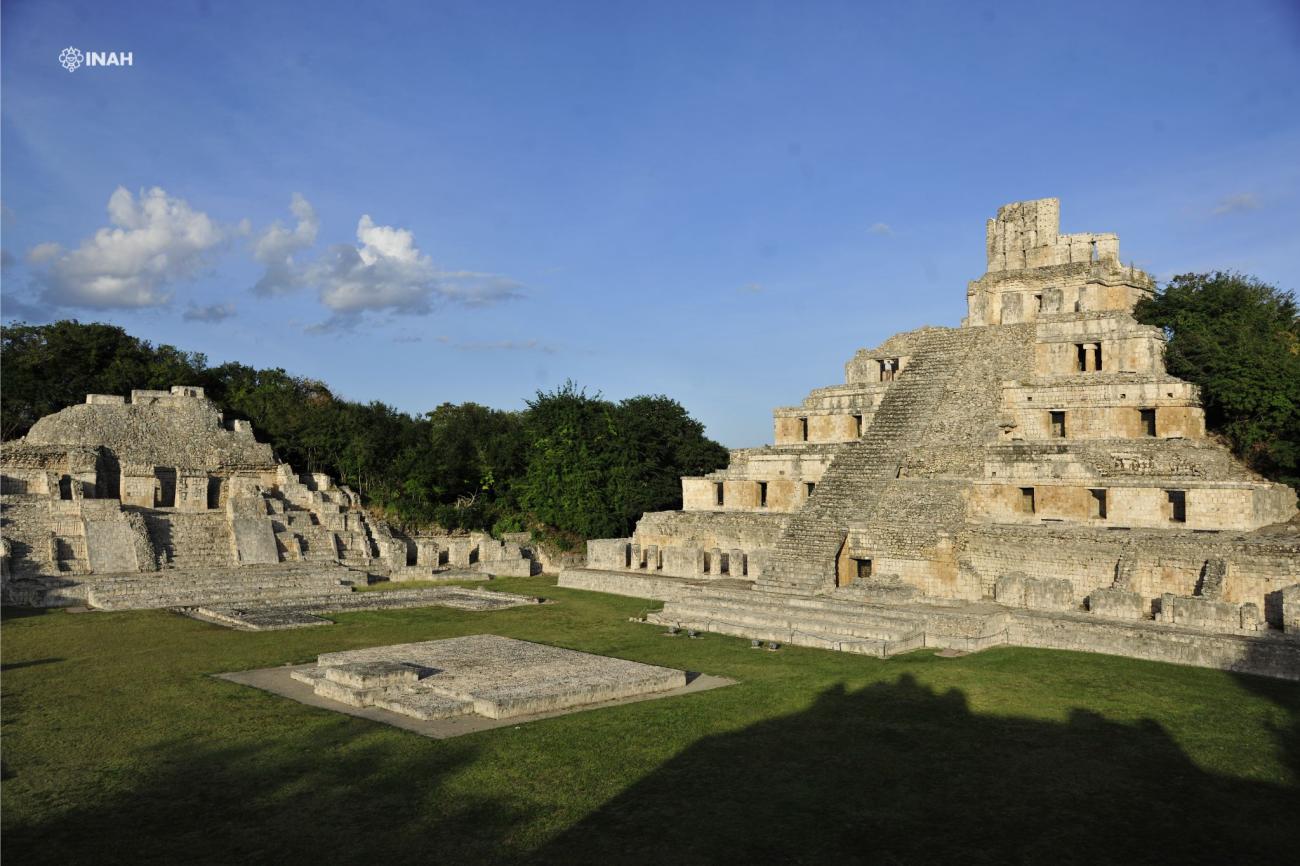 The Templo de los Mascarones at Edzná, Campeche
The site is spacious enough that a quiet visit can feel unhurried, but heat changes the pace. Walk slowly, pause in available shade, and avoid treating every structure as a place to climb. A hat, breathable clothing, sunscreen, and insect repellent are more useful than elaborate camera equipment. Bring a refillable bottle if permitted by the current site rules, and do not leave plastic or food waste behind.
Opening hours, fees, and site rules
INAH’s current Edzná listing shows Monday-to-Sunday access from 08:00 to 17:00, with last access at 16:30. These are the figures to use for initial planning, but verify them close to your travel date on the official page because public holidays, conservation work, weather, or administrative changes can affect access. Arrive early even though the site opens daily: morning temperatures are easier, and a delayed bus will not consume your entire visiting window.
The same official listing currently displays a national fee of MXN 105 and a foreign-visitor fee of MXN 210. Treat those as current published reference figures, not a permanent promise. Bring pesos, keep small notes where possible, and ask about applicable exemptions or discounts if you are a student, teacher, INAPAM cardholder, child, or Mexican resident. Rules around documentation and free Sunday access can be specific, so carry the required identification if you intend to request a discount.
INAH’s information lists services including parking, restrooms, a shop, and guided visits, but availability on the day can vary. Food and drinks may be restricted inside the archaeological area, so eat beforehand and follow the entrance rules. Drones, pets, smoking, professional photography, and tripods may require restrictions or separate permission. If photography is important to you, check the current rules at the ticket counter rather than assuming a camera or phone is treated the same way as commercial equipment.
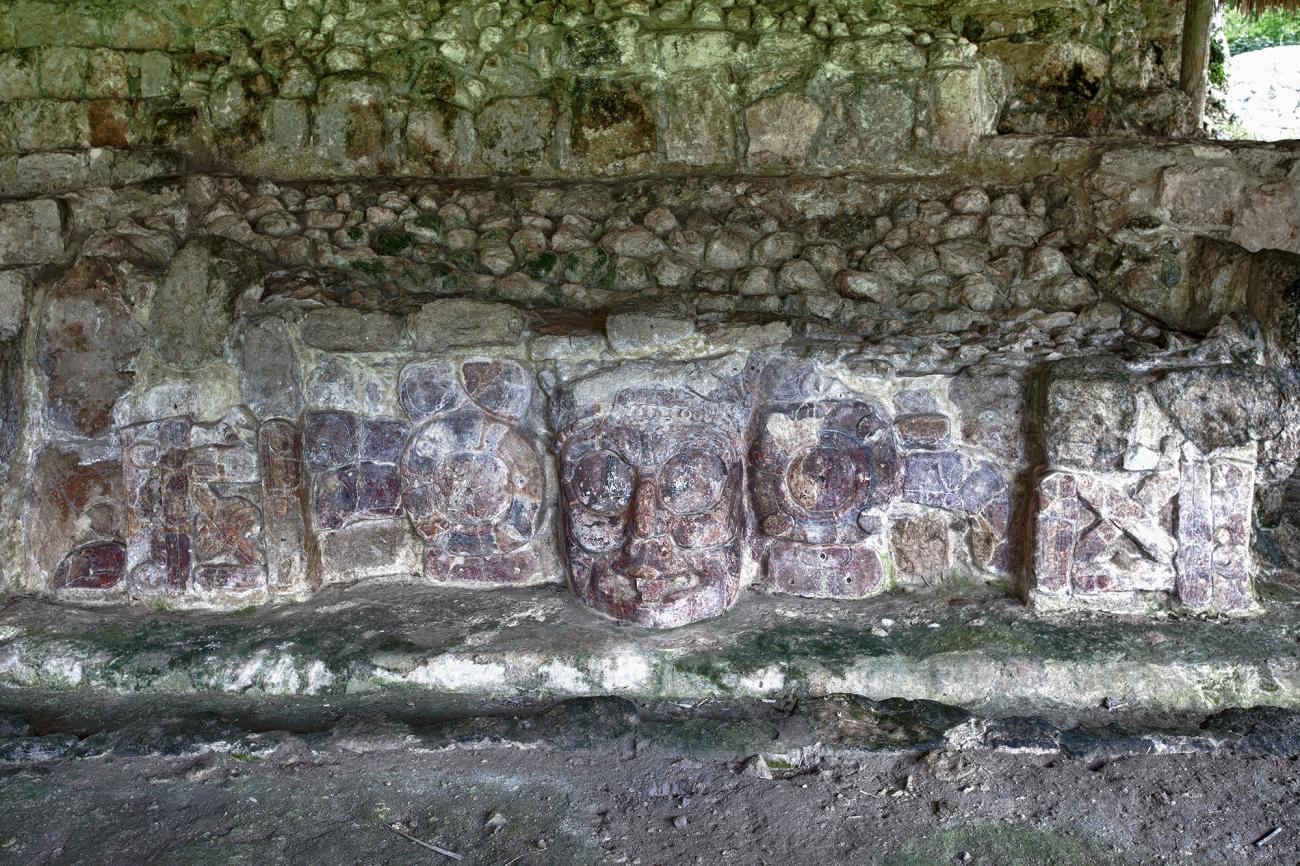 The Building of the Five Floors in the Great Acropolis at Edzná
Edzná with children or older travellers
Edzná can work well for families because the drive from Campeche is shorter than the journey to Calakmul, but it is not a stroller-friendly indoor attraction. Paths are open to the weather, surfaces can be uneven, and the large plazas require walking. Bring a carrier rather than relying on a pushchair if your child is very young, and plan a shorter circuit if the heat becomes too much.
Older travellers and anyone with limited mobility should ask about current accessible routes before paying. The most important architecture is spread across open ground, and stairs or steep changes in level may make some structures difficult. A taxi or private vehicle allows you to arrive at the most comfortable time and carry water and shade equipment, while a tour can provide more help with orientation. No transport option changes the need for sensible pacing at the site.
For children, turn the visit into a search for practical clues: where water might have collected, how people moved between plazas, and why a building was raised above the surrounding ground. This makes the site more engaging than asking children to remember a list of monument names. Avoid encouraging climbing, touching stucco, or entering closed areas.
Combining Edzná with other stops
Edzná pairs naturally with a day in Campeche City, but the order depends on transport. With a car, visit Edzná early and return for the historic centre, museums, or malecón later. With a bus, keep the rest of the day flexible until you know when you will be back. With a tour, read the itinerary closely: a city walk before or after the ruins may leave less time for independent exploration.
You can also use Edzná as part of a wider inland route, but do not confuse geographic closeness on a map with an easy same-day connection. Sites in the Chenes and Río Bec areas require separate planning, and some roads have limited services. Calakmul is a different scale of journey entirely; it involves a long drive through the reserve and should not be added casually after a morning at Edzná. The same applies to out-of-state sites: keep this trip within Campeche unless you have deliberately built a multi-day route.
If you want to add a town or market stop, confirm that it is open and on your route before leaving. Rural Campeche is not a row of continuously available attractions. A locked gate, a private property, or a missed last bus can remove the supposed second highlight. One well-paced Edzná visit followed by time in Campeche is usually better than an itinerary assembled from map pins.
Safety and comfort on the route
The principal practical risks are heat, dehydration, traffic, and an uncertain return connection rather than technical difficulty. Use official transport or a clearly arranged taxi, avoid displaying large amounts of cash, and keep valuables out of sight. In the city, use established taxi stands or accommodation-arranged rides when possible. On the rural road, stay away from the traffic lane and do not walk farther than necessary if dropped at a junction.
Download the INAH page, offline maps, your accommodation details, and your return notes before leaving Campeche. A screenshot of the route and the Spanish phrase “¿Dónde puedo tomar el colectivo de regreso a Campeche?” can be useful. Carry cash in separate places, a charged phone, water, sunscreen, insect repellent, and a light layer for an air-conditioned bus. The site’s open landscape can be bright even when the city feels cloudy.
During the rainy season, showers can arrive quickly and muddy shoulders can make roadside waiting unpleasant. Roads may remain passable while taking longer than expected. During the dry season, heat and sun are the larger concern. Neither season makes a late departure attractive. If the forecast is poor, ask the site and transport provider about conditions rather than assuming a cancellation or assuming everything is normal.
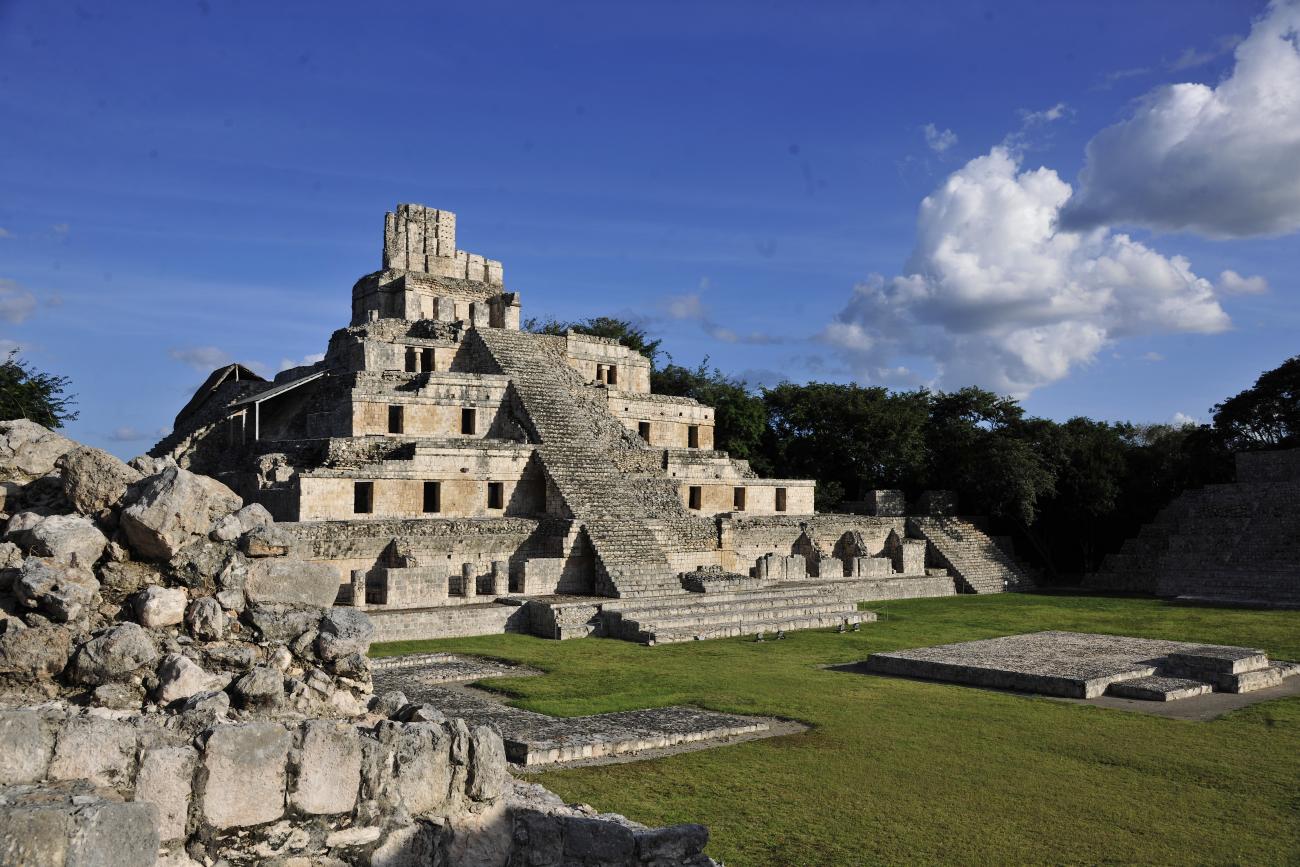 The Building of the Five Floors rising above the Great Acropolis at Edzná
Which transport option is right for you?
Choose the bus or colectivo if you are travelling on a budget, have flexible timing, speak enough Spanish to confirm the route, and are comfortable arranging the return locally. Confirm the departure point and return before entering the site.
Choose a taxi if you are travelling with a companion, want a morning departure, need a reliable return, or prefer not to navigate rural public transport. Agree the round-trip and waiting terms before leaving Campeche.
Choose a rental car if you want control over the day, plan to explore more of inland Campeche, or have luggage and equipment to manage. Download offline maps, check insurance, and avoid driving after dark.
Choose a guided tour if you want interpretation, hotel pickup, or one confirmed booking rather than several moving parts. Compare the live GetYourGuide and Viator descriptions and make sure Edzná receives enough time for your priorities.
For most first visits, the best balance is an early independent trip by car or a verified small-group tour. Public transport is entirely possible, but the return requires the most flexibility. Whichever option you choose, treat Edzná as a real archaeological visit rather than a quick add-on: arrive early, walk slowly, look beyond the main pyramid, and leave enough time to return to Campeche before the day becomes complicated.
Final recommendation
If you are staying in Campeche City, plan Edzná as a half-day excursion with a generous return buffer. Use the morning for the site, carry cash and sun protection, verify the current INAH information, and decide your return transport before you enter. Take the colectivo when saving money matters and uncertainty does not, arrange a taxi when time matters, drive when you want to explore beyond the direct route, or book a verified tour when you want the history and logistics handled together. That simple choice keeps one of Campeche’s most accessible Maya sites enjoyable instead of rushed.
Need transport? Book a transfer on WhatsApp.