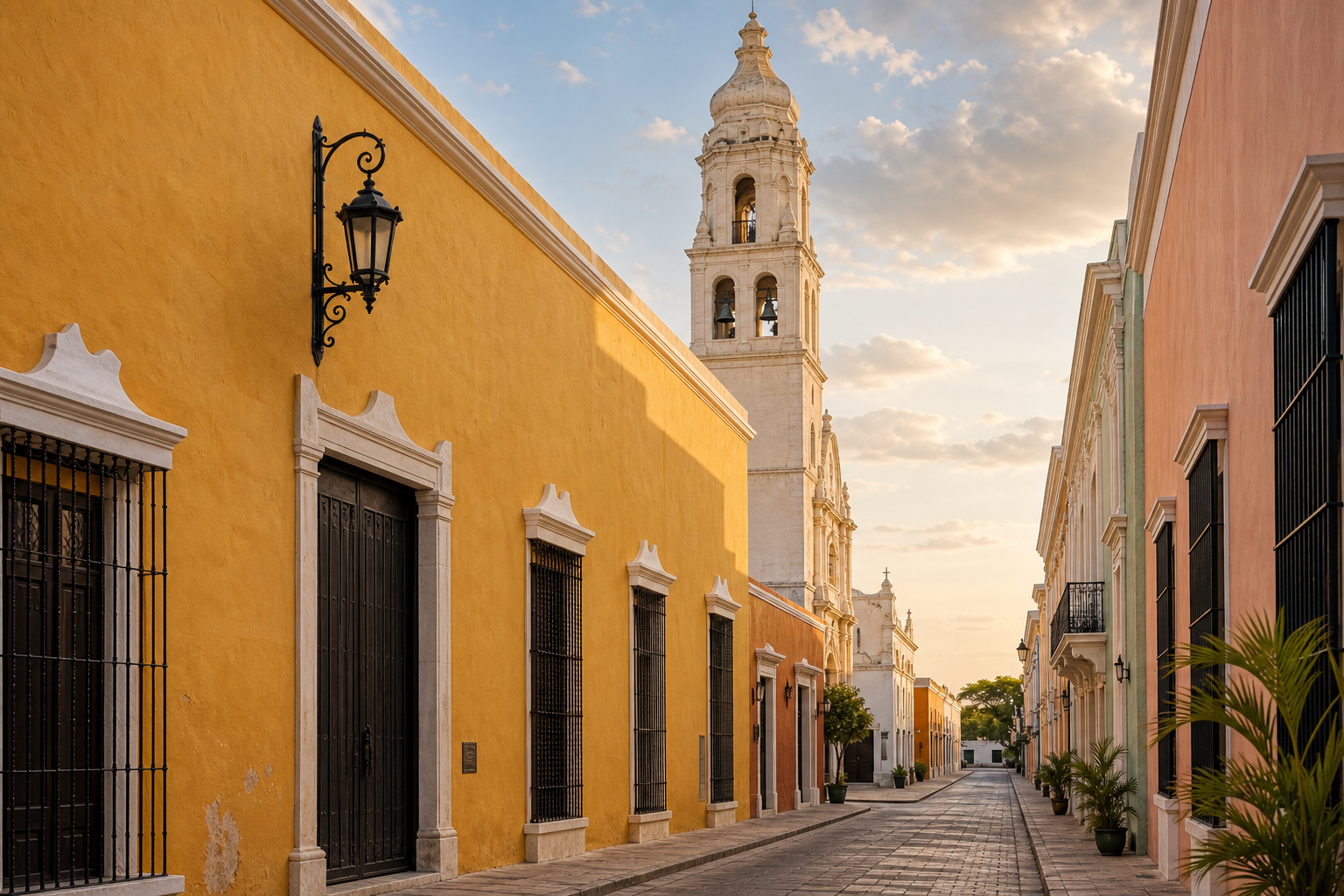

Campeche is easiest to understand as a state of separate travel moods rather than a single resort destination. San Francisco de Campeche gives you a compact fortified city, Gulf sunsets, museums and streets that are simple to explore on foot. Edzná is a manageable archaeological day trip from the capital. Farther south, Calakmul and the Río Bec sites lead into a much longer forest journey, where the drive and the protected landscape are part of the experience. Along the coast, Champotón, Sabancuy, Isla Aguada and Ciudad del Carmen offer different versions of Gulf travel, from working ports to lagoon wildlife and low-key beach time.
That variety is the reason to plan by geography. A traveler who treats every place as a quick excursion will spend too much of the holiday on highways. A traveler who uses the city for everything will miss the state’s most distinctive archaeology and wildlife. The best route usually combines a walkable urban base with one or two carefully chosen inland or coastal additions, leaving enough time for heat, meals, transport delays and the simple pleasure of not moving every morning.
This guide is for independent travelers planning a first visit to Campeche State. It explains where to go, how long to stay, how to travel between bases, what to do with limited time, and which expectations need adjusting. It keeps Campeche city separate from Calakmul: they are in the same state, but they are not neighboring attractions.
Decide what kind of Campeche trip you want
Before booking transport, identify the main reason for the visit. If colonial streets, museums and food are the priority, stay in San Francisco de Campeche and explore slowly. If Maya archaeology is the focus, use the capital for Edzná and create a separate southern base for Calakmul or the Río Bec route. If you want coast and wildlife, look toward Champotón, Isla Aguada, Laguna de Términos and Ciudad del Carmen. If you are crossing the peninsula, Campeche works well as a calmer stop between Yucatán and the southern states, but do not turn the entire itinerary into a list of places seen through a bus window.
A first-time city visit can work in two nights, although three nights gives you room for a museum day, an unhurried historic-centre walk, the malecón at sunset and one decision about a day trip. A state-wide route needs more than a city weekend. Add a night near Xpujil or another southern base when Calakmul matters. Add coastal nights only if you genuinely want lagoon, beach or port landscapes; a coast stop is not automatically a better version of the city.
The trade-off is straightforward. Campeche city offers convenience and density: meals, accommodation, museums, pharmacies, transport connections and a walkable centre. Southern Campeche offers scale and atmosphere, but fewer services and longer distances. Coastal towns offer a different pace, but public transport and tours can be less predictable than in the capital. Choose the experience first, then choose the route.
Need transport? Book a transfer on WhatsApp.
When to visit Campeche
Campeche is warm throughout the year. The practical question is not whether you can travel in the heat, but how much heat you want to manage while walking, climbing archaeological structures or sitting in a vehicle without frequent shade. The cooler, generally drier part of the year is often more comfortable for a first visit, especially if your plan includes long outdoor days. Even then, midday can be intense.
The warmer months can reward travelers who plan around the sun. Begin city walks early, take an indoor break through the middle of the day, and return to the streets or waterfront later. At ruins, shade is limited and the stone reflects heat. In the rainy season, showers can be sudden, roads can feel slower, and forest paths may be muddy or humid. Rain does not make a trip impossible, but it makes flexible scheduling more valuable.
Hurricanes and tropical storms are a seasonal consideration on the Gulf coast. Monitor official weather information before a coastal or boat-based outing, and do not assume that a previously advertised departure will operate in poor conditions. Lagoon and wildlife activities depend on water, wind and local decisions. For Calakmul, weather affects both the road and the comfort of walking through the reserve.
Festivals can change the atmosphere and the availability of rooms in Campeche city. Carnival, religious celebrations and local fairs are reasons to visit if you want public life and events, but they can also mean more noise, traffic or sold-out accommodation. Check the current calendar and book early if your dates are fixed.
Getting to Campeche State
San Francisco de Campeche is the most useful arrival point for a first visit. The city has an airport, a major intercity bus station and a Maya Train station, although route frequency and schedules are date-dependent. Mérida is a practical border gateway for travelers arriving by air with more flight choices, while Ciudad del Carmen Airport serves the southern and western side of the state. Choose the arrival airport according to the first base, not simply the cheapest ticket.
The intercity bus is often the simplest choice for the capital. It connects Campeche with Mérida, Cancún, Playa del Carmen, Chetumal, Villahermosa and other cities, but departure times and ticket classes change. Check the current schedule directly with the operator or at the station. Keep a buffer when connecting to a flight, train or tour; a road journey that is usually comfortable can still be affected by traffic, weather or a delayed departure.
The Maya Train can be useful for selected intercity legs, but it is not a magic solution for reaching every attraction in Campeche State. A station may be outside the exact place you want to visit, and the train schedule may not align with a same-day archaeological visit. Use the official Maya Train ticket portal for current availability rather than relying on an old timetable. For the capital, compare the train’s station transfer and departure time with the bus before deciding.
If you fly into Mérida and continue to Campeche, the overland journey is a logical first leg. Mérida itself is outside the scope of this guide, but the connection is useful for travelers building a Campeche-focused route from the northeast. If you arrive through Ciudad del Carmen, organize the first night around the southern coast or the Laguna de Términos area rather than assuming the capital is a short local transfer.
Choosing between bus, train, rental car and tours
A rental car is most useful when you want to combine several places that do not share a convenient public-transport timetable. It gives you control over early starts, luggage and stops, especially on routes toward Edzná, Champotón, the Río Bec sites and Calakmul. The disadvantages are fatigue, night-driving risk, fuel planning, tolls, navigation gaps and the responsibility of driving long rural stretches. Avoid planning a demanding ruin visit after an exhausting cross-state drive.
A bus is better for city-to-city travel when you prefer not to drive. It is particularly practical between the capital and other major hubs. It becomes less convenient for archaeological sites where the final approach is rural or where the return departure is uncertain. A public bus can get you near a place without solving the last few kilometres, and a taxi waiting at the destination should never be assumed unless you have confirmed it.
A guided tour can make sense for a remote attraction, a short city stay or a traveler who wants interpretation rather than transport research. Verify what the product actually includes, where pickup occurs, how long the day is, and whether entry fees are separate. Current Campeche tours on GetYourGuide include city, Edzná, Calakmul and nature-oriented listings; Viator’s Campeche activity inventory is another place to compare current products. Do not choose a tour solely because its title mentions several sites: a long list can mean very little time at each stop.
For a mixed itinerary, many travelers use buses for the main corridors, walk in Campeche city, and hire a car or book a verified excursion for the remote day. That is often less stressful than renting for the entire holiday. The right combination depends on whether flexibility or rest is more important to you.
GuideCampeche Car Rental Guide: When You Need a Rental CarPractical guide to renting a car in Campeche State — which destinations require one, which don't, what insurance you actually need, and how to avoid the common traps at the rental counter.Explore
Staying in San Francisco de Campeche
For a first visit, the historic centre is the most convenient base if you want to walk to plazas, churches, museums, Calle 59 and the old defensive structures. The malecón is a different kind of base: it can be better for waterfront space, evening walks and easier vehicle access, but you may use transport more often for the walled city. Areas outside the centre can offer larger rooms or parking, but the saving is only useful if it matches your daily plans.
Look for air-conditioning, reliable recent reviews, luggage access, and a location that suits your walking tolerance. In the old centre, charming buildings can have stairs, narrow entrances and limited parking. Near the waterfront, distance on a map may feel longer in the afternoon heat. If a quiet room matters, check how close the property is to active evening streets and event spaces.
Avoid naming a hotel unless you have verified both the property and its current listing. For a broad search, compare Campeche stays on Booking.com and browse Campeche hotels on Trip.com. Read the cancellation terms and the most recent reviews rather than treating a star category as a guarantee.
GuideBastions of Campeche: San Carlos, San Francisco, San Pedro, Santa Rosa & SantiagoExplore
The historic centre: your first full day
Start at Plaza de la Independencia, where the cathedral and surrounding buildings establish the centre’s scale. From there, walk the street grid without trying to photograph every façade. The pleasure is in seeing how the coloured houses, arcades, churches and defensive structures fit together. Calle 59 provides a useful route between Puerta de Tierra and Puerta de Mar, but quieter parallel streets often give you a better feel for the living city.
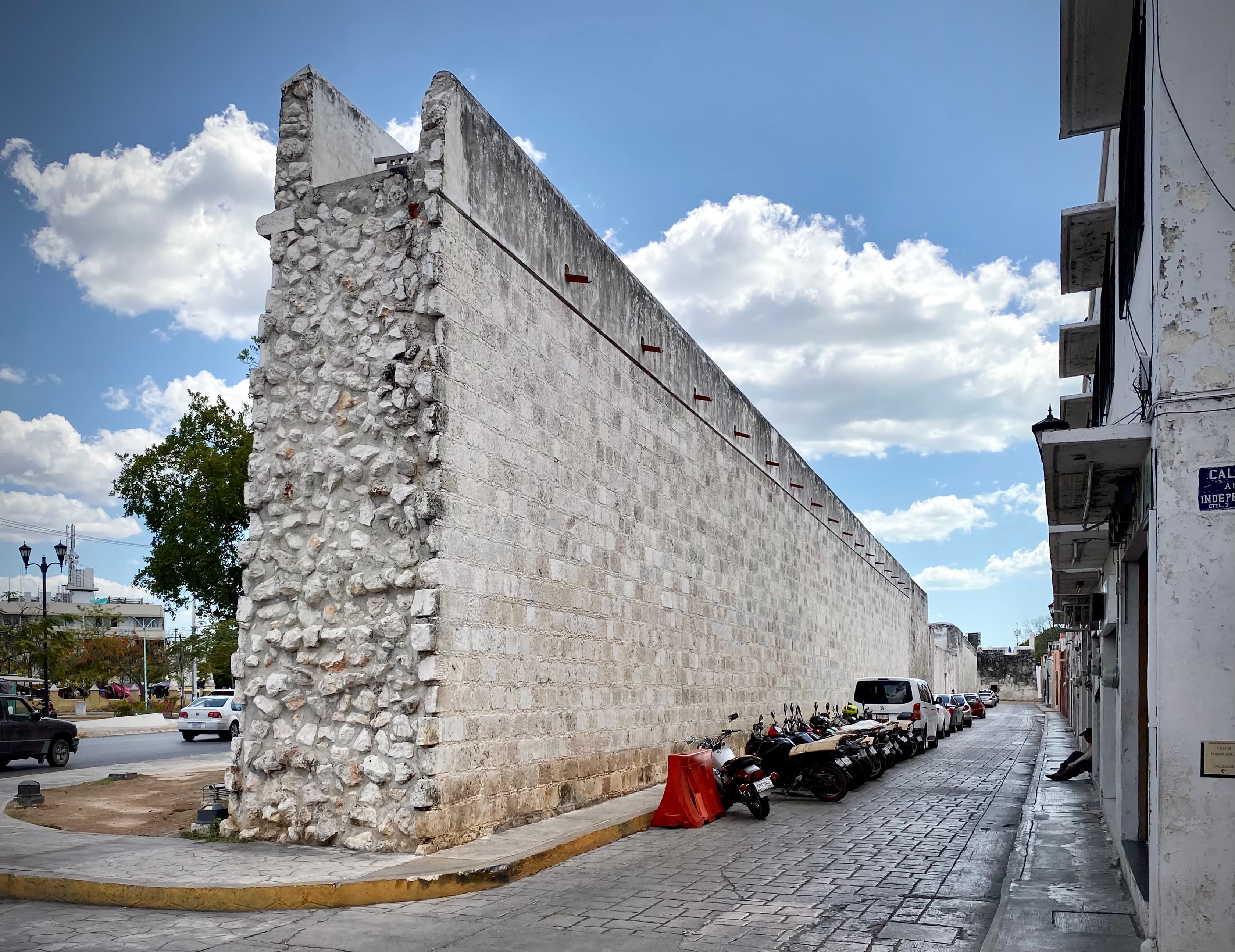
The fortified town is a UNESCO World Heritage site because of the relationship between its colonial urban plan and military architecture. The walls, gates and bastions are not isolated decorations. They explain how a port town organized movement and defense. Walk a section of the wall where access is open, then view the gates at street level so you can understand the change in elevation and control.
Campeche Cathedral is an active place of worship, so visit respectfully and check locally for service-related access. The building is especially effective in the evening light, but the square around it is worth seeing at different times. The city is more enjoyable when you leave pauses for shade, a drink or a second look at a street rather than scheduling every minute.
The city’s historic-centre guide goes deeper into the walled district, while the guide to the malecón covers the Gulf-facing promenade. These are complementary visits, not the same attraction: the old town is an architectural and civic walk; the malecón is open waterfront and evening movement.
Museums and forts
Campeche’s museums help connect the city to the rest of the state. The Museo de Arqueología Maya in Fuerte de San Miguel is particularly useful before visiting ruins because its collections include material from major Maya sites in Campeche. The fort itself is part of the city’s defensive story, and its elevated position gives the visit a different perspective from the walls in the centre. Confirm current hours and fees with INAH’s official museum page before setting out.
Baluarte de la Soledad and the Museo de Arquitectura Maya provide another way into the region’s architecture. A small museum visit can be worthwhile even if you are not an archaeology specialist: it gives names and context to buildings you might otherwise experience only as large stone forms. Fuerte de San José el Alto adds maritime and military history, but opening arrangements can change, so check before crossing the city for a locked door.
Do not try to visit every museum during the hottest part of the day without a break. Choose one or two, eat or rest, then continue in the late afternoon. Families can make the forts more engaging by treating the visit as a search for vantage points, gates, slopes and defensive details rather than expecting a long sequence of labels to hold everyone’s attention.
The malecón and Campeche’s Gulf edge
The malecón is where the capital opens toward the Gulf. It is not a beach-resort strip, and the city’s seawall should not be described as a place for a conventional swimming holiday. Its strengths are space, sunset, cycling or walking conditions in selected stretches, public sculpture and the changing light over the water. Go in the late afternoon, when the heat begins to ease, and stay for the sky if conditions are clear.
The waterfront also helps you understand Campeche’s geography. The historic centre faces a working Gulf coast rather than an enclosed Caribbean resort bay. Wind, humidity and weather are part of the view. On a blustery evening, the sea may look rougher and the walk less comfortable; on a calm evening, families and local walkers make it a social public space.
 The Campeche malecón along the Gulf coast
For a beach day, look beyond the capital toward places such as Playa Bonita, Seybaplaya or other coastal areas described in current local information. Conditions, facilities and transport vary. Do not promise that a beach has a particular service unless you have checked recently. The capital’s malecón and the state’s swimming beaches serve different purposes.
Edzná: the most practical archaeological addition
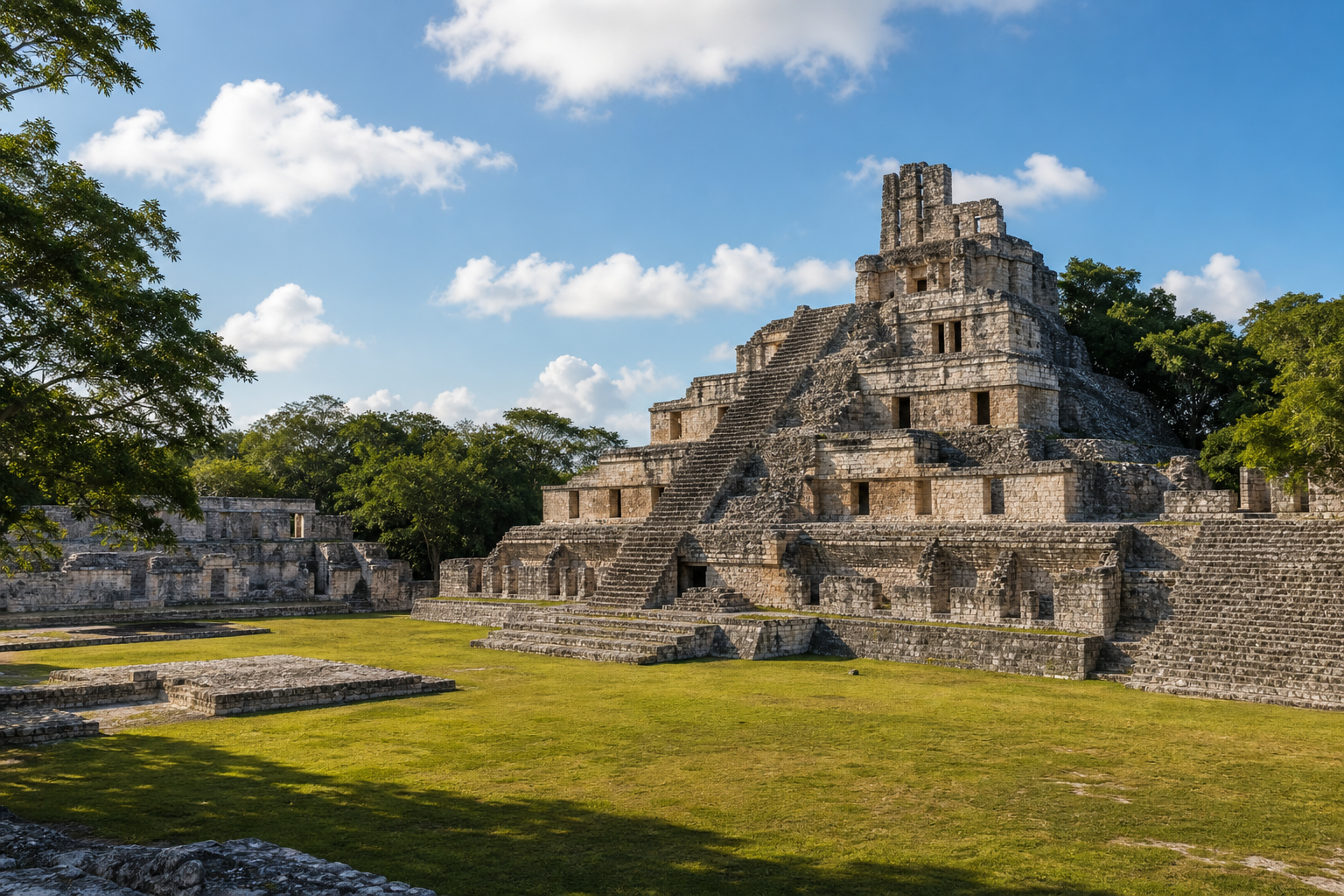
Edzná is the easiest major archaeological addition from Campeche city. INAH places the site about 55 kilometres southeast of the capital and describes a long occupation, sophisticated water management and architectural phases associated with several Maya styles. The Great Acropolis and the Temple of the Five Stories are central to the visit, but the site is more than one pyramid. Look at the plazas, drainage and reservoirs as evidence of how the city managed water in a seasonal environment.
Go early. The open areas provide limited shade, and the combination of tropical heat and stone surfaces can make a short-looking route tiring. Wear stable shoes, bring water and follow the current access rules for structures. The official INAH Edzná page is the right place to recheck hours, fees and access before departure.
You can drive, arrange a taxi or compare a guided option. Public transport may bring you close without making the return effortless, so confirm where and when you can travel back before entering the site. For a described bookable day trip, use live listings such as GetYourGuide’s Campeche activity page and Viator’s Campeche tours. If the listings do not match your date or pickup point, independent transport may be more realistic.
Edzná works as a half-day or full-day plan depending on your transport and pace. Pairing it with an already busy museum circuit can make the day feel rushed. A better rhythm is Edzná in the morning, a substantial break in the city, and a short evening walk if energy allows.
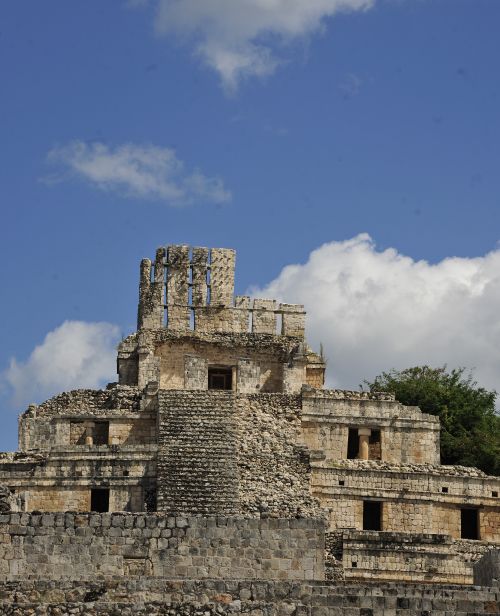 Edzná’s Temple of the Five Stories in Campeche State
Calakmul and the southern jungle
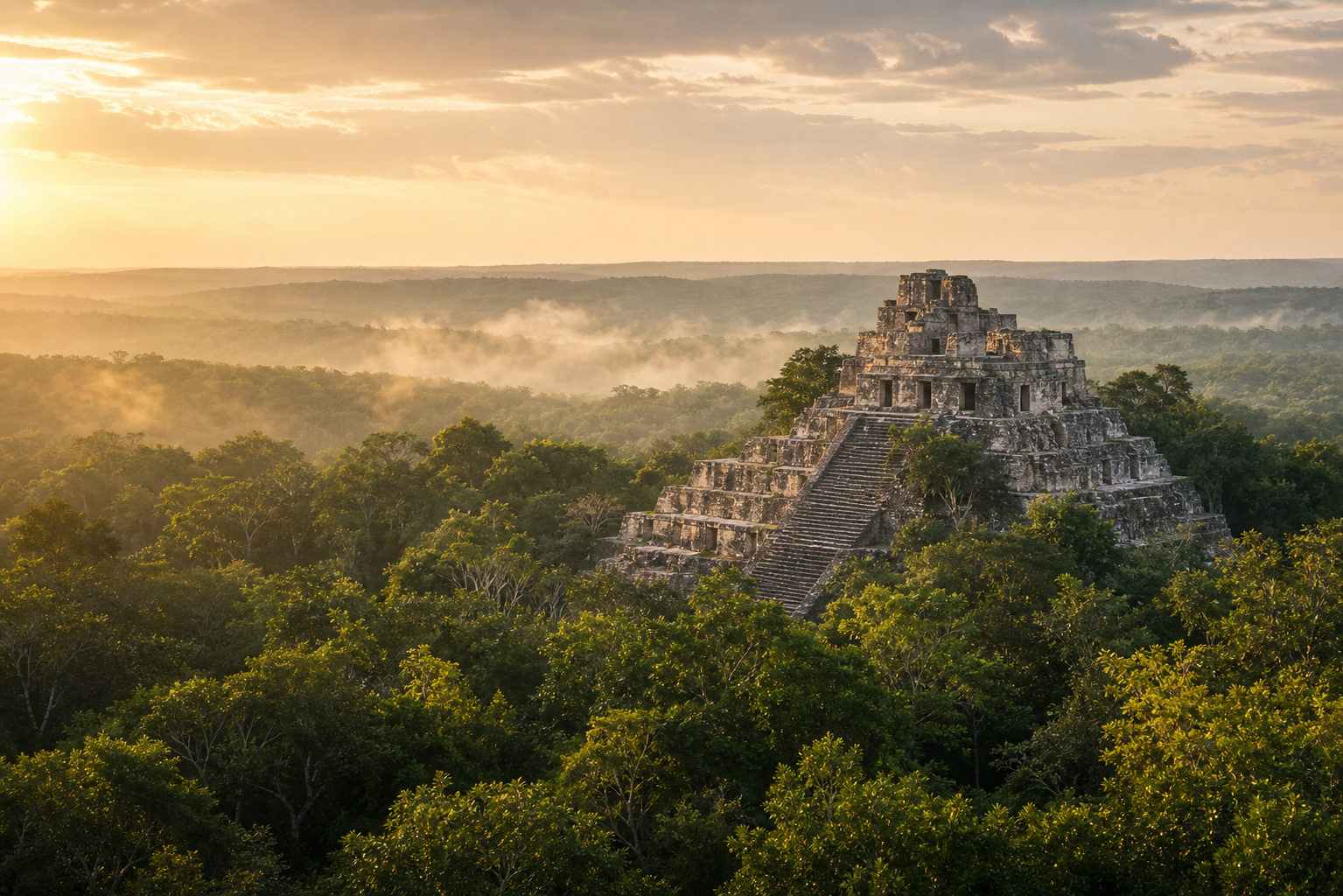
Calakmul is one of the defining reasons to travel through Campeche, but it is not a casual day trip from the capital. The route south includes a long highway journey and then a deep approach through the protected forest. INAH’s access information describes the route via Escárcega and the road through the reserve; the archaeological zone’s current hours and charges should be checked before travel on the official Calakmul page.
Most travelers should use a southern base such as Xpujil or the Calakmul area rather than driving from Campeche city and returning the same day. This reduces fatigue and gives you room for the road, entry procedures, walking, wildlife possibilities and delays. The reserve is not a theme park. You may see birds, monkeys or other wildlife, but sightings are never guaranteed, and the forest deserves attention even when no animal appears.
The archaeological city includes large plazas, monumental structures, carved stelae and multiple architectural groups. Its scale is part of the story: Calakmul was a major Maya political centre, and its relationship with the surrounding tropical forest is central to the modern experience. Bring water, sun protection, insect protection and footwear suited to uneven ground. Do not rely on a shop or mobile signal at every point along the route.
A guided Calakmul excursion can be worthwhile if you do not want to drive or interpret the site alone, but verify the pickup location and total duration. Compare current Calakmul listings on GetYourGuide with Viator’s Campeche inventory and check that the product genuinely starts from your base. For an overnight plan, compare Xpujil and Calakmul-area stays on Booking.com and see southern Campeche accommodation on Trip.com.
 Calakmul Structure II rising above the jungle canopy
The Río Bec route
The Río Bec region gives a different archaeological experience from Edzná and the capital. Bécan, Chicanná, Xpujil and Balamkú are part of a southern Campeche landscape where sites are connected by long road journeys and forest conditions. They are not interchangeable stops. Bécan is known for its moat and monumental architecture; Chicanná is associated with richly decorated Chenes-style façades; Xpujil has distinctive tower forms; Balamkú is especially important for its stucco frieze.
Use a base that allows an early start and decide how many sites you can visit without turning the day into a race. Some access details, opening conditions and restoration limits change. Check INAH or local site information shortly before travel. A rental car gives the most control, while a specialist guide can help with distances and interpretation. Do not add Calakmul, every Río Bec site and a long onward drive to one day unless you have confirmed the timing and accept a very early start.
The southern route suits travelers who enjoy archaeology as a landscape experience. There are fewer urban distractions, fewer dependable meal stops and longer stretches where preparation matters. Carry cash, water and offline navigation. Treat fuel planning as part of the itinerary, not an afterthought.
Campeche’s coast: Champotón, beaches and lagoons
Champotón is a useful coastal stop southwest of the capital and a practical place to understand the state’s working Gulf character. It is not simply a smaller Campeche city. The town’s history, river and coast create a different rhythm, and travelers interested in seafood, local movement and a less museum-focused day may prefer it to adding another urban stop.
Seybaplaya and nearby beaches are possible additions when conditions and transport fit. Facilities vary, so go with realistic expectations and check local access. A beach day in Campeche often means sun, wind, warm water conditions and limited shade rather than a fully serviced resort environment. Bring what you need and avoid leaving valuables unattended.
Farther south, Isla Aguada and Laguna de Términos are associated with lagoon landscapes, mangroves, birds and dolphin-oriented activities. Boat trips depend on weather, water conditions and local operators. If you book a described wildlife excursion, confirm that it is a real current product: GetYourGuide’s Campeche page and Viator’s Campeche listings are useful starting points. Do not guarantee a dolphin encounter or a particular animal sighting.
Ciudad del Carmen is a larger southern hub with its own urban waterfront and business-travel character. It can be useful for flights, onward connections and Laguna de Términos logistics, but it is not the closest base for a quick Campeche-city sightseeing weekend. Choose it when the southern coast is the point of the route.
GuideChampotón, Campeche: Things to Do, Beaches & Travel GuideExplore
What to eat in Campeche
Campeche cooking reflects the Gulf, Maya ingredients, Spanish colonial history and the practical habits of a port region. Pan de cazón is the best-known dish for many visitors, but it should not be treated as the entire cuisine. Seafood, pickled fish preparations, stews, tamales, tacos and market snacks reward curiosity. Ask what is fresh and what is prepared that day rather than ordering only the dish you have seen online.
Food planning is easier in Campeche city because you can compare markets, family-run eateries and restaurants around the centre. Avoid inventing a restaurant list from memory: businesses change names, close, move or alter hours. Use current local recommendations, inspect busy places at appropriate meal times and keep an open mind about modest settings. A crowded dining room can be a useful signal, but it is not a guarantee of quality.
The heat changes how you eat. Breakfast early, carry water, and consider a substantial midday meal followed by a rest. Street food is more enjoyable when you observe turnover, cleanliness and local demand instead of treating every stall as interchangeable. Seafood requires ordinary caution about freshness and storage, particularly in hot weather.
How many days do you need?
For the capital alone, two full days can cover the historic centre, forts, a museum, the malecón and several meals without a frantic schedule. Three nights is more comfortable, especially if you want Edzná. A sample city plan looks like this:
- Arrival day: settle in, walk around Plaza de la Independencia and Calle 59, then go to the malecón near sunset.
- Full city day: start with the walls and gates, visit one or two museums, rest during the heat, and return to the centre in the evening.
- Edzná day: leave early, visit the archaeological zone, return for a long break, and keep the evening light.
For Calakmul, add at least two nights in the south rather than treating it as a minor detour. A wider route might use Campeche city, then move through Escárcega or Xpujil, visit Calakmul and selected Río Bec sites, and continue toward the southern border or another state. The exact sequence depends on transport, opening information and whether you are driving.
For a coast-focused trip, allow time for weather flexibility. A lagoon outing cancelled by wind should not ruin the itinerary; keep a town walk, market visit or rest day available. For families, reduce the number of long transfers. For photographers, allow return visits at better light. For history travelers, a second museum may be more satisfying than another rushed beach stop.
Safety, money and practical comfort
Use normal urban precautions: keep phones and wallets secure, avoid displaying large amounts of cash, and use established transport. The historic centre is easy to walk, but do not confuse a calm tourist district with a reason to ignore traffic, heat or night-time awareness. On rural routes, drive in daylight where possible, slow down for towns and do not assume every road service will be open.
Carry some cash for smaller sites, food stalls, taxis and rural stops. Cards are useful in larger hotels and businesses but should not be your only plan. Keep copies of important documents separately from the originals and make sure your phone can access offline maps.
Heat management is not optional. A hat, water, sunscreen, breathable clothing and stable shoes make a larger difference here than an ambitious packing list. In the forest, insect protection and a light rain layer are useful. At churches and museums, dress in a way that respects the setting. At beaches and lagoons, protect electronics from spray and keep an eye on changing weather.
Accessibility varies. The historic centre has uneven paving, and forts or archaeological sites can involve slopes, steps and rough ground. Ask the specific museum or site about the route you need rather than assuming that a general accessibility label describes every area.
A sensible first route through the state
If you have four or five days, keep the route selective. Spend two or three nights in Campeche city, visit Edzná, then move south only if Calakmul is a genuine priority. If you have a week, add a southern base and selected Río Bec sites, or choose the coast instead. Trying to do both the far south and a lagoon circuit in a short holiday usually produces long drives and little time at either place.
If you are arriving by bus from Mérida, start in the capital and use it as an orientation base. If you are arriving through Ciudad del Carmen, consider beginning with Laguna de Términos or the southern coast, then travel north. If Calakmul is the headline purpose, arrive with enough daylight and energy for the road rather than placing it immediately after an international flight or a cross-peninsula transfer.
Book accommodation according to the route’s hardest day, not its easiest one. A walkable city room is valuable in Campeche; a simple, well-located southern base is valuable before Calakmul. Compare Campeche accommodation on Booking.com with Trip.com’s Campeche hotel listings, and recheck cancellation terms when plans depend on weather or transport.
Is Campeche right for you?
Campeche suits travelers who like history with ordinary city life around it, archaeological sites that require some planning, Gulf landscapes rather than resort polish, and road trips where distance is part of the story. It is a good choice if you want a quieter base than the peninsula’s busiest destinations and are willing to trade convenience for scale in the southern jungle.
It may frustrate travelers who want every attraction within a short taxi ride, dependable resort infrastructure at every beach, or a quick Calakmul visit with no early start. Those are not failures of the destination; they are signals to shape the route honestly. Stay longer in the capital if you want an easy break. Build a dedicated southern segment if you want the reserve. Choose the coast when you actually want lagoon or beach conditions, not because a map makes it look close.
The most reliable first visit is usually simple: stay in San Francisco de Campeche long enough to walk the fortified centre and malecón without rushing, use one morning for Edzná, and reserve the southern jungle for a separate overnight plan. That structure leaves room for the state’s real strengths—architecture, archaeology, food, forest and Gulf light—without pretending they all fit into one short day.
GuideIs Campeche Safe? A Practical Safety Guide for TravelersCampeche is one of the safest states in Mexico, but every traveler should understand the real risk profile. Here's an honest, data-backed guide to staying safe in Campeche City and beyond.Explore
Need transport? Book a transfer on WhatsApp.