
Champotón is a working Gulf Coast town in southern Campeche State where the Champotón River reaches the sea. It is close enough to San Francisco de Campeche for an easy road stop, but it has a different rhythm: a waterfront shaped by fishing, a compact town centre, broad public shorelines and a history that reaches from Maya Chakanputun to the first Spanish expeditions in the peninsula.
The practical appeal is simple. You can walk beside the water, eat fresh seafood, watch boats and shorebirds, and use the town as a slower overnight point on the road between Campeche and Ciudad del Carmen. You can also combine it with a beach outing, an inland history day, or a longer coastal drive. Champotón is not a polished resort and should not be planned as one. Services are local, conditions change, and the most enjoyable visits leave room for weather, tides and an unhurried meal.
This guide explains what to do, how to use the beaches, which history matters, how to arrive, where to base yourself without inventing a hotel list, and how to build a realistic one-day or two-day visit.
Why visit Champotón?
Champotón suits travellers who want a coastal town rather than a resort strip. The waterfront is used by residents, families and fishermen, and the town’s attractions are spread through ordinary streets instead of arranged around a single ticketed complex. That gives the place character, but it also means you need to be comfortable asking locally about access, boat departures, beach conditions and opening times.
The town sits on the Gulf of Mexico south of Campeche City, along the main coastal road toward Ciudad del Carmen. Its location makes it useful in three ways. First, it is a manageable day trip or lunch-and-walk stop from the state capital. Second, it can break up a long Campeche road journey. Third, it gives you a base for exploring the municipality’s shore, river environment and inland communities without returning to the capital every evening.
Champotón is also historically important. The modern town is associated with the Maya settlement of Chakanputun and with the 1517 encounter in which Maya forces resisted the expedition led by Francisco Hernández de Córdoba. That event is remembered locally through the phrase “Bahía de la Mala Pelea,” or Bay of the Bad Fight. The story should be understood as Maya resistance, not as a decorative pirate anecdote. It gives the town a historical identity that predates the colonial period by centuries.
The beaches are another reason to come, although expectations matter. Gulf water can be calm and pleasant, but colour and clarity vary with weather, river flow, wind and season. You will not get the same visual conditions every day, and the shoreline is not maintained like a Caribbean resort. In return, you get space, local life and a less manufactured coastal experience.
The waterfront and Champotón River
 Champotón waterfront and river mouth in Campeche
Start at the water rather than trying to rush through a list of monuments. The river mouth is the geographic reason Champotón exists, and it helps you understand the town’s layout. Water, boats, the road and the public spaces meet in a compact area where the town feels most open.
A walk along the waterfront is best early or late in the day. Morning light is easier for photography and usually more comfortable in the heat. Near sunset, the promenade becomes a social space, with residents out walking and sitting, children playing and the air coming off the Gulf. The river is not a dramatic canyon or a wilderness paddle by default; its value is the meeting of a small coastal town, tidal water and working boats.
Look for the boundary between river and sea, where the water’s surface and boat traffic tell you more than a map does. Tides affect the appearance of the shore and the feasibility of any water activity. If you are hoping to join a boat outing, ask about the same day’s conditions rather than assuming a departure will run because a website mentions one. Weather, demand, local operators and tide all matter.
The promenade is also a good place to pace a visit. Allow time to sit, but keep valuables close and avoid leaving phones or bags unattended on the beach or in a parked vehicle. This is ordinary advice for any Mexican coastal town, not a warning that Champotón is unusually dangerous.
For a bookable city or coastal activity, inventory is more limited than in the major Yucatán Peninsula hubs. Check the Campeche activities on GetYourGuide and Campeche experiences on Viator before travelling, but treat independent waterfront walks and locally arranged outings as separate from a guaranteed marketplace product.
Beaches: what to expect
Champotón’s shore is a useful place to spend a few hours, particularly if you are already travelling along the Gulf route. The beach experience is public and local. Some stretches are more built up around town, while other coastal areas require a vehicle and a willingness to find the appropriate access point. Do not assume that every attractive-looking turn from the highway is a legal or safe swimming entrance.
Water conditions change. Recent rain can make the sea look less clear, and wind can produce stronger chop than the calm morning suggested. Check the water yourself, follow any local flags or warnings, and do not swim alone in unfamiliar conditions. The Gulf is not a swimming pool, and a quiet surface does not tell you everything about currents or boat traffic.
The shoreline can contain shells, driftwood and natural debris. That is part of the coast, not a reason to expect a manicured resort beach. Bring shade, drinking water, sun protection and something to carry rubbish back out if bins are not available. Avoid collecting large quantities of shells, especially in areas connected to protected or sensitive habitat. Empty shells can still be part of the coastal food chain.
Families often find the calmer sections comfortable for a relaxed afternoon, but travellers with small children should stay close to the waterline and check the bottom before anyone wades. Shoes that can handle sand, small stones and shells are more useful than delicate sandals. If the day is windy, a waterfront walk may be a better choice than forcing a swim.
The best beach plan is flexible: visit the shore, assess the conditions, swim only if it feels right, and keep a town-based alternative available. A meal, plaza walk or river view can rescue a beach day when the water is rough or the heat becomes tiring.
For broader coastal planning, compare Campeche beach ideas with current Campeche-area stays on Booking.com and Champotón hotel inventory on Trip.com. Availability and property standards vary, so read recent reviews and confirm exactly how far a listing is from the waterfront.
A walk through the town centre
Champotón is walkable in its central area, although heat and traffic can make short distances feel longer than they appear. Start with the main civic spaces, continue through the older streets, and let the route connect back to the waterfront. You do not need to reproduce the fortification-focused itinerary of Campeche City. Champotón’s interest is more dispersed and less monumental.
Notice the mix of low-rise façades, local shops, churches and everyday businesses. The town is not a museum set. Delivery vehicles, school traffic and repairs are part of the scene. Walk on the side facing traffic when there is no pavement, cross carefully and avoid turning a working neighbourhood into a photo backdrop without consideration for residents.
A central plaza is a natural pause point. Depending on the day, it may be quiet or busy with families and local activity. Shade is valuable, and a short rest can make the difference between enjoying the afternoon and retreating indoors. If a church or civic building is open, dress respectfully and ask before photographing inside.
The town’s historic interest is strongest when you connect places with the river and the coast. Champotón was not an isolated inland settlement; its position supported movement, fishing and exchange. The river also explains why the town’s modern identity remains tied to food from the water and to boats.
Do not plan around a long list of named businesses unless you have checked them close to departure. Opening hours can change, especially outside busy periods. Instead, ask your accommodation or a local shopkeeper where people are eating that day, look for busy places with a current service, and confirm whether a menu item is available before ordering. That approach is more reliable than treating an old online list as a promise.
The history of Chakanputun and the 1517 battle
Champotón’s pre-Hispanic name appears in several spellings, including Chakanputun and Chanputun. The modern town inherited a landscape with a much longer Maya history than the colonial buildings alone suggest. Maya communities controlled and used coastal and river environments through networks of settlement, agriculture, trade and fishing.
In 1517, an expedition under Francisco Hernández de Córdoba reached the peninsula’s coast. At Champotón, Maya forces resisted the landing. The encounter was not a minor footnote: it demonstrated that the expedition could not simply claim coastal settlements without organised opposition. The Spanish suffered losses and withdrew, and the phrase “Bay of the Bad Fight” became attached to the place in Spanish accounts.
A good visit keeps the power relationship clear. The event was an episode of Indigenous resistance to an invading expedition, not merely a colourful first-contact story. Local memory, public symbols and the town’s ceremonial identity continue to refer to the Maya victory. If you see a monument or historical display, read it in that context and give the subject more attention than a quick photograph.
The following year, Juan de Grijalva’s expedition returned and the balance of the encounter changed. Later campaigns formed part of the prolonged Spanish conquest of the peninsula. The chronology is useful because it prevents a common mistake: treating 1517 as the date when Spanish rule began everywhere. Initial expeditions, later campaigns, colonial settlement and the survival of Maya communities were separate processes.
You can use the history as a walking theme. Begin at the waterfront, where the geography of a landing and river mouth becomes legible; continue through civic spaces and local monuments; then return to the shore and consider how the same coastal setting supports present-day fishing and daily life. A guide can add context, but do not invent a named historical tour if you cannot verify that it operates. Independent walking is perfectly reasonable here.
Monuments and local symbols
 Maya-inspired monument on the Champotón waterfront
Champotón’s waterfront monuments are most useful when read as local statements about identity. A Maya-inspired monument beside the Gulf is not the same thing as an archaeological structure, and it should not be described as an ancient ruin. It is a modern public work that refers to Maya heritage and to the town’s historical memory.
That distinction matters for responsible travel. The town’s public art may compress complicated histories into a single image, while a traveller’s job is to look more closely: who is represented, what event is being remembered, and how does the monument sit beside a working waterfront? You can take photographs from public areas, but avoid blocking paths or photographing people in an intrusive way.
Champotón may also have temporary installations, civic decorations or event-related displays that are not present year-round. Do not build a trip around a photograph found online without checking its date. The stable experience is the town itself: waterfront, river, public spaces, local food and the historical setting.
If you want a more extensive fortified-colonial experience, continue the journey to Campeche City rather than expecting Champotón to duplicate it. The two destinations work well together because they show different kinds of coastal history. Campeche City foregrounds walls, bastions and colonial urban planning; Champotón foregrounds river geography, Maya resistance and a living fishing town.
Seafood and eating in Champotón
Seafood is central to Champotón’s identity, but the safest way to write or plan this part of the trip is to follow the day’s supply and local custom rather than demand a particular dish from a particular named venue. Fish, shrimp, ceviche and seafood cocktails may be available, but menus change with catch, weather and season.
Ask how an item is prepared, whether it is cooked or raw, and whether the establishment can accommodate allergies. With raw seafood, choose a busy place with good turnover, keep food cold, and use judgement if refrigeration or hygiene seems uncertain. Visitors should be especially careful in the hottest hours, when food held at the wrong temperature can become unsafe quickly.
A waterfront meal is part of the Champotón experience, but view and quality are not the same thing. Compare a couple of current menus, ask about today’s catch and confirm the total price before ordering anything sold by weight. If a menu is unclear, choose a simpler cooked option. Carry some cash in small denominations because smaller coastal businesses may not accept cards or may have an unreliable connection.
Breakfast and lunch are often easier to plan than a late dinner in a small town. If you are staying overnight, ask when the kitchen or dining room is serving rather than assuming city hours. If you are driving onward, leave enough time for the meal; rushing coastal food between a photograph and a departure undermines the point of stopping.
Food travellers can also use Champotón as a comparison with Campeche City. The capital offers a broader range of restaurants and a more predictable evening scene. Champotón offers a stronger connection to the fishing economy and a simpler town setting. Neither is automatically better; choose based on whether you want variety or locality.
Nature, birds and the river environment
 Brown pelican juveniles recorded in Champotón, Campeche
The river mouth and coast create opportunities for casual birdwatching. Pelicans and other waterbirds may be visible around boats, shoreline structures and tidal areas, though sightings are never guaranteed. Bring binoculars if you have them, keep distance from nesting or roosting birds, and avoid playing calls or feeding wildlife.
Champotón is not a substitute for a dedicated biosphere reserve visit. It is a good place to notice how human settlement and coastal habitat overlap. Look at mudflats, mangrove edges, river vegetation and the changing bird activity around dawn and dusk. Heat haze can make distant animals hard to identify, so a field guide or phone app is useful, but do not wander into private land or unstable banks for a better view.
Boat trips, fishing outings and river activities may be arranged locally, but conditions and operators vary. Ask who is responsible for the boat, what safety equipment is provided, whether the route is appropriate for children, and what happens if the weather changes. A trip that depends on a specific tide should not be booked so tightly that you cannot adapt.
Do not touch wildlife, collect living shells, buy protected species or remove mangrove material. Keep noise low near birds and take all plastic back to town. The river is a working environment, not an amusement park; fishermen and boat operators have priority over a visitor looking for a better angle.
Getting to Champotón from Campeche City
Champotón is south of San Francisco de Campeche on the main coastal highway toward Ciudad del Carmen. By car, the route is straightforward, but allow more time than the map’s driving estimate if you plan to stop, eat or visit the shore. Road works, traffic, rain and slower vehicles can change the journey.
A car is the most flexible option if you want to combine the town with beaches or rural stops. Fill up before committing to a longer coastal detour, keep offline navigation available, and avoid driving unfamiliar secondary roads after dark. Do not leave luggage visible in a parked car. If a beach access point looks deserted or unofficial, choose a more clearly used public area instead.
Buses and regional transport connect Champotón with larger towns, but departure times and stopping patterns are subject to change. Confirm the current departure point, destination and last return before leaving Campeche City. A ticket to Champotón does not solve the final beach connection, and a bus that passes along the highway may not stop where you expect. Ask locally and keep a taxi or walking plan for the central area.
If you are travelling from Ciudad del Carmen, Champotón can work as a northbound stop. The distance is substantial enough that a same-day return to see both towns would make for a long day, especially with beach time. Consider which place deserves your overnight base rather than trying to collect both waterfronts in a single rushed loop.
For travellers arriving by train, check the current station and onward connection details before booking around Champotón. The relevant station and the town centre are not interchangeable, and a station name may describe a wider municipality or corridor rather than a walkable central stop.
GuideBest Beaches in Campeche and Near Campeche CityExplore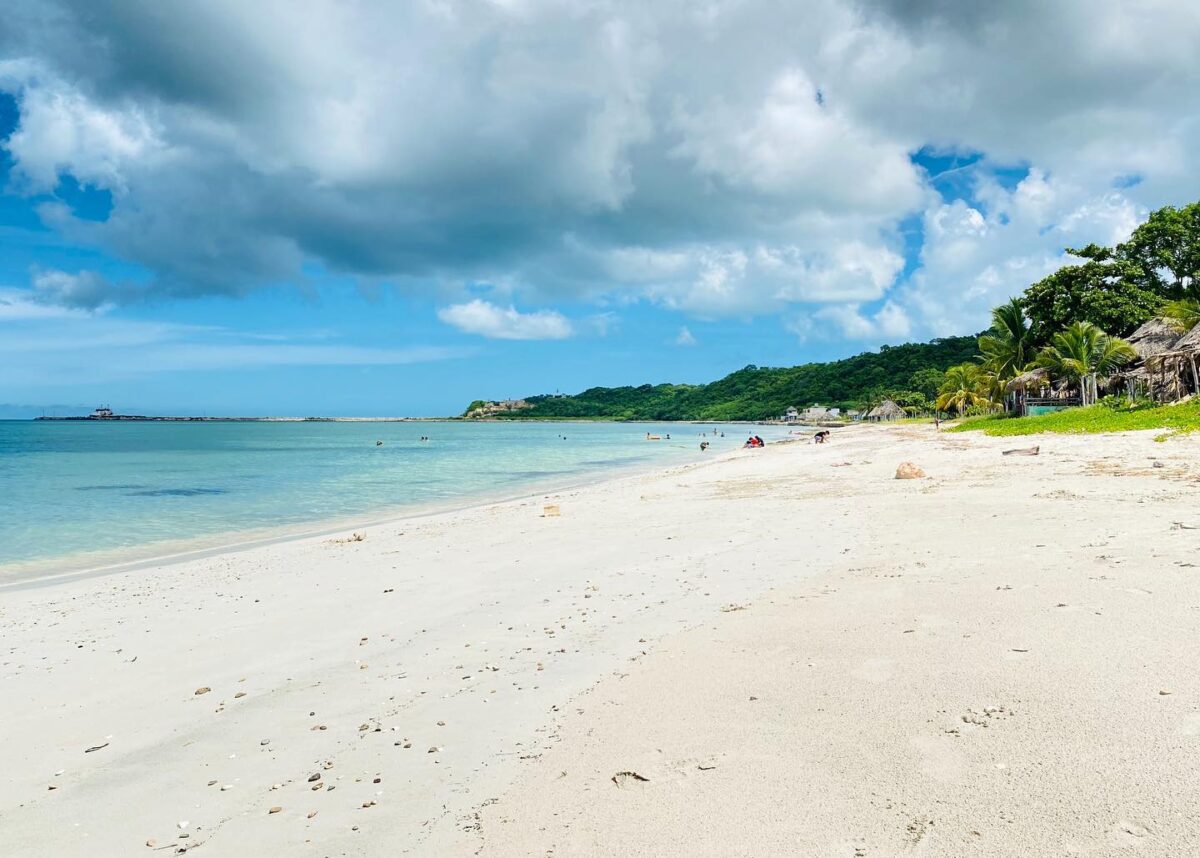
Where to stay
Champotón is best treated as a modest local base. Choose a place according to practical needs: secure parking if driving, air conditioning, reliable water, a sensible route back to the highway, and proximity to the centre or waterfront depending on your priorities. Do not assume that a “beach” listing is directly on a swimmable public shore; check the map and recent reviews.
The town works for one night when you want to break up the Campeche–Ciudad del Carmen route. Two nights make sense if your plan includes a slow beach day, a river or birding outing, and enough time for the historical walk. If your priority is a wide choice of restaurants, nightlife or polished facilities, Campeche City may be more convenient. If your priority is local coastal rhythm, staying in Champotón gives you an earlier and quieter start.
Before paying, confirm check-in arrangements, cancellation rules, parking and whether the advertised room facilities are private or shared. Smaller properties may not have a 24-hour desk. Keep a copy of the booking confirmation and the address available offline, especially if you arrive after dark.
Check current Champotón rates on Booking.com · Compare Champotón stays on Trip.com
One-day Champotón itinerary
A one-day visit works best with an early start. Begin with a waterfront walk while the temperature is manageable. Look at the river mouth, boats and the public spaces before the day becomes busy. If you want a swim, inspect conditions now and decide whether the shore deserves the middle of the day.
Move into the centre for a plaza and streets walk. Use the history of Chakanputun and the 1517 battle as your theme, but keep the walk grounded in what is actually visible. A monument, church or civic space can prompt questions without needing a formal museum or a long guided circuit.
Take a shaded break and have lunch based on what is available and fresh. Afterward, return to the beach or sit beside the water. The middle of the day is often better spent slowly than driving between several marginal viewpoints. If you are continuing to Ciudad del Carmen, leave a buffer for traffic and weather; if you are returning to Campeche City, avoid making the final drive after a tiring swim.
This plan suits a traveller using public transport only if the central walk and return connection are confirmed in advance. With a car, you can add a nearby shoreline, but do not turn the day into a string of unverified stops.
Two-day itinerary and nearby options
With two days, use the first for the town and the second for nature or a carefully chosen coastal outing. A morning birdwatching or river activity should be arranged locally and confirmed for weather. If no suitable trip is running, use the extra time for a slower beach visit and a second meal rather than forcing a substitute tour.
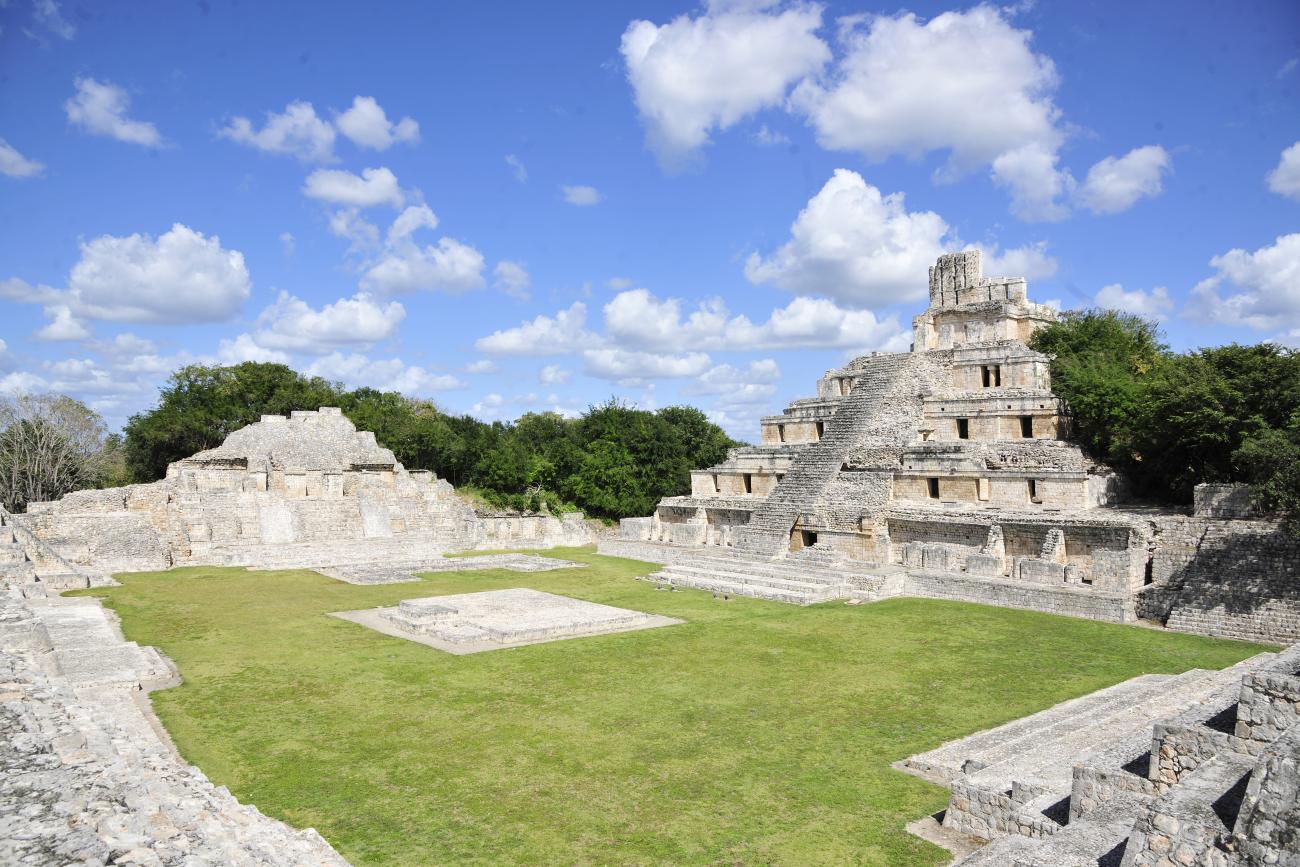
You can also position Champotón between other Campeche destinations. Northbound, it pairs with Campeche City’s historic centre and forts. Inland, Edzná is a possible archaeological addition, but the route, site schedule and driving time need to be checked against your exact starting point. Edzná is not in Champotón and should not be presented as a walkable nearby attraction.
Southbound, the road continues toward Ciudad del Carmen, Sabancuy and the Laguna de Términos region. These are separate destinations with their own transport and ecological conditions. Use Champotón as a coastal pause, not as a claim that every southern Campeche attraction is close by.
When considering a guided day trip, compare the current GetYourGuide Campeche listings and Viator Campeche tours. If neither marketplace shows a Champotón-specific product, independent logistics are more honest than inventing an itinerary or tour title.
When to go and what to pack
Champotón is hot for much of the year. Plan walks for morning or late afternoon and keep the middle of the day flexible. Lightweight clothing, a hat, sunscreen, insect repellent and a refillable water bottle are practical basics. Bring a dry bag or simple waterproof pouch for phones near the water.
Rain can arrive suddenly. A light waterproof layer protects electronics and makes a town walk easier, but thunderstorms are a reason to leave the beach and avoid exposed waterfront areas. During periods of strong wind or rough sea, choose food, history and town streets instead of treating the weather as an inconvenience to ignore.
Mosquitoes are more noticeable around vegetation and water, particularly around dusk. Use repellent and wear long sleeves if you are comfortable doing so. A small first-aid kit, hand sanitiser and any prescription medicine are useful because a small town may not have the exact item you need at the moment you need it.
If you are driving, carry water in the vehicle, download maps, check fuel and keep cash for small purchases. If you are using buses, pack lightly enough to walk from the stop and confirm the return plan before leaving the main town.
How to pace the day
Champotón is easier when you group activities by conditions instead of trying to follow a rigid attraction schedule. Put walking and photography first, when the streets and waterfront are cooler. Reserve swimming for the moment when you have checked the water and wind. Use the hottest hours for lunch, a shaded plaza, an indoor rest or the drive to your overnight base. Return to the river late in the day if the weather is comfortable.
This rhythm also helps with transport. A bus traveller should avoid an itinerary that depends on reaching three separate beaches after arrival. A driver should resist the temptation to keep adding roadside stops once the light is fading. If you are carrying beach equipment, keep it discreet and take it back to your room or vehicle rather than leaving it in a public space. Travellers who need a quiet working morning can stay near the centre and walk; travellers focused on the coast should confirm the exact location and access conditions of any accommodation before booking.
Champotón is not a destination where every worthwhile moment has a ticket or a sign. Watching the river change with the tide, finding a current seafood lunch, or hearing local accounts of the town’s history can be more memorable than a rushed checklist. Build in an hour with no scheduled objective, and the town will usually make better sense.
Is Champotón worth visiting?
Champotón is worth visiting if you value a working coastal town, Maya and conquest history, seafood, river scenery and a flexible pace. It is less suitable if you want resort facilities, guaranteed clear water, a dense list of formal attractions or nightlife every evening.
The strongest visit is not complicated: arrive early, walk the waterfront, understand the 1517 Maya resistance, explore the centre, eat according to the day’s supply, and leave enough time to sit by the river or sea. Add a beach or nature outing only after checking conditions locally. Keep the distinction between Champotón, Campeche City, Edzná and the southern lagoon towns clear, because the distances are part of the experience.
For a first visit, one full day is enough to understand the town; an overnight stay is better if you are travelling the coast or want to make the beach and river feel unhurried. Champotón rewards travellers who treat it as a real community with a long history, not as a quick photograph between larger destinations.