Why Puerta de Tierra belongs on your Campeche route
Puerta de Tierra is the land gate of San Francisco de Campeche, the best-known surviving entrance in the city’s historic fortifications. It is not a freestanding arch placed in a modern square. The gate is part of a defensive system: walls, a dry moat, a raised passage, gun positions, and bastions linked the landward side of the old port. That distinction matters when you visit. The most rewarding experience is not simply taking a photograph of the arch; it is walking through the gate, looking at the surviving military details, and then following the wall toward the nearby bastions and Calle 59.
The gate stands on the eastern side of the walled centre, while Puerta de Mar faces the Gulf. Between them, Calle 59 forms the most convenient historic-centre walk. You can therefore make Puerta de Tierra the start or finish of a larger route rather than treating it as an isolated stop. In the morning, the gate gives you a useful introduction to Campeche’s defensive geography. Near sunset, the walls take on warmer colours and the surrounding streets become more comfortable for walking. On selected evenings, the site also hosts the light-and-sound presentation known as El Lugar del Sol.
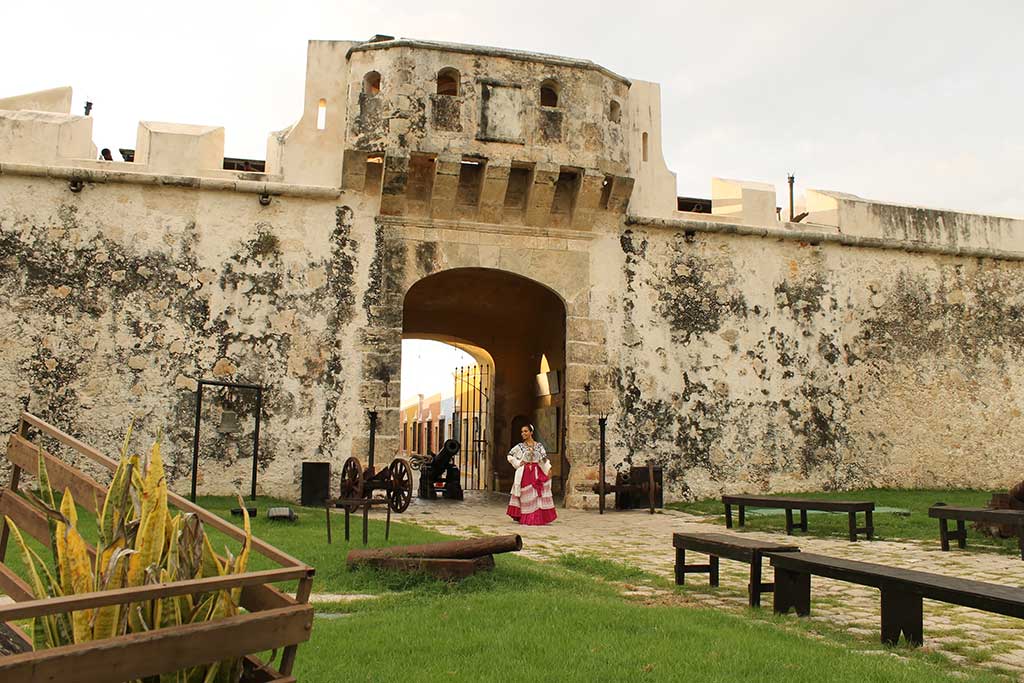 Puerta de Tierra and its landward fortifications in Campeche
This guide explains what the gate is, what to look for, how to combine it with the historic centre, what to know about the show, and how to plan around heat, accessibility, children, photography, and changing local schedules.
GuidePuerta de Mar, Campeche: History & Visitor GuideExplore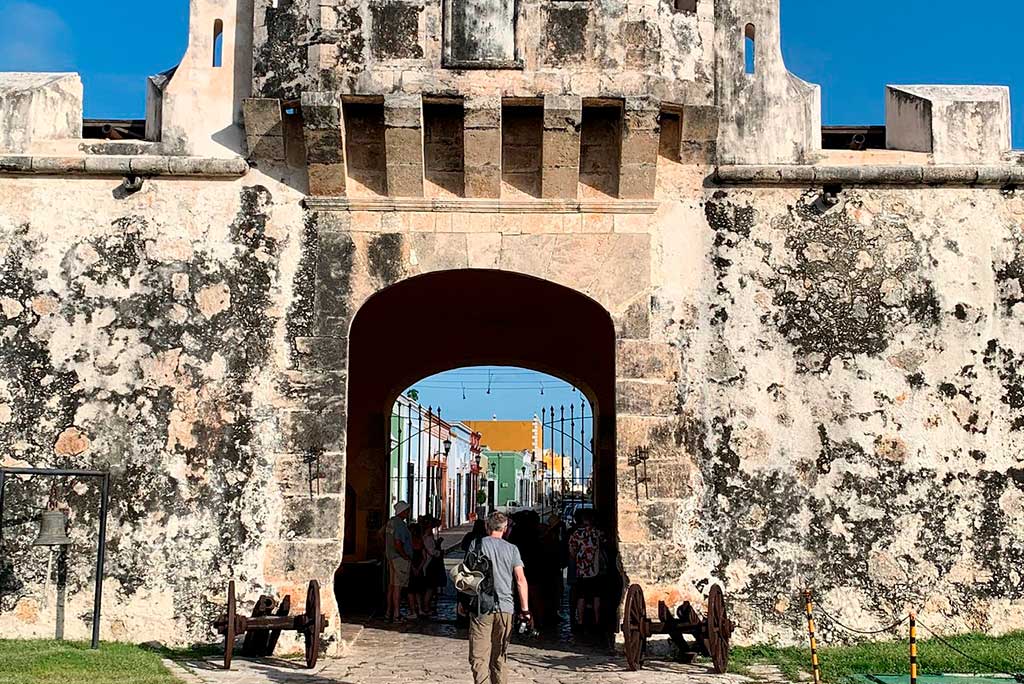
What Puerta de Tierra is
The Spanish name means “Land Gate.” In the colonial port, it controlled movement between the fortified city and the inland road. Campeche’s wealth came through maritime commerce, but the city also needed protection from attacks arriving by land or from raiding parties moving around the harbour. The gate was built in the eighteenth-century period of major fortification work; tourist and historical references commonly date the present gate to 1732.
The gate’s purpose was practical. A controlled opening could be shut, watched, and defended more easily than an unprotected stretch of street. Its parapet and adjoining walls allowed defenders to move between positions. The moat created another obstacle in front of the wall, while the gate’s upper defensive features helped protect the opening. Inside the enclosure, rooms were used by guards and for military storage. The complex that you see today is therefore a compact lesson in how a colonial port turned architecture into a security system.
Do not expect a huge fortress like a hilltop citadel. Puerta de Tierra is an urban gate integrated into the street grid. Its scale becomes clearer when you stand beside the wall and follow the surviving passage toward the bastions. The gate is valuable precisely because it sits in the middle of ordinary city life: local streets, market movement, shops, homes, restaurants, and the busy transition between the old centre and newer Campeche.
A short history of the walled city
Campeche’s location on the Gulf made it an important port, but the same position exposed it to privateers, pirates, military rivals, and the hazards of colonial competition. The city was not fortified in one single moment. Defensive works developed over time as threats, resources, and military ideas changed. Walls enclosed the urban core, and bastions projected outward so defenders could cover the sides of the walls rather than only fire straight ahead.
The fortifications also separated different kinds of movement. Goods and travellers arriving from the sea used the seaward side; roads from the interior approached the land gate. The two surviving principal gates help you read the old city as a port with two faces. Puerta de Mar looks toward the waterfront and the malecón. Puerta de Tierra looks toward the inland side and the market area. Walking between them along Calle 59 is one of the easiest ways to understand that relationship without needing a long museum lecture.
The original fortified enclosure was much longer than the sections now visible. Restoration and urban change mean that some wall segments disappeared while others remain in good enough condition to interpret. At Puerta de Tierra, you can see a concentrated group of defensive elements rather than a complete circuit. The site’s meaning comes from connecting the surviving pieces: gate, moat, wall walk, bastions, and the streets that replaced or follow the old perimeter.
Campeche’s historic fortified town was inscribed on the UNESCO World Heritage List in 1999. That designation covers the wider urban ensemble, not only Puerta de Tierra. The gate is one of the clearest places to see why the designation exists: military architecture, a colonial street plan, civic buildings, religious buildings, and a Gulf port remain legible together.
GuidePirates of Campeche: History of the Walled City, Forts & AttacksExplore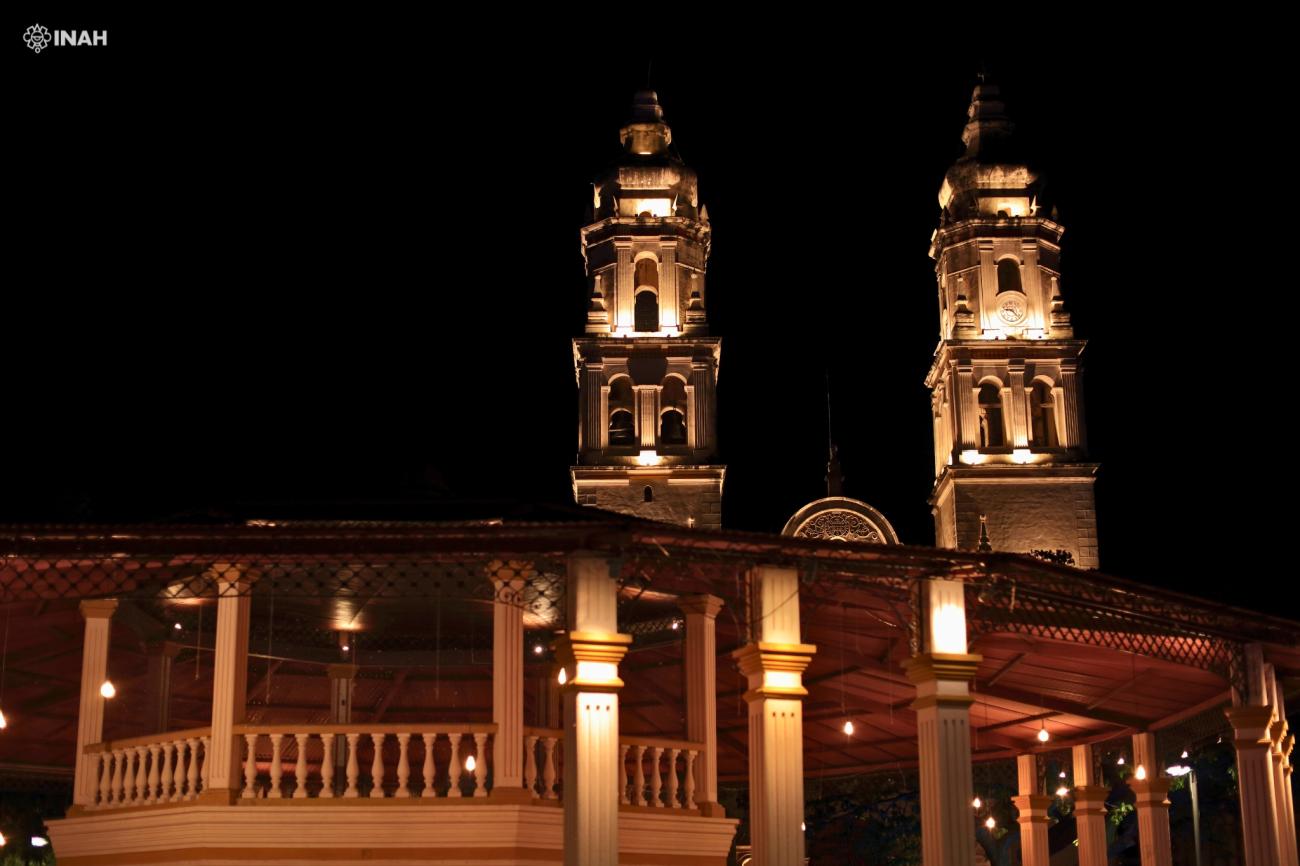
What you can see at the gate
Start outside and look at the relationship between the arch and the wall. The entrance is designed as a controlled opening, not a decorative gateway. Thick masonry, narrow openings, and the raised upper section communicate defence. The surface shows age, repairs, weathering, and restoration rather than a perfectly uniform finish. This is a place where the stonework itself is part of the story.
Move through the passage slowly. The threshold is the point at which the modern street becomes the historic enclosure, and the change is more noticeable if you pause rather than walk straight through. Depending on the access arrangement that day, you may be able to enter the interior spaces and climb to a higher level. Access to the upper wall or parapet can be controlled by staff, and stairs are not ideal for every visitor. Ask before climbing instead of assuming that every section is open.
Within the complex, travellers may see military objects such as cannon, defensive openings, storage spaces, and interpretive material about the fortified enclosure. Displays and exact access can change, so treat the building as a heritage site rather than promising a fixed museum layout. The point is to understand how a gate worked with the moat and adjoining walls.
From an elevated section, the view is useful even when it is not panoramic. You can look toward the street running into the historic centre, identify the direction of Calle 59, and see how little distance separates a defensive structure from everyday urban life. Look back toward the outside of the wall as well. The contrast between the enclosed colonial centre and the later city is part of the visit.
The moat and defensive details
One of the easiest details to miss is the moat. It is not a dramatic water-filled ditch. The dry moat is an excavated gap that made it more difficult to approach the wall and gate directly. From the passage and adjoining platform, you can see how the moat created a setback in front of the masonry. It also gave defenders a clearer field of view.
Look for the openings used for firearms and the irregular defensive features above the gateway. Some terms used in descriptions of Campeche’s fortifications include embrasures, casemates, machicolations, and ravelins. You do not need to memorise the vocabulary, but noticing the difference between a viewing window and a defensive opening changes the way you read the building. The gate was not built for symmetry alone; each projection and opening had a job.
The moat is especially helpful for families because it makes the fortification’s logic visible without requiring a long attention span. Children can understand the basic sequence: a wall, a gap, a narrow crossing, a gate, and people watching from above. Keep children away from edges and dark or uneven areas, however. Heritage sites can have stone surfaces, steps, and low barriers that are less forgiving than a modern attraction.
If you photograph the moat, include enough wall to establish the setting. A close-up of a stone surface could be almost anywhere. A wider image showing the gap, gate, and raised defensive line tells the story more accurately.
The light-and-sound show: El Lugar del Sol
The evening presentation associated with Puerta de Tierra is called El Lugar del Sol. It uses projection, illumination, sound, and a historical narrative about Campeche and the attacks that shaped the fortified city. The walls and gate become a screen and stage. This is a theatrical interpretation, not a silent archaeological presentation, so expect music, effects, and a dramatic treatment of the pirate era.
Published schedules have varied by season and source. Campeche tourism information has described presentations on Friday and Saturday evenings, while other local listings have reported additional days or a Saturday performance around 19:30 or 20:00. Do not plan an evening around an old timetable copied from a blog. Confirm the current performance day, start time, language, ticket procedure, and availability locally at the gate or through the official tourism channels when you arrive.
The performance may have limited capacity. If the show is a priority, arrive with time to ask where tickets are sold and where the audience enters. Do not assume that a normal daytime visit includes the evening presentation. The show can require a separate ticket or admission arrangement, and weather or cultural programming can change the schedule.
The experience suits travellers who enjoy history presented as spectacle. It is useful for families and for visitors who find a purely architectural visit too abstract. It may be less appealing if you want a quiet, technical account of military construction. A good plan is to see the gate in daylight first, then return after dark if the performance is running. The second visit makes the projections easier to understand because you already know the shape of the wall.
Read the current Puerta de Tierra information from Campeche tourism and check local performance details before committing to the evening.
What the show explains—and what it does not
A staged account naturally compresses history. It may focus on pirates, attacks, courage, and the city’s defence because those subjects work well with sound and light. The real history is broader: port commerce, colonial administration, military engineering, Indigenous communities, changing political control, and the gradual transformation of the city after the period of active fortification.
Use the show as an introduction rather than your only source. During the day, examine the physical structure and connect it with the nearby bastions. If you want more context, visit a museum in the historic centre or ask a qualified local guide to explain how the gate relates to the whole defensive plan. The combination is stronger than treating the spectacle as a literal reconstruction of one event.
The use of “pirate” in tourism can also flatten the past into costume. Attacks were connected to international rivalries, maritime trade, colonial power, and the value of cargo moving through the Gulf. A calm walk around the walls after the show can help restore that complexity. You can enjoy the performance without assuming every dramatic scene represents a precisely documented episode at this exact gate.
How to fit Puerta de Tierra into a walking route
The simplest route begins at Plaza de la Independencia, continues along Calle 59, passes through or beside Puerta de Tierra, and then follows the wall toward the bastions. You can reverse it if you arrive from the market side. Allow more time than the gate alone requires because the route is about relationships: plaza to street, street to gate, gate to moat, and wall to city.
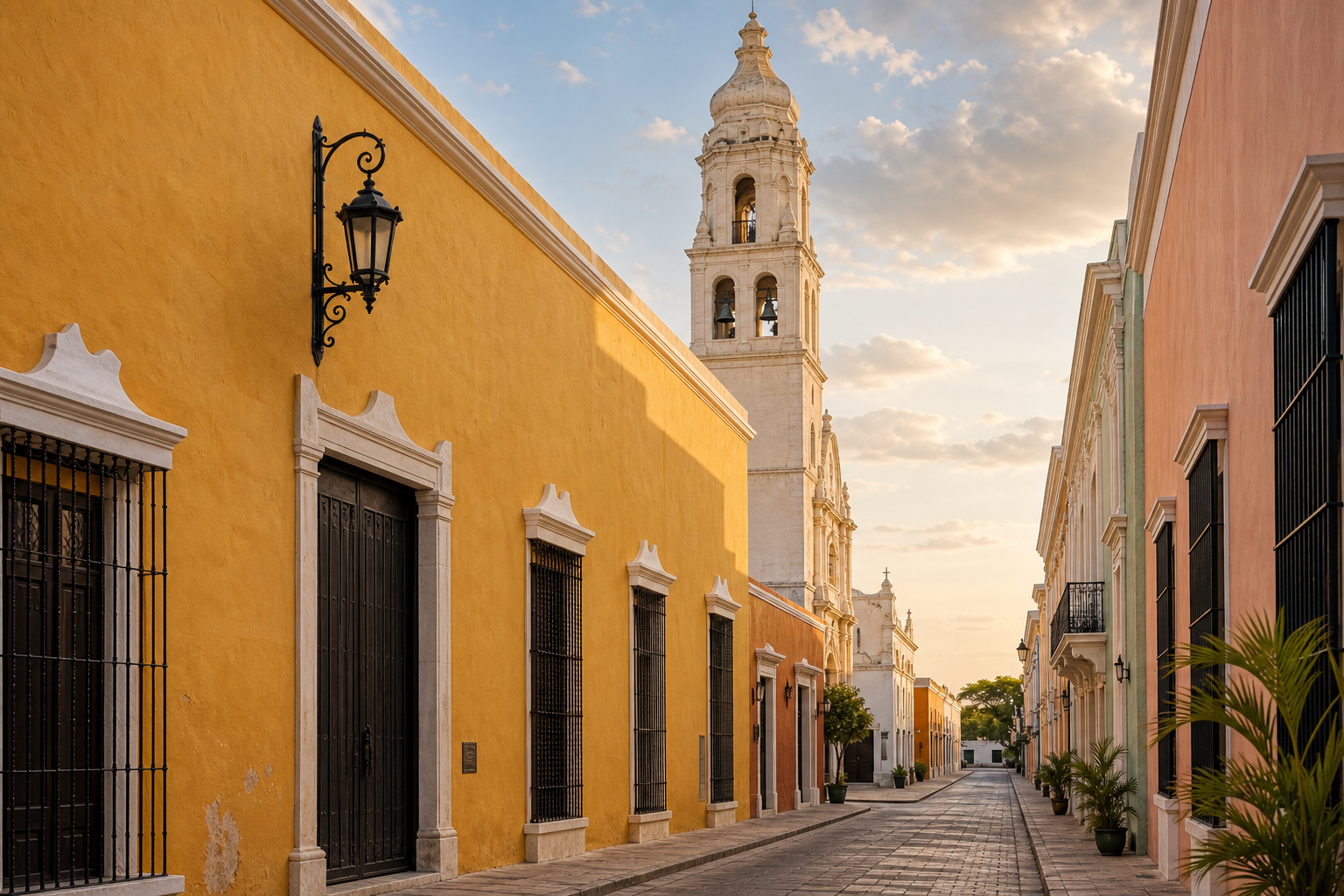
From Plaza de la Independencia, notice the Cathedral and the surrounding colonial façades before walking east along Calle 59. The street connects Puerta de Mar and Puerta de Tierra and is one of the most active pedestrian corridors in the centre. Its restaurants, shops, balconies, galleries, and painted façades make it easy to stop frequently. The route is not a straight historical timeline; it is a living street that has changed use while retaining the old urban frame.
At Puerta de Tierra, spend time on both sides. Look toward the old centre, then return to the exterior to understand the landward approach. Continue to nearby wall sections and bastions if they are open. The exact sequence of open interiors can change, and some bastions may have their own admission or schedule. If the heat is high, do the outdoor perimeter early and save indoor museums for the middle of the day.
Finish at Puerta de Mar and walk toward the malecón for evening air. This route gives you the two gates as a pair: inland entrance and sea entrance. It also avoids treating the fortifications as a collection of unrelated photo stops.
 Calle 59 connecting the two historic gates in Campeche
A practical half-day plan
For a half day, begin before the strongest heat. Start at the plaza, visit the Cathedral from outside or inside if open, and walk Calle 59 toward Puerta de Tierra. Give the gate at least enough time to inspect the passage, moat, wall, and interpretive elements rather than rushing through for a single photograph.
After Puerta de Tierra, choose one or two nearby fortification spaces instead of trying to enter every museum. The Baluarte de la Soledad and its Maya architecture displays are a logical cultural companion when open. The Baluarte de Santiago is another useful stop because its botanical setting shows how a defensive structure can be reused for public education. Check each venue’s current opening details locally.
Take a break indoors during the hottest part of the day. The historic centre is compact, but compact does not mean cool. Stone and paving can reflect heat, and the wall walk has little shade. Refill water, protect your shoulders, and avoid scheduling the entire route between late morning and mid-afternoon if you are sensitive to heat.
Return to Puerta de Tierra in the evening only if the light show is confirmed. Otherwise, continue to the malecón and watch the sunset over the Gulf. The gate and waterfront provide different moods: enclosed, thick-walled history followed by open sea and breeze.
A full-day historic-centre plan
With a full day, you can make the visit less rushed. Spend the first part of the morning on the western side of the old centre: Plaza de la Independencia, the Cathedral, Puerta de Mar, and the beginning of the malecón. Then walk back through Calle 59, taking time for architecture and small exhibitions. This approach lets you see Puerta de Tierra after you already understand the sea-facing side of the city.
Use the middle of the day for indoor museums, lunch, and a rest. If you are interested in military architecture, compare the urban gate with one of the larger hilltop forts, such as Fuerte de San Miguel or Fuerte de San José el Alto. Those forts require transport and should not be squeezed into the same hot walking window. Their elevated positions and larger defensive layouts complement Puerta de Tierra, but they are separate visits.
In the late afternoon, return to the walls or walk the central streets as the light softens. If El Lugar del Sol is operating, eat or rest before the performance rather than trying to arrive after a long continuous walk. If there is no show, use the evening for the malecón, a quiet circuit of the lit historic streets, or another cultural event listed locally.
When to visit
The best time of day depends on your priorities. Early morning is best for cooler walking, softer light on façades, and fewer people in the gate’s immediate area. Late afternoon is good for photography and for connecting the gate to an evening walk. Midday is workable if you combine the site with indoor spaces, but it is the least comfortable time for climbing walls or standing in exposed areas.
The dry season can bring strong sun and warm afternoons. The rainy season can produce sudden showers and slippery stone, while humid weather can make a short route feel longer. A light rain layer and shoes with reliable grip are more useful than delicate footwear. If thunder or heavy rain develops, postpone a wall walk and use the time for an indoor museum or covered street.
Avoid treating a holiday or festival timetable as a normal day. Cultural venues and performances can change around public events, maintenance, and municipal programming. The gate itself may remain visible from the street even when an interior section is closed. Build flexibility into the plan instead of travelling across the city solely for a promised opening.
Getting there
Puerta de Tierra is in the historic centre of San Francisco de Campeche. If you are staying inside or near the walled city, walking is usually the clearest way to arrive because the surrounding streets are part of the experience. From the bus station or a hotel outside the centre, a taxi is the practical option when heat, luggage, or mobility makes a longer walk unattractive. Ask to be taken to Puerta de Tierra or the historic centre, then confirm the final approach on foot.
Drivers may use different descriptions for the surrounding roads, and street access can change during events. A map pin is useful, but the gate itself is a recognisable landmark. If you arrive by car, do not assume you can park directly beside the entrance. Look for legal parking outside the most restricted historic streets and continue on foot. A vehicle is more useful for reaching forts outside the centre than for moving between the two gates.
Public transport can be less straightforward for a short tourist visit because routes and stops are not always as intuitive as the historic-centre grid. For a first visit, walking from a central drop-off is usually simpler. Keep small cash available for local transport and smaller admissions, but verify current fares rather than relying on an old guide.
Where to stay for the visit
Staying inside the historic centre gives you the easiest access to Puerta de Tierra, Calle 59, the plaza, Puerta de Mar, and evening walks. It also lets you return to your room during the hottest part of the day and come back for the show without arranging another cross-city journey. The trade-off is that older buildings can have stairs, compact rooms, or limited parking. Ask about lift access, air conditioning, and luggage arrangements before booking if those details matter.
The malecón is a good alternative if you prefer sea air, a broader road layout, and an easy sunset walk. You can reach the walled centre by taxi and spend the day there, but returning after a performance requires planning. A stay farther out may suit a road-trip itinerary, particularly if you are leaving early for Edzná, but it is less convenient for a spontaneous evening at the gate.
Do not choose a named property solely because a search result calls it historic or central. Compare the actual walking location, current guest information, parking, air conditioning, and cancellation terms. Search current accommodation inventory for the centre or malecón before booking:
Check current historic-centre rates on Booking.com · Compare Campeche stays on Trip.com
Guided tour or self-guided visit?
A self-guided visit works well if you have read a little about the fortifications and are comfortable checking current access at the gate. You can move at your own pace, stop for photographs, and connect the gate with the other walls without following a fixed timetable. It is also the best option if you only have a short window between transport connections.
A walking guide can add value when the history feels disconnected. A good guide can explain why bastions project from the wall, how the two gates relate to the port, and which features are original, restored, or reconstructed. Ask whether the walk includes the historic centre and fortifications, whether it is offered in your preferred language, and whether the show ticket is separate. Do not assume a general city walk includes a full interior visit to Puerta de Tierra.
Bookable inventory in Campeche changes, and product pages can be renamed or unavailable. Use live destination listings rather than relying on an old tour title. The verified GetYourGuide walking product below specifically describes the historic city centre, walls, churches, museums, and key landmarks. Viator’s regional destination page is useful for comparing current activity inventory when no single product is confidently available.
Compare a Campeche historic-centre walking tour on GetYourGuide · See current Campeche experiences on Viator
Visiting with children
Puerta de Tierra works for children who like forts, tunnels, cannons, and stories of ships and attacks. Keep the explanation simple: Campeche was a port, the city needed protection, and this gate controlled movement on the inland side. Let children find the moat, identify the thick wall, and compare the narrow gate passage with a normal street.
The practical challenge is heat. Go early or near sunset, carry water, and plan a shaded or indoor break. Do not promise the light show without confirming the schedule; young children may find a late performance tiring, especially after a full day of walking. If you attend, establish a meeting point and keep children close because a dark heritage site with steps and crowds is harder to navigate.
Strollers can be awkward on uneven paving, steps, and wall sections. A carrier may be more practical for younger children, but the decision depends on your family and current access. Ask staff before taking a stroller into an interior area. For older relatives and children together, a short gate visit followed by a taxi to another attraction can be more comfortable than a complete fortification circuit.
Accessibility and physical comfort
The street-level view of the gate is accessible to many visitors, but the full experience may not be. Stone paving, thresholds, narrow passages, stairs, and uneven surfaces can limit access to upper wall areas. The moat and defensive platform may have edges or changes in level. Ask staff what is open and what route is safest rather than assuming that a heritage building meets modern accessibility standards.
If you use a wheelchair or have limited stamina, consider making the outside façade, gate passage, and nearby street the main visit. A companion can photograph or describe upper sections if stairs prevent access. Choose a hotel close to the historic centre so you can return for a rest. A taxi can reduce the distance between the gate and the malecón, although drop-off points may be affected by street controls.
Comfortable closed shoes are sensible even in hot weather. The historic centre is walkable, but the combination of paving, sun, steps, and standing time can be tiring. Sun protection, water, and a lightweight layer for air-conditioned museums make the visit easier.
Photography tips
The front façade is the obvious photograph, but it is not the only useful angle. Step back enough to include a portion of the adjoining wall and the ground in front of the gate. This shows that Puerta de Tierra is a defensive complex, not just an arch. From the wall or nearby approach, photograph the moat and the way the gate sits within the city’s perimeter.
Morning light can reveal texture on the stone and reduce harsh contrast. Late afternoon gives warmer colour, while night lighting changes the mood completely. If a performance is running, follow staff instructions about where photography is allowed. Flash can distract performers and other visitors.
People are part of the living city, but ask before making a portrait of anyone clearly identifiable, especially vendors, guards, or performers. Be respectful during religious or cultural events nearby. Avoid climbing barriers for a better angle; the wall is a protected structure, and a slightly less dramatic photograph is preferable to damage or risk.
What to combine with the gate
The most natural companion is Calle 59 because it links the land and sea gates. Add Plaza de la Independencia and the Cathedral if you want the civic and religious centre, then continue to Puerta de Mar and the malecón for the Gulf setting. This creates a coherent route with minimal transport.
For a stronger military-architecture day, add one or two bastions and one hilltop fort, but separate the walking and driving portions. Fuerte de San Miguel has a different scale and setting from the urban gate; it is a museum-and-fort visit rather than a second version of Puerta de Tierra. Fuerte de San José el Alto also provides a comparison, but current opening arrangements should be checked before you make the trip.
For archaeology, Edzná is a separate excursion outside the city. Do not describe it as nearby in the sense of walking distance. It can fit into a Campeche itinerary, but it requires its own transport and time. The same rule applies even more strongly to Calakmul, which is a long jungle journey and should not be added casually after a morning at the gate.
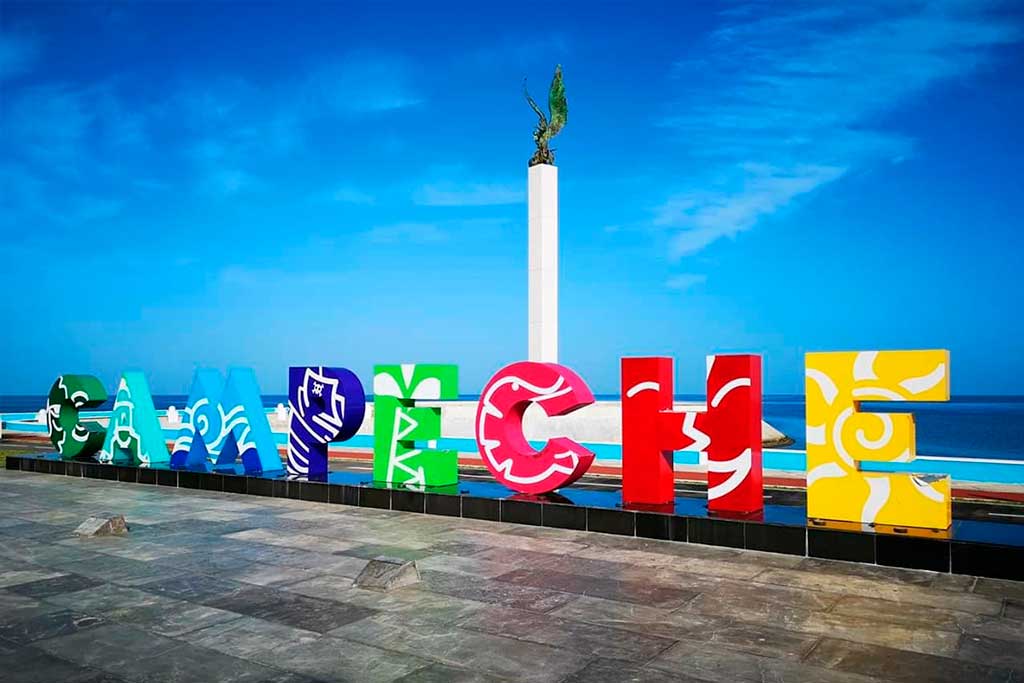 The Campeche malecón, a separate waterfront stop after the walled city walk
A route for history-focused travellers
Begin at Puerta de Mar to establish Campeche as a port. Walk through the centre to the plaza and Cathedral, then follow Calle 59 toward Puerta de Tierra. At the gate, focus on the landward approach, moat, and defensive openings. Continue along the wall to see how bastions allowed defenders to cover angles that a straight wall could not.
After a break, visit a museum that supplies context about Maya architecture or the city’s history. The exact museum choice depends on opening times and your interests. Then compare the urban fortifications with a hilltop fort if you have transport. The contrast matters: Puerta de Tierra controlled a city threshold, while the larger forts occupied strategic high ground and contained more extensive defensive arrangements.
End at the malecón, not because the waterfront is part of the gate, but because it completes the geography. From the sea-facing promenade, the historic port’s location becomes easier to imagine. You have moved from sea entrance to enclosed city to land entrance and back toward the Gulf.
A route for photographers
Start early at the gate’s exterior, when the surface texture is visible and the surrounding area is quieter. Photograph the arch, the wall, the cannon display if open, and the moat from several distances. Walk a short section of the adjoining wall and look for lines created by the parapet and street.
Move along Calle 59 when the façades are lit but before the strongest midday glare. The street image in this guide’s visual references shows the kind of relationship worth capturing: colourful façades, a narrow historic street, and the fortification at the end of the view. Keep the caption accurate. A street photograph near the gate is not automatically a photograph from inside the gate.
Return at dusk for the strongest contrast between warm stone and the deepening sky. If the show is scheduled, the illuminated moat and walls offer a different subject from the daylight architecture. Finish at the malecón for open horizons and sunset colour. These are three distinct photographic settings within one city: masonry detail, colonial street, and Gulf waterfront.
Food and breaks around the visit
The historic centre is the easiest place to pause because cafés, restaurants, and street activity are concentrated along and near the pedestrian corridors. Rather than recommending an unverified business by name, look for a shaded table, visible local traffic, and a menu you can understand. Campeche’s regional food includes seafood and dishes influenced by the Gulf and Maya culinary traditions. Ask about ingredients if you have allergies.
A break is not wasted time. It prevents the common mistake of attempting the gate, every bastion, both forts, and the malecón without rest. For a show evening, eat before arriving or choose a place near the route, then confirm how long it takes to reach the entrance. Keep your ticket or booking information accessible and leave room for queues.
Markets and busy streets are useful for observing daily life, but do not block passageways for photographs. Smaller vendors may prefer cash, and payment options vary. Carry only what you need while walking and keep your phone secure in crowded areas.
Common mistakes to avoid
The first mistake is confusing Puerta de Tierra with Puerta de Mar. Both are historic gates in Campeche, but they face different directions and support different route choices. The second is confusing the gate with the city’s hilltop forts. Puerta de Tierra is in the walled centre; Fuerte de San Miguel and Fuerte de San José el Alto require transport.
The third mistake is relying on a fixed show timetable. Online pages can remain visible after schedules change. Verify directly before travelling for the performance. The fourth is visiting at the hottest time with no water or shade plan. A short route in Campeche’s heat can be more demanding than the map suggests.
The fifth is treating every visible wall as an original, untouched surface. Campeche’s fortifications have been restored, maintained, and adapted. Read signs, ask staff, and use careful language when distinguishing original elements from later work. Finally, do not rush through the gate simply because it is close to another attraction. The defensive relationship between wall, moat, passage, and city is the main reason to visit.
Frequently asked questions
Is Puerta de Tierra worth visiting?
Yes, especially if you are already exploring Campeche’s historic centre. The gate is compact but meaningful, and it becomes more rewarding when combined with Calle 59, the bastions, Puerta de Mar, and the malecón. It is less satisfying as a five-minute photograph with no time to examine the moat or adjoining walls.
How long should you allow?
Allow roughly 30–60 minutes for the gate and immediate fortification details, depending on which interior areas are open and whether you climb to a wall section. Allow several hours if you connect it with the plaza, Calle 59, bastions, Puerta de Mar, and a waterfront walk. A light show requires extra time and a separate schedule check.
Is the light show every night?
Do not assume so. Published information has differed by year and source. Confirm the current day, time, language, ticketing, and weather policy locally or through official Campeche tourism information. A normal daytime visit does not guarantee that the evening presentation is operating.
Can you walk between Puerta de Tierra and Puerta de Mar?
Yes, the two gates are connected by the historic-centre street network, with Calle 59 providing the clearest tourist route. Wear comfortable shoes and allow for heat, pauses, shops, and museums. The distance is manageable, but the whole route takes longer if you stop to explore.
Should you visit with a guide?
A guide is helpful if you want more context about bastions, colonial trade, pirate attacks, and restoration. A self-guided visit is fine for travellers who prefer flexibility. Check the exact inclusions of any current walking product before booking, particularly whether the gate interior or evening show is included.
Is Puerta de Tierra suitable for children?
Yes, if children can manage heat, stairs, and uneven surfaces. The moat, cannon, gate passage, and fortification story are easy to make engaging. Go early or late, keep children near edges, and confirm whether a light show will finish too late for your family.
Can you visit the gate during rain?
You can usually see the exterior, but wet stone and steps can be slippery, and an outdoor wall visit may be uncomfortable. If heavy rain arrives, switch to an indoor museum or covered street and return when conditions improve. Performance schedules may change in bad weather.
The best way to plan your visit
Treat Puerta de Tierra as one part of Campeche’s fortified city rather than a standalone monument. Visit in daylight so you can read the masonry, moat, gate passage, and adjoining walls. Walk Calle 59 toward or away from Puerta de Mar to understand the city’s two entrances. Add a bastion or museum for context, and reserve the malecón for the open Gulf view that the land gate cannot provide.
If El Lugar del Sol is running during your stay, decide whether theatrical history fits your evening and verify the details before buying or travelling. If it is not running, the gate is still worthwhile: the architecture does not depend on a projection schedule. Go early or near sunset, carry water, ask staff about upper access, and leave enough time to notice how the old defence system remains part of a working city.
Check current Campeche historic-centre stays on Booking.com · Compare accommodation on Trip.com
 Puerta de Tierra’s illuminated moat and wall at night
If you want a guided overview before exploring independently, compare the current Campeche walking inventory on GetYourGuide and check Viator’s current Campeche experiences. Confirm the live details for any tour or performance before you travel.
For most visitors, the strongest plan is simple: arrive at the historic centre with no rushed connection, walk from the plaza along Calle 59, spend thoughtful time at Puerta de Tierra, continue through the fortification landscape, and finish by the Gulf. That sequence gives you the gate’s history, its urban setting, and the practical pleasure of Campeche’s evening air in one manageable route. Let the physical gate—not only the show—set the pace of your visit.