

Palizada is a small river town in southwestern Campeche State, close to the Tabasco border and far from the better-known route between Campeche city and the Maya ruins. Its main attraction is not a single monument. It is the combination of the Palizada River, colorful low-rise houses with French tiles, a compact historic centre, a market, and a slow daily rhythm shaped by water and wetlands.
The town is one of Campeche’s Pueblos Mágicos, a designation it received in 2011. That label is useful as a starting point, but it should not create resort expectations. Palizada has limited services, a quiet evening scene, and fewer straightforward transport connections than Campeche city, Ciudad del Carmen, or Escárcega. The reward is a destination that feels like a living community rather than a programmed attraction.
The river is a branch of the Usumacinta system and eventually connects with Laguna de Términos. Historically, waterways carried palo de tinte and other goods through the region. Today, the same river gives the town its shape: the market and central streets sit close to the water, the malecón is a place for an evening walk, and boat outings can open up a wetland landscape where birds, reptiles, and other wildlife may be seen. Sightings are never guaranteed, and the river is a working natural environment rather than a wildlife park.
This guide explains how to decide whether Palizada fits your trip, what to see on foot, how to arrange time on the river, how to reach the town, where to stay without relying on invented hotel recommendations, and how to combine it sensibly with other destinations in Campeche State.
What Palizada is like
Palizada is best understood as a small town with a strong visual identity and a large natural setting. The central area is walkable, but the wider municipality is rural and spread out. A visitor can cover the principal square, church, market, riverfront, and several streets in one relaxed morning. The reason to stay longer is to slow down, arrange a river experience, watch the light change over the water, and use the town as a base for nearby countryside rather than to fill a checklist of attractions.
The houses are a major part of the experience. Many have bright façades, tall doors, generous windows, and roofs made with French tiles. These materials are linked to the historical trade in dyewood: European goods moved through the river network while forest products left the region. The architecture is not a perfectly preserved colonial stage set. It is a town where homes, civic buildings, shops, and religious spaces continue to be used, repaired, painted, and adapted.
The weather affects how you experience Palizada. Heat and humidity can be intense, especially when there is little wind in the streets. The most comfortable walking is generally early in the day or after the strongest afternoon heat. Rain can alter river conditions and rural roads. Carry water, sun protection, insect repellent, and shoes that can handle wet pavement or muddy edges near the river.
Palizada is a good fit if you enjoy small-town travel, local markets, architecture, birdwatching, river landscapes, and unhurried days. It is less suitable if you need frequent departures, nightlife, a large choice of restaurants, or a tightly scheduled attraction circuit. The destination rewards flexibility more than optimization.
The riverfront and malecón
Begin at the river. The Palizada River is the town’s organising feature, and the riverfront gives you the clearest sense of why the settlement exists where it does. Walk slowly along the malecón, looking across the water at vegetation, boats, and the changing edges of the opposite bank. Morning can be especially active, with people moving around the waterfront and working boats preparing for the day. Late afternoon brings softer light and a more social atmosphere.
The river is not a swimming pool. Currents, wildlife, muddy banks, boat traffic, and changing water levels make it important to stay back from unprotected edges. If you are travelling with children, keep them close near docks and never assume a calm surface is safe. Ask locally before entering any water, and follow the instructions of boat operators.
The riverfront is also where you can appreciate Palizada’s relationship with the wider wetland system. This is not the open Gulf coast of Champotón or Isla Aguada. The view is inland and estuarine: broad brown-green water, low banks, tropical vegetation, and the possibility of birds crossing the sky. In the dry season, light and visibility can make distant details easier to pick out. During rainy periods, clouds, reflections, and fuller vegetation become part of the scene.
A short riverfront walk is worthwhile even if you do not take a boat. It provides an orientation to the central streets and a useful way to judge the day’s weather. If a boat trip is your priority, use this first walk to ask about departure points, river conditions, duration, wildlife expectations, and what is included. Services can vary, so confirm the arrangement directly rather than relying on an old timetable.
 Palizada town centre and its colorful river-town architecture in Campeche
San Joaquín church and the central square
 Red façade of Parroquia de San Joaquín in Palizada, Campeche
The red façade of the Parroquia de San Joaquín is the most recognisable building in the central district. Sources from Mexico’s tourism information describe the church as dating to the late eighteenth century, while other local accounts discuss later construction and changes. The safe way to read the building is as a historic parish church whose present form reflects more than one period of use and repair. Its single bell tower, clock, bright façade, and French-tile roof make it easy to identify from the square.
Take time to view the church from the public space rather than treating it as a quick photograph. The relationship between the red façade, the square, the surrounding trees, and the low houses is more important than a long interior visit. If the doors are open, behave as you would in any active place of worship: dress respectfully, keep voices low, and do not photograph services or people without permission. Opening arrangements can change for religious celebrations and maintenance, so do not plan your day around a guaranteed interior visit.
The square is associated with Parque Benito Juárez and is a useful place to pause. In the cooler parts of the day, residents gather here and the town feels more animated than it may during the hot midday hours. Look at the paving, benches, planted areas, and the way streets feed into the square. Palizada’s sense of place comes from these ordinary civic spaces as much as from named attractions.
The town’s calendar matters. Religious celebrations, carnival, civic events, and local festivals can change the atmosphere, available rooms, traffic, and food options. If you are travelling for a particular event, verify the current dates locally or through official municipal and tourism channels. Do not assume that an event listed in an old travel article happens on the same dates every year.
French-tile houses and town architecture
Palizada’s French tiles are a reminder that architecture can record trade. European roof tiles arrived in a region connected to river commerce, while local materials and tropical building practices shaped the homes around them. The result is not the same architectural vocabulary as the walled city of Campeche. Here, the visual effect is lower, more domestic, and closely connected to streets and gardens.
Walk beyond the square without turning the visit into a hunt for one perfect façade. Notice the variation: some roofs are intact, some have been replaced, some houses are freshly painted, and others show the marks of humidity and age. High ceilings, shaded doorways, bright walls, and ventilation are practical responses to a hot climate as well as aesthetic details.
Photography should remain considerate. Avoid pointing a camera through open doors or photographing residents at close range. A quiet town is not an empty museum. Ask before photographing markets, workshops, boats, or people. If a doorway or private courtyard looks interesting, enjoy the architectural detail from the public street unless invited closer.
The best walking route is not necessarily the longest. Start at the square, visit San Joaquín, continue toward the market and riverfront, then return through side streets while the temperature is manageable. A local guide can add context about family homes, civic buildings, river commerce, and changes in the town that are not visible in a short independent walk.
The municipal market
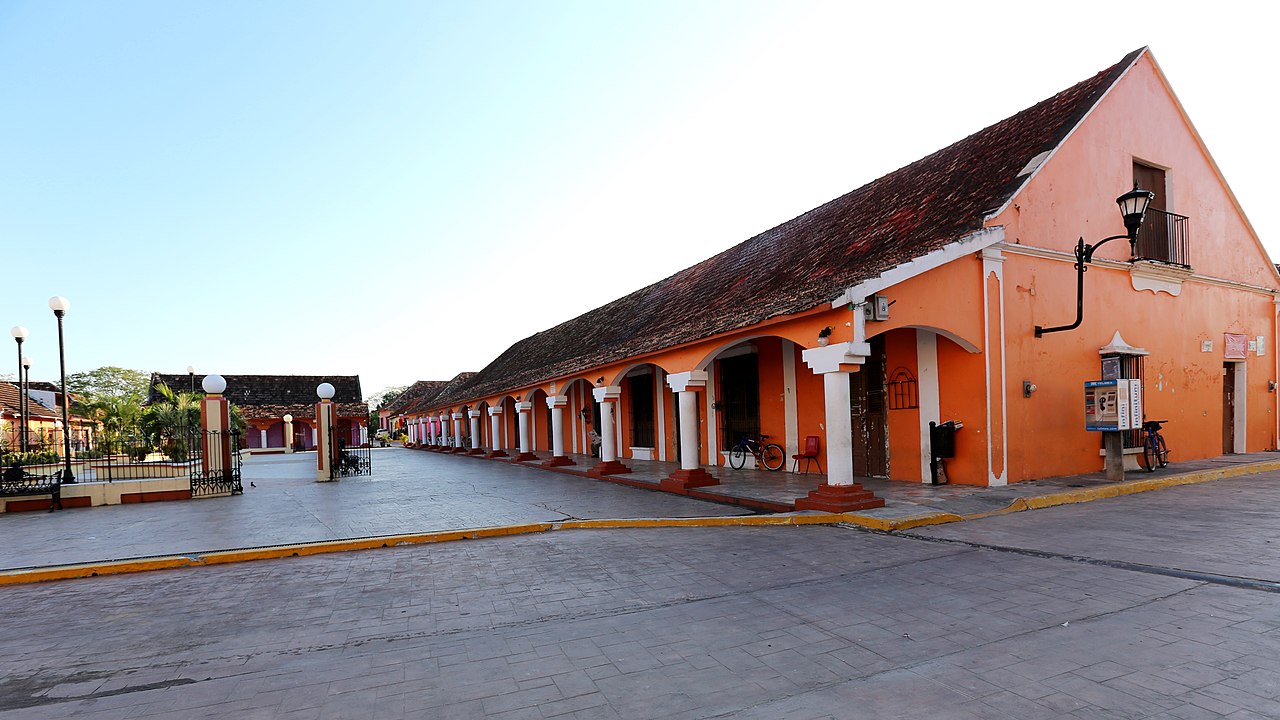 Arched portales and historic streets in Palizada, Campeche
The municipal market is one of the most useful stops in Palizada because it connects sightseeing with daily life. Official tourism descriptions identify it as a market building with arches where local produce, fish, and prepared food are sold. Go early if you want to see the widest range of activity. Later in the day, some stalls may be quieter or finished, particularly when supplies and routines follow the local rhythm rather than visitor demand.
A market breakfast or simple meal is often a better way to understand the town than searching for a restaurant list. Look for what is being prepared and ask what is available that day. Regional food may include freshwater fish, local produce, tamales, tortillas, stews, fruit, and drinks suited to the heat. Names and availability can vary, so let the menu and the vendor’s explanation guide you.
Carry small cash and keep expectations practical. Smaller towns may have limited card acceptance, and some stalls do not operate with printed menus. If you have allergies or dietary restrictions, use clear Spanish phrases and confirm ingredients more than once. In a hot, humid climate, choose food that is freshly cooked or properly chilled, and drink sealed water if you are uncertain about local supplies.
The market is also a good place to buy fruit for a river day. Mangoes are strongly associated with Palizada, but seasonality matters. Do not expect every product to be available year-round. Buying locally supports the people who keep the market active, but avoid buying protected wildlife products, archaeological objects, or anything whose origin is unclear.
A boat trip on the Palizada River
A boat outing is the main activity to arrange in Palizada. The route and duration depend on local operators, river conditions, weather, and the type of outing you want. Some trips focus on the riverfront and nearby banks; others explore a broader wetland landscape. Ask whether the boat is private or shared, whether life jackets are provided, how long the trip normally lasts, and where you will return.
Wildlife is a possibility, not a promise. The wider region can support birds, iguanas, turtles, crocodiles, and other wetland species, and local accounts also mention monkeys and manatees. Your chances depend on water level, time of day, season, noise, and luck. A responsible operator should not bait or harass animals for photographs. Keep distance, do not feed wildlife, and avoid loud music.
Early morning can be useful for cooler temperatures and active birdlife. Late afternoon may be attractive for light and temperature, but visibility and return timing need to be clear. If rain or wind is developing, take local advice seriously. The river can look calm while conditions change quickly beyond the waterfront.
Bring a hat that will not blow away, water, insect repellent, sunscreen, and a dry bag for phones and documents. Long sleeves and lightweight trousers can be more comfortable than exposed skin. Binoculars are more useful than a powerful zoom lens: they allow you to observe at a respectful distance. If the boat has no shade, confirm that before departure.
Compare Campeche and Palizada-area experiences on GetYourGuide · See available Campeche activities on Viator
Wildlife and responsible observation
Palizada sits within a wetland landscape connected to Laguna de Términos and the broader river systems of the southwest. It is a place to observe habitat, not a guarantee of a particular animal. Birds may be easier to find than mammals, especially when you learn to look for movement, calls, silhouettes, and feeding areas rather than expecting animals to pose beside the boat.
Crocodiles require particular care. Never approach the water’s edge because a photograph looks interesting, and never throw food into the river. Keep children and pets away from unguarded banks. Manatees are sensitive, slow-moving animals; if one appears, the correct response is to reduce noise and maintain distance. The same principle applies to monkeys, turtles, and nesting birds.
Do not collect shells, plants, feathers, or other natural objects. Wetland plants protect banks and provide habitat. Plastic bags and snack wrappers are especially damaging around waterways, so pack out everything you bring. Use reef-safe language only where it applies; Palizada is a river and wetland environment, and ordinary litter prevention is the more relevant concern here.
If wildlife protection is central to your trip, ask an operator about their practices before paying. Questions about group size, speed, distance, and whether animals are fed are reasonable. A slower trip with fewer close encounters is usually the better experience. The landscape remains valuable even when the headline animal does not appear.
The river’s history and trade
Palizada’s story is inseparable from transport. Long before modern roads connected the region, rivers were practical routes through a landscape of forests, floodplains, and lagoons. The trade in palo de tinte, a dyewood associated with Campeche, brought commercial attention and connected the interior to ports and international markets. French roof tiles in local architecture are one visible trace of those exchanges.
The river should not be romanticised as an untouched route. River commerce involved extraction, labour, colonial power, and changing relationships between communities and outside markets. A good guide or local conversation can help you understand that the colourful houses are not just decorative; they reflect the economic history of the region.
The arrival of roads changed the balance. Goods and people could move without relying entirely on the river, and Palizada became less central to long-distance commercial transport. The town’s quietness today is partly a consequence of that shift. It also explains why a visitor should not expect the same concentration of services found along major highways.
You do not need a formal museum visit to notice this history. Look at the riverfront, market, old civic buildings, roof materials, and the town’s orientation toward the water. Ask residents how the river is used today. Local knowledge can make the difference between seeing a pretty street and understanding why the street looks that way.
Food and everyday eating
Palizada’s food is shaped by the river, surrounding agriculture, and Campeche’s wider culinary traditions. Freshwater fish and local produce may be prominent, while seafood from the Gulf can also appear depending on supply. Mangoes are part of the town’s identity, but a traveller should follow the seasonal offerings rather than expect a particular dish at every meal.
The market is the most reliable starting point for simple eating. Go with an open mind and ask what is fresh. A breakfast stall may serve a different selection from a lunch counter. In the evening, choices may be more limited than in Campeche city. If your accommodation has a refrigerator, buying fruit and water during the day can make the overnight stay easier.
Food safety is mostly about ordinary judgment. Choose busy stalls with good turnover, observe whether cooked food is kept hot, and be cautious with raw ingredients if refrigeration looks uncertain. Drink sealed water if you are not accustomed to local supplies. Heat can make food spoil quickly, so do not keep prepared dishes in a warm vehicle.
Do not turn local cuisine into a search for named restaurants unless you have verified that a business is open. Businesses change, and small towns can have seasonal hours. The market, central streets, and hotel staff are better sources for current recommendations. If a vendor offers a dish you have not tried, ask what it contains and whether it is spicy before ordering.
Where to stay in Palizada
Staying overnight makes sense if you want a river outing, early wildlife observation, an unhurried walk, or a slower connection through southwestern Campeche. A day trip can show you the centre, but it can also turn Palizada into a rushed stop at the end of a long drive. Check current accommodation availability before travelling because the room supply is smaller than in Campeche city or Ciudad del Carmen.
Choose a base near the central area or riverfront if walking matters. That makes it easier to reach the square, market, church, and malecón without arranging transport for every short trip. Ask about air conditioning, water pressure, parking, mosquito screens, and whether the property can help contact a boat operator. These practical details matter more than a polished listing description in a hot, humid river town.
Check current Palizada-area availability on Booking.com · Compare available stays on Trip.com
Book earlier for festivals, holiday weekends, and dates when regional events increase demand. On ordinary weekdays, availability may be better, but do not assume a last-minute room is guaranteed. Save confirmation details offline and carry the property’s address in Spanish. Mobile coverage and connectivity can be inconsistent outside the central area.
How to get to Palizada
Palizada is not on the main high-speed visitor circuit. The practical route depends on where you start and whether you are driving. From Campeche city, the journey is long enough that a day trip requires an early start and careful return planning. From Ciudad del Carmen, the town can fit more naturally into a southern Campeche itinerary, although you still need to verify current road and transport conditions. Escárcega is another useful inland reference point for routes through the state.
Public transport services can change, and connections may not run at the frequency a visitor expects. Check the current departure point, destination wording, and return options before committing to a same-day plan. Some services may be regional buses or vans rather than the large intercity coaches used on principal corridors. Ask whether luggage is stored underneath or remains with you.
A rental car gives more control over arrival time, market visits, and nearby countryside, but it also makes you responsible for fuel, navigation, weather, and rural driving. Fill the tank before entering less-served areas, download offline maps, and avoid driving unfamiliar rural roads after dark. Flooding and heavy rain can change conditions. Do not rely on a travel article’s old journey time as a promise.
A private transfer or locally arranged driver can be useful when the group values flexibility but does not want to drive. Confirm what is included, where the driver will wait, and whether the vehicle can reach your accommodation. For any option, build in time for delays rather than making a tight connection to a flight or long-distance bus.
Palizada from Campeche city
Campeche city and Palizada offer very different experiences. The capital is a fortified Gulf city with a UNESCO-listed historic centre, larger accommodation inventory, established intercity connections, and more evening options. Palizada is a river town where the attraction is the relationship between houses, market, water, and wetlands.
The distance makes Palizada a poor substitute for a short Campeche-city weekend. If you have only one or two nights in the capital, stay in Campeche and explore its own centre, malecón, forts, and nearby Edzná. Add Palizada when you have enough time to absorb the journey and accept a quieter base.
If Palizada is the priority, consider travelling there as part of a southern route rather than returning to Campeche city between every stop. Keep the itinerary loose. A river outing may be scheduled by local conditions, and a slow market breakfast can take longer than a quick attraction visit. The best plan leaves room for weather and conversations.
For tours and day activities based around Campeche, browse GetYourGuide inventory and compare Viator listings. These pages may show limited Palizada-specific inventory, so read the destination and meeting-point details carefully before booking.
GuideCampeche Map: Routes from City to Coast and JungleSee how Campeche’s walled capital, Gulf towns, Maya cities, and southern jungle connect—and choose a base that turns the state’s long distances into a rewarding route.Explore
Palizada from Ciudad del Carmen and Laguna de Términos
Ciudad del Carmen is the most useful larger southern base for understanding the region’s lagoon geography. It has more services, accommodation, transport options, and food choices, while Palizada provides the smaller river-town experience. Isla Aguada offers another perspective on Laguna de Términos, with a coastal and lagoon setting rather than Palizada’s inland riverfront.
Do not confuse the two landscapes. A boat trip from Isla Aguada is not the same experience as a river outing from Palizada, even though both relate to the same broad wetland system. Isla Aguada faces the Gulf and lagoon channels; Palizada is built along a river farther inland. Combining them can be rewarding, but the distances and road conditions need checking.
If you base yourself in Ciudad del Carmen, confirm whether a proposed excursion is a transport service, a boat trip, or a full day tour. Those are different products with different timings. Compare Ciudad del Carmen stays on Booking.com and view current Trip.com hotel availability.
GuideLaguna de Términos, Campeche: Complete Visitor GuideHow to visit Laguna de Términos in Campeche for wild dolphins, mangroves, birdwatching, boat trips, beaches, and practical coastal planning.Explore
A practical one-day plan
A one-day visit is possible, but it works best when the transport is already settled. Arrive early enough to walk the square and church before the heat builds. Continue to the market for breakfast or a simple meal, then walk the riverfront and ask about boat availability. If a suitable, responsible trip is running and the weather is good, take it; otherwise, do not force the activity.
After the riverfront, return to the central streets for a slower architectural walk. Look at French-tile roofs, bright façades, shaded doorways, and civic buildings. Keep the afternoon flexible for a drink, fruit, or rest. The late-day malecón is a natural closing walk if your transport allows it.
A day trip becomes uncomfortable when it includes too many unrelated detours. Do not combine Palizada with Calakmul, Edzná, or a distant coast stop on the same day. These places belong to different geographic parts of Campeche State. A realistic day has one main base and perhaps one nearby addition, not a map full of pins.
If you are driving back after sunset, check the road and weather situation before leaving. If you are using public transport, confirm the last departure in person rather than assuming the schedule shown by a third-party website is current.
A better two-day plan
Two days allow Palizada to feel like a destination rather than a pause between highways. On the first day, arrive, settle in, walk the centre, visit San Joaquín and the market, and watch the riverfront in the evening. Keep the first day light if the journey is long.
Use the second morning for a boat trip or a guided countryside outing. Early hours are usually more comfortable in hot weather, and an operator can advise on current water conditions. Return for a late breakfast or lunch, then spend the afternoon revisiting the streets or resting during the hottest period. A second evening gives you time to see how the square and malecón change after work and school hours.
This rhythm is especially useful for photographers, birdwatchers, older travellers, and families who do not want every hour scheduled. It also gives you a buffer if weather cancels the first planned boat trip. The town’s value lies in attention and time, not in accumulating activities.
For a two-night stay, verify accommodation and transport in advance. Check Palizada lodging on Booking.com and compare Trip.com results. For a river activity, confirm the operator and meeting point locally when you arrive.
Visiting with children
Palizada can work well for children who enjoy boats, animals, markets, and open-air exploration. The pace is less tiring than a long archaeological site day, but the heat and water require attention. Plan walks for the morning or evening, carry drinking water, and schedule a real rest rather than expecting children to stay enthusiastic through the hottest hours.
Near the river, supervision is constant. Use life jackets on boats, keep children away from unprotected banks, and explain that wildlife must not be fed or approached. A child who wants to see a crocodile or monkey should learn to observe quietly from a safe distance. Binoculars can turn a distant bird into an engaging activity.
For food, the market can be flexible, but ask about ingredients and spice. Familiar fruit, tortillas, rice, and freshly cooked dishes may be easier choices than ordering a large unfamiliar meal. Keep snacks in a cool bag if you are travelling between towns, and do not leave children in a parked vehicle.
Accommodation with reliable air conditioning and a private bathroom may be worth prioritising over a more atmospheric room. Confirm these details before arrival because standards and descriptions vary in small destinations.
Heat, rain, insects, and practical comfort
Palizada’s environment is lush because it is wet and warm. That same climate affects comfort. Lightweight clothing, a hat, sunscreen, and regular water breaks are basic requirements rather than optional extras. Insect repellent is useful near the river and vegetation, particularly around dawn and dusk.
Rain can be sudden. A small waterproof layer or umbrella protects phones, documents, and camera equipment. Heavy rain may make unpaved access routes muddy or change river conditions. Ask locally before setting out if the forecast looks unsettled. Do not treat a cancellation as a failure; the river is the reason to respect the weather.
Mosquito protection is not a substitute for medical advice. Travellers with specific health concerns should consult a qualified professional before the trip. Keep medication in its original packaging and carry enough for delays. A small first-aid kit, water, and offline accommodation details are sensible in a town with fewer late-night services.
Cash is useful for markets, transport, tips, and small purchases. Internet access may be adequate in some accommodation and weak in others. Download maps and booking confirmations before leaving a larger city. Tell someone your general route if you are driving into rural areas, and avoid assuming that a phone signal will be available beside the river.
Is Palizada worth visiting?
Palizada is worth visiting when you want a quiet, distinctive corner of Campeche State and are willing to travel for atmosphere rather than a long list of major monuments. Its strongest experiences are connected: the river explains the town’s history, the market shows its daily life, the French tiles reveal old trade, and the wildlife makes the surrounding wetland visible.
It is not the best choice for every trip. If you have limited time, no interest in river landscapes, or need frequent transport, Campeche city is easier. If your priority is a large archaeological site, go to Calakmul, Edzná, or the Río Bec area instead. If you want Gulf beaches and lagoon dolphins, Isla Aguada fits more naturally. Palizada earns its place by being different from those destinations.
The key is to plan for the destination it is, not the destination a generic Pueblo Mágico label might suggest. Expect a small service base, hot weather, locally changing schedules, and a town where public spaces matter more than ticketed attractions. Arrive with enough time to walk, listen, eat simply, and let the river set the pace.
A final recommendation for planning your visit
Make Palizada an overnight or slow southern-Campeche stop if possible. Stay near the central area, walk to the square and riverfront, visit the market early, and arrange any boat outing only after checking the day’s weather and local conditions. Keep wildlife at a respectful distance and let seasonal food and local advice shape your plans. With that approach, Palizada offers something the larger destinations cannot: a close view of how a Campeche town, a historic trade route, and a living river continue to fit together.

