
If you are visiting Calakmul, the most useful hotel decision is not usually about luxury. It is about choosing a base that makes an early jungle departure, a long day on the road and a return without services feel manageable. Xpujil is the practical answer for most travellers. The town is small and functional, positioned on Federal Highway 186 in southeastern Campeche, with accommodation, food, fuel, cash points and local transport contacts before the route turns toward the reserve.
That does not mean every place described as “near Calakmul” is equally convenient. Calakmul archaeological zone is deep inside the Calakmul Biosphere Reserve. A hotel in modern Xpujil still requires a substantial drive to the reserve entrance and then along the internal road to the ruins. A jungle lodge outside town may feel closer on a map, but it can have fewer services, weaker mobile reception and less flexibility if your vehicle or tour arrangement changes. Chicanná and Zoh Laguna are useful alternatives for a quieter forest setting, while Escárcega can work as a road stop, but neither replaces Xpujil for every itinerary.
This guide compares the main types of accommodation in and around Xpujil, explains what to check before booking, and helps you match a room to your actual route. Hotel names, room categories and availability change, so the reliable part of the decision is the location, transport access, air-conditioning, water, parking and breakfast arrangement. Check current Xpujil accommodation rates on Booking.com · Compare Xpujil hotels on Trip.com
The short answer: where should you stay?
For a first visit to Calakmul, stay in Xpujil town if you want the simplest combination of services and transport options. This is the best choice for travellers without a private vehicle, for anyone arranging a local driver or guide, and for road-trippers who want to buy water and fuel before entering the reserve. It is also the sensible base if you plan to combine Calakmul with Xpuhil, Becán, Chicanná or Balamkú.
Choose a jungle lodge or eco-lodge around the Río Bec corridor if the forest setting is part of the point of the trip and you already have reliable transport. These properties can make the stay feel more connected to the reserve, but they may be farther from shops, banks and fuel. Ask exactly where the property is, not just whether it is advertised as “near Calakmul.”
Choose Zoh Laguna or another rural base when quiet, birds and a slower pace matter more than convenience. This can work well for nature-focused trips and for travellers with two or more nights. It is a weaker choice for an improvised one-night stop, a late arrival, or a morning when you need to solve transport at short notice.
Choose Escárcega only when your route makes it a natural overnight stop. Escárcega has a larger transport role and can be useful between Campeche city and the southern interior, but it adds distance to a Calakmul morning. If the ruins are your main reason for coming, sleeping in Xpujil usually protects more of the day.
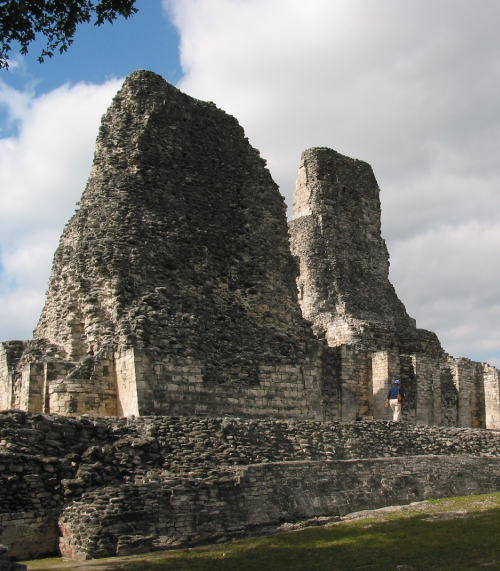 The Xpuhil archaeological zone near the modern town of Xpujil, Campeche
Why Xpujil is the best base for most Calakmul visits
Xpujil is not a resort town and should not be booked with resort expectations. Its value is logistical. It sits on the road connecting Escárcega with Chetumal, close to the archaeological sites of Xpuhil, Becán and Chicanná, and within the broader Calakmul municipality. The modern town is also the place where most visitors make their final practical decisions: fuel up, buy food, confirm a driver, check road conditions and start early.
 A Federal Highway 186 road scene between Escárcega and Xpujil in Campeche
The distinction between Xpujil and Calakmul matters. The archaeological zone is not in town, and a train station labelled Xpujil does not put you at the ruins. The route into the reserve is long enough that you should treat a hotel night in Xpujil as preparation for an expedition rather than as accommodation beside an attraction. The return journey can be hot and tiring, particularly after walking around large structures, so a room with dependable air-conditioning and a straightforward arrival is worth more than a decorative extra.
Xpujil also gives you options if the weather, vehicle or energy level changes. You can visit the nearby Xpuhil zone instead of committing to the full Calakmul drive. You can spend part of a day at Becán and Chicanná. You can ask local accommodation staff about current access conditions. A remote property may be peaceful, but it cannot offer the same fallback choices.
The town is especially useful for three travel patterns:
- One Calakmul day: arrive in Xpujil the previous afternoon, prepare supplies, depart early, return for a second night or continue only if the next leg is realistic.
- Río Bec archaeology: sleep two nights and visit Xpuhil, Becán and Chicanná at an easier pace rather than trying to squeeze them into a single transfer day.
- Cross-peninsula routing: use Xpujil as a stop between Campeche State, Chetumal or Bacalar, while keeping enough time for the ruins instead of treating them as a roadside detour.
For a first visit, that flexibility is the central reason to book in town rather than chasing the smallest possible distance to the reserve.
The best areas to book around Xpujil
1. Central Xpujil: best for services and flexible plans
Central Xpujil is the strongest all-round base. Exact hotel boundaries are informal, so study the map and the current listing rather than relying on the label “downtown.” You want a location with practical access to the highway, food, shops and transport contacts. A central room may be simple, but the ability to walk out for supplies or ask about a transfer can save time.
The benefits are clearest for travellers who do not have a car. Public transport can get you into the wider region, but the final approach to Calakmul requires more planning than a normal intercity bus journey. A hotel in town gives you somewhere to receive a driver, meet a guide or arrange the next leg. It is also easier to carry luggage between the bus or train connection and the room when you are not staying in an isolated lodge.
Central Xpujil is not necessarily quiet. Highway traffic, dogs, generators, neighbouring rooms and early departures are part of a small transport town. If you sleep lightly, request a room away from the road and read recent reviews for noise comments. If you need to leave before dawn, ask whether reception is staffed, whether a gate is locked and how payment or keys are handled at an early departure.
The centre is usually the best match for:
- Travellers arriving by bus or Tren Maya.
- Visitors arranging a Calakmul driver after arrival.
- Budget travellers who want to avoid paying for an isolated setting.
- Families who need food and basic supplies close by.
- Road-trippers who want a quick exit toward Chetumal or Escárcega.
The trade-off is that “central” does not guarantee a pool, a large room or a polished common area. In Xpujil, location and reliable basics should come before a long amenities list.
Browse current Xpujil town hotels on Booking.com · Compare available Xpujil stays on Trip.com
2. The highway edge: best for drivers and early departures
Properties along or close to Federal Highway 186 can make sense if you are travelling by car. They are often easier to reach with luggage, and a driver can leave without navigating the smaller streets of town. This is useful when Xpujil is one overnight in a longer Campeche–Chetumal route.
Do not assume that a highway address means a better position for Calakmul. The reserve route is a separate decision, and a hotel that is easy to reach from the highway may still be a walk or taxi ride from food and supplies. Check the map, confirm parking and ask about road noise. A room facing traffic may be less restful than one set farther back, especially when trucks pass early.
Parking questions deserve a direct answer. Ask whether the spaces are on the property, whether they are covered, whether the entrance is accessible after dark and whether a large rental vehicle will fit. “Free parking” can mean a shared open area, which may be completely adequate, but it is better to know before arrival. Do not leave valuables visible in a vehicle, and follow the property’s own security advice.
The highway edge suits:
- Drivers on a fixed route.
- Travellers who need to depart toward the reserve before sunrise.
- People carrying camping or camera equipment.
- Anyone staying only one night and prioritising easy arrival over town atmosphere.
It is less convenient for a car-free traveller and less pleasant if you want to walk out for an evening meal. Confirm how far the nearest food and cash services are before booking.
3. The Chicanná and Río Bec corridor: best for a forest atmosphere
The corridor west of Xpujil includes accommodation associated with the Río Bec archaeological area. This is where to look if you want trees, birds, cabins or an eco-lodge atmosphere rather than a town room. The setting can be a meaningful part of the trip: mornings are quieter, the forest is close and the nearby ruins can be reached without returning to a city each afternoon.
The practical compromises are just as important. A lodge may have limited reception hours, irregular mobile signal, fewer nearby food choices and no easy way to replace fuel or cash. Some properties offer meals or can coordinate guides, but confirm this in writing. Ask whether breakfast is available early enough for your planned departure, whether dinner must be reserved, and whether the property can arrange a transfer if your original plan changes.
The corridor is a good choice for two nights: one day for nearby Río Bec sites and another for Calakmul, subject to your transport plan. It is a poorer choice for a late arrival followed by an improvised morning. Arriving in daylight helps you understand the road, locate the property and resolve any questions before the reserve trip.
When comparing an eco-lodge, check:
- The exact distance and route from the property to the highway.
- Whether the listed room has air-conditioning or only a fan.
- What water, power and hot-water arrangements apply.
- Whether food is available on site and at what times.
- Parking, gate access and arrival instructions.
- Whether staff can help with a local guide or driver without promising a service that is not confirmed.
A rural setting is worthwhile when you choose it deliberately. It should not be an accidental consequence of clicking a listing with “Calakmul” in its name.
4. Zoh Laguna and other rural bases: best for nature and a slower trip
Rural communities around the reserve can offer a more intimate forest experience than town accommodation. Zoh Laguna is a recognised base in the Calakmul area, and travellers interested in birds, plants and community-based tourism may prefer it to a roadside room. The pace is slower, and the setting encourages an early night and an early start.
The same remoteness that makes the stay appealing changes your responsibilities. You need to arrive with enough fuel, water and cash. You should not assume a taxi will appear when needed or that a shop will be open when you arrive. Mobile reception and internet quality can be limited. If you are travelling with children, older relatives or someone who needs regular medical access, compare the extra quiet with the extra distance from services.
Rural accommodation works best when the itinerary is built around it. Plan two nights if possible, ask the property for current access instructions and arrange the Calakmul transport before arrival. A local guide can add context to the forest and may know how to pace the day, but confirm what is included rather than assuming that a room booking includes excursions.
For wildlife, keep expectations honest. The reserve is rich in habitat, but seeing monkeys, toucans, deer or other animals is never guaranteed. Choose a rural base because you value the landscape and the chance to observe it, not because a listing promises a particular sighting.
What to look for in an Xpujil hotel
Air-conditioning is a planning tool, not a luxury
Southern Campeche is hot and humid for much of the year. After a day on exposed archaeological paths or a long reserve drive, a functioning air-conditioning unit can determine whether you sleep well enough for the next morning. Read recent reviews for comments about cooling, water dripping, noise and whether the unit is controlled from inside the room.
If you prefer a fan, check whether the room offers both options. A fan alone may be adequate in a cooler period, but it is less reliable during a humid spell. Ask about power interruptions if your equipment needs charging, and bring a small power bank for phones and cameras.
Water and bathrooms
Remote accommodation can have different water pressure and hot-water arrangements from a city hotel. This is not automatically a problem, but the listing should make the basics clear. If you need a private bathroom, confirm that the booked room has one. If you are travelling with children, ask about the shower layout and water temperature rather than assuming a standard hotel bathroom.
Bring a small amount of patience. Water use matters in a reserve region, and a property may ask guests to avoid long showers or to use supplies carefully. That is a reasonable part of staying near a protected landscape.
Breakfast and early departures
A Calakmul day often starts earlier than a normal sightseeing day. Do not pay extra for a breakfast you cannot eat. Ask whether the kitchen opens early, whether a packed meal is possible, and whether coffee or drinking water is available before departure. If the property cannot serve food at your hour, buy supplies in Xpujil the previous day.
The same applies to check-out. Confirm the key-return process, especially if you need to leave before reception opens. Keep your booking confirmation, route information and payment method accessible rather than packed in the car.
Parking and transport
Drivers should confirm parking directly with the property. Car-free travellers should ask how the hotel expects guests to reach the reserve, whether local drivers are available and how much notice is needed. Do not rely on a generic “airport shuttle” or “transfer” label as proof that a Calakmul journey is included.
A hotel can help connect you with a driver, but the vehicle, guide, entrance costs, start time and return arrangements should be agreed separately. Ask whether the driver waits during the visit and what happens if the reserve road or archaeological zone changes its operating conditions.
Internet and mobile reception
Internet can be useful for checking the next train or bus, but do not build a remote itinerary that depends on continuous connectivity. Download maps, booking confirmations and important phone numbers before leaving the larger cities. Tell someone your plan when you enter the reserve, and keep your phone charged.
If you are working while travelling, Xpujil town is a safer bet than an isolated lodge, but verify the actual connection rather than trusting a generic amenity icon. A good room for a two-hour video call is not guaranteed simply because Wi-Fi is listed.
How many nights should you book?
One night: possible, but only with a tight route
One night in Xpujil can work if you arrive early enough to settle in, have already arranged transport and leave the next morning for Calakmul or the next destination. It is a practical stop, not a relaxed visit. A late bus, delayed train or long drive can turn the plan into a stressful chain of check-ins and early alarms.
If you book one night, choose town access over atmosphere. Buy water and food before the evening, confirm the driver and check the reserve route while you still have daylight. Keep the next day’s departure realistic: Calakmul is not a quick detour before a long onward drive.
Two nights: the best default
Two nights gives you a preparation night and a recovery night. You can arrive, inspect the route, visit Xpuhil if time allows, then dedicate the following day to Calakmul. A second night also protects you if the first day’s transport is delayed or if you return too tired to continue.
For many independent travellers, two nights is the best balance. The first evening is not wasted; it is what makes the reserve visit feel less rushed. You can buy supplies, confirm local arrangements and sleep before the early start.
Three nights or more: for the full Río Bec area
Book three or more nights if you want to combine Calakmul with Xpuhil, Becán, Chicanná, Balamkú or wildlife activities. The sites are not interchangeable. Xpuhil is known for its Río Bec architecture, Becán for its monumental core and defensive ditch, Chicanná for its decorated architecture, and Calakmul for its scale and setting deep in the reserve.
A longer stay also lets you adapt to heat and rain. You can put the longest walk on the coolest morning and use another day for a shorter site or a slower forest activity. That is a better use of time than trying to prove that every ruin fits into one exhausting loop.
Hotel types by traveller
Best for budget travellers
A basic room in Xpujil town can be the strongest budget decision because it reduces secondary costs. You are close to shops, can compare transport options and do not need to pay for a remote transfer every time you need something. A low nightly rate is less useful if the property requires an expensive ride for food or if you must buy all supplies at a premium after arriving late.
Compare the total night, not only the room price. Check whether air-conditioning, breakfast, parking, taxes or additional guests change the final amount. Read recent reviews for cleanliness, water and noise. In a hot climate, saving money on a room that does not cool properly can make the next day much harder.
Best for couples
Couples should decide whether “romantic” means a forest setting or an easy evening together. A lodge with cabins and trees may feel special, but a town hotel makes dinner, supplies and transport simpler. If you have only two nights, the practical base may leave more energy for the ruins.
Look for a quiet room, reliable cooling, a shaded place to sit and a clear late-arrival policy. A balcony is less important than whether it faces the road or the forest. Ask about parking if you are driving, since loading bags in a dark open area is not the same as secure on-site parking.
Best for families
Families should prioritise sleeping arrangements and recovery space. Confirm the number and size of beds, occupancy rules, bathroom layout and whether a cot is actually available. A pool can help after a hot day, but it should not replace working air-conditioning and a practical location.
Town accommodation usually makes family logistics easier. Snacks, drinks and basic medicine are closer, and a child who cannot manage a full reserve day can rest while another adult visits a nearby site. Rural lodges can be excellent for older children who enjoy nature, provided the family is comfortable with limited services.
Best for photographers and wildlife watchers
A rural base may offer better dawn atmosphere, but camera planning matters more than the word “eco.” Ask about access before sunrise, electricity for batteries, dry storage and whether staff can advise on local conditions. Do not walk into the forest alone or leave marked paths without permission. Wildlife is wild, and a quiet property does not make an encounter predictable or safe.
A town hotel can be better for photographers carrying expensive equipment because it offers easier vehicle access and more predictable charging. You can still reach the reserve early if the transport is arranged the previous day.
Best for rail and bus travellers
Stay in Xpujil town and confirm the last connection before booking. The station or bus stop is part of a wider transport network, but it is not a substitute for a Calakmul transfer. Ask the hotel whether they can arrange a taxi or local driver and whether the timing is confirmed.
Keep luggage modest. A large suitcase is awkward on rural transfers and less useful inside a simple room. Pack a day bag with water, sun protection, insect repellent, comfortable shoes, a charged phone and copies of your booking information.
Planning the Calakmul day from your hotel
Treat the day as a sequence of legs: hotel to the reserve access route, reserve entry procedures, the internal road, archaeological walking, the return road and the journey back to Xpujil. The distance on a booking page does not capture the full experience. Road conditions, gates, payment arrangements and wildlife can affect timing.
Leave early for cooler conditions and better chances of seeing active wildlife. Carry enough water and food because services inside the reserve are limited. Bring cash where local or site payments may require it, and verify current fees and opening arrangements through official INAH and protected-area sources before departure. Details change; an old blog post is not a guarantee.
Wear light clothing that covers the skin, a hat and shoes with a firm sole. Sunscreen and insect repellent are useful, but avoid applying products in a way that harms the environment or leaves rubbish behind. Stay on marked paths, do not feed animals, and never approach wildlife for a photograph.
Before you leave the hotel, make sure the driver understands the return plan. A vehicle that drops you at the entrance without waiting is not the same as a full-day transfer. If you are self-driving, fill the tank in advance and do not assume there will be a convenient fuel stop inside the reserve. Download your route and tell your accommodation when you expect to return.
If you are booking a guided excursion, compare what is actually included: transport, guide, site entries, meals, reserve access and waiting time. Compare Calakmul-area tours on GetYourGuide · See current Calakmul options on Viator
Nearby archaeological sites and how they affect your hotel choice
Xpuhil
Xpuhil is the easiest nearby archaeological visit from town and gives the area its modern name. Its distinctive Río Bec architecture makes it worthwhile even if you are also visiting Calakmul. Because it is close to Xpujil, you can often use it as an arrival-afternoon visit, provided you have daylight and have confirmed current opening conditions.
A town hotel is convenient for this plan. You can leave luggage in the room, visit the site and return for dinner without committing to a remote road after dark.
Becán
Becán is close enough to combine with other Río Bec sites, but it deserves more than a hurried photograph from the entrance. Its monumental structures and surrounding ditch give the site a different character from Xpuhil. Wear the same heat-ready clothing and carry water; the forest shade does not eliminate the effort of climbing or walking uneven ground.
Becán works well on a separate day or as part of a planned cluster. If the itinerary includes Calakmul the following morning, do not overfill the afternoon. Staying two nights lets you decide according to heat and energy rather than forcing a fixed checklist.
 A structure at Becán archaeological zone in Campeche, near Xpujil
Chicanná
Chicanná is another Río Bec site in the wider Xpujil area, noted for its decorated architecture and forest setting. It can be a good choice for travellers who want a shorter archaeological visit after a long day or who have a second day before moving on. Ask locally about current access and combine it only when the route and opening conditions fit.
A lodge in the corridor may shorten the approach to these nearby sites, while central Xpujil gives you better food and transport flexibility. There is no universal winner; choose according to whether your priority is the forest at the door or the town’s services.
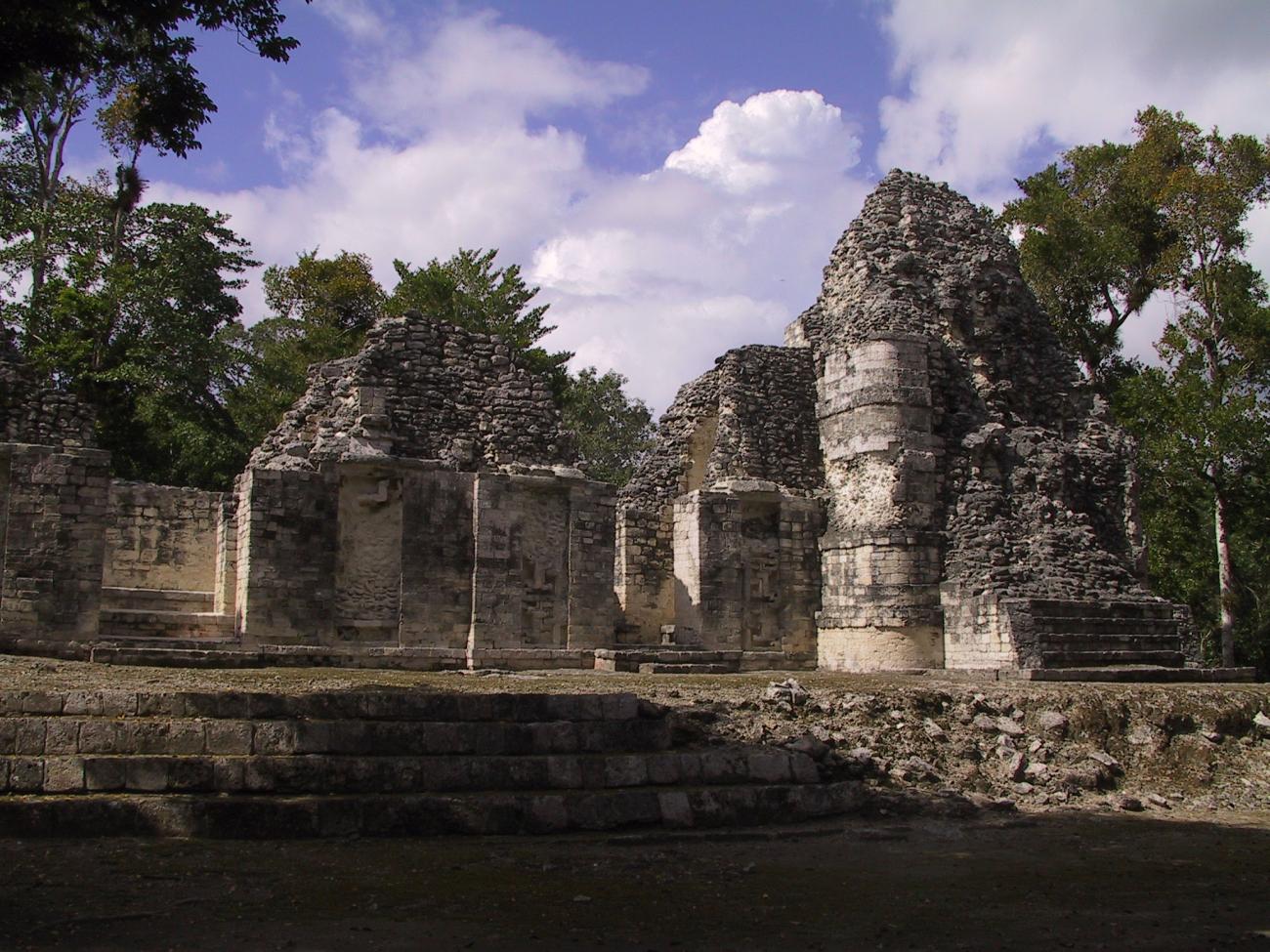 Chicanná archaeological zone in Campeche, near the Xpujil hotel base
Calakmul
Calakmul is the long day. Its significance comes from the scale of the ancient city, the large structures and the setting within the protected forest. It is not simply a larger version of the smaller Río Bec sites, and it should not be treated as an optional stop squeezed between check-out and an evening transfer.
Book your hotel around the Calakmul day, not around the name on a search-results page. Xpujil is usually the most useful starting point because it gives you the final services before the reserve and more than one way to solve transport.
Common booking mistakes in Xpujil
The first mistake is booking by the phrase “near Calakmul” without opening the map. Confirm whether the room is in Xpujil, near Chicanná, in Zoh Laguna, or much farther along a rural road. The second is assuming the train station, the town and the ruins are one location. They are not.
The third mistake is arriving too late to buy supplies. If your reservation is outside town, plan food, water and fuel before leaving the highway. The fourth is trusting an old price or opening-hours claim. Rates, availability, payment methods and site rules can change, so check current information close to travel.
The fifth is packing the wrong expectations. Xpujil accommodation can be clean, comfortable and genuinely useful without looking like a resort. A simple room with cold air-conditioning, water, parking and a helpful early departure may serve a Calakmul trip better than a more decorative property with a complicated location.
Finally, do not book a one-night stay that leaves no margin between a long arrival and a long reserve day. The southern interior rewards a slower itinerary. If the route already includes Campeche city, Escárcega, Chetumal or Bacalar, use the map honestly and protect the night before Calakmul.
A practical booking strategy
Start with the archaeological plan. Decide whether you want one full day at Calakmul, a Río Bec circuit, or a nature-focused stay. Then choose the number of nights. Two nights in Xpujil is the dependable default; add a third for slower exploration.
Next, filter by air-conditioning, private bathroom, parking or transport support according to your needs. Read the newest reviews, then contact the property with three direct questions: can you arrive at your planned time, can you leave early, and what transport or breakfast arrangements are confirmed? Keep the answers with your booking.
Use Booking.com and Trip.com to compare availability, cancellation conditions and recent reviews, but make the location decision yourself. Check Xpujil hotel availability on Booking.com · Review Xpujil hotel inventory on Trip.com
If you are combining accommodation with a guided trip, compare tours separately rather than assuming the hotel’s room listing includes a reserve excursion. Compare guided Calakmul experiences on GetYourGuide · Browse Calakmul activities on Viator
Is Xpujil better than staying in Campeche city?
For Calakmul, yes. Campeche city is a better base for the walled historic centre, the malecón, Edzná and the Gulf side of the state. It is a poor base for a relaxed Calakmul visit because the approach is long and the return leaves little room for delays or heat.
For a mixed trip, use both bases. Spend time in Campeche city for colonial streets and museums, then move south and sleep in Xpujil before the reserve. This costs an extra hotel change but creates a more realistic itinerary. Trying to make one city serve both ends of the state usually turns the longest drive into the main event.
GuideBest Hotels in Campeche: Where to Stay in the CityExplore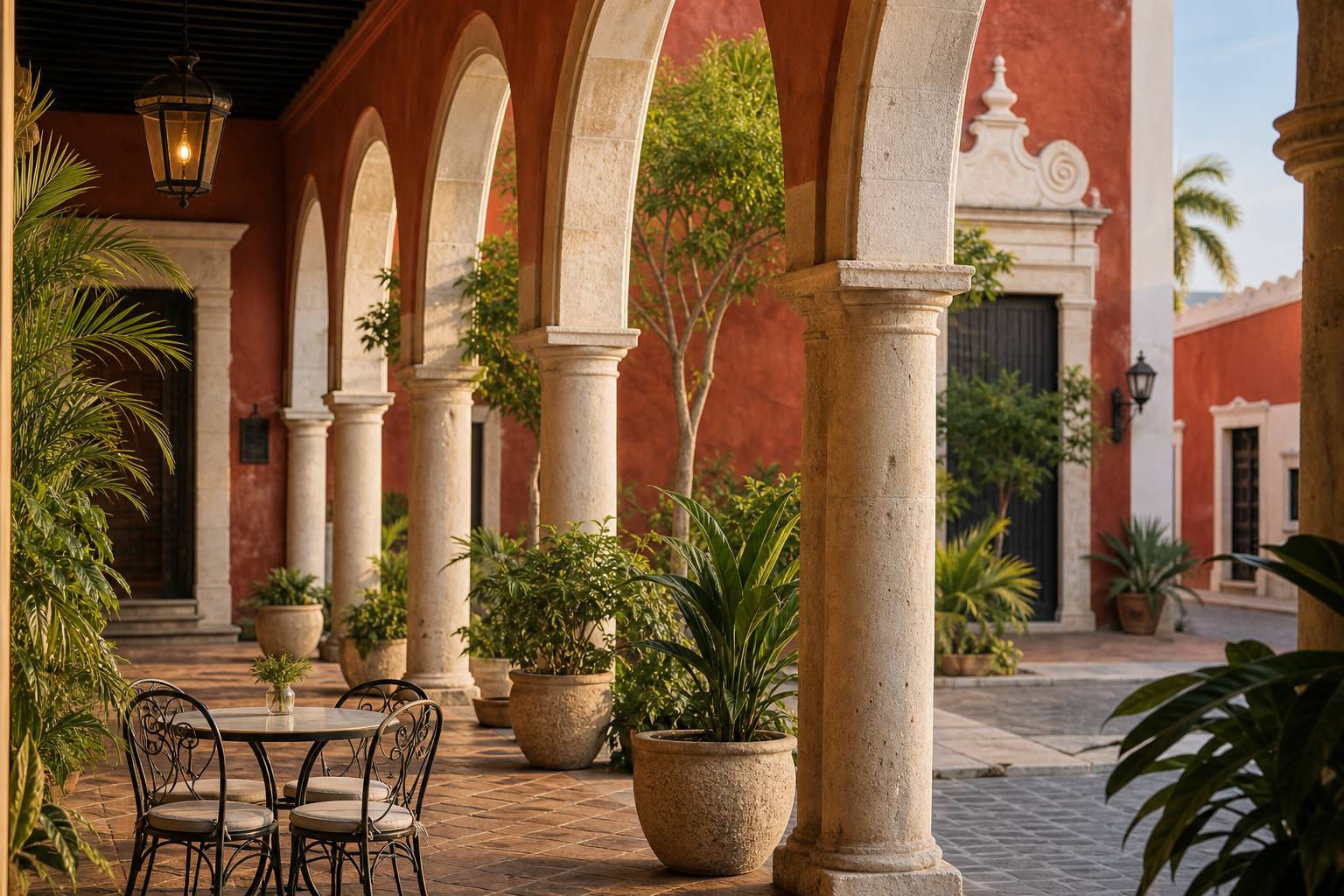
Is Xpujil better than staying in Chetumal or Bacalar?
Chetumal and Bacalar can be convenient for travellers arriving from Quintana Roo, and a cross-border itinerary may naturally pass through them. They are not substitutes for sleeping in Xpujil if Calakmul is the main activity. Staying in Campeche State places you closer to the reserve route and lets you use the nearby archaeological sites without repeating the longest approach.
If you arrive from the east, consider reaching Xpujil a day before Calakmul. If you arrive late, sleep where you can do so safely and continue in daylight rather than forcing a night drive. The best base is the one that protects the entire route, not only the first line on the map.
The bottom line
For most travellers, the best hotel in Xpujil is a well-reviewed, air-conditioned room in or close to town with a clear early-departure policy, dependable parking or transport help, and access to supplies. Choose a Río Bec lodge or rural base when the forest setting is important and you have arranged the logistics in advance. Choose Escárcega only when it fits the wider road journey, not because it appears in a broad Calakmul hotel search.
Book two nights if you can. Use the first evening to buy water, confirm the route and sleep before the reserve day. That small amount of preparation is what turns Xpujil from a bed on a long highway into the useful southern Campeche base it is meant to be.
The best plan is simple: sleep near the services you will need, leave early, and let the reserve set the pace rather than trying to make the hotel search promise a shorter journey than the road actually allows.
Frequently asked questions
Can you stay inside Calakmul archaeological zone?
No. The archaeological zone is inside a protected forest area, not a conventional hotel district. Visitors normally stay in Xpujil or in accommodation along the wider Río Bec and Calakmul corridor, then travel to the ruins by car, arranged transfer or guided trip.
Is Xpujil safe for an overnight stop?
Xpujil is a normal small town and a common base for visitors to the southern Campeche archaeological sites. Use ordinary travel precautions, choose accommodation with clear arrival arrangements and avoid driving unfamiliar rural roads at night. The bigger challenges are distance, heat, limited services and planning.
Do Xpujil hotels arrange Calakmul tours?
Some properties may help connect guests with local drivers or guides, but services and inclusions vary. Ask what is confirmed, whether the vehicle waits, and whether entry costs are separate. A room reservation alone is not proof that transport to the ruins is included.
How early should you leave?
Leave early enough to reach the reserve access points and begin walking before the strongest heat. The exact timing depends on your hotel, transport, current site conditions and route. Confirm the latest opening information and departure plan the evening before.
Can you visit Calakmul without a guide?
Independent visits can be possible with a private vehicle and careful preparation, but the route is remote and the site is extensive. A guide can add historical context and simplify logistics. Decide based on your driving confidence, language needs, time and interest in interpretation rather than assuming one option is always better.
Should you stay one or two nights in Xpujil?
Two nights is the safer default for a first visit. One night can work when transport is fixed and the arrival is early, but it leaves little margin for delays. Two nights gives you a preparation evening and a less rushed reserve day.
