
The short answer: which Calakmul tour is best?
The best Calakmul tour depends less on a star rating than on where you are sleeping and how much time you can give the journey. Calakmul is not a compact attraction beside a city. The archaeological zone lies deep inside the Calakmul Biosphere Reserve, reached by a long forest road after the turnoff from Federal Highway 186. A good tour has to allow for that distance, a substantial archaeological walk, heat, and the possibility that the group will stop for wildlife or nearby Maya sites.
For most travellers, there are four sensible formats:
- A guided day trip from Campeche City for people who want transport and interpretation arranged from the state capital and accept a very long day.
- A full-day tour from Xpujil for travellers who spend the night near the Río Bec sites and want the remote road, transfers, and site visit organised locally.
- A private Calakmul and nature trip for families, photographers, birders, or anyone who needs a flexible pace and a smaller group.
- A multi-day Río Bec itinerary combining Calakmul with Balamkú, Becán, Chicanná, and Xpuhil instead of trying to see every site in one exhausting outing.
There are real bookable listings in these categories, but availability, language, meeting points, inclusions, and departure bases change. Compare the current Calakmul tours on GetYourGuide and check the verified Calakmul options on Viator before deciding. Treat the live listing as the final source for what a particular departure includes.
 Structure II rising above the forest at Calakmul, Campeche
Why Calakmul tours are different from ordinary ruin trips
A Calakmul excursion is a transport problem, a walking day, and a history visit at the same time. The site is in southern Campeche, not in the historic centre of San Francisco de Campeche and not in the beach corridor around Ciudad del Carmen. Even when a listing uses “Calakmul” as its destination label, the practical experience changes dramatically according to the starting point.
From Campeche City, the road runs southeast through Champotón and Escárcega before continuing along Highway 186 toward Xpujil. The final approach leaves the highway near the reserve and continues for roughly 60 kilometres through forest. From Xpujil, that final road is still long, but you avoid making the entire journey from the capital and can start earlier. From Bacalar or Chetumal, an east-side day trip is possible, although it crosses from Quintana Roo into a Campeche-focused visit and can produce another very long day.
The archaeological zone itself is large. You do not simply walk from a car park to one pyramid, take a photograph, and return. A tour should leave time for plazas, stelae, palace groups, the major structures, uneven paths, and viewpoints from elevated temples where access is permitted. Heat and humidity slow people down. A group that includes children, older travellers, or anyone with knee or balance concerns needs a different rhythm from a group of strong hikers hoping to climb every available structure.
The forest also matters. Calakmul is recognised for its cultural and natural significance, and the surrounding reserve is part of the setting rather than a blank backdrop. Howler monkeys, spider monkeys, birds, ocellated turkeys, deer, and other wildlife may be encountered, but no tour can promise a jaguar, a tapir, or any other animal. A responsible guide treats sightings as luck, keeps distance, and does not call animals from the trees or feed them for photographs.
Best tour types at a glance
Best for a simple booking: a guided day trip from Campeche City
Choose this when Campeche City is already your base and you have only one free day for the southern interior. The main advantage is convenience: a single reservation can cover the early transfer, the reserve approach, a guide, and the return. A live GetYourGuide listing currently describes a guided nature-and-history day trip from Campeche with hotel transfer, a picnic, drinks, birding and wildlife interpretation, Calakmul, and a visit to Balamkú. Confirm the current language, pickup zone, duration, and inclusions on the product page rather than relying on an old itinerary.
The drawback is the clock. A listed day trip from Campeche can run to around 15 hours, depending on the departure and return schedule. That is a serious day in a hot climate. It may suit an independent couple with limited time, but it is a poor choice if you want an unhurried archaeological study, sunset wildlife, or several Río Bec sites. A long drive can also be tiring for children who need regular stops.
See the current Campeche-to-Calakmul day trip on GetYourGuide · Compare Calakmul departures from Campeche on Viator
Before booking, check five details: whether pickup is from your accommodation or a fixed meeting point; whether entrance fees are included; how many hours are spent at the ruins; whether Balamkú replaces part of the Calakmul visit or is an additional stop; and whether breakfast, lunch, and water are supplied. Do not assume that “all-inclusive” means every reserve or community charge is covered.
Best balance for most visitors: a full-day tour from Xpujil
Xpujil is the practical gateway to Calakmul and the Río Bec archaeological sites. A tour from here normally gives you a better starting position than a capital-city day trip. You can sleep near the highway, leave early, reach the forest road while conditions are cooler, and return without repeating the entire Campeche-to-Xpujil journey.
The verified Viator listing for Calakmul Ancient Maya City Tour From Xpujil describes a full-day site visit with transport from Xpujil and a guided archaeological experience. The precise options and inclusions can change, so read the live page for the current meeting arrangements, entry treatment, walking time, and meal details. Check Calakmul Ancient Maya City Tour From Xpujil on Viator · Browse the current Xpujil activity inventory on GetYourGuide
This format works well for visitors who do not want to drive the reserve road themselves. You still need to ask how the group travels from town to the site, how long the guide stays inside, and whether the tour returns to the same accommodation. “From Xpujil” should mean that the operator has planned the local logistics, not that you can arrive at any hour and join an excursion without checking availability.
A full-day Xpujil tour is also a better choice than an ambitious self-drive for travellers who are uncomfortable with remote roads. You can concentrate on the interpretation and wildlife rather than watching the fuel gauge, looking for the correct turnoff, and calculating whether a delayed departure will affect last entry. The trade-off is less control over stops and pace.
Best for flexibility: a private Calakmul and forest day
A private trip is worth considering when the group has different walking speeds or when the archaeological site is only one part of the day. The verified Viator inventory includes a private Calakmul day tour described around the archaeological zone and a guided nature walk. Confirm the actual departure city, the current route, and the inclusions before booking; similar titles can be offered from different bases.
Private does not mean effortless. The road remains long, the forest remains hot, and the site rules remain in force. Its value is control: you can discuss a slower walk, spend more time on monuments that interest you, pause for water, and avoid forcing every traveller into the same pace. Photographers may prefer time around stelae and changing light; families may need a shorter route and more breaks; serious birders may care more about the forest than about adding another pyramid.
Do not book a private product solely because it promises “the jungle.” Ask whether the nature component is a formal guided walk, a roadside stop, or simply the drive through the reserve. Ask whether Balamkú, a cave, or another activity is actually part of the current itinerary. A responsible operator will explain what is confirmed rather than promising rare wildlife.
Tour from Campeche City or overnight near Xpujil?
This is the most important decision in the whole category. If you have two or more nights available, moving your base to Xpujil is usually the more comfortable plan. It turns Calakmul into the principal activity of the morning instead of the middle of a huge out-and-back from the coast. It also leaves room for the Río Bec sites on another day.
A Campeche City day tour makes sense in three situations. You have only one Campeche night, you do not want to change hotels, or you prefer a packaged transfer to a self-managed southern route. It is especially useful for travellers arriving without a car who want one organised visit rather than a chain of buses, taxis, and local arrangements.
Xpujil is better when you want to see Calakmul properly, when you are travelling with children, when heat affects your pace, or when you want to combine the major site with Becán, Chicanná, Xpuhil, and Balamkú. The town is modest, but it has the practical advantages of fuel, basic food, accommodation, and local contacts. It is not a resort base, and you should not expect a dense nightlife or a large choice of late-night services.
Check current Xpujil and Calakmul-area accommodation on Booking.com · Compare Xpujil stays on Trip.com
If you are driving from Campeche City, Escárcega is a useful route point but not a substitute for a reserve base. Staying there can split the journey, yet it leaves a longer morning approach to Calakmul. Escárcega is more useful when your itinerary also includes Candelaria, Champotón, or a southbound transport connection.
GuideCampeche Map: Routes from City to Coast and JungleSee how Campeche’s walled capital, Gulf towns, Maya cities, and southern jungle connect—and choose a base that turns the state’s long distances into a rewarding route.Explore
What a good Calakmul itinerary should include
A realistic departure
A credible itinerary acknowledges the reserve road. It should not promise a relaxed late-morning arrival from Campeche City followed by a leisurely visit and an early return. Ask for the approximate departure time, but treat it as a planning estimate because pickup routes and road conditions affect the day.
From Xpujil, an early start is still valuable. Morning temperatures are more manageable, wildlife is often more active, and you have a larger margin before last access. Arriving early does not guarantee solitude, but it reduces the risk of doing the most exposed walking in the hottest part of the day.
Enough time at the archaeological zone
A tour that gives you only a rushed circuit may be convenient but will not suit everyone. You want time to understand the relationship between the central plazas, the elevated structures, the carved monuments, and the hidden city beyond the cleared route. Ask whether the guide remains with the group throughout the site or whether the arrangement is simply transport and a meeting time.
The site includes uneven ground, roots, steps, exposed plazas, and steep climbs where access is allowed. Shoes with grip matter more than fashionable sandals. Even if you do not climb a pyramid, you will walk farther than the headline “ruins visit” suggests. Bring water, sun protection, insect repellent, and a small bag that leaves both hands available on steps.
Transparent inclusions
Tour pages should make it possible to distinguish transport, guide service, entry fees, food, drinks, and reserve or community charges. Where a page is vague, ask before paying. The official INAH listing gives archaeological-site information, but charges associated with protected-area access or local entry points may be administered separately and can change.
Calakmul is remote enough that carrying cash remains sensible. Do not rely on a card terminal at every checkpoint or on mobile data throughout the forest. Your operator should explain what you need to bring, but keep water and basic personal supplies with you rather than assuming a snack stop will appear.
Calakmul and Balamkú: when the pairing works
Balamkú is a small archaeological site in the wider Calakmul region, known for its preserved stucco frieze. It is not a miniature version of Calakmul and should not be used to replace the main visit. The two work together when the itinerary gives Calakmul the time it deserves and treats Balamkú as a focused complementary stop.
A guided product from Campeche currently advertises Calakmul, nature interpretation, and Balamkú in one long day. That can be a strong cultural-and-forest introduction for travellers who want an organised route, but read the order and time allocation carefully. A small site with an important object can be rushed just as easily as a large site. Ask whether Balamkú is open on your date, whether access to the frieze is subject to current conservation arrangements, and how long the group will spend there.
The pairing is more comfortable over two days from Xpujil. Use one day for Calakmul and another for Balamkú with Becán or Chicanná, depending on current opening arrangements and your transport. This gives you space to listen to the guide, look closely at architectural details, and stop when the heat becomes limiting.
 The preserved stucco frieze at Balamkú, in southern Campeche
If a booking page describes Balamkú but does not clearly state the access conditions, do not assume the frieze will be available for close viewing. Archaeological access changes for conservation, weather, staffing, or safety. The right response is to verify the current arrangement, not to promise an image or a particular interior experience.
GuideCalakmul Travel Guide: Maya City Above the JungleCalakmul is a vast Maya city inside a biosphere reserve near Campeche's southern border, best approached with an overnight near Xpujil rather than a rushed day from the capital. This guide explains driving times, reserve fees, what to expect at Structure II and the stelae groups, wildlife etiquette, and how Calakmul compares to easier day trips like Edzná. It covers dry-season road notes, guide options, and how to slot Calakmul into a longer Campeche itinerary when you have two or more days for the jungle south.Explore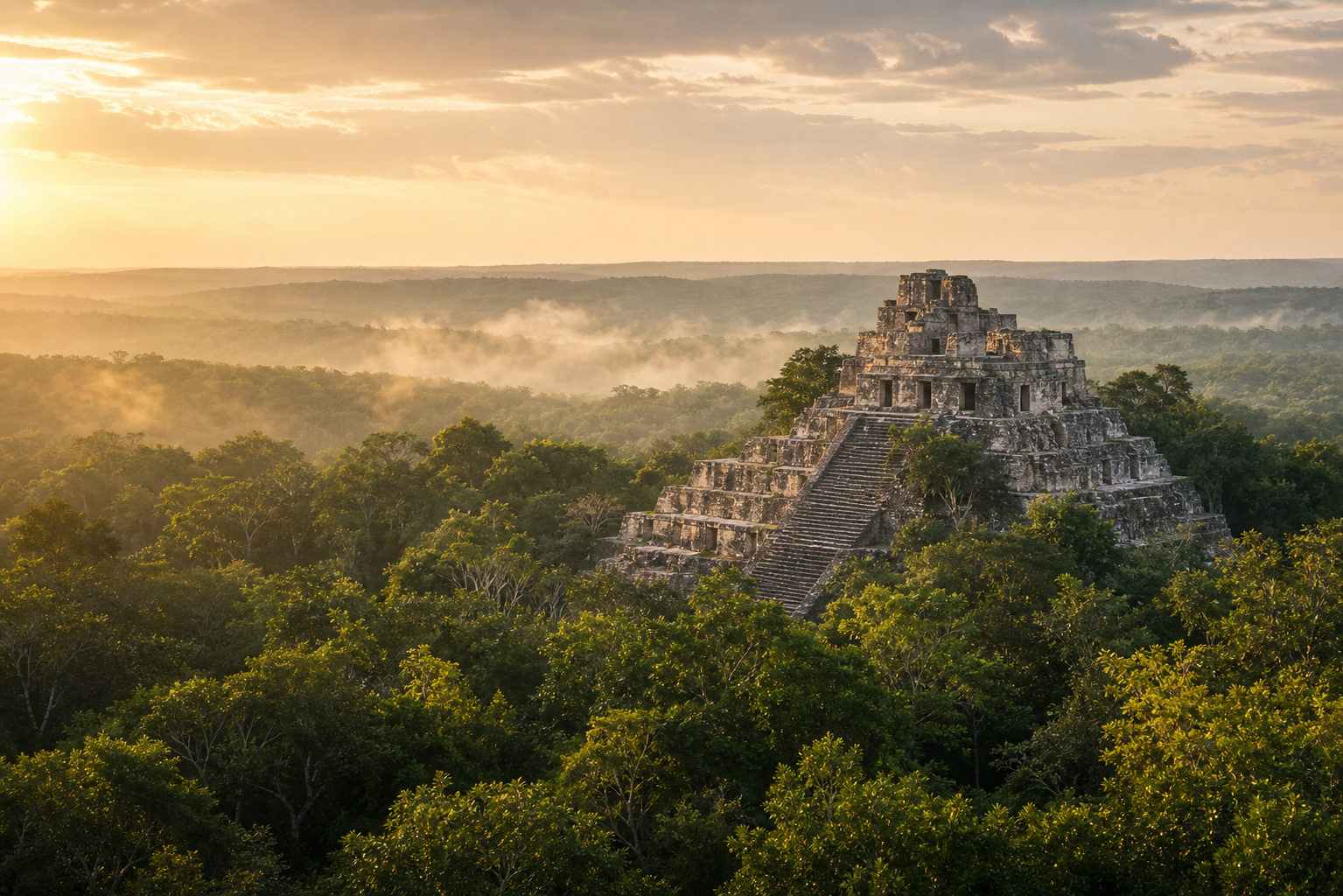
Multi-day Calakmul and Río Bec tours
A multi-day route is the best format for travellers who see southern Campeche as a cultural landscape rather than a single attraction. The Río Bec cluster includes Becán, Chicanná, Xpuhil, Balamkú, and other archaeological places with different scales and architectural emphases. A two- or three-day itinerary can separate them instead of turning the area into a checklist.
One sensible structure is arrival in Xpujil, a day for Calakmul, and a day for the nearer Río Bec sites. Another is to visit one or two highway sites on the arrival day, keep Calakmul alone on the second morning, and leave the final day for a slower departure. The correct order depends on transport, opening conditions, and whether you have a guide or rental car.
Becán is useful for understanding a different urban layout, including its defensive moat and large plazas. Chicanná is associated with elaborate architectural decoration. Xpuhil is close to the town and known for its distinctive towers. Balamkú is more compact and more object-focused. These descriptions are orientation, not a promise that every structure or trail will be open on your date.
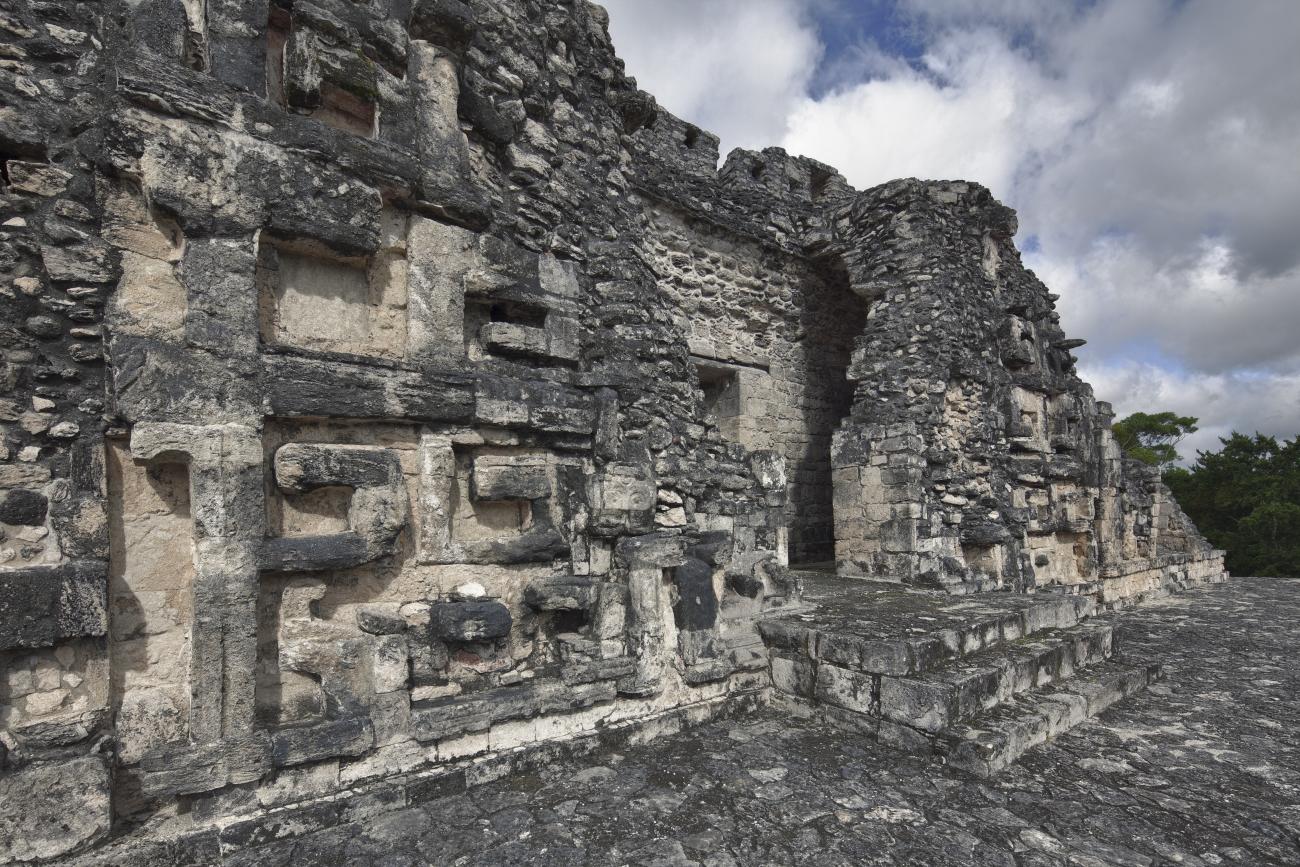 Structure X and forest setting at Becán, Campeche
The main reason to book a multi-day trip is not simply to add more names. It is to protect the quality of the experience. Calakmul requires attention and energy. Smaller sites can then be visited with curiosity rather than as hurried add-ons. If a tour advertises five archaeological zones in two days, check the actual route, the time at each place, and whether meals and accommodation are included. A long list may be impressive in a headline but uncomfortable on the ground.
For this format, compare the live regional inventory rather than assuming a generic “Maya ruins tour” includes Campeche. Browse current multi-day and Río Bec activities on GetYourGuide · See Calakmul and southern Campeche listings on Viator
Should you choose a jungle or wildlife tour?
Choose a nature-focused component if you enjoy observation and are willing to accept uncertainty. The Calakmul forest is valuable even when you see no large mammal. A good guide can point out bird calls, tracks, tree species, epiphytes, termite structures, and the relationship between the reserve and the ancient city. That is more reliable than a promise of a rare animal.
Some live listings describe birdwatching, hiking, flora and fauna, or a jungle stop alongside the ruins. Read the language carefully. “Wildlife tour” can mean an actual guided walk, a short roadside observation, or interpretation during the transfer. Confirm footwear, walking time, shade, water, and what happens in rain.
Wildlife behaviour should guide your expectations. Monkeys may remain high in the canopy. Birds can be heard without being seen. A jaguar is an extraordinary sighting, not a service included in a normal day trip. Do not choose an operator that advertises baiting, touching, chasing, or close approaches. Keep voices low, remain on authorised paths, and never use food to attract animals.
A forest excursion is not automatically suitable for every traveller. People with severe heat sensitivity, limited mobility, or a strong fear of insects may prefer a shorter archaeological visit with reliable shade breaks. Families should ask whether children can opt out of a longer walk without disrupting the whole group. A private vehicle can help, but the reserve’s road and site conditions still set the limits.
From Bacalar or Chetumal: useful, but not always comfortable
Tours from Bacalar or Chetumal appear in the wider Calakmul inventory because the eastern approach to southern Campeche is practical on a regional itinerary. GetYourGuide currently lists Calakmul experiences departing from the Bacalar area, including options that combine ruins, jungle, and a possible bat-cave visit. The current listing should be checked for exact pickup locations, dates, language, duration, and the optional nature of any additional activity.
This choice suits travellers already based in southern Quintana Roo who do not want to rearrange their trip around Xpujil. It is less attractive if you are travelling slowly or want two full days in the Río Bec region. The outward and return journey can dominate the day, and the route may leave little flexibility for a late start or a tired child.
If you choose an east-side trip, confirm that the booking returns to the same area and does not leave you at a highway stop. Ask how the operator handles border-state logistics, entry charges, food, and the long forest approach. Calakmul remains in Campeche State even when the tour begins in Quintana Roo.
Self-drive versus a guided tour
A rental car is the strongest option for travellers who want to combine several Campeche sites, but it is not automatically the easiest option for Calakmul itself. You need fuel before the remote section, offline navigation, water, food, a spare tyre check, and enough daylight for the return. You also need to be comfortable with a long road where services and mobile coverage may be limited.
The advantage is control. You can leave Xpujil when you choose, stop at a viewpoint or roadside wildlife without pressuring a group, and visit Becán or Chicanná on your own schedule. The disadvantage is that every delay belongs to you. A driver who underestimates the road or arrives near last access has no tour operator to reorganise the day.
A guided tour is usually the better choice if you are a solo traveller, do not speak enough Spanish to manage local arrangements, dislike remote driving, or want historical interpretation. It is also useful when the tour has a confirmed local transfer from Xpujil to the ruins. A local guide may add context that a sign cannot provide, although the quality varies, so read recent reviews for evidence about knowledge, punctuality, communication, and respect for the site.
Public transport can bring you to the southern corridor, but it does not remove the final-reserve problem. Reaching Xpujil is not the same as reaching the archaeological zone. If you arrive without a pre-arranged onward vehicle, you may have difficulty visiting on your preferred morning. Arrange the full chain before leaving the highway town.
What to ask before booking
Use these questions when comparing listings:
- Where does the tour start and finish? Confirm the city, town, hotel zone, and return point.
- How long is the archaeological visit? Look for actual site time rather than only the total duration.
- Which admissions are included? Ask separately about INAH entry, reserve access, and community charges.
- Is the guide with the group inside the site? Transport-only arrangements are different from guided interpretation.
- What language is guaranteed? A language filter or request is not always the same as a confirmed departure.
- What food and water are supplied? Bring your own backup regardless, especially for children.
- Is Balamkú or another site definitely open and included? Optional stops should not be treated as guaranteed.
- What happens in rain or a road closure? Ask about cancellation and alternative arrangements.
- How much climbing and walking is involved? The answer should account for uneven ground and exposed heat.
- What is the group size? A small group may be more flexible, but verify what the listing actually promises.
Do not make the decision from price alone. A cheaper listing may exclude admissions, food, or local transfers. A more expensive private product may be poor value if its “nature walk” is undefined. Compare the complete day on the live pages, then choose the itinerary that leaves enough time for the place.
What to bring on a Calakmul tour
Wear light, breathable clothing that covers enough skin for sun and insects. Closed shoes with a firm sole are more useful than sandals. Pack a brimmed hat, sunscreen, insect repellent, a refillable bottle or sufficient drinking water, and a small amount of cash. A thin long-sleeved layer can help with sun and branches even when the day is hot.
Carry a phone battery or power bank, but do not treat your phone as the only navigation or communication tool. Download important booking information before entering the reserve. If you wear glasses, bring a strap or case; if you use medication, keep it with you rather than in luggage left in a vehicle.
A camera with a long lens can be useful for distant birds, but wildlife watching should not become a reason to leave paths or crowd animals. Avoid drones unless you have confirmed the permissions required. Archaeological monuments and carved stones are not climbing props, and a guide’s instructions exist to protect both visitors and the site.
Heat, rain, and physical effort
The main challenge is usually climate, not danger. The forest can be humid, the plazas can be exposed, and stone steps can become slippery after rain. Start early, drink before you feel thirsty, and tell the guide when you need a break. A group that hides discomfort to keep up can turn an enjoyable tour into a medical problem.
Rain does not automatically ruin the visit, but it changes footing, visibility, and road speed. Ask about the current forecast and access conditions, then bring a lightweight rain layer rather than relying on a tour company to supply one. During periods of heavy rain, the operator or site authorities may alter access. Treat that as a safety decision, not a failed holiday.
Travellers with limited mobility should contact the operator in advance and describe what they can manage: uneven paths, steps, heat, distance from the vehicle, and lack of continuous shade. Do not rely on a generic “accessible” label. The archaeological setting is broad and wooded, and assistance may be limited.
A practical two-night plan from Xpujil
Arrival day: Reach Xpujil with fuel, water, and accommodation arranged. If time and current opening conditions permit, visit a nearby Río Bec site rather than attempting Calakmul late in the day. Keep the evening quiet; an early start matters more than adding another restaurant or activity.
Calakmul day: Take a confirmed guided tour or leave in a prepared rental car. Enter the reserve early, carry cash and food, and spend the main part of the day at the archaeological zone. Do not add a distant stop simply because the map makes it look close. Return to Xpujil with enough daylight and energy.
Departure day: Visit Balamkú, Becán, Chicanná, or Xpuhil according to current access and your onward route. These places show different aspects of southern Campeche and are easier to appreciate after you have seen the scale of Calakmul. If your next stop is far away, choose one site rather than turning departure into another race.
A three-night plan is even better for a first visit. It allows one arrival or Río Bec day, one Calakmul day, and one flexible day for weather, wildlife, Balamkú, or a slower departure. The additional night is not wasted time; it is protection against the distances that make this region special.
Who should not book a Calakmul day trip?
Avoid a same-day tour if you dislike long vehicle journeys, cannot tolerate heat, need a predictable short outing, or want to spend several hours photographing one part of the site. Consider staying near Xpujil instead. The remote setting is the point of visiting Calakmul, but it also means that the journey cannot be compressed without changing the experience.
Families can enjoy Calakmul when adults are realistic about the day. Choose an early departure, bring familiar snacks, plan toilet breaks, and ask whether a private arrangement allows the group to slow down. Older children who enjoy ruins and animals may find the forest memorable; toddlers may struggle with heat and climbing. There is no universal family itinerary.
History-focused travellers should prioritise a guide who explains the Kaanul dynasty, inscriptions, urban scale, and the relationship between Calakmul and other southern Maya centres. Nature-focused travellers should ask for genuine forest interpretation rather than a guarantee of large-animal sightings. The best tour is the one whose expertise matches your reason for coming.
Final recommendation
For a first visit with enough time, stay near Xpujil and book a full-day Calakmul tour from there, then use a separate day for Becán, Chicanná, Xpuhil, or Balamkú. Choose a Campeche City day trip only when changing bases would make the rest of your itinerary worse, and choose a private or multi-day format when your group needs flexibility. Check the live GetYourGuide and Viator pages for the exact departure, inclusions, and cancellation terms, then plan around the forest road rather than treating Calakmul as a quick excursion. That approach gives the ruins, the reserve, and the journey the time they require.
