
If you have time for only one major Maya archaeological site on a Yucatán Peninsula trip, the choice between Calakmul and Chichén Itzá comes down to the kind of day you want. Chichén Itzá is the easier, more famous, more immediately legible visit: a major monumental centre with a strong visitor infrastructure, a famous central pyramid, and straightforward access from Yucatán’s main travel routes. Calakmul is the more demanding choice. It lies deep in southern Campeche, inside a protected tropical forest, and the journey through the reserve is part of the experience.
Neither site is objectively “better.” They communicate different parts of Maya history and ask different things of a traveller. Chichén Itzá suits a first visit focused on iconic architecture, a tight schedule, or a route through Mérida, Valladolid, or the Caribbean coast. Calakmul suits a traveller who values scale, forest, quiet, wildlife, and the feeling of reaching a remote ancient city. It also suits someone already travelling through Campeche and willing to spend at least one night near Xpujil.
This comparison keeps the geography clear. Calakmul is in Campeche State. Chichén Itzá is in Yucatán State, near the town of Piste. They are not neighbouring attractions that make an easy same-day pair. Use the comparison to choose a main archaeological experience, then build the rest of the route around that decision.
The short answer
Choose Chichén Itzá if you want the most recognisable monuments, a shorter and simpler archaeological outing, easier public transport, or a site that works well in a broader Yucatán itinerary. Its central ceremonial area is compact enough to understand during a half-day visit, although the heat and crowds still make an early arrival worthwhile.
Choose Calakmul if you want the ancient city in its forest setting, a longer and quieter visit, elevated views across the canopy, and a stronger sense of archaeological exploration. Plan it as a southern Campeche destination, not as a spare-hour excursion from the capital. Xpujil is the practical base, and the reserve road means that transport planning matters as much as the ticket.
Choose both only if you have enough time to travel through both states deliberately. They are complementary, not interchangeable. Chichén Itzá gives you a highly visible ceremonial and political centre associated with the northern lowlands. Calakmul shows a vast southern lowland city whose monuments, stelae, plazas, and surrounding forest remain inseparable.
The simplest decision rule is this: if you are already staying in Campeche City or travelling the southern route, choose Calakmul. If you are based in Mérida, Valladolid, Cancún, or the Riviera Maya and want one major ruin without changing your route, choose Chichén Itzá.
 The Calakmul Biosphere Reserve forest in Campeche, Mexico
The biggest difference: setting and atmosphere
The contrast begins before you reach either entrance. Chichén Itzá sits near a major regional road and a settled tourist corridor. The approach is part of an established visitor circuit, with transport links, tour departures, parking, food options, and other attractions nearby. Once inside, the principal monuments are arranged across open lawns and broad cleared spaces. You can see the scale of the central area quickly.
Calakmul feels remote because it is remote. From Federal Highway 186, the route turns toward the Calakmul Biosphere Reserve and continues through forest for a long distance. The final approach is not a decorative prelude to the ruins; it is a real journey through a protected landscape with limited services and inconsistent mobile coverage. You need water, food, fuel, and a confirmed return plan before entering the remote section.
That difference changes the emotional rhythm of the visit. At Chichén Itzá, your attention moves between famous buildings, interpretation, visitor flow, and the practical question of how to handle heat and crowds. At Calakmul, you spend more time walking through shade and vegetation, waiting for structures to emerge, and noticing how the forest limits the view. Silence is not guaranteed at either site, but Calakmul usually offers more moments when the landscape dominates the experience.
Travellers who dislike uncertain logistics may find Chichén Itzá more comfortable. Travellers who think the uncertainty is part of an adventure may find Calakmul more memorable. Neither reaction is wrong. A remote archaeological site should not be sold as a universally easy day.
What each site tells you about Maya history
Chichén Itzá was a major city and regional power in the northern Maya area. INAH describes its importance through the combination of Maya and central Mexican influences, its political role, and its chronology, with a principal period in the Early Postclassic from about AD 900 to 1200. Its architecture makes that history visible to a visitor who may have no specialist background. The Great Ball Court, the Temple of the Warriors, the observatory commonly called El Caracol, the Sacred Cenote, and the pyramid known as El Castillo create a sequence of recognisable landmarks.
Calakmul was one of the great cities of the southern lowlands and a major centre of the Kaanul, or Snake, dynasty. Its inscriptions record dynastic politics, alliances, warfare, ceremonies, and relationships with other powerful cities. Calakmul’s importance is not only the height of its pyramids. The site’s large number of stelae, its broad urban footprint, its interconnected plazas, and its position within a huge tropical forest show how political authority, settlement, water management, ritual, and ecology operated together.
The two sites therefore reward different kinds of looking. At Chichén Itzá, you can concentrate on architectural forms, sculptural programmes, processional spaces, and the relationship between the most visible buildings. At Calakmul, you should pay attention to how monumental groups connect, how stelae were displayed, how the forest conceals the wider settlement, and how a major ancient city could occupy a landscape that still feels sparsely settled.
A comparison should not become a ranking of one Maya culture against another. The Maya world was not a single uniform civilisation with one capital and one architectural style. Cities changed over centuries, formed alliances, competed, traded, and developed distinct local expressions. Chichén Itzá and Calakmul belong to different regional and historical conversations, even though both are now presented to travellers as headline archaeological destinations.
Chichén Itzá: why choose it
It is easier to fit into a short itinerary
Chichén Itzá works well when you have a base in Mérida, Valladolid, or another northern route and want to dedicate a morning or a substantial half-day to archaeology. The site is reached from Federal Highway 180, with the entrance near Piste. Public transport and organised excursions are more common than at Calakmul, although the exact route, departure point, and return time depend on your base.
The convenience is practical rather than glamorous. You have more options if a bus schedule changes, a tour sells out, or you decide that your group needs a shorter day. It is also easier to combine Chichén Itzá with a night in a nearby town or a northern Yucatán route. That does not mean you should rush. A site with many visitors can take longer to navigate than the map suggests, especially if you stop to read, wait for space around a monument, or manage children in the heat.
For a traveller flying into the Caribbean side of the peninsula or arriving through Mérida, Chichén Itzá often requires less geographic compromise. It can be the sensible choice even if Calakmul is more appealing in the abstract.
The headline monuments are immediately legible
The central pyramid known as El Castillo gives first-time visitors an instant orientation point. From there, the Great Ball Court and major temple groups provide a clear route through the site. You do not need to spend the first hour figuring out where the important areas are. The architecture is visually powerful, and information panels or a guide can help connect the buildings with broader Maya history.
The site’s fame can also be its limitation. Many travellers arrive expecting one pyramid and leave without giving enough attention to the rest of the city. Look beyond the most photographed structure. The Great Ball Court is important for its size and carved imagery. The Temple of the Warriors and surrounding columns show the scale of public architecture. The Sacred Cenote is a reminder that water, ritual, and regional geography shaped the city’s significance. The observatory offers a different way to think about time, sky observation, and architectural design.
Access rules and conservation measures mean that visitors should not expect to climb every monument or enter every structure. Do not use older photographs as a promise of what will be open. The value of the visit is not dependent on standing on top of El Castillo.
It works well for families and mixed-interest groups
A family group may find Chichén Itzá easier because the major route is comparatively straightforward and there are more services around the wider destination. Children can identify the large pyramid, ball court, columns, and other structures without needing a long explanation of why a forest road took much of the morning. Older travellers or anyone who needs to manage energy carefully may also prefer a visit where transport and facilities are easier to organise.
That said, the site still involves substantial outdoor walking on hard surfaces under strong sun. Bring water according to current site rules, a hat, sun protection, and shoes that are comfortable for uneven ground. Check current regulations before packing food or large bags. If your group includes someone with mobility needs, contact the site or use current INAH information rather than assuming that a general statement about accessibility covers every path and monument.
The trade-off is crowd pressure
Chichén Itzá is internationally famous, and the visitor experience reflects that. You may share the main spaces with school groups, independent travellers, guides, and day tours. Vendors and commercial activity are more visible around the destination than at Calakmul. Some travellers appreciate the energy and services; others find that the crowds interrupt the sense of an ancient city.
Arrive as early as your transport allows, and avoid building your plan around the final entry window. Morning usually helps with heat as well as visitor numbers, but no arrival time guarantees an empty site. Move beyond the first monument instead of remaining in one congested photo position. If your priority is solitude, Chichén Itzá is unlikely to satisfy you as much as Calakmul.
Compare current Chichén Itzá experiences on GetYourGuide · See Chichén Itzá options on Viator
Calakmul: why choose it
The forest is part of the archaeological site
Calakmul’s most distinctive feature is not a single pyramid. It is the relationship between monuments and forest. The site is inside the Calakmul Biosphere Reserve, and the ancient city is part of a protected cultural and natural landscape. The road through the reserve, the canopy, the sounds, and the possibility of wildlife sightings all shape the day before you reach the central plazas.
This setting changes your expectations. You will not see the whole city from a parking area. You will walk between groups where vegetation blocks some sightlines and reveals others. Some ancient structures are fully or partly restored; others appear as platforms, walls, mounds, or stairways emerging from the trees. The forest can make the city feel smaller at one moment and much larger at the next, because every cleared group suggests what remains beyond the visitor route.
Wildlife is a possibility, not a product guarantee. You might notice birds, monkeys, coatis, deer, tracks, or movement in the canopy, but the reserve is not a zoo. Do not feed animals, play calls, chase a sighting, or leave food beside the road. A quiet vehicle and patient observation are more responsible and usually more rewarding.
The pyramids provide a different kind of view
Structure II is the monument most visitors associate with Calakmul. When climbing is permitted, the ascent is steep and uneven, and the heat makes it more strenuous than photographs suggest. At the top, the view is a wide canopy panorama rather than a city skyline. You see why the forest setting matters: the ancient urban centre is surrounded by green, and the horizon does not reveal modern development.
Structure I creates a useful contrast. Together, the major pyramids establish the monumental scale of the central area, but the spaces between them matter just as much. Allow time for plazas, platforms, routes, stelae, and smaller groups. Do not turn the visit into a race between the two highest structures.
Climbing rules can change according to conservation work, weather, and safety conditions. Follow staff directions and do not climb a closed stairway because an old guidebook or photograph shows someone doing so. Visitors with vertigo, knee problems, unstable footing, or unsuitable shoes can experience Calakmul from below and still have a rich visit.
 A view of Chichén Itzá’s El Castillo pyramid in Yucatán, Mexico
The stelae connect the ruins with political history
Calakmul is strongly associated with its carved stelae. INAH describes roughly 120 stelae distributed around its monumental architecture. Many have weathered surfaces, and a visitor will not decipher every inscription without specialist training. Their placement, however, is revealing. Paired monuments, altars, portraits, dates, and texts made royal history visible in public spaces.
This is one reason Calakmul can reward a guide with archaeological knowledge. A good explanation can help distinguish what is known from inscriptions, what comes from excavation, and what remains a scholarly interpretation. It can also explain why a monument is positioned where it is, rather than treating each carved stone as an isolated object.
The site is not a museum display in the normal sense. Surfaces are exposed to weather, roots, humidity, and visitor pressure. Do not touch carvings or lean equipment against them. Take photographs without climbing on walls or blocking paths. The quietness of the forest should make careful behaviour easier, not less necessary.
It suits travellers who enjoy a full day with logistics
Calakmul is a strong choice if you like long drives, open-ended exploration, nature, and history in the same outing. It suits photographers who can accept changing light and partial views, travellers who enjoy birdwatching without guaranteed sightings, and visitors who would rather spend hours in a forest than in a busy attraction corridor.
It is a weaker choice if you have only a few hours, need frequent facilities, dislike uneven ground, or cannot tolerate a remote return journey. The site is not a convenient add-on from Campeche City. It is possible to drive from the capital, but a same-day return leaves little margin and turns a major archaeological experience into an endurance exercise. Stay near Xpujil when Calakmul is central to the trip.
Compare Calakmul experiences on GetYourGuide · Review Calakmul tours on Viator
GuideCalakmul Travel Guide: Maya City Above the JungleCalakmul is a vast Maya city inside a biosphere reserve near Campeche's southern border, best approached with an overnight near Xpujil rather than a rushed day from the capital. This guide explains driving times, reserve fees, what to expect at Structure II and the stelae groups, wildlife etiquette, and how Calakmul compares to easier day trips like Edzná. It covers dry-season road notes, guide options, and how to slot Calakmul into a longer Campeche itinerary when you have two or more days for the jungle south.Explore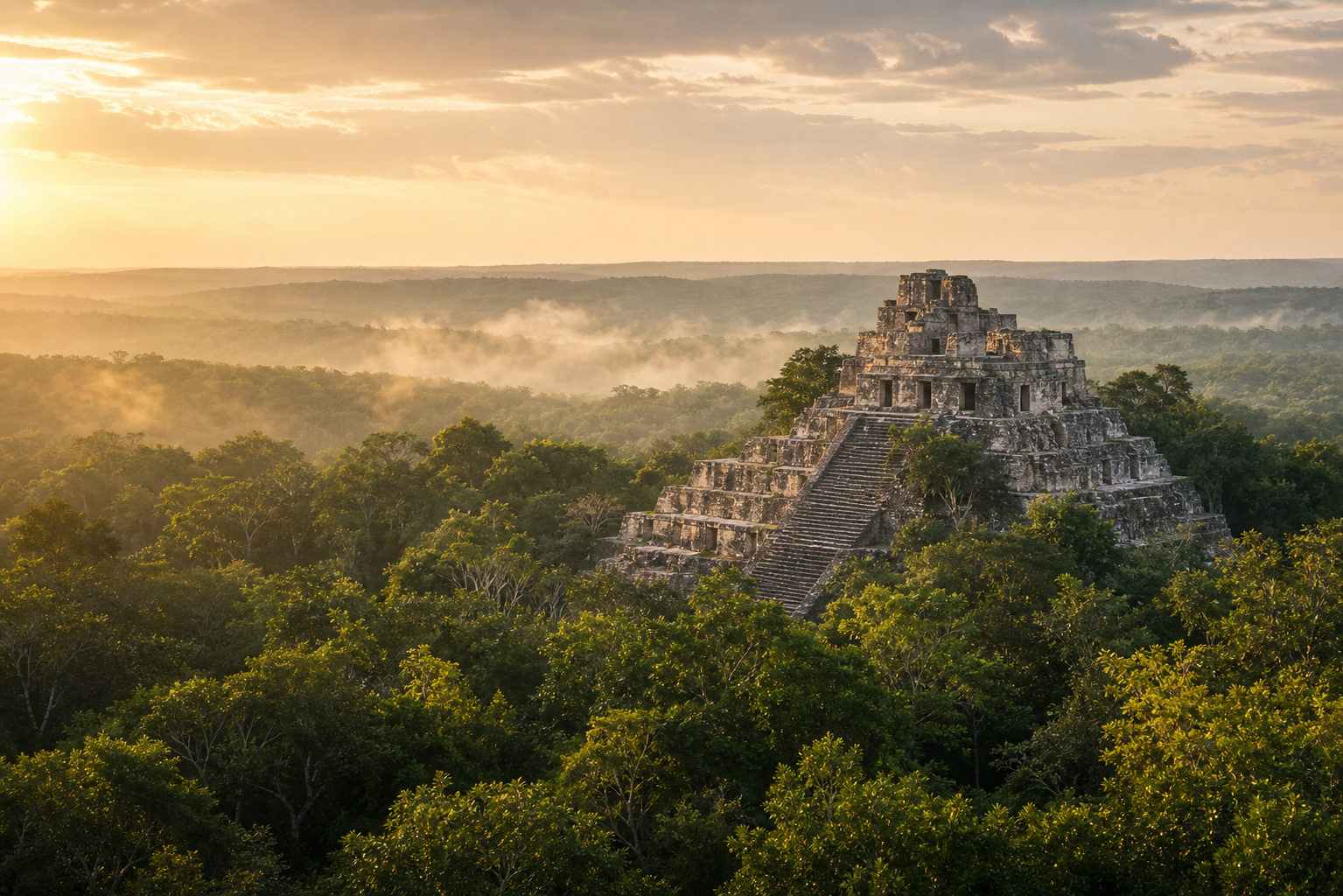
Access and transport: which is simpler?
Chichén Itzá access
Chichén Itzá is connected to the better-used northern Yucatán travel network. From Mérida, Valladolid, Cancún, and other bases, you can investigate public bus routes, shared transport, rental-car travel, or organised excursions. The best option depends on where you sleep and whether you want to combine the ruins with other stops.
An organised tour reduces the number of decisions you make, but read the itinerary carefully. Some excursions add cenotes, Valladolid, meals, or shopping stops. Those additions may suit you, but they reduce time at the archaeological zone. Ask how long you will actually spend inside, where transport picks you up, whether entry is included, and whether a guide accompanies the group through the site.
A rental car provides more control over arrival and departure, but it does not remove the need to plan for heat, parking, current entry arrangements, and the road back. If you are combining Chichén Itzá with another state or town, avoid assuming that every stop will fit because the map distance looks short.
Calakmul access
Calakmul requires two separate transport decisions: reaching the Xpujil area and covering the long road from the highway toward the archaeological zone. Public transport to Xpujil does not automatically solve the final approach. Arrange a rental car, local driver, or verified excursion in advance. Confirm the departure point, return plan, waiting time, food, entry charges, and what happens if weather or road conditions slow the schedule.
The remote road means you should fill the vehicle with fuel before entering the reserve, carry water and food, and download maps. Do not count on a phone signal or a last-minute taxi. Leave early enough that the return does not depend on the final possible entry or closing time. Keep a buffer for wildlife, road surfaces, rain, group delays, and the walking route inside.
For visitors travelling from Campeche City, Escárcega is a useful route junction, but it is not a substitute for an overnight base. From the east, travellers may approach through Bacalar or Chetumal before staying around Xpujil. Those border logistics are possible, but Calakmul remains a Campeche destination and the reserve road remains the key practical issue.
Time and itinerary comparison
If you have one day
Choose Chichén Itzá if your base is already in the northern travel corridor. Leave early, spend enough time inside to see more than the central pyramid, and return without stacking several distant attractions onto the same day. If you are based in Campeche City, do not attempt to substitute Calakmul for a quick one-day Chichén Itzá-style outing; the geography is different.
Choose Calakmul for one day only when you are already sleeping near Xpujil or have a carefully organised long excursion. The archaeological visit and reserve road together occupy most of the day. Keep the plan focused on Calakmul rather than promising Bécan, Chicanná, wildlife stops, and several towns as well.
If you have two days
Two days make Calakmul much more realistic. Use the first day to arrive in Xpujil, buy supplies, confirm transport, and visit one nearby site only if time and conditions allow. Use the second day for an early Calakmul departure, several hours at the ruins, and a safe return. If you have a second full day in the region, add Bécan, Chicanná, Xpujil, Balamkú, or a locally organised nature experience after checking current access.
Two days also work well for Chichén Itzá if you want a slower northern route. Stay near the site or in a nearby base, visit early, and use the remaining time for another activity that genuinely fits your route. There is no prize for attaching more stops to one archaeological morning.
If you have a week
With a week dedicated to Campeche and nearby border logistics, prioritise Calakmul if southern Campeche is one of your reasons for travelling. A route can connect Campeche City, Escárcega or the southern corridor, Xpujil, Calakmul, and several Río Bec sites, with realistic overnight stops. Add Chichén Itzá only if you are also travelling through Yucatán and can do so without sacrificing the southern forest days.
With a week based mainly in Yucatán or the Caribbean coast, Chichén Itzá is the natural fit. Reaching Calakmul just to say you saw both can consume substantial travel time. Make the longer detour when Calakmul’s landscape and remoteness appeal to you, not because a comparison list implies that two famous names must be collected.
Where to sleep
For Calakmul, Xpujil is the most practical general base because it offers access to food, fuel, accommodation, and transport contacts near the southern archaeological sites. An accommodation farther into the forest may reduce one transfer but can provide fewer services. Compare what you need after a long hot day: air conditioning or a fan, water, breakfast timing, vehicle arrangements, and current road information.
For Chichén Itzá, choose a base according to the rest of the route. Staying near the entrance can support an early visit. Staying in Valladolid or another established town can provide more evening services and a broader itinerary but may mean an earlier departure. Do not name a property unless you have verified its current listing; destination-level searches are safer when availability changes.
Check current Xpujil-area stays on Booking.com · Compare Xpujil hotels on Trip.com
Search stays near Chichén Itzá on Booking.com · Compare nearby hotels on Trip.com
Heat, walking, and accessibility
Both sites require outdoor walking in a hot climate, but Calakmul usually adds more uneven forest paths, longer distances between groups, and more demanding steps. Closed shoes with a firm sole, a hat, insect repellent, sun protection, and more water than you expect to drink are sensible. Carry a spare shirt or small towel if humidity affects you.
Chichén Itzá’s open spaces can feel hotter because shade is limited around the principal monuments. The route may be easier to understand, but the sun is not easier to ignore. Arrive early, move at a steady pace, and take breaks before you are exhausted. Calakmul offers more tree cover in sections, but shade should not be confused with cool conditions.
Mobility needs require individual planning. A remote site with stairs, roots, rough paths, and limited facilities cannot be evaluated from a generic destination label. Contact the relevant site office or INAH information close to travel, describe the route you need to use, and ask about current closures. A guide or companion may help with interpretation, but cannot remove every physical limitation.
Families should consider children’s tolerance for long vehicle days. Chichén Itzá is usually easier for a mixed-age group because transport and services are more available. Calakmul can be excellent for older children who enjoy wildlife and exploration, but a full reserve day needs snacks, patience, and a plan for heat. Keep children away from monument edges and do not allow climbing where it is prohibited.
Archaeology versus nature: deciding what you actually want to remember
Ask yourself what you are most likely to talk about after the trip. If the answer is “the largest ball court, the famous pyramid, carved columns, and a clear introduction to Maya monumental architecture,” Chichén Itzá is probably the better match. If the answer is “walking through forest, seeing ancient plazas appear between trees, climbing above the canopy, and feeling the distance from modern towns,” choose Calakmul.
Chichén Itzá’s strength is communication. Its major buildings make a powerful first impression, and the visitor can understand the civic scale without an expedition-style approach. Calakmul’s strength is immersion. The archaeological interpretation develops more slowly, and the forest makes you work for the relationship between one group and the next.
A guide can improve either visit, but the need is different. At Chichén Itzá, a knowledgeable guide can help you move beyond a photo tour and explain political history, architecture, astronomy, sculpture, and the limits of popular legends. At Calakmul, a guide can make the long road and the forest meaningful as well as explain inscriptions and buildings. Verify the actual provider and itinerary rather than selecting an attractive title that does not state what is included.
Can you visit both on the same trip?
Yes, but do not plan them as a single day. The sites are in different states and belong to different route patterns. A sensible combined trip might include Chichén Itzá while travelling through Yucatán, then a separate movement toward Campeche and the southern forest, or the reverse. The order depends on flights, buses, rental-car arrangements, and whether you want to finish on the Gulf coast or continue east.
Allow recovery time between major driving days. A traveller who leaves a northern base before dawn for Chichén Itzá, then drives a long distance toward Campeche, may arrive too tired to appreciate either place. Similarly, Calakmul followed by an immediate all-day transfer can turn a rewarding forest visit into a fatigue problem.
If your trip includes Campeche City, Edzná is a useful comparison point within Campeche State. It is much easier to reach from the capital than Calakmul and presents a different architectural and environmental setting. Edzná cannot replace Calakmul’s forest scale, but it can give you substantial Maya archaeology without committing to the southern reserve road.
 The Main Plaza and architecture at Edzná in Campeche, Mexico

A practical choice by traveller type
First-time visitor to the peninsula: Choose Chichén Itzá if you want one famous site and are already in the northern corridor. Choose Calakmul if you have deliberately built a southern Campeche route and prefer a less conventional experience.
History-focused traveller: Both work. Chichén Itzá offers abundant visible architecture and a complex history of regional interaction. Calakmul offers dynastic inscriptions, stelae, large-scale urban planning, and the chance to connect political history with landscape. A specialist guide can deepen either choice.
Nature and wildlife traveller: Choose Calakmul. Sightings are not guaranteed, but the reserve is part of the visit. Chichén Itzá has vegetation and ecological context, yet it is primarily an archaeological attraction in a busy visitor circuit.
Family with young children: Chichén Itzá is generally easier to organise. Calakmul can work with older children who manage long drives, heat, and uneven paths, especially if you stay near Xpujil.
Photographer: Calakmul offers canopy views, filtered light, forest pathways, monuments, and a stronger sense of place. Chichén Itzá offers clearer monument silhouettes and easier access to iconic architectural compositions, but more people around them.
Traveller without a car: Chichén Itzá is the safer logistical choice because public transport and excursions are more established. Calakmul is still possible, but arrange the final transfer before you arrive in Xpujil.
Traveller with only one free day from Campeche City: Choose Edzná for a realistic Campeche archaeological outing, or accept that Calakmul needs a separate overnight plan. Do not treat the long southern drive as equivalent to a short day trip.
Traveller who dislikes crowds: Choose Calakmul, while accepting that the reserve road and remote logistics are the price of that quieter atmosphere. Go early and avoid assuming that even Calakmul will be empty.
Tickets, hours, and changing conditions
Official hours, admission charges, additional state or conservation fees, and access rules can change. Check the current INAH listing for each site before travelling and confirm any separate local or protected-area charges. Treat prices copied from an old blog as historical, not guaranteed. Carry cash for remote or small payment points, but do not assume every fee can be paid in cash or that a card terminal will work.
For Calakmul, road conditions deserve the same attention as opening hours. Ask at your Xpujil base about rain, repairs, access arrangements, and the current route. For Chichén Itzá, confirm current entry procedures and any restrictions on bags, food, photography, or specific areas. Arrive with enough time for the full visit rather than aiming for the final entry window.
Weather changes the experience. The dry season may make roads and stone paths easier, but heat can be severe. The rainy season can make the forest lush and atmospheric while increasing the chance of slippery surfaces and slower driving. Build flexibility into Calakmul especially. A closure, storm, or transport delay has fewer easy alternatives on the reserve road.
Responsible visiting at both sites
Stay on marked routes, follow staff instructions, do not touch carvings, and never climb a closed structure. Avoid drone flights or commercial photography unless you have the necessary permission. Keep voices low in forest areas and do not use playback to attract birds. Take rubbish with you and do not feed wildlife.
Do not measure a site only by how many photographs you can take. Chichén Itzá’s crowds can make patience and courtesy important around monuments. Calakmul’s remoteness can create a false sense that no one is affected by careless behaviour. In both places, conservation depends on thousands of ordinary choices: keeping off fragile surfaces, respecting barriers, and allowing other visitors to move through the site.
A local guide or driver can bring useful regional knowledge, particularly at Calakmul, but verify what the service actually provides. Ask about language, archaeological interpretation, transport, insurance or operating arrangements where relevant, entry fees, food, and return timing. A guide should not promise wildlife sightings or access that the site does not permit.
 Structure II at Calakmul in Campeche, Mexico
The final decision
For a convenient, iconic, architecture-led visit, choose Chichén Itzá. For a remote, forested, slower, and more demanding archaeological experience, choose Calakmul. Chichén Itzá is the better fit for a northern Yucatán route and a first encounter with the peninsula’s most famous monuments. Calakmul is the better fit for a southern Campeche itinerary, a night near Xpujil, and travellers who want the ancient city and protected forest to be understood together.
If you are deciding from a map, choose the site that fits your route. If you are deciding from your interests, choose the atmosphere you want. Do not force Calakmul into a short schedule because it sounds impressive, and do not dismiss Chichén Itzá because it is popular. Plan Chichén Itzá early and give it more than one photograph; plan Calakmul with an overnight, supplies, and a safe return buffer. Either choice becomes better when the itinerary respects what the site actually is.
For most travellers already exploring Campeche State, the recommendation is Calakmul with Xpujil as the base, followed by a separate day for nearby Río Bec sites. For travellers passing through Yucatán on a shorter route, Chichén Itzá is the honest practical choice. Choose one well, rather than spending the trip exhausted trying to make two very different destinations behave like the same attraction.
Check the wider Campeche-to-Calakmul route · Compare current Calakmul transport and tour options on Viator
If Calakmul is the site you choose, protect the day around it: sleep nearby, leave early, carry supplies, and let the forest road and the ancient city set the pace.
