
Xpujil is the practical gateway to southeastern Campeche: a small inland town on Federal Highway 186, close to the Río Bec archaeological sites and the road into the Calakmul Biosphere Reserve. From San Francisco de Campeche, the journey is not a quick hop across the peninsula. It is a long overland crossing through Champotón and Escárcega, with enough distance that your choice of transport affects the whole trip.
The good news is that the route is simple to understand. You are travelling southeast from Campeche city, joining the Escárcega–Chetumal corridor, and arriving in Xpujil before tackling any jungle excursion. A bus keeps the cost and driving workload down. A rental car gives you the freedom to combine Xpujil with Becán, Chicanná, Balamkú, or other Río Bec sites. The Tren Maya can be useful when its timetable fits, but it is not automatically the fastest option from the city centre.
This guide concentrates on getting from Campeche to the modern town of Xpujil. It explains the road, the bus and rail choices, how to use Escárcega as a connection point, what to do with a rental car, and how to plan the next leg after arrival. Schedules, fares, station arrangements, and road conditions change, so check the operating company close to departure and treat any local timetable as more authoritative than an old travel blog.
 Federal Highway 186 toward Xpujil and the Calakmul turnoff in Campeche
The route at a glance
Campeche city and Xpujil are connected by the interior road network rather than by a coastal route. The usual road logic is Campeche city to Champotón on Federal Highway 180, then inland through or toward Escárcega, followed by Federal Highway 186 east toward Xpujil. The complete road distance is roughly 280 kilometres, although the exact figure depends on where you start in Campeche and where you finish in Xpujil.
That distance looks manageable on a map but feels longer than a typical city transfer. You are travelling on a two-lane regional highway for much of the way, and buses may make intermediate stops. Rain, roadworks, livestock, slow trucks, and town traffic can all stretch the journey. A realistic planning range is around four to six hours by road, with bus travel often taking longer than a direct drive.
Escárcega is the important junction. It is a working transport town rather than a polished visitor base, and it is where routes from Campeche, the Gulf coast, Palenque, and the eastern peninsula meet. If a direct bus from Campeche does not fit your day, a connection through Escárcega is the most logical alternative. If you are driving, it is also a sensible place to think about fuel, food, cash, and a final check of your route before continuing east.
Xpujil itself is not the same place as the Calakmul archaeological site. The town has accommodation, shops, food, fuel, local transport, and access to the nearby Xpuhil, Becán, and Chicanná sites. Calakmul lies much farther south inside the biosphere reserve and requires a separate, early-start excursion. Arriving in Xpujil is therefore the end of the intercity journey, not the end of the archaeological-site journey.
Need transport? Book a transfer on WhatsApp.
How long should you allow?
For a same-day transfer, leave margin around the published travel time. A car can cover the route in about four hours in favourable conditions, but that is a driving estimate rather than a promise from the centre of Campeche to your lodging. A bus may take five hours or more depending on the service and stops. A train itinerary can be longer still once you add the trip to and from each station and any connection at Escárcega.
The most comfortable plan for many travellers is to leave Campeche in the morning and sleep in Xpujil. That gives you time to check in, buy supplies, and arrange the next day without turning the journey into a race. It also avoids the common mistake of reaching town late and then trying to continue to Calakmul in the dark. The reserve and the archaeological site are not designed for a casual night arrival.
If you want to visit one of the nearer Río Bec sites on the same day, a rental car makes the idea more realistic, but only if you start early and keep the list short. Xpujil, Becán, and Chicanná can be thought of as a compact regional cluster compared with Calakmul. Do not add the long Calakmul reserve road to an already full transfer day unless you have verified access conditions and have a very deliberate plan.
For an ordinary bus journey, treat Xpujil as an overnight base. For a train journey, treat the arrival time as dependent on the exact service you book. For a drive, decide before leaving Campeche whether the goal is simply to reach town or to stop at places along the way. A clear goal prevents an ambitious map route from becoming an exhausting day in the heat.
By bus: the simplest public-transport choice
The bus is usually the most straightforward option for solo travellers, couples, and anyone who does not want to drive a long unfamiliar corridor. Services operating along the Campeche–Escárcega–Xpujil route may be sold through different brands or classes, and the exact departure pattern changes. Search the current journey on the official bus operator site or ask at the Campeche terminal rather than relying on a fixed departure time copied from an older article.
A direct Campeche-to-Xpujil service is the easiest result when one is available at a useful hour. Published journey times commonly fall in the broad range of four to six hours, depending on the service and stops. The bus normally follows the established highway corridor and drops passengers in or near the small Xpujil transport area. From there, you can walk or take a local taxi to your accommodation, depending on luggage, heat, and the location of your lodging.
 An Escárcega plaza on the Campeche-to-Xpujil corridor
Buy the ticket as early as practical when travelling around a holiday, festival, or school break. You do not need to assume every departure sells out, but the choice of arrival time matters more here than it does on a short city route. A late arrival can remove the possibility of arranging a next-morning driver, collecting supplies, or visiting Xpuhil before the heat builds.
Pack water and a snack even if the bus is scheduled to stop. The corridor is served by towns and roadside businesses, but the timing of a stop is not always convenient, and you should not plan to arrive at Xpujil without enough water for the transfer to your lodging. Keep a light layer accessible for strong air conditioning and keep valuables in a small personal bag rather than buried under the bus.
The Campeche terminal is outside the walled centre, so include the local trip to the terminal in your departure plan. If you are staying in the historic centre, a taxi is generally more practical than walking with luggage. Ask the driver to take you to the bus terminal and confirm the departure board when you arrive. Terminal staff can also tell you whether the service is direct or requires a change.
Connecting through Escárcega
If the direct option is too late, sold out, or absent for your date, travel first from Campeche to Escárcega and then continue toward Xpujil. This creates a second ticket and a connection, but Escárcega is a natural interchange rather than a random detour. It is on the same broad route and has more onward possibilities than smaller towns.
Do not make the connection artificially tight. Buses can arrive late, queues can form, and the next service may use a different part of the transport area. A generous connection also gives you time to use a restroom, buy food, and withdraw cash if needed. If the remaining journey would put you into Xpujil late at night, consider staying in Escárcega rather than forcing an arrival that leaves you without a local plan.
Escárcega is functional and useful, but it is not a substitute for Xpujil if your purpose is the Río Bec sites. Staying there can make sense when transport timing demands it; otherwise, continue to Xpujil so you wake closer to the archaeological area. The town’s public spaces and market area can provide a practical break, but allow time for the onward bus and do not wander far from the transport corridor with luggage.
Bus advantages and drawbacks
The main advantage is that you can rest while someone else handles Federal Highway 180 and 186. It is also easier to avoid the fatigue of a return drive after a hot day at a ruin. The disadvantages are less control over stops, less flexibility for nearby archaeological sites, and the need to arrange local transport once you reach Xpujil.
Public transport works best when your trip has a deliberate rhythm: travel to Xpujil, sleep, visit nearby sites or arrange a reserve excursion, then continue. It works less well when you want to photograph every roadside stop or reach several ruins in one day. For that kind of trip, compare the total cost of buses, taxis, and local excursions with a rental car before committing.
Compare current Xpujil activities on GetYourGuide · See current Calakmul-area tours on Viator
By Tren Maya: when rail fits your itinerary
 A Tren Maya train at Escárcega, Campeche, on the route toward Xpujil
The Tren Maya offers another way to cover the corridor, with Xpujil and Escárcega connected to the wider railway network. It is particularly useful if your journey already includes several rail stops or if you prefer trains to buses. The key issue is not whether a route exists in principle; it is whether the current timetable gives you a practical departure from the Campeche station and a useful arrival in Xpujil.
Campeche’s station is outside the historic centre, so calculate the taxi time from your lodging. The same applies when you arrive at Xpujil station: check how far it is from the town and what local transfer is available for your service. A station shown with the town’s name may still be a short drive from the centre. Do not assume you can step off the train and immediately walk to a hotel with heavy bags in the afternoon heat.
A connection at Escárcega may be required. Read the itinerary carefully and check whether the booking is one continuous journey or two train legs with a planned transfer. Leave enough time between legs for a delay, platform change, or the practical work of moving luggage. Rail travel is not automatically faster once these first- and last-mile transfers are included.
The train is a good fit for travellers who want a slower, more spacious journey and are comfortable planning around a timetable. It can also make sense for a Campeche-to-Xpujil trip followed by a wider overland itinerary. It is a weaker fit when you need to arrive early, visit a site immediately, or make an unplanned connection to a local vehicle.
Check the official Tren Maya booking system for the exact date, station name, fare category, and luggage terms. Timetables and service patterns are operational details, not permanent geography. Save the booking confirmation offline, arrive with time to spare, and keep your onward Xpujil transfer plan separate from the train ticket.
Xpujil station versus the town
The distinction between the railway station and Xpujil town matters. Your accommodation, food, cash, local drivers, and most visitor services are concentrated in the modern town. If a booking screen presents a station associated with Calakmul rather than Xpujil, investigate it carefully before paying. A remote station is not a useful arrival point if no taxi or onward service is waiting.
Use Xpujil town as your planning base. Confirm how you will travel from the station, whether your lodging can help with pickup, and whether a local taxi is available at your arrival time. If your train arrives after dark, arrange the connection before departure rather than improvising at an isolated platform.
By rental car: the most flexible option
A rental car is the best choice when Xpujil is one stop in a larger archaeological or nature itinerary. Driving lets you leave Campeche when the weather is cooler, stop in Champotón or Escárcega, and reach the Río Bec sites without negotiating a new ride for each one. It also makes it easier to carry water, food, insect repellent, and a change of clothes.
The main road is more important than the vehicle’s badge. Confirm the rental company’s insurance, roadside assistance, fuel policy, and restrictions before leaving. Ask specifically whether driving on unpaved or narrow reserve roads is covered. A standard car is usually adequate for the main highway in dry conditions, but the route south from the highway into the reserve can be slower and more demanding, especially after heavy rain. Do not choose a vehicle solely because it is cheap if its clearance, tyres, or insurance are unsuitable for your actual itinerary.
From Campeche, follow the signed route toward Champotón and then continue toward Escárcega. Once you join Federal Highway 186, keep following the eastbound corridor toward Xpujil and Chetumal. Download offline mapping before departure. Mobile service can weaken or disappear in rural stretches, and a map that depends on live data is not enough for a long day in the interior.
Fill the tank before the final stretch. The dependable places to think about fuel are Campeche, Champotón, Escárcega, and Xpujil; do not assume there will be a convenient petrol station near every archaeological turnoff. Keep some cash for small roadside purchases and local access points. Bring enough drinking water for everyone in the car, particularly if you intend to visit a ruin before checking in.
Driving conditions and safety
The highway is a working regional route, not a scenic motorway. Expect trucks, buses, motorcycles, occasional pedestrians, animals near settlements, and sudden speed changes. Avoid overtaking when visibility is poor. On a two-lane road, patience is safer than trying to recover a few minutes.
Do the longest part of the drive in daylight. Night driving reduces your ability to see animals, potholes, unmarked turns, and people walking beside the road. It also makes a wrong turn more costly because there may be little lighting or reliable signal. If your departure from Campeche is delayed, shorten the day’s sightseeing rather than treating the original arrival time as fixed.
Rain changes the experience. The wet season can bring standing water, slippery shoulders, fallen branches, and slower traffic. Ask locally about the condition of any reserve or archaeological access road after significant rain. A road that is fine for a careful driver in a dry month may be uncomfortable in a low sedan after a storm.
Do not leave luggage visible in the car when stopping. Use established, populated stops and lock the vehicle. At archaeological sites, follow the access rules, stay on public paths, and do not climb structures that are closed. The jungle is not a place to improvise a shortcut because a map shows a nearby road.
GuideCampeche Car Rental Guide: When You Need a Rental CarPractical guide to renting a car in Campeche State — which destinations require one, which don't, what insurance you actually need, and how to avoid the common traps at the rental counter.Explore
What to do in Escárcega on the way
Escárcega is primarily useful as a transport and supply point. If you need fuel, food, cash, or a break from the highway, it can be a sensible stop. Its public market and central plaza give you a brief view of an inland Campeche town that developed around transport and regional commerce rather than colonial tourism.
Keep the stop proportionate to your day. A short break can improve a long drive; a long detour can push you into Xpujil after services have closed. If you are travelling by bus, remain aware of the next departure and keep your ticket and luggage close. If you are driving, check the vehicle, top up supplies, and return to the main route with daylight left.
Escárcega can also be an overnight fallback when bus or train connections do not line up. The decision is practical: sleep there if it makes the next travel leg safer and more reliable. Sleep in Xpujil when you want an early start for the Río Bec sites or the Calakmul road. These are different bases with different purposes, even though both sit on the same broad corridor.
Arriving in Xpujil
Xpujil is small, spread along the highway, and oriented toward travellers moving between Campeche, Escárcega, Chetumal, and the archaeological zone. Confirm your lodging’s exact location before arrival. A place near the transport corridor may be convenient for an early departure, while a quieter address farther away may require a taxi, especially with bags.
Use the first afternoon to make the next day easier. Buy water and snacks, confirm opening conditions at the site you want to visit, and ask your accommodation about local drivers or shared transport. If you have arrived by train, settle the station transfer and learn how you will return for the next leg before you start exploring.
Xpujil has basic services, but the range is narrower than in Campeche city. Do not postpone every purchase until the reserve road. The archaeological site at Calakmul is deep inside the biosphere and does not function as a normal town stop. Bring what you need from Xpujil, including water, sun protection, insect repellent, medication, and food that will remain comfortable in the heat.
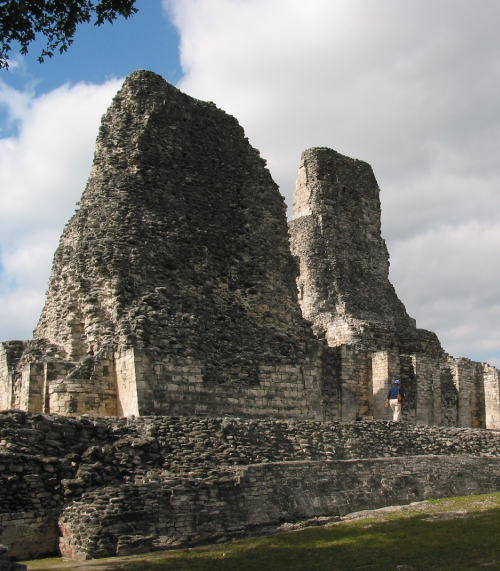
The nearby Xpuhil archaeological site is the easiest first visit because it is associated with the town. INAH describes the site as being on Federal Highway 186 near Xpujil and identifies Río Bec-style architecture, services, and guided-tour possibilities. Check the current official hours and access rules before setting out. The three-tower profile is the feature most visitors recognise, but the value of the visit is also in seeing how a compact archaeological site fits into the modern gateway town.
Continuing from Xpujil to nearby ruins
Xpujil is a strong base for a cluster of sites, but distances and access arrangements still matter. Becán and Chicanná are on the Río Bec corridor and can be combined by car or local transport when opening times and daylight allow. Balamkú lies farther toward the Calakmul approach and needs more deliberate planning. Smaller or less frequently visited sites may have limited visitor services or changing access.
A self-drive itinerary should list sites in geographic order and leave room for heat. A public-transport itinerary should ask locally how to return, not just how to reach a site. If the last bus is uncertain, arrange a driver before entering the ruins. Being able to reach a site does not mean you have a reliable way back.
For Calakmul, start from Xpujil early and treat it as a full outing. The road into the biosphere is slow, wildlife sightings are possible but never guaranteed, and there are no ordinary town services beside the principal ruins. A guided product can reduce the number of moving parts, but verify what the current package includes before booking.
Compare Xpujil and Calakmul activities on GetYourGuide · Check the verified Calakmul tour from Xpujil on Viator
Where to stay in Xpujil
For this route, location matters more than a long amenities list. Staying in Xpujil town gives you the best chance of arranging a morning vehicle, buying supplies, and reaching nearby ruins without first travelling from a remote lodge. If you are arriving by bus or train, confirm whether the accommodation is in town or outside it and ask about late-arrival arrangements.
Do not name a property unless you have checked its current listing and can link the same stay on both booking platforms. The area’s inventory changes, and a generic search is safer than assuming an old recommendation is still operating. Compare the map, recent reviews, cancellation terms, and whether breakfast or an on-site restaurant is actually available for your departure time.
Check current Xpujil stays on Booking.com · Compare Xpujil hotels on Trip.com
If your purpose is an early Calakmul visit, ask how the property helps guests arrange transport. If your purpose is a rail journey, ask how to reach the station. If you are driving, confirm parking and whether the access road is suitable for your vehicle. These practical questions are more useful than choosing a room based only on a pool photograph.
Choosing the right mode for your trip
Choose the bus when you are travelling with a light bag, want the lowest-effort intercity transfer, and are happy to spend a night in Xpujil. It is a sensible option for a slow archaeological itinerary where local transport will be arranged after arrival.
Choose the Tren Maya when the timetable fits and you are building a wider rail journey. Check both stations and first- and last-mile transfers. The train can be comfortable, but a connection or remote station can make the total journey less convenient than a bus.
Choose a rental car when you want to visit several Río Bec sites, carry supplies, control your start time, or continue beyond Xpujil without depending on a local schedule. Budget for fuel, insurance, fatigue, and careful daylight driving rather than comparing only the headline rental rate.
Choose a guided excursion when you value a driver and a planned archaeological day more than independent flexibility. The verified Viator Calakmul listing from Xpujil describes hotel pickup, a full-day format, and a reserve-and-ruins itinerary; check the live product page for language, dates, physical demands, inclusions, and cancellation terms. GetYourGuide also lists current Xpujil and Calakmul Municipality inventory, but the exact products and departure bases can change.
A practical sample plan
A balanced public-transport plan starts with a morning bus from Campeche to Xpujil. After checking in, buy supplies and confirm the next day’s transport. Visit Xpuhil if opening conditions and daylight allow, or keep the afternoon for rest. On the following morning, take a pre-arranged vehicle or current local service toward Calakmul, then return to Xpujil for another night before continuing.
A balanced driving plan leaves Campeche early, stops briefly for fuel and food in the corridor, and reaches Xpujil with enough daylight to check in. The next day can combine the most suitable Río Bec sites, or it can be dedicated to Calakmul. Trying to cover the transfer, multiple ruins, and the reserve in one push usually leaves too little time at each place.
A rail-based plan begins by checking the exact Campeche-to-Xpujil itinerary and station transfers. If a connection at Escárcega is required, treat the connection as a real part of the day. Sleep in Xpujil, then use a local arrangement for the archaeological sites. This plan rewards travellers who prefer a measured journey over a tightly packed schedule.
What to pack for the corridor
Carry a refillable water bottle, sun protection, insect repellent, comfortable shoes, and a small snack bag. A light long-sleeve layer helps on air-conditioned buses and protects you from sun and insects near the ruins. Keep a power bank and offline maps accessible. Cash remains useful for small purchases and local transport, but do not carry more than you need in one place.
For the Calakmul day, add enough food and water for the reserve road, because you cannot assume a shop will appear when you need one. Bring a hat and a phone or camera with spare battery capacity. Wear shoes that can handle uneven ground and possible dampness. If you have mobility limitations, check the current site conditions in advance rather than assuming a long jungle archaeological route will be accessible.
Common mistakes to avoid
The first mistake is confusing Xpujil with Calakmul. Xpujil is the town and gateway; Calakmul is the distant archaeological site inside the reserve. Plan the second journey separately.
The second is trusting an old schedule. Bus and train times change, and a service that appeared online months ago may not run on your date. Verify immediately before departure.
The third is arriving without supplies. Xpujil is the place to prepare for the reserve, not merely a signpost on the way to the ruins. Buy water and food before leaving town.
The fourth is underestimating the heat and distance. A map may show several sites close together, but walking exposed paths after a long drive is tiring. Choose fewer sites and enjoy them properly.
The fifth is driving the final rural roads after dark. Leave the reserve and the highway planning to daylight. If the day is running late, change the plan rather than speeding or taking an unknown shortcut.
Check Xpujil accommodation availability on Booking.com · Compare current Xpujil stays on Trip.com
Browse current Xpujil experiences on GetYourGuide · Compare Calakmul options from Xpujil on Viator
Final recommendation
For most independent travellers, the best balance is a morning bus or train to Xpujil, one or two nights in town, and a separately arranged archaeological day. Choose the rental car if Becán, Chicanná, Balamkú, and other Río Bec stops are central to your plan. Whichever mode you use, treat Xpujil as the gateway and preparation base, not as a quick name on the way to Calakmul; that single distinction makes the long journey easier, safer, and much more rewarding.
Need transport? Book a transfer on WhatsApp.