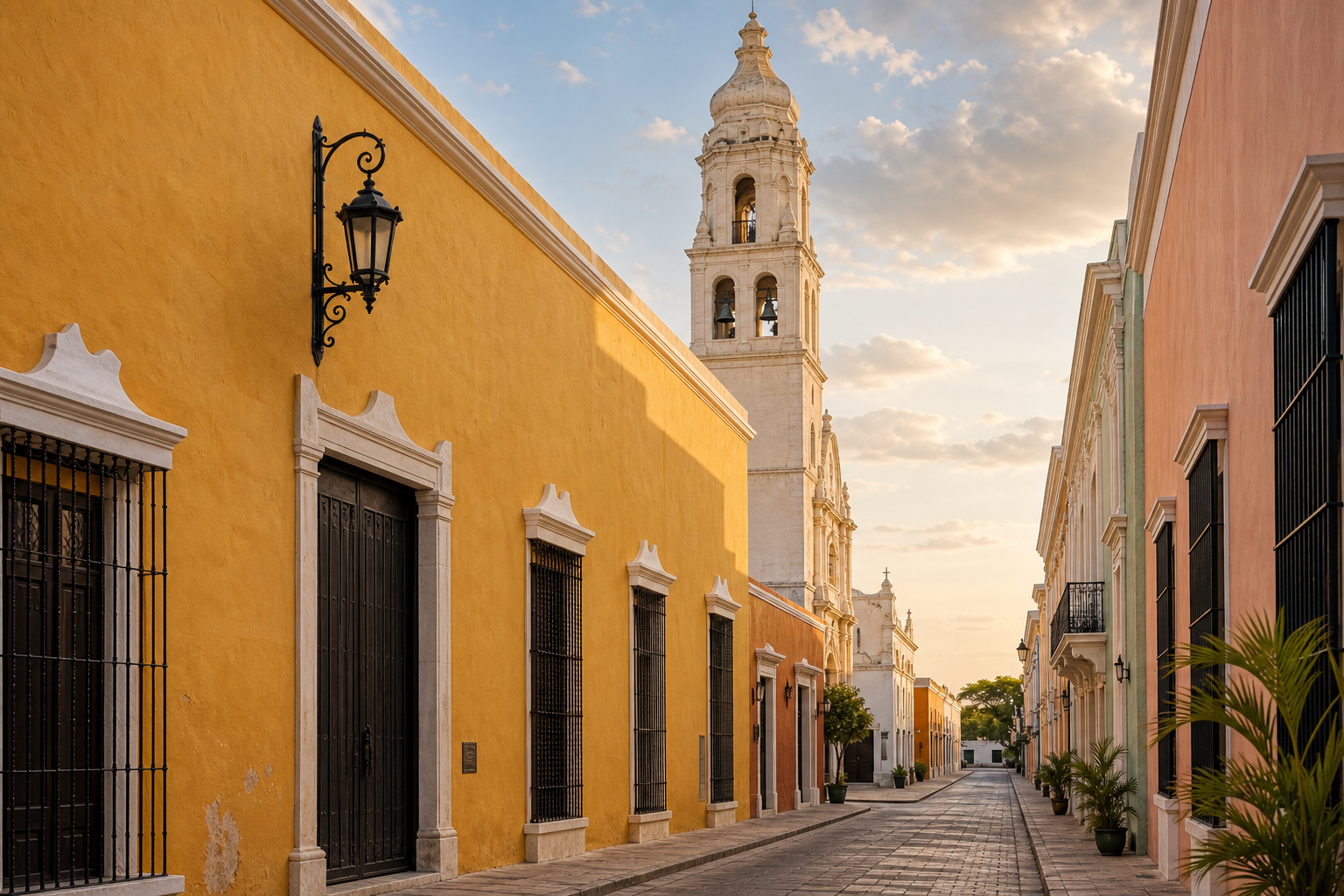

The short answer: when is the best time to visit Campeche?
Campeche is warm all year, so the best month depends on what you want to do with the daylight. For a first visit focused on Campeche City, the historic centre, the malecón and Edzná, the cooler and often drier stretch from roughly November through February is usually the easiest to manage. December, January and February can bring comfortable mornings for walking and clearer-feeling days, although you should still expect strong sun and occasional changes in wind or rain. November and March are useful shoulder-month choices when you want a balance between outdoor comfort and a less rigid itinerary.
April and May are often the most demanding months for travelers who plan long walks or archaeological visits. Heat builds, humidity can feel heavy, and shade becomes an important part of every route. These months are still workable if you begin early, rest during the middle of the day and choose an air-conditioned base. June through October is the wetter and more storm-aware part of the year. Rain may arrive as a brief interruption or reshape a whole day, and tropical systems require attention on the Gulf coast. The reward is a greener landscape and a trip that can feel quieter when you accept flexibility.
There is no single “bad” month in Campeche State. There are only months that suit different rhythms. A city break can work in July if you plan indoor pauses. A Calakmul trip can work in January but still requires an early start and road preparation. A coast day may be beautiful in any season, but wind and storms can change conditions quickly. Use climate averages as a planning guide, then check the forecast shortly before each outdoor outing. The CONAGUA climatological normals catalog is a useful official reference for historical context, while the National Hurricane Center is the place to monitor active tropical systems.
GuideBest Time to Visit Campeche: Month-by-Month Weather GuideCampeche's tropical climate means warm weather year-round, but the right month makes all the difference. Here's a practical breakdown of seasons, costs, crowds, and what to expect each month.Explore
Campeche weather at a glance
Campeche State sits on the Gulf side of the Yucatán Peninsula. Its low elevation, tropical latitude and broad distances create a climate in which warmth is the dependable feature. What changes through the year is the combination of heat, humidity, rainfall, cloud cover and wind. A forecast for Campeche City is not a perfect forecast for Calakmul, and a city forecast should not be used as a guarantee for a coastal boat outing.
Think in travel terms rather than in a promise of exact temperatures. In the cooler season, early mornings can feel pleasantly mild while the afternoon remains hot. In the hot season, the sun can make a short walk feel longer than the map suggests. In the rainy season, the morning may be bright and the afternoon unsettled, or a shower may pass quickly and leave the air steaming. Tropical weather is variable by nature, and a weather app can change several times before the day arrives.
The year is easier to plan in three broad periods:
- Cooler and comparatively drier months: November through February, with comfortable starts and generally favorable conditions for city walking and ruins.
- Hot transition and peak heat: March through May, when early starts, water and shade matter most.
- Rainier and storm-aware months: June through October, when showers, humidity and possible tropical disturbances call for backup plans.
These categories are not hard boundaries. A dry-season day can bring rain, and a wet-season morning can be perfect. They are simply a way to choose the type of trip you can enjoy without fighting the weather.
How the seasons shape a Campeche itinerary
Cooler season: November to February
This is the most straightforward window for a first-time itinerary. The historic centre is pleasant to explore in the morning, and the reduced intensity of the heat can make it easier to combine a fort, a museum and an evening waterfront walk. Edzná also benefits from an early start, but the season does not remove the need for sun protection. Stone reflects heat even when the air feels comfortable.
A cool-season trip can still be windy along the Gulf. That is usually a benefit for a malecón walk, but it can make exposed viewpoints feel less sheltered. Bring a light layer for early departures rather than assuming tropical weather means every hour will be hot. If your dates overlap a holiday, local celebration or school break, the practical concern may be demand and traffic rather than climate. Check current arrangements before locking in a remote excursion.
Hot season: March to May
The hot season rewards a split-day routine. Walk the old city early, return to your room or a shaded indoor space around the brightest hours, and go out again in the late afternoon. Schedule the most exposed archaeological or coastal activity for the beginning of the day. If you are traveling with children, older relatives or anyone sensitive to heat, treat a midday rest as part of the itinerary rather than as lost time.
Humidity changes the experience. Sweat does not evaporate as readily, and a breathable shirt that felt comfortable in the morning may feel damp by lunch. Carry more water than you think you need, but do not rely on finding a refill point at a rural site. A wide-brimmed hat, sunglasses and a small towel are genuinely useful. Heat illness can begin with a headache, unusual tiredness, nausea, dizziness or confusion; stop, cool down and seek medical help if symptoms are severe or do not improve.
Rainy season: June to October
Rainy season does not mean constant rain. It means a greater chance that a shower, thunderstorm or saturated road will affect the plan. City travelers can often adapt by moving into a museum, taking a long meal break or shifting the malecón visit. The calculation is different in Calakmul, where a missed road window has more consequences and services are farther apart.
Use waterproof protection for phones, documents and camera batteries. Sandals may be comfortable in town, but closed shoes with a secure sole are a better choice for uneven surfaces and wet paths. If you rent a car, slow down for standing water, reduced visibility and muddy shoulders. Avoid assuming that a road is safe simply because a navigation app still displays it as open. Ask locally about conditions before committing to a long rural drive.
Storm-aware season: June to November
The Gulf coast can be affected by tropical storms and hurricanes, particularly during the Atlantic season. A storm does not have to make landfall in Campeche to affect a coastal plan: wind, rain, rough water, transport disruption and closures can extend beyond the center of a system. Monitor official advisories through NOAA’s National Hurricane Center and follow instructions from local authorities and your accommodation.
Travel insurance terms, evacuation information and cancellation policies are worth reading before a storm-sensitive trip. Do not take a boat or remain on an exposed coast because a prepaid activity feels difficult to abandon. A flexible booking and a quiet indoor day are better than forcing a risky plan.
Campeche weather month by month
January: comfortable starts and clear planning
January is often one of the most comfortable months for a city-and-ruins itinerary. Mornings can feel fresh by tropical standards, especially when a northerly wind passes through, while afternoons remain warm. This contrast is helpful: you can use the first hours for the historic centre or an Edzná visit and reserve the evening for the malecón. Pack a light layer for an early departure, but keep sun protection in your day bag.
For families, January offers a manageable structure. Set out after breakfast, choose one major outdoor focus, and keep the afternoon flexible. A child may enjoy the walls or a fort more than an extended street walk, so alternate movement with shade. If your trip includes Calakmul, January is favorable for avoiding the most oppressive heat, but it is still a demanding day because of the distance and time on the road. Do not mistake cooler air for a short excursion.
January can also bring busy travel periods around holidays. Confirm transport and accommodation policies early, and leave margins between an arrival and a pre-booked activity. A little wind may make the coast feel cooler than expected, so a thin overshirt is useful at sunset.
February: a strong all-round choice
February is a strong choice for travelers who want to combine history, outdoor walking and a longer day trip without building the entire holiday around weather management. The city’s scale makes it possible to explore in sections: a morning in the walled centre, a rest, then a museum or waterfront walk. The sun is still intense, so do not plan an uninterrupted loop simply because the month is considered comfortable.
At Edzná, arrive early and carry water. The open plazas and stone structures offer limited shade, and the most memorable experience is usually better when you are not rushing to escape the heat. In Calakmul, the forest changes the feeling of heat, but humidity, walking and the length of the approach remain real factors. Wear shoes you trust and keep the day’s logistics simple.
February is also a good month for a flexible city base. If a morning feels cloudier or windier than expected, you can switch the order of the fort, centre and malecón rather than canceling the whole day. Check current event dates if you want a lively public atmosphere, and expect that popular periods may require earlier reservations.
March: warm, bright and increasingly hot
March often feels like the transition into the hotter part of the year. The first hours can still be excellent for walking, but the afternoon demands more deliberate pacing. Travelers who tolerate heat well may enjoy the month, particularly when they prefer long daylight and a less rain-focused plan. Everyone else should build in an indoor or shaded pause.
A practical March day begins with either Edzná or the historic centre, not both as a race. Return to your base for lunch and rest, then choose a short museum visit or the malecón later. On the coast, breeze can make the air feel easier, but it does not cancel sun exposure. Use a shirt, hat and sunscreen rather than relying on wind as a cooling signal.
If you are driving south, schedule the most tiring road work when you are alert. Do not add Calakmul to a day that already includes a long arrival from another part of Campeche State. March is a good month for a two-base itinerary: Campeche City for the cultural core and a southern base for the forest, with enough time in each to respond to road or weather changes.
April: peak-heat habits become essential
April is often hot enough that itinerary design matters more than sightseeing ambition. Historic streets can be beautiful in full sun, but a route that looks short on a map may feel strenuous when you are stopping for shade. Begin early, drink steadily, and make the middle of the day quiet. A late-afternoon walk is more rewarding than forcing yourself through the brightest hours.
Edzná in April should be treated as an early activity. Bring water, a hat and lightweight clothing that covers your shoulders if that is more comfortable. Closed shoes help with uneven ground. At Calakmul, the forest may provide intermittent shade, but the site’s scale and the long travel time make heat management essential. Choose a reliable vehicle, confirm fuel and water arrangements, and avoid driving tired on the return.
Families can have a good April visit when adults accept that children need pauses before they ask for them. Let one ruin, one fort or one waterfront section be enough for a morning. A room with effective air-conditioning is particularly valuable in this month; verify recent information rather than assuming every cooling system performs equally. If you are booking through Booking.com’s Campeche listings, compare recent comments about air-conditioning, noise and cancellation terms.
May: intense heat before the wetter pattern settles
May is commonly one of the toughest months for outdoor travelers. Heat and humidity can combine to make even experienced walkers slow down. This is not a reason to avoid Campeche, but it is a reason to reduce the number of fixed commitments. Keep a morning plan, a recovery period and a late-day option. If the forecast looks unusually oppressive, swap a ruin or long walk for a shorter cultural stop and return outside when the light softens.
Carry water in the vehicle and on foot, keep electronics out of direct sun, and watch for signs of heat exhaustion. Never leave a child, older traveler or pet in a parked car, even briefly. Wear loose, breathable clothing and use oral rehydration supplies if a medical professional has recommended them for you. Take extra care with alcohol and dehydration; thirst is not always a reliable early warning.
At the coast, cloud and wind may create a deceptive sense of safety. You can still burn or overheat under cloud cover. On a May road trip, storms can develop around your route even before the broader rainy season feels established. Check the forecast at breakfast and again before a remote departure. A flexible day is the smart choice, not a failure of planning.
June: showers, humidity and greener surroundings
June brings a wetter rhythm for many travelers. A bright morning can support an early city walk, while an afternoon shower changes the order of activities. Pack for this possibility without letting it dominate the trip: a compact rain shell, a dry bag or waterproof phone pouch and shoes with grip cover most urban inconveniences. For rural routes, ask about recent road conditions and avoid rushing through heavy rain.
The city is easy to adapt because distances between cultural stops are relatively compact. Use the morning for the malecón or historic centre, then keep a museum, reading time or a long rest as a deliberate alternative. If you book an excursion, check its weather policy and pickup details. Current options can be compared through GetYourGuide’s Campeche listings; read the full description rather than relying on a headline itinerary.
June can be rewarding for nature-minded travelers because the landscape responds to rain. Calakmul, however, requires a more conservative approach. Wet roads, poor visibility and a long return are a poor combination. Go with a driver who knows the route or a carefully checked tour, confirm the day’s conditions and leave room to turn back if local advice changes.
July: tropical rain does not follow a timetable
July is warm, humid and capable of producing sudden downpours. Some days offer a long dry window; others make an outdoor schedule feel like a negotiation. The best strategy is to protect the experiences that need clear conditions while keeping the rest movable. A morning archaeological visit can work well, but do not book a tightly timed second activity far away unless you have a generous buffer.
In Campeche City, rain can be atmospheric: wet streets, reflective façades and a cooler pause can make the old town feel different. Still, lightning and flooded sections are reasons to go indoors, not to seek a better photograph. At the malecón, check wind and wave conditions before lingering near exposed edges. A coast day should be canceled or shortened when official warnings or local instructions say so.
For transport, allow additional time. Water on the road, reduced visibility and slow vehicles can affect buses and rental cars. Avoid night driving on unfamiliar rural roads, especially after a Calakmul day. Viator’s current Campeche activities can help compare guided choices, but confirm what happens if weather prevents the advertised route.
August: humid, flexible and rewarding for patient travelers
August often asks for the same habits as July: early starts, breathable clothing, water and a willingness to change plans. A short rain burst can be followed by steam rising from pavement, so drying space and a spare shirt are valuable. If you are traveling with a camera, protect it from both rain and condensation when moving between air-conditioning and humid outdoor air.
For the city, divide sightseeing into small chapters. See a stretch of wall, rest, visit a cultural site, then choose the waterfront only if the sky is stable. Families may prefer an itinerary with one non-negotiable morning activity and a choice between two afternoon options. That format gives children a sense of structure without making everyone anxious about a shower.
August is not the month for casual assumptions about coastal conditions. Monitor NOAA if a tropical disturbance appears and follow local closures. A booking platform can be useful for finding a room or activity, but weather decisions remain your responsibility. Trip.com’s Campeche hotel search is one place to compare current accommodation options; review the property’s terms before paying for a nonrefundable stay.
September: storm awareness and contingency planning
September deserves special attention because Atlantic tropical activity is often a central planning concern. It may be a perfectly calm month during your dates, but you should have a way to monitor official advisories and a plan for a delayed bus, changed tour or canceled coast outing. The National Hurricane Center provides the authoritative tropical outlook for the Atlantic basin. Use local authority instructions as the practical guide once a system affects the area.
If you travel in September, avoid stacking the itinerary with costly, nonrefundable outdoor commitments. Keep a city day available for rain, and choose accommodation with a sensible cancellation policy. A storm-aware plan is also useful for ordinary rainy days: Edzná can move to the first clear morning, and the malecón can wait for a calm evening.
Calakmul is the place where caution matters most. A long forest drive is not the right experiment during severe weather or uncertain road conditions. Confirm the route locally, carry provisions and tell someone your plan. If conditions deteriorate, turn the trip into a city-based history day rather than trying to salvage a remote excursion.
October: a transitional month with changing conditions
October can bring a mix of humid heat, rain and clearer intervals. It is a shoulder-style month in the sense that conditions may shift, but it is still part of the season when tropical systems need attention. Travelers who enjoy quiet museums, flexible city walks and adaptable nature plans may find it appealing. Travelers seeking a guaranteed dry beach schedule should choose a different expectation.
Start outdoor activities early and use a forecast check to decide whether the coast or ruins come first. If the morning is stable, Edzná is a sensible priority. If clouds are building, a city museum or historic-centre walk with nearby shelter may be the wiser order. Bring a light rain layer even when the morning sky looks clear.
October roads can be fine, but rural shoulders and unpaved approaches may be more affected by recent rain. Confirm driving time with people who have traveled the route recently and keep daylight for the return. If you are not comfortable with that responsibility, use a reputable guided option and verify inclusions, pickup and weather cancellation terms.
November: a comfortable shoulder choice
November often marks a welcome shift toward more manageable outdoor conditions, though rain and tropical weather are not impossible. It is a good month for travelers who want the city’s architecture and a ruin visit without the highest heat. A morning may call for a thin layer, while the afternoon still feels distinctly tropical. Pack for both rather than bringing only beach clothing.
The month works especially well for a flexible four- to six-day route. Spend the opening days in Campeche City, reserve one early morning for Edzná, and decide whether Calakmul deserves a separate southern segment. If you have only a weekend, stay focused on the capital and treat the weather as a reason to wander slowly, not as a reason to add a distant site.
November can also bring increased interest around holidays and local events. Confirm availability before arrival, and check whether a celebration will affect traffic or opening arrangements. The Campeche vacation-rentals guide can help frame the choice between a central apartment-style stay and a more conventional room, but always verify current property details directly.
December: popular, bright and pleasantly paced
December is popular for understandable reasons: mornings are often comfortable for walking, the city has a festive public atmosphere, and rain is generally less central to planning than in the wettest months. It is not cool in the way a northern traveler may imagine. Sun, warm afternoons and humidity remain part of the day, especially during an exposed archaeological visit.
Book transport and accommodation with extra care around holiday dates. A full city can be enjoyable, but it leaves less room for spontaneous changes. Plan only one major outdoor target per morning, then keep the afternoon open for a museum, rest or malecón walk. A light layer is useful for early road departures and evening wind.
December is a strong final recommendation for a first visit if your priority is a balanced city-and-Edzná itinerary and you can handle seasonal demand. For Calakmul, the month can provide comfortable walking conditions, but the journey is still long. Treat it as its own expedition rather than a casual add-on to a city day.
GuideBest Time to Visit Campeche: Month-by-Month Weather GuideCampeche's tropical climate means warm weather year-round, but the right month makes all the difference. Here's a practical breakdown of seasons, costs, crowds, and what to expect each month.ExploreCity, coast, Edzná and Calakmul: four different weather experiences
Campeche City
Campeche City is the easiest place in the state to adjust around weather. Streets, plazas, walls, museums and the malecón can be visited in separate windows, and you can return to your accommodation without losing an entire day to transport. The old centre’s stone and painted façades absorb and reflect heat, while the waterfront feels more exposed to wind and sun. Morning and late afternoon are the best default periods for walking.
A city day should have an anchor and a margin. The anchor might be the historic centre before the heat rises. The margin might be a museum or a rest period that can expand if rain arrives. Do not schedule every block as if the weather were a train timetable. The city is at its most enjoyable when you can stop for shade and notice how daily life continues around the heritage buildings.
The Gulf coast and malecón
The coast has its own exposure. Wind can make a hot day feel pleasant, but it can also signal rougher water. Cloud can reduce glare without eliminating ultraviolet exposure. Rain may arrive visibly across the bay, or a storm may develop after a calm morning. Check conditions before swimming, boating or spending extended time on an open shore, and follow local guidance.
The malecón is primarily a waterfront public space rather than a promise of resort-style swimming. Use it for a sunset walk, a view of the Gulf and a change of pace from the walled city. The Campeche malecón article is a useful companion for understanding that distinction. For broader activity comparisons, check current Campeche experiences on GetYourGuide and read the meeting point, duration and weather language carefully.
 Campeche’s malecón beside the Gulf coast
Edzná
Edzná is close enough to Campeche City to be the practical archaeological addition for many visitors, but “close” should not become an excuse to visit at the hottest time of day. The site is exposed, the ground can be uneven, and shade is limited. An early departure gives you a better chance of walking before peak heat and leaves the afternoon available for recovery.
Rain changes the surface and the comfort of the visit more than it changes the significance of the architecture. Wear secure shoes, protect your phone and carry water. If a heavy shower arrives, pause rather than hurrying across slick ground. Check the current access information with official sources or a local operator before departure, because conditions and arrangements can change.
The road to Edzná is a manageable day-trip question, not a reason to underestimate logistics. Allow time for the return, especially during rain. If you prefer interpretation or do not want to solve transport, compare a current excursion and confirm whether transport, admission and guiding are included. The Campeche-to-Edzná guide can sit alongside the forecast when you decide how early to leave.
 The Cinco Pisos structure at Edzná
Calakmul
Calakmul is a different undertaking from Edzná. It combines a long approach, a protected forest landscape and a substantial amount of walking. The weather at your city hotel is not enough information for the day. You need to consider the forecast along the route, road conditions, fuel, daylight, water and the condition of every traveler in the vehicle.
The forest can provide shade, but it can also feel humid and close. Wildlife sightings are never guaranteed, and you should not pursue animals or stray from permitted paths for a better view. Wear long, light clothing, closed shoes, insect protection and a hat. Keep food and waste secured, follow site rules and bring enough water for the full plan rather than assuming services will appear when needed.
Do not drive the return after a day when everyone is exhausted. A southern base makes more sense than treating Calakmul as a rushed out-and-back from Campeche City. In wet conditions, ask locally about the road and be ready to postpone. The Calakmul guide provides broader route context, while this weather guide’s main point is simple: distance, heat and weather multiply each other.
 A Maya pyramid in Calakmul’s forest landscape
Transport, roads and weather decisions
Weather affects transport in small and large ways. In the city, a brief shower may only mean waiting under cover or using a short taxi ride. On an intercity bus, it may mean a slower arrival. On a rural drive, it can mean poor visibility, standing water, slippery shoulders or a changed decision about whether to continue. Build buffers into every connection, especially when a bus, train, flight or tour follows the same day.
For Campeche City, walking remains rewarding when the heat is reasonable, but there is no prize for walking every kilometre in midday sun. Use a short ride when it protects the rest of your day. If you rent a car, inspect the vehicle, understand the insurance and check fuel before a remote route. Download or otherwise prepare navigation for stretches where mobile coverage may be inconsistent, and tell your accommodation or travel companion the day’s general plan.
Avoid night driving on unfamiliar rural roads. This is particularly important after a Calakmul visit, when fatigue is predictable. Rain, animals, potholes, road works and limited lighting can make a familiar route harder after dark. If the forecast turns poor, a professional driver or a postponed departure is preferable to trying to maintain a rigid schedule.
Guided activities can reduce research and driving stress, but they do not make weather irrelevant. Ask whether the product operates in rain, what happens during a warning, whether transfers are shared, and how much time is spent traveling. Commercial listings are useful for comparing current options, not for replacing a forecast or local safety judgment.
What to pack for Campeche weather
Pack for heat first, then add protection for rain, sun, insects and changing indoor temperatures. A practical list includes:
- Lightweight, breathable shirts and trousers or shorts that allow easy movement.
- A wide-brimmed hat or cap, sunglasses and high-protection sunscreen.
- Comfortable walking shoes with a secure sole; add a second pair if you expect rain.
- A compact rain shell, small umbrella or pack cover for wet-season travel.
- A refillable water bottle and a small day bag that keeps documents dry.
- Insect repellent for forest and lagoon settings, plus any personal medication.
- A thin layer for windy evenings, air-conditioned transport and early departures.
- A dry bag or waterproof pouch for phones, passports, chargers and cameras.
- A small towel, spare shirt and hand sanitizer for hot, humid days.
- Electrolyte supplies only if appropriate for you and used according to medical advice.
For Edzná and Calakmul, prioritize function over appearance. Shoes that grip and clothing that dries reasonably quickly are more valuable than a polished outfit. For the city, you may want something slightly smarter for evening, but it should still be comfortable in warmth. Keep a copy of important documents separately from the originals and do not leave valuables visible in a vehicle.
Heat, humidity and everyday safety
Heat safety is mostly about pacing. Drink before you are deeply thirsty, take shade breaks, eat regularly and notice how the least heat-tolerant person in your group is doing. Plan the most exposed activity early. If someone develops weakness, dizziness, headache, nausea, unusually rapid breathing or confusion, stop the activity, move to a cool place and seek medical assistance. Confusion, fainting or worsening symptoms are emergencies.
Sun protection matters in cloudy weather and on the coast, where reflected light can increase exposure. Reapply sunscreen as directed, cover shoulders if they burn easily and use a hat. At archaeological sites, do not climb or cross barriers for a photograph. Wet stone and uneven ground add fall risk when rain passes through.
Humidity affects sleep as well as sightseeing. Choose accommodation with dependable cooling, ventilate only when outdoor air is comfortable, and keep wet clothing from becoming a source of mildew in a closed bag. If air-conditioning fails, ask promptly for a repair or room change rather than waiting through an uncomfortable night before a long road day.
Storm safety is straightforward: monitor official information, register or share your plans when appropriate, obey evacuation or shelter instructions and avoid exposed waterfronts during severe weather. Do not treat social-media rumors as a substitute for official advisories. Your accommodation can explain local procedures, but you should still know how to access NOAA updates.
Families and travelers who need a gentler pace
Campeche works well for families when the route respects heat and distance. A child-friendly plan does not mean removing history; it means presenting it in short chapters. Let a fort become a story about walls and views, a street walk become a hunt for colors and doors, and a malecón visit become a sunset outing rather than an all-day obligation. Keep snacks and water available, and do not wait for a child to become irritable before taking a break.
For a family with a stroller, inspect the route in practical terms. Historic streets, steps, uneven paving and fort access may make a lightweight carrier more useful for some groups. Ask accommodation providers about stairs, cooling and space before booking. In the wet season, protect the stroller and plan a dry indoor alternative.
Edzná can be meaningful for children who are ready for an outdoor history visit, but the heat may be the main challenge. Go early, shorten the visit if necessary and avoid promising that every structure must be seen. Calakmul demands more: a long vehicle day, bathroom and food planning, walking and patience. It can be excellent for an older child or teenager interested in nature and archaeology, but it is not the automatic next step after Edzná.
Multigenerational groups should choose a base and rhythm that let people opt out without splitting the whole trip. One person can rest while others walk a nearby section. A rental with separate sleeping areas may help, but verify every property detail rather than trusting a generic description. The best itinerary is one that keeps everyone well enough to enjoy the evening.
Building a flexible itinerary by season
A two-night city visit is easiest in the cooler months, but it can work year-round. On arrival, keep the first evening light: settle in, take a short walk if conditions are good and avoid making the next morning depend on a late arrival. Use the first full morning for the historic centre or Edzná, then leave the afternoon open. The next day can combine a museum, another short city walk and the malecón.
For three or four nights, reserve one movable morning. Put Edzná on the clearest and most comfortable forecast window, not necessarily the first available day. Keep the historic centre as the weather-proof core, though you may still need rain shelter. If the coast forecast is stable, use a late afternoon for the malecón; if wind or thunderstorms build, stay inland and move the waterfront to another evening.
A five- to seven-day state itinerary should not be a sequence of day trips from Campeche City. Give Calakmul a southern base or a well-planned overnight segment. Choose either a coast emphasis or a forest emphasis unless you have enough days to avoid long backtracking. In the rainy season, place the least flexible long drive earlier in a weather window and retain city days as buffers.
A useful rule is “one anchor, one option.” The anchor is the activity that matters most and needs particular conditions. The option is something nearby or indoors that remains worthwhile if the forecast changes. This keeps a trip purposeful without making a shower feel like a disaster. It also makes the itinerary kinder to families, slower walkers and travelers who need regular cooling breaks.
When to book and how to keep plans adaptable
Book earlier when your dates fall near holidays, festivals or school breaks, or when you need a specific room configuration. In quieter periods, flexibility can be more valuable than committing to a tightly packed schedule. Check cancellation windows, transfer policies and whether a tour’s price includes admission, meals or transport. Never assume a booking platform’s headline includes every cost or guarantee.
For accommodation, compare Booking.com’s Campeche city page with Trip.com’s Campeche hotel page. Use recent reviews to assess cooling, noise, access and communication. For activities, compare GetYourGuide and Viator, then confirm the exact meeting point and weather policy. A listing is a starting point for questions, not evidence that conditions will be suitable on your date.
Keep important phone numbers, booking confirmations and offline directions accessible. If traveling to Calakmul or another remote part of Campeche State, tell someone your broad route and expected return. Carry enough water and fuel for the plan, and do not rely on a last-minute purchase in a rural area. If the road, weather or a traveler’s health says “not today,” postpone when possible.
Frequently asked questions
Is Campeche hot all year?
Yes. Campeche is a warm tropical destination throughout the year. The cooler months can feel more comfortable in the morning, but afternoons still require sun protection and sensible pacing. April and May often feel especially demanding, while the rainy season adds humidity and changing conditions rather than replacing the heat.
Which month has the least rain?
Historical patterns generally make the late-year and winter months a more attractive choice for travelers seeking a drier-feeling itinerary, but no month guarantees rain-free days. Consult the CONAGUA climatological normals for historical context and check a current forecast close to travel. A shower can occur in a comparatively dry month, just as a wet-season day can be bright.
Is December the best month for a first visit?
December is one of the strongest choices for a first visit because outdoor conditions are often manageable and the city is enjoyable on foot. It is also a popular period, so accommodation and transport may need earlier planning. If you dislike crowds or fixed holiday demand, November or February may offer a more relaxed balance.
Can I visit Edzná in the rainy season?
Yes, provided you plan for sudden rain and check conditions before leaving. Go early, wear shoes with grip, protect electronics and allow extra road time. If a heavy storm or unsafe access is reported, postpone rather than trying to force the visit.
Can I visit Calakmul as a day trip from Campeche City?
It is possible in the broad logistical sense, but it is a long and demanding plan rather than a casual day trip. The distance, forest roads, walking, heat and return drive can make an overnight southern base the more comfortable choice. If you do it in one day, use a reliable vehicle or carefully checked tour, start early, carry provisions and avoid returning tired after dark.
Does rain ruin a visit to Campeche City?
Usually not. The city’s compact cultural core lets you change the order of activities, rest indoors and return to the streets when rain passes. It can disrupt a waterfront or archaeological plan, but a flexible schedule turns many showers into a pause instead of a lost day.
What should I wear in Campeche?
Wear breathable clothing, comfortable shoes, sun protection and a light layer for wind or air-conditioning. Add a rain shell in the wetter months and closed shoes for Edzná or Calakmul. Choose respectful clothing for religious and cultural places, and prioritize coverage and comfort over fashion during hot outdoor activities.
Is the malecón a beach for swimming?
The malecón is best understood as a waterfront promenade and public space, not as a conventional resort beach. It is well suited to walking, sunset views and feeling the Gulf atmosphere. For swimming or a dedicated beach day, research the specific coastal location and current conditions rather than assuming the malecón provides the same experience.
Should I rent a car because of the weather?
A car can help with early starts and remote routes, but it also places responsibility for road conditions, fatigue, navigation and fuel on you. It is most useful when your itinerary includes several places without convenient connections. For a city-focused trip, buses, local transport and a single guided excursion may be less stressful.
How far ahead should I check the hurricane forecast?
Watch general tropical outlooks during the Atlantic season and check specific advisories as your travel date approaches. A forecast becomes more useful close to the day, but an active system can affect plans before it reaches Campeche. Use NOAA’s National Hurricane Center for official basin information and follow local instructions for real-time decisions.
Is Campeche suitable for a short weekend?
Yes, especially if you focus on Campeche City. Two nights can support a historic-centre walk, a museum or fort, and a malecón evening without spending the weekend on highways. Add Edzná only if transport and weather align comfortably. Leave Calakmul for a longer route with a southern base.
Final recommendation
For most first-time travelers, the best overall choice is November through February, with December, January or February especially suitable for a calm combination of Campeche City, Edzná and a Gulf-facing evening. Choose March or April if you are comfortable with heat and will commit to early starts and long midday rests. Choose June through October when flexible planning, greener landscapes and the possibility of rain are part of the appeal, not an inconvenience you expect the weather to avoid.
Whatever month you choose, organize the state by distance. Let Campeche City be the adaptable cultural base, treat Edzná as an early archaeological outing, and give Calakmul the time and road planning it deserves. Keep the coast weather-aware, protect yourself from sun and humidity, and leave at least one movable block in the itinerary. That combination—an informed season choice, practical transport and room to change course—is more reliable than chasing a perfect forecast.