Printable guide
Best Hotels in Palizada, Campeche: Where to Stay
Published
A practical guide to choosing a hotel in Palizada, Campeche, with advice on central rooms, river views, rural stays, transport, weather, and how many nights to book.

Palizada is not a hotel-heavy destination. That is the first thing to understand before booking a room here. This small river town in southwestern Campeche is a place of colorful façades, French-tile roofs, a compact centre, and a slow-moving river landscape. It is not a resort strip, a business city with several interchangeable chains, or a convenient overnight stop on the main Campeche–Calakmul road.
That limited choice is part of the appeal, but it changes how you should search. In Palizada, the best place to stay is usually the room that gives you the right location, reliable communication, air-conditioning, and a workable arrival plan—not necessarily the property with the longest amenity list. A central room can put the church, square, market, and riverside within an easy walk. A rural lodging option can give you more space and access to countryside, but may require a car and advance coordination. A hotel in nearby Ciudad del Carmen offers more conventional facilities, but it is no longer the same experience as sleeping beside the Palizada River.
This guide explains how to compare those choices without relying on invented hotel rankings or old prices. Availability, names, facilities, and rates change in a small market, so use the live search pages below to check your dates and then confirm the details directly with the property before travelling. The advice is about choosing the right kind of base, planning realistic transport, and avoiding the common mistake of treating Palizada as a quick add-on that can be improvised at the end of a long drive.
The short answer: where should you stay in Palizada?
For most visitors, stay in or very close to the central town if you want to walk to the main sights and experience Palizada at a relaxed pace. The centre is the practical choice for a first visit, a one-night stop, travellers without a rental car, and anyone who wants to see the riverfront at different times of day. You can start with a morning walk, return to your room during the hottest hours, and go back out for the evening light without arranging another ride.
Choose a rural or countryside property only when the setting is the main reason for your trip. This can work well for birdwatchers, photographers, families who prefer space, and travellers building a wetland-focused itinerary. It is less convenient if you expect to walk to dinner, find a late arrival desk, or solve transport problems at short notice. Confirm the access road, check-in procedure, mobile signal, meals, water, electricity, and payment method before committing.
Consider Ciudad del Carmen instead when your priority is a larger choice of hotels, predictable transport, business facilities, airport access, or a base for several destinations around Laguna de Términos. Ciudad del Carmen can be useful in a wider Campeche itinerary, but a hotel there should not be presented as a substitute for staying in Palizada. The road and river geography mean that a day visit from Carmen requires proper planning, especially if you are considering the water route.
Check current Palizada hotel availability on Booking.com · Compare Palizada stays on Trip.com
GuideBest Hotels in Campeche: Where to Stay in the CityExplore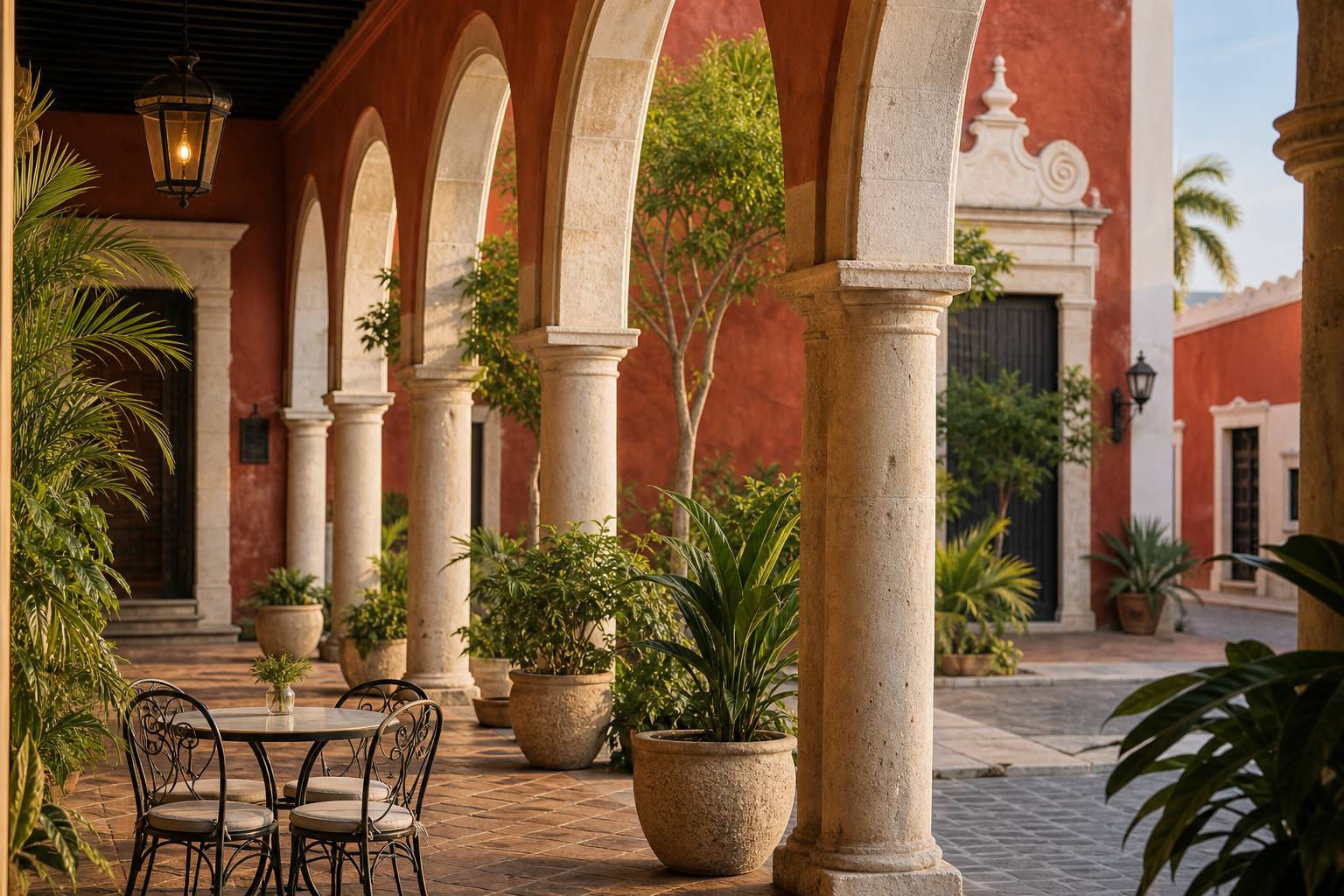
What staying in Palizada is actually like
Palizada is a municipal town with a small centre, not a purpose-built tourism zone. The built-up area is easy to understand once you arrive: streets, public squares, the parish church, market activity, and the riverfront sit close together. Outside that core, the municipality becomes rural quickly. The distinction matters when a booking page uses “Palizada” broadly. A property may be associated with the municipality while being outside the walkable centre, on a road toward another community, or in a countryside setting.
The architecture is one of the reasons travellers choose the town. Low houses in strong colors line streets near the river, and roofs made with French tiles give Palizada a visual character that differs from the stone fortifications and colonial streets of San Francisco de Campeche. The town is lived-in rather than arranged as a museum. Shops open according to local routines, public spaces become more pleasant as the heat falls, and the riverfront is both a scenic place and part of everyday movement.
Expect a modest service environment. A small lodging property may have fewer rooms, a narrower reception window, and less English-language support than a hotel in Campeche city or Ciudad del Carmen. Wi-Fi may be adequate for messages but not ideal for large uploads or long video calls. A pool, restaurant, parking, hot water, generator, or luggage storage should be treated as a feature to verify—not an assumption based on a listing photograph.
This is also a humid tropical environment. Air-conditioning is more than a luxury if you are visiting during a hot period, especially when you plan to walk in the middle of the day. Ask whether the room has air-conditioning rather than only a fan. Check whether the unit is included in the quoted room type, and ask how late you can arrive if driving from another part of Campeche. Bring insect repellent even if you plan to stay in the centre, because the river, vegetation, and evening conditions are part of the setting.
 Colorful houses and trimmed plaza gardens in Palizada, Campeche
The best area for most visitors: the central town
The central area is the safest default for a short stay because it reduces the number of decisions you need to make after arrival. From a central room, you can explore the public square, look for the parish church, reach the market during its active hours, and walk along the malecón. You are also closer to whatever local food and convenience options are open that day. That does not mean every central property is identical. A room on a busy street may be noisier than one a block away, while a river-facing room may be more exposed to heat, insects, or activity along the waterfront.
When comparing central listings, look beyond the headline photograph. Check the map carefully and confirm whether “central” means the actual town centre or a wider municipal search area. Look for recent comments about air-conditioning, water pressure, cleanliness, bed comfort, parking, and how the host handles arrival. In a small destination, a review mentioning a helpful check-in arrangement can be more useful than a generic comment about décor.
Ask these questions before paying:
- Is the property inside the walkable central area, or will you need a taxi for the riverfront and market?
- Is there secure parking if you are driving?
- Is air-conditioning available in the exact room category?
- What is the latest possible arrival time, and who receives guests after dark?
- Is breakfast included, available, or not offered at all?
- Can you pay by card, or should you carry cash?
- Is the room on a ground floor, and are there stairs?
- What happens if heavy rain affects your arrival road?
A central stay is particularly useful for one night. You can arrive, take a short orientation walk, have a simple meal, and be ready for the river or surrounding countryside the next morning. It is also the better choice for travellers who do not want to turn every meal, photo stop, or change of plan into a transport arrangement.
Riverfront rooms: attractive, but check the practical details
A river view sounds like the obvious choice in Palizada. Sometimes it is. Watching the water change color from a balcony or nearby promenade can be the most memorable part of a stay. The river also makes early mornings and late afternoons feel different from the hotter middle of the day. If your room genuinely faces the water, ask which direction it overlooks and whether the view is from the room, a shared terrace, or a public street nearby.
Do not assume that a riverside position guarantees quiet. The waterfront can have local movement, voices, boats, music, and occasional community events. A room facing the river may also receive more direct sun. Ask whether shutters, curtains, or shade are available, and confirm that air-conditioning works properly. Mosquito screens are useful, but you should still bring repellent and avoid leaving doors open at night.
The water itself is part of a river and wetland system, not a managed swimming facility. A riverside lodging choice does not mean you can safely enter the river from a private bank. Currents, muddy edges, boat traffic, wildlife, and changing water levels all matter. If your booking mentions a dock, ask whether it is for boarding a boat, sitting beside the water, or both. Children need close supervision near every unprotected edge.
A riverfront room suits travellers who value atmosphere over a long list of facilities. It is a good choice for photography, reading, birdwatching from a fixed base, or building a slower itinerary. It is less important if you will leave before sunrise for a long drive and return only to sleep. In that case, central access, parking, and a dependable check-in may matter more than the view.
Countryside and rural lodging near Palizada
Some travellers search Palizada because they want to be close to water, wildlife, farms, or the broader wetland landscape. Rural lodging can provide that setting, but you need to assess it as a small logistics project rather than a normal hotel reservation. The property may be several kilometres from the centre, and the final approach may involve a narrow or uneven road. Rain can change the condition of unpaved sections. A phone map may show a route that is technically possible but uncomfortable after dark or in a small rental car.
Before booking countryside accommodation, request precise arrival instructions and a local contact number. Ask whether the property can be reached in an ordinary car, whether a gate is locked at night, and whether someone will meet you. Confirm how meals work. If there is no restaurant within walking distance, you may need to arrive with food or arrange a meal in advance. Ask about drinking water, electricity, hot water, fans, air-conditioning, refrigeration, and mosquito protection.
A rural room can be a good base for a two-night nature stay. One day can be used for Palizada’s centre and the other for a locally arranged river, farm, or wetland activity. Avoid trying to combine a long drive, a late arrival, a boat departure, and a return journey on the same day. The best rural stays are unhurried. Their value is the setting and the chance to notice birds, weather, and river light—not the number of attractions you can squeeze into a timetable.
Be careful with wildlife promises. Palizada’s surrounding waterways and wetlands support birds and other animals, but no responsible property can guarantee a manatee, crocodile, monkey, or particular bird sighting on demand. Choose operators and hosts who explain distance, noise, feeding rules, weather limitations, and what happens if conditions change. Wildlife viewing should not involve touching or feeding animals.
Hotel facilities that matter most in Palizada
A small town makes practical facilities more important than decorative language. Start with climate control. Air-conditioning is the feature most likely to affect whether you sleep well, especially in the hottest months. Confirm that it is in the room itself and not only in a common area. If you are sensitive to noise, ask whether the unit is recently serviced and whether the property has a quieter fan option.
Next, check arrival and communication. A property can be perfectly comfortable and still be a poor fit if the host stops receiving guests before your road journey ends. Send a message before booking if your arrival is late, your Spanish is limited, or you need parking. Save the address and contact details offline. Mobile coverage can vary on rural approaches, and you should not rely on sending a message from the final turn.
Parking is another important distinction. A listing may say parking is available while meaning street parking. If you are driving, ask whether the vehicle is inside a gated area, whether the space is covered, and whether you can enter after dark. Do not leave luggage visible in a parked car, even in a quiet town.
Water and electricity deserve a direct question. Tropical destinations can experience interruptions, and a property’s response is more useful than an assumption that every room will operate like a large city hotel. Ask whether there is backup power for lights, refrigeration, and air-conditioning. If the answer is unclear, pack a charged power bank and keep your phone, headlamp, and important documents together.
Breakfast is not always part of the room rate. If it is included, confirm the serving time and whether an early takeaway is possible. This matters if you are leaving for a long road journey or a morning boat arrangement. If breakfast is not offered, identify a market or local food option after arrival rather than assuming that a café will open at the exact time you need it.
Finally, think about stairs and room access. Traditional buildings may have narrow stairways or uneven thresholds. Travellers with limited mobility should ask for photographs and a ground-floor room before booking. Do not rely only on an accessibility icon in a third-party listing.
How many nights should you book?
One night is enough for a compact introduction if you are already travelling through southwestern Campeche and arrive early enough to walk around. Use the afternoon for the riverfront and central streets, then return to the same areas in the cooler evening. The following morning, you can visit the market or take a short walk before continuing. One night works best when the transport plan is already clear.
Two nights is the better choice for most independent travellers who make the effort to reach Palizada. It gives you a buffer against road delays, allows time for a river or wetland arrangement, and prevents the town from becoming a rushed photo stop. It also lets you separate walking from boat logistics. One day can focus on the centre and riverfront, while the next can be used for a countryside activity or a slower return to the water.
Three nights makes sense only when Palizada is part of a wider nature itinerary or you have a specific reason to stay, such as photography, visiting family, fishing arrangements, or a rural experience. The centre is compact, so three nights without a plan for the surrounding landscape may feel long for travellers who want a full schedule of conventional attractions.
Do not book a non-refundable room immediately before a complicated transfer. Leave room for weather and transport changes, particularly during the rainy season. Flexible cancellation is useful, but read the actual terms. A flexible listing may still impose a deadline or require direct confirmation for a late arrival.
Getting to Palizada before you book
The right hotel depends on how you arrive. Palizada is in southwestern Campeche, near the Tabasco border and close to the wetland geography of Laguna de Términos. It is not on the simplest direct route between Campeche city and Calakmul. From the capital, the road journey requires planning through the wider regional road network, and a one-day out-and-back can be tiring. If you are driving, download maps, fill the tank before entering less-served stretches, and avoid assuming that every small town has a late-night fuel stop.
Villahermosa is another regional gateway used by some travellers because of its position west of Palizada. Ciudad del Carmen is useful for travellers building an itinerary around Laguna de Términos, Isla Aguada, and the southern coast. Routes and public-transport connections can change, so check current schedules with the relevant bus operator or local terminal rather than copying an old blog timetable.
Public transport requires more patience than a stay in Campeche city. You may need to combine an intercity bus with a local connection or taxi, and the last leg may not run at the frequency you expect. Confirm the final connection before reserving a room with a strict check-in window. If the property offers pickup, clarify the cost, meeting point, luggage space, and whether the service is available on your arrival date.
The river route from Ciudad del Carmen is a separate experience, not a guaranteed replacement for the road. Campeche’s tourism authorities have promoted a natural route connecting Ciudad del Carmen and Palizada through Laguna de Términos and the Palizada River. Published departure information can change as navigation, weather, operators, and community arrangements change. Verify the current departure point and time directly before building a hotel booking around it.
If you are considering an organized multi-stop experience from Campeche that includes Palizada, read the itinerary carefully. A current GetYourGuide listing covers a two-day route from Campeche involving Palizada along with other stops; it is a specific product, not proof that daily independent transfers or a general Palizada tour operate on the same schedule. Check the live GetYourGuide Palizada itinerary and compare current Campeche experiences on Viator before assuming a tour matches your dates or interests.
GuideCampeche Travel Guide: Everything You Need to Know Before You VisitExplore
Choosing between Palizada and Ciudad del Carmen for your hotel
Choose Palizada when the destination itself is the point. You want to wake near a small river town, walk among low colorful buildings, see the public spaces before the heat builds, and accept a limited service network. Palizada is especially attractive for travellers who prefer local rhythm, architecture, river scenery, and a quieter base.
Choose Ciudad del Carmen when your hotel needs are more conventional. The city has a larger accommodation market, more transport links, airport access, and a wider range of business and dining services. It can be a practical base for Laguna de Términos and Isla Aguada, but travel times to Palizada still need to be checked. A Carmen hotel may reduce accommodation uncertainty while adding daily driving or boat logistics.
Do not choose based only on a map’s straight-line distance. Wetlands, bridges, road connections, and river crossings shape the journey. A property that appears close may not be quick to reach. Check the route at the time of day you expect to travel, and ask a local host about the final approach.
If you are combining both towns, two nights in each can be excessive unless you have a clear nature plan. A common sensible pattern is to use Ciudad del Carmen for arrival or onward connections and Palizada for a deliberately slower middle section. Alternatively, stay in Palizada first, then move to Carmen when you need airport or coastal access. The order depends on your flight, road direction, and confirmed transport.
Compare hotels in Ciudad del Carmen on Booking.com · Check Ciudad del Carmen stays on Trip.com
GuideCiudad del Carmen Nightlife: Best Bars & Evening SpotsA practical guide to nightlife in Ciudad del Carmen, Campeche: the lagoon-side malecón evenings, the Playa Norte bar corridor, craft beer at Mosto Beer House, beach clubs on the Gulf side, sports bars, festival nights during the Feria del Carmen, safety after dark, and where to stay for easy nights out.Explore
Budgeting without relying on old prices
Room prices in a small market can change sharply with weekends, festivals, school holidays, local events, weather, and limited inventory. A price shown in an old article is not a useful planning fact. Search your exact dates, compare the cancellation conditions, and check whether taxes, breakfast, parking, air-conditioning, and river transport are included.
The cheapest room is not always the lowest-cost choice. If it requires a taxi from outside town, a paid meal because there is no kitchen or nearby food, or a separate transfer after a late bus, the total can exceed a more central room. Calculate the whole stay: room, transport to the property, meals, parking, cash needs, and any activity arrangement.
Budget travellers should prioritise location, fan or air-conditioning, clean bedding, secure arrival, and a way to contact the host. You do not need a large lobby or resort facilities for a successful Palizada stay. You do need to know where you will get water, how you will enter after dark, and what happens if your road journey is delayed.
Families should ask about room configuration rather than assuming that a listing’s occupancy number means separate beds. Check whether children’s facilities exist, whether the bathroom has a shower arrangement suitable for your family, and whether the riverfront is close enough that children can be supervised. A ground-floor room and secure parking may be worth more than a nominally lower rate.
Couples and photographers may prefer a river-facing or courtyard room, but should still confirm heat, insects, and noise. Remote workers should treat internet speed as unverified unless the property gives a current, specific answer. Download maps, tickets, and directions before arrival.
What to eat and how lodging affects meals
Palizada’s food options are part of the town’s daily rhythm, not a guaranteed hotel restaurant schedule. Local cooking reflects the broader riverine and coastal region, with seafood and regional staples appearing in everyday places. Market and family-run food options can be useful, but opening times may change, especially outside busier periods.
If you book a property outside the centre, ask where guests usually eat. A host may recommend a nearby option, arrange a meal, or suggest buying supplies before reaching the property. Do not assume a rural lodge has a full restaurant simply because its listing mentions food. Confirm whether meals require advance notice and whether special diets can be accommodated.
A central stay gives you more flexibility to look around and decide locally. That is another reason it works well for first-time visitors. Even then, carry some cash and a small supply of water. Card acceptance can vary between lodging, shops, market stalls, and transport providers.
Avoid naming a restaurant as part of a hotel recommendation unless you have checked that it is operating and genuinely close to the property. The more dependable advice is to ask your host or the market vendors where residents are eating that day, then keep your plans flexible.
Weather, mosquitoes, and seasonal comfort
Palizada’s low, wetland setting makes weather a central booking consideration. Heat and humidity can be exhausting when you are walking, while heavy rain can affect road conditions and river plans. The rainy season can bring dramatic skies and greener scenery, but it also increases the value of flexible bookings and a realistic arrival buffer.
The dry season is not automatically cool. Sun can still be intense, and an air-conditioned room remains valuable. Early morning is usually the most comfortable time to walk through the centre or look for birds. Late afternoon can be pleasant once the heat begins to fall. Schedule the longest outdoor activity around conditions rather than around an arbitrary checklist.
Pack lightweight clothing, a hat, sunscreen, insect repellent, sandals or shoes that can get wet, and a thin layer for air-conditioned transport. A dry bag or sealed pouch protects phones and documents during a boat trip or sudden rain. If you are staying in a rural setting, add a power bank and a small torch.
Mosquitoes and other insects are normal in a river environment. Screens and closed doors help, but they are not a reason to leave doors open at dusk. Ask whether rooms have screens, and keep repellent accessible rather than buried in your luggage. If you have a medical condition affected by heat or insect exposure, choose a property with dependable indoor cooling and a clear route to local services.
A practical two-day stay
On arrival day, aim to reach Palizada with enough daylight to understand the town. Settle into your room, then walk toward the central square and the river. Notice where the market, parish church, public spaces, and malecón are located. This orientation makes the next day easier and gives you a chance to ask about current river conditions without rushing onto a boat.
Use the cooler part of the afternoon for photographs of the streets and roofs. The town’s appeal is in the relationship between façades, gardens, public paving, and the water—not in collecting one quick landmark photograph. Return to the riverfront near sunset if the weather is comfortable. Keep valuables secure and follow local guidance around docks and edges.
On the second morning, visit the market and central streets early. If you have arranged a river or countryside activity, leave enough time for the meeting point and any change in water or road conditions. If no activity is confirmed, do not force the day. A second slow walk, a conversation with your host, or a longer riverside observation can be more rewarding than an improvised transfer.
After lunch, either continue to your next base or stay another night if the journey is long. Do not combine a late afternoon departure from Palizada with a flight or important connection unless you have a large buffer. Small-town transport is where a flexible itinerary earns its value.
What to see near your room
A central hotel makes the principal Palizada sights simple to reach on foot. The parish church of San Joaquín is an important visual landmark, with a red façade and a bell tower overlooking the public space. It is an active religious building, so interior access depends on services, maintenance, and local arrangements. Dress respectfully and avoid photographing worshippers without permission.
 Parroquia de San Joaquín in the centre of Palizada, Campeche
The riverfront and malecón provide the strongest sense of place. Walk without assuming that every boat is a tourist service. Some activity is local transport or work. Ask before boarding, confirm the length and route of any outing, and follow safety instructions. A calm-looking river can still have a strong current or an unstable muddy edge.
The town’s public squares and gardens are worth including because they show how Palizada functions outside tourism. Trimmed trees, benches, patterned paving, and colorful buildings create a visual rhythm that is different from the fortified centre of Campeche city. The replica of the Statue of Liberty is one of the town’s recognizable landmarks, but it works best as one detail in a broader walking route rather than the sole reason to visit.
 Palizada’s riverfront houses and waterfront from the Palizada River
If your stay is connected to Laguna de Términos, remember that Palizada and Ciudad del Carmen are different bases in the same broad wetland region. A Palizada hotel is convenient for the town and river; it is not a guaranteed launch point for every lagoon excursion. Confirm the exact departure location before booking an activity.
Booking checklist for a small-town stay
Before confirming, save a screenshot of the listing and write down the property’s direct contact details. Third-party listings can change, and internet access may be inconsistent during the journey. Send your estimated arrival time, especially if you are arriving by road after sunset. Ask for instructions that include a recognizable landmark, not only a map pin.
Confirm the total price in the booking currency and check whether the rate changes with the number of guests. Read the cancellation policy, no-show terms, and check-in deadline. If your itinerary includes a river crossing or weather-sensitive route, a flexible rate can be useful even when it costs a little more.
Check the bed arrangement, bathroom, air-conditioning, Wi-Fi, parking, breakfast, payment method, and luggage storage. Ask whether the room is on an upper floor. If you need an accessible room, request measurements or photographs rather than relying on a broad accessibility label.
For rural properties, ask about the final road, gate access, meals, electricity, water, mobile signal, and whether a local transfer is available. For riverside rooms, ask about mosquitoes, screens, noise, and the precise view. For central properties, ask about street noise and parking. These questions are not overcautious; they are the information that matters most in a small destination.
Is Palizada a good choice for a hotel base?
Palizada is a good hotel base if you want the town’s river setting, can travel at a slower pace, and accept that services are limited. It is especially suitable for independent travellers who enjoy walking, public spaces, architecture, wetlands, and local conversations. It can also be a useful two-night pause between larger transport hubs.
It is not the easiest base if you want a polished resort, a large breakfast buffet, frequent tours, nightlife, or a guaranteed activity every hour. It is also a poor fit for an itinerary that leaves no margin for rain, road delays, or changing river arrangements. Those travellers may be happier in Campeche city or Ciudad del Carmen, visiting Palizada only when transport is confirmed.
The best hotel in Palizada is therefore the one that matches the way you want to travel. Choose central convenience for a short first visit, a verified river position for atmosphere, or a countryside property for a deliberate nature stay. Check the exact room and arrival conditions, keep some cash and water with you, and reserve enough time to let the town unfold without rushing back onto the road. For most visitors, two flexible nights in a simple, well-located room will reveal far more of Palizada than a hurried stop in a more comfortable hotel elsewhere.
Frequently asked questions
Are there many hotels in Palizada?
No. Palizada has a smaller accommodation market than Campeche city or Ciudad del Carmen. Search early for weekends, festivals, and holiday periods, and verify the exact location and facilities before paying. If no suitable room is available, compare a stay in Ciudad del Carmen with the transport required for a Palizada visit.
Should I stay in Palizada or Ciudad del Carmen?
Stay in Palizada for the river-town experience and walkable centre. Stay in Ciudad del Carmen for more hotel choice, airport access, and conventional city services. The better option depends on your route and priorities, not just the apparent distance on a map.
Do Palizada hotels have air-conditioning?
Some do, but confirm the exact room category and do not assume that every listing includes it. In Palizada’s hot, humid climate, air-conditioning can make a significant difference to sleep and recovery after walking or driving.
Can I book a river tour through my hotel?
A host may be able to help you find current local arrangements, but availability, meeting points, weather, and prices change. Ask what is operating on your dates and confirm the operator, route, safety equipment, and return plan. Do not treat a generic “boat trip” mention in a listing as a guaranteed service.
Is one night enough?
One night can work if you arrive early and already know how you will leave. Two nights is more comfortable for most visitors because it gives you time for the centre, riverfront, and a possible countryside or water activity without turning every delay into a crisis.
What should I bring?
Bring insect repellent, sunscreen, water, light clothing, shoes that can handle wet ground, a power bank, and some cash. Add a dry bag if you expect to travel by boat. Save your booking and directions offline before leaving a larger town.
Palizada rewards a room chosen for practical fit rather than prestige. Check the live inventory, confirm the details directly, and give yourself enough time to walk the riverfront in both morning and evening light. That is the stay that makes the town worthwhile. The best place to stay is the one that lets you experience Palizada’s river and streets at an unhurried pace, while still giving you a confirmed arrival, a cool room, and a realistic plan for the road beyond town.