What the Feria de San Román is like
The Feria de San Román is Campeche City’s major late-summer religious and cultural celebration. It centres on the Cristo Negro Señor de San Román, a centuries-old crucifix venerated in the San Román neighbourhood, but the experience extends well beyond the church. During the festival period, the city fills with processions, masses, music, fairground attractions, food stalls, craft displays, sporting events, and gatherings that bring together residents, pilgrims, and visitors from elsewhere in Campeche and Mexico.
This is not a heritage show designed only for tourists. The religious programme comes first, and its most meaningful moments belong to the people who make the pilgrimage, attend services, carry flowers, join a procession, or return to the neighbourhood every year. Visitors are welcome, but the best approach is observant and patient. Stand to one side during a religious act, ask before photographing people or devotional objects, and treat the church as a living sanctuary rather than a photo set.
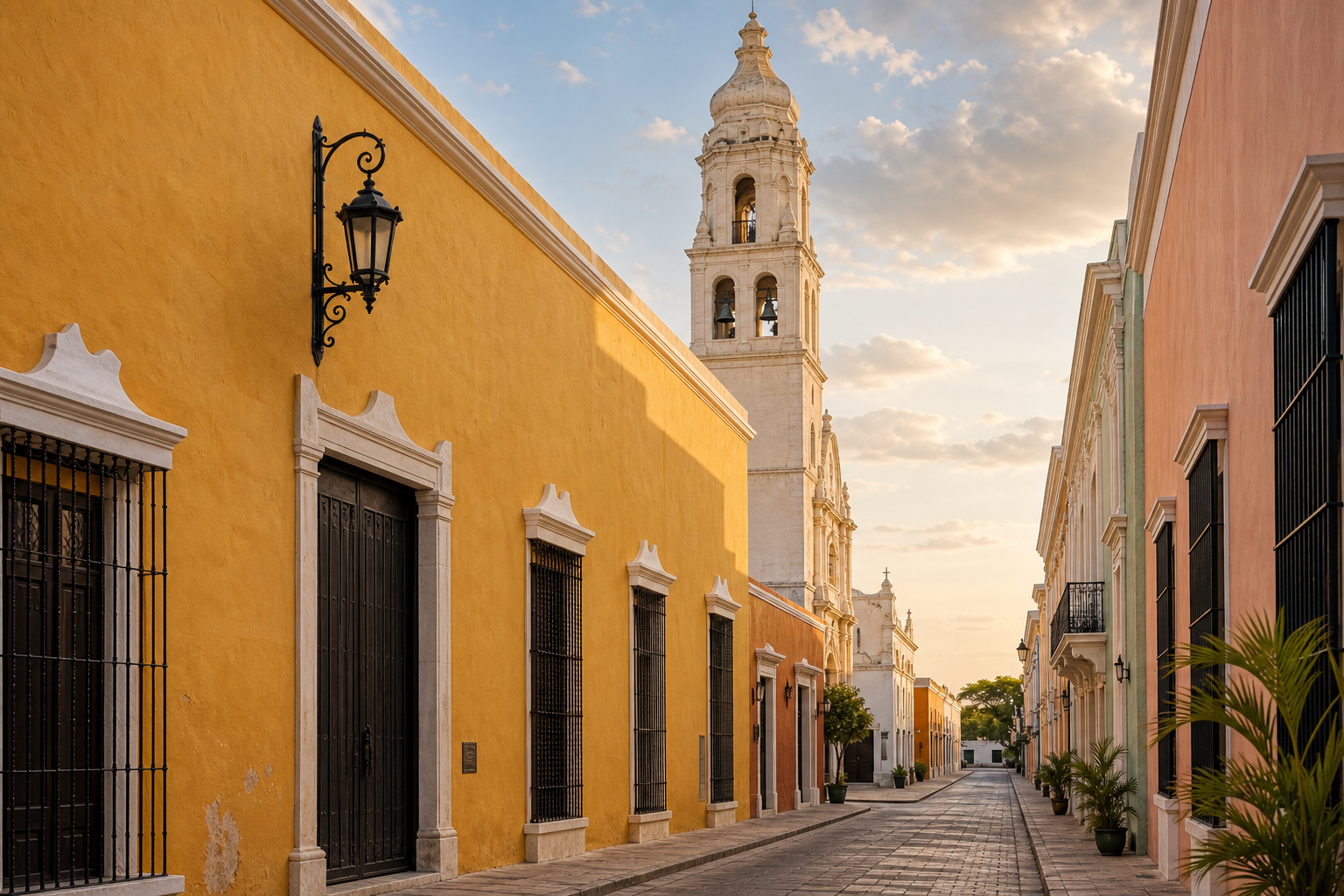
The fair is also a useful way to see a different side of San Francisco de Campeche. The walled historic centre is the city’s most recognisable landscape, with pastel façades, plazas, bastions, and narrow streets. San Román sits outside that compact colonial core and has its own history and neighbourhood identity. During the festivities, the connection between the old port city, its waterfront, its religious communities, and its wider state becomes especially visible.
 Cristo Negro procession on the waters of Campeche Bay
Expect a lively, sometimes noisy atmosphere. The fairground can be crowded, especially in the evening and on weekends. Heat and humidity remain important in August and September, and rain can change the feel of an outdoor event quickly. The programme may spread across the church area, public squares, the waterfront, and temporary event spaces, so do not assume that every activity takes place inside the historic centre.
When is the Feria de San Román?
The traditional celebration is associated with September, particularly the days around September 14, the feast connected with the Cristo Negro’s arrival in Campeche, and the final processions and religious events later in the month. The exact dates and programme vary each year. For 2026, current published announcements describe festivities from August 15 through September 27, with religious and cultural activities during that wider period. A separate fairground programme may begin or end on different dates, and individual concerts, rides, exhibitions, and processions can change after the first announcement.
Use those 2026 dates as a planning reference, not as a permanent annual timetable. The parish, the municipality, and local cultural authorities are the places to check before booking. Search in Spanish for Feria de San Román Campeche, Cristo Negro Señor de San Román, and programa San Román close to your travel date. Look for a dated programme rather than relying on an old blog post, a poster without an issuing organisation, or a social-media listing copied from a previous year.
The festival traditionally unfolds in phases. The religious calendar may begin with the descent or preparation of the image, followed by novenas, masses, visits, and devotional events. Cultural activities can include concerts, public dances, exhibitions, a traditional vaquería, talks, and local performances. Sporting events often form part of the municipal programme. The main days may culminate in maritime and land processions, with the Cristo Negro’s image or a protected representation involved according to the arrangements announced by the sanctuary.
Schedules are particularly fluid for outdoor activities. Weather, crowd-control measures, conservation decisions, road closures, and changes in the availability of performers can all affect the programme. The 2026 announcements also indicate a conservation-related change in how the original image participates outside the sanctuary. That is a reminder that a traditional event can preserve its meaning while adjusting its public rituals. Check the current parish notice before assuming that the image will appear in a particular procession or that visitors can approach it.
If you have only one evening, choose the activity that interests you most rather than trying to cover the whole fair. A mass or serenade will suit a visitor interested in devotion and local history. A public cultural programme is easier for a first-time visitor who does not speak much Spanish. The fairground is the most straightforward option for families and travellers who want food, rides, lights, and a busy evening. The final procession can be moving, but it also brings the largest crowds and requires more patience.
The Cristo Negro and the history of San Román
The Cristo Negro is the central reason the Feria de San Román exists. Local tradition dates its arrival in Campeche to 1565, when the image was brought by sea from Veracruz. Stories of the voyage describe a violent storm and a mysterious dark-skinned sailor who helped the ship reach port. As with many pilgrimage traditions, the story exists in several versions and belongs to religious memory rather than a single easily verified travel account. It remains essential to understanding why the image is connected so strongly with the sea, the port, and the people of Campeche.
The image is housed in the Santuario Diocesano del Cristo Negro Señor de San Román, commonly called the Iglesia de San Román. The church stands in the San Román neighbourhood, outside the walled historic core. The neighbourhood grew as the colonial city expanded, and its devotional life developed alongside the port, fishing communities, workers, and families living beyond the walls. Visiting the sanctuary gives you a better sense of the festival than seeing only a parade poster in the centre.
The dark colour of the crucifix has encouraged different explanations and legends. Some accounts emphasise the material and age of the sculpture, while others connect the image with devotional traditions surrounding dark Christs in Latin America. It is better to distinguish those explanations from local faith. A visitor does not need to decide which legend is “true” to understand that the Cristo Negro has become a symbol of Campeche identity, protection, and belonging.
Stories surrounding the image also include protection from storms, pirates, and danger at sea. Campeche’s history makes that connection understandable. The city was an important Gulf port, and its residents lived with the practical risks of hurricanes, maritime travel, disease, and attacks. The Cristo Negro’s annual celebration brings those layers together: Catholic devotion, colonial history, the memory of the sea, neighbourhood solidarity, and present-day civic festivities.
The church itself is not as visually monumental as the cathedral or the principal bastions, and that is part of the point. The sanctuary’s significance comes from continuity and devotion, not from the scale of the architecture. During a quiet visit outside the busiest festival moments, you may notice candles, flowers, written prayers, devotional objects, and people arriving to pray. During the fair, the same space becomes the anchor of a much larger public gathering.
 Calle 59 in Campeche’s historic centre
Dress for a church visit rather than a beach stop. Light, breathable clothing is practical, but shoulders and knees should be reasonably covered if you plan to attend a service. Silence your phone, do not use flash unless permission is clearly given, and avoid standing in front of worshippers during a prayer or procession. If the sanctuary is full, follow the direction of ushers and local volunteers.
The main traditions to look for
Religious services and the feast period
Masses, novenas, serenades, prayers, and special services form the foundation of the festival. The exact order changes, but the schedule normally grows more intense around the feast day and the final days. If you attend, arrive early enough to find a respectful place without pushing through the congregation. Spanish is the working language, and printed programmes may use Catholic terms that are unfamiliar to non-Catholic visitors. You can still follow the atmosphere without trying to participate in every response.
A service is not a performance. Do not walk around the church to find a better camera angle, and do not photograph communion or people who are visibly praying. If you are unsure whether a particular moment may be photographed, put the phone away. A respectful visit usually leaves a better impression than a large collection of intrusive images.
The descent and public veneration
The annual preparation and descent of the Cristo Negro traditionally mark the beginning of the wider San Román festivities. In past years, the image has been brought into a position where the faithful can venerate it more closely. Conservation requirements can change how this is done, and the 2026 programme includes a modification intended to protect the original object. Follow the current sanctuary instructions rather than relying on descriptions of earlier years.
Public veneration may involve flowers, candles, prayers, and devotional objects. Do not touch the image, altar, flowers, or offerings unless a church official explicitly invites you to do so. The people around you may have travelled a long way for this moment. Give them space and let the movement of the congregation set the pace.
Paseo por Mar
The Paseo por Mar, or maritime procession, recalls the Cristo Negro’s connection with the sea and the story of its arrival in Campeche. The precise route, viewing areas, boat arrangements, and public access vary. A maritime event is also dependent on weather and harbour safety, so a scheduled time can be adjusted even after publication.
If you watch from the waterfront, arrive early and stay behind barriers or the line indicated by organisers. Do not step onto docks, launch areas, or restricted sections for a closer view. The Campeche malecón is open and exposed, with little shade in some stretches. Bring water, sun protection, and footwear suitable for standing on uneven pavement. The sea breeze can make the heat feel more comfortable, but it does not replace sunscreen or hydration.
Paseo por Tierra and the final procession
The land procession brings the celebration into the streets. Depending on the year’s arrangements, the procession may include religious groups, music, flowers, banners, and a route connecting the sanctuary with nearby neighbourhoods or public spaces. Crowds form along the route well before the procession begins. Families may reserve a viewing place, and street access can become difficult for cars and taxis.
Stand at the edge of the crowd and keep doorways, ramps, and emergency routes clear. Do not join the procession unless you understand where it is going and are prepared to walk at the local pace. If you are travelling with children, agree on a meeting point before the crowd grows. A small bag, water, identification, and a charged phone are more useful than a large camera bag.
Serenades and music
The serenade to the Cristo Negro is one of the festival moments that blends public music with devotion. Programmes may include local musicians, choirs, orchestras, or popular performers. The setting can be crowded and the sound level high. Ear protection is useful for young children, and a folding seat is helpful for older visitors if organisers permit it.
A programme listing a concert does not necessarily mean that an international-style ticketed show is taking place. Some events are free and outdoors; others may be in a theatre, church, plaza, or temporary venue. Check whether access is first-come, whether a ticket is required, and whether bags are restricted. Do not buy a resale ticket without confirming that the event is genuinely ticketed.
Vaquería and traditional dance
A vaquería is a Yucatecan and Campeche-area tradition of music and dance with roots in rural festive culture. During festival programmes, dancers may wear regional dress, and the event can combine a procession, a parade of participants, live music, and a public dance. It is a social celebration rather than a staged folklore fragment separated from local life.
If you photograph dancers, avoid blocking the circle or standing in front of musicians. Visitors are sometimes invited to join, but do not assume that wearing a costume or entering the dance space is appropriate. Watch first, follow the invitation of organisers, and keep valuables secure while moving through a lively crowd.
Fairground rides, games, and food stalls
The temporary fairground is the most recognisable part of a feria for many families. Rides, lights, games, snacks, and merchandise can continue later into the evening than the religious programme. Safety standards and operating arrangements can vary between editions, so inspect a ride before deciding whether it is appropriate for your group. Children should remain with an adult, and loose items should not go onto rides.
Food stalls may offer regional antojitos, grilled foods, sweets, fruit, drinks, and snacks associated with Mexican fairs. Choose stalls with a steady flow of customers and food that is cooked hot in front of you. If you have a sensitive stomach, start with small portions and avoid combining several unfamiliar foods late at night. Carry cash in small denominations; card acceptance is not guaranteed at temporary stalls or games.
Where to stay in Campeche during the fair
The most convenient base is usually Campeche City, with the historic centre offering the clearest access to plazas, restaurants, the waterfront, and evening transport. San Román is outside the walled centre, so staying inside the walls does not mean that every event is walkable. It does mean you can combine festival activities with morning sightseeing and return to a familiar area between events.
The historic centre is a good choice if you want colonial architecture, walkable streets, and access to the malecón. Rooms can be more limited during major festival weekends, and noise may travel through old buildings. Read recent reviews for information about air conditioning, street noise, stairs, parking, and late check-in. Do not assume that a building’s historic character means it has the same facilities as a modern business hotel.
The area around San Román can reduce the distance to the sanctuary and some local activities, but inventory is more limited and the neighbourhood can feel quieter outside the festival. Check the exact map location, not only the phrase “near San Román.” A place that looks close on a city-wide listing may still require a taxi at night, especially if temporary road closures alter the normal route.
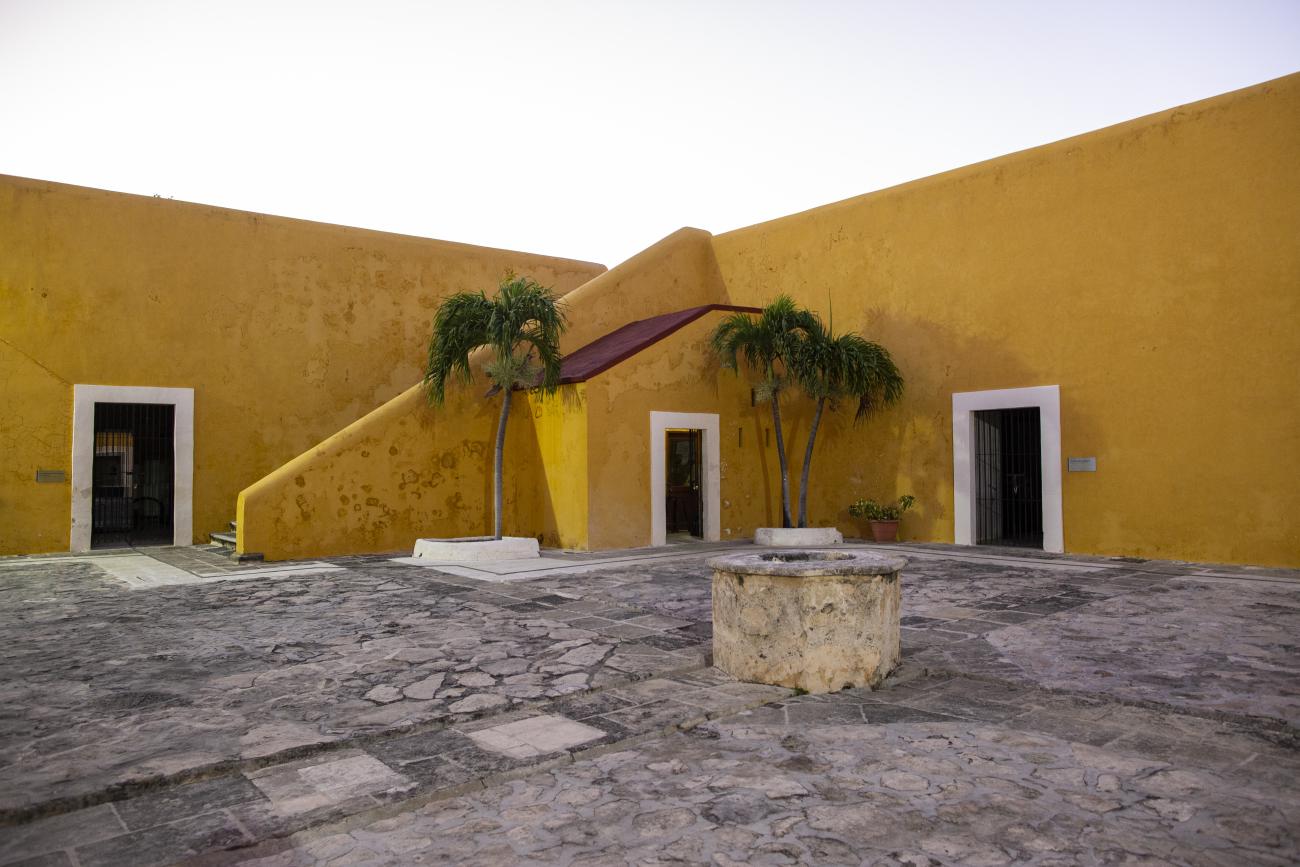 Fuerte de San Miguel in Campeche City
If you plan to attend the final weekend, compare current availability early through Campeche City stays on Booking.com and Campeche hotels on Trip.com. Check cancellation conditions because festival schedules and transport plans can change.
Do not book accommodation in Ciudad del Carmen or Champotón simply because it appears within Campeche State. Both are useful bases for other itineraries, but they are separate destinations and not practical substitutes for attending a late-night event in Campeche City. If you are combining the fair with a longer state trip, use Campeche City for the festival and plan a separate night for the coast, archaeological sites, or the south.
Getting to San Román and moving around the city
Campeche City is compact in its central areas, but festival traffic changes the normal calculation. A route that is easy in the afternoon can become slow when a procession closes a street or when families arrive at the fairground. Ask your accommodation about the current walking route and taxi pickup point on the day of the event.
Walking is practical between many historic-centre sights, but San Román and the waterfront event areas may be farther than visitors expect. Use a map in daylight to understand the route, then decide whether you want to walk back after dark. Heat, humidity, uneven pavement, and crowds can make a short distance tiring. Comfortable sandals with good grip or walking shoes are preferable to delicate footwear.
Taxis are a common option, but pick-up locations can change during closures. Ask the driver to confirm the destination before getting in, and keep the address or map pin of your accommodation available in Spanish. Ride-hailing coverage and availability can vary, so do not build a precise late-night plan around an app unless it is working when you arrive.
If you drive, avoid trying to park directly beside the sanctuary or a procession route. Temporary restrictions can make a familiar street inaccessible, and blocking a local entrance creates unnecessary problems. Leave the car at your accommodation or in a legal public parking area, then walk or take a taxi to the event. Never leave passports, cameras, or luggage visible in the vehicle.
The fair does not require a packaged tour. For travellers who want a broader city history outing, you can compare Campeche activities on GetYourGuide and Campeche experiences on Viator separately from attending the festival. These listings change, so confirm the meeting point and date before booking; a tour is not a replacement for checking the parish programme.
How to build a festival day
A comfortable festival day begins slowly. Use the morning for the historic centre, the city walls, a museum, or the malecón before the strongest heat. Return to your room during the afternoon if you need a rest, then leave with water, a small amount of cash, a light layer for rain, and a phone charger. This break is valuable because many public events begin in the evening and may run later than a normal sightseeing day.
For a religious programme, plan to arrive before the service and remain through the moments that matter to the congregation. For an outdoor cultural event, identify the nearest shaded street or indoor place where you can cool down. For the fairground, eat before the peak crowd if you are travelling with children and decide in advance how much cash you are willing to spend on games and rides.
Keep the afternoon flexible. Do not schedule an archaeological-site excursion that returns just minutes before a procession unless you are comfortable missing it. Edzná is the most practical major ruin excursion from Campeche City, but even a relatively straightforward day trip can be affected by heat, road conditions, and transport delays. The festival and an archaeological site deserve separate time rather than a rushed combination.
A simple two-day structure works well. On the first day, explore the historic centre, the cathedral area, the walls, and the malecón. In the evening, attend a cultural or fairground event. On the second day, visit the sanctuary during a quieter period, then choose the maritime or land programme if dates line up. Leave room for a meal, rain, and the possibility that the event location changes.
Families should decide how late they want to stay before entering the crowd. The fairground is stimulating, but tired children are vulnerable to heat and separation. Put a card with an adult’s phone number in a child’s pocket, choose a meeting point that is not inside a moving crowd, and take a photograph of the child’s clothing at the start of the evening. These are ordinary precautions for any large public event, not a reason to avoid the feria.
Food and everyday practicalities
The festival is a good time to try Campeche food, but it is not necessary to eat every meal at a temporary stand. Use the daytime for a sit-down meal in or near the historic centre, then sample one or two fair snacks in the evening. Regional seafood, corn-based dishes, pickled preparations, sweets, and spicy sauces are common parts of the wider Campeche food culture. Names, menus, and vendors change, so ask what an unfamiliar dish contains rather than guessing.
Carry drinking water and take shade breaks even when the evening feels cooler. The combination of walking, standing, salty food, alcohol, and humid weather can cause dehydration. If you drink, alternate with water and use a taxi rather than driving. Smaller neighbourhood shops may close or become difficult to reach during a procession, so buy essential medication and snacks before heading out.
Public toilets may be available near temporary events, but facilities can be basic or busy. Use a proper restroom before joining a procession and carry tissues and hand sanitiser. Parents should bring whatever their children normally need; do not assume that a temporary fair has a particular brand of nappies, formula, or medication.
Cash is useful for small food stalls, games, tips, and taxis. Keep money in more than one place and avoid displaying a large wallet. ATMs can be busy or temporarily empty during major weekends. Cards are more useful at established restaurants and accommodation than at a moving parade or temporary stall.
What to pack and wear
Pack for heat, rain, crowds, and a long evening. Lightweight clothing, a hat, sunscreen, insect repellent, comfortable shoes, a compact rain jacket, and a refillable water bottle are more important than formal festival clothing. A small cross-body bag that closes securely is easier to manage than a backpack in a dense crowd.
Bring a modest layer if you plan to spend time in air-conditioned accommodation or a church. For services, avoid beachwear and clothing with slogans that could be distracting. If you intend to photograph a procession, a phone is often less intrusive than a large camera with a long lens. Ask before photographing close-up portraits, children, pilgrims, or devotional acts.
Protect electronics from sudden rain. A waterproof pouch or two sealed bags can save a phone and passport when a tropical shower arrives. Do not stand under a fragile awning or crowd into a private doorway simply to stay dry. Move with the crowd’s instructions and wait until organisers reopen a route.
Photography and respectful visiting
The feria offers strong visual contrasts: church interiors, flowers, banners, boats, lights, colonial streets, and crowded public squares. The most respectful photographs usually show the setting rather than isolating a person in a vulnerable moment. Ask permission for portraits, particularly when a pilgrim is praying, carrying an offering, or visibly emotional.
Never climb barriers, enter a procession route, or use a drone over a crowd. Flash can be disruptive in a church and may damage the experience for worshippers even if it does not damage the object. Follow posted instructions about photography of the Cristo Negro. Conservation measures may restrict close access or photography in a given year.
If you publish images online, use accurate location labels. San Román is in Campeche City; it is not Calakmul, Edzná, Ciudad del Carmen, or a generic “Yucatán” destination. Clear captions help other travellers understand what they are seeing and prevent the festival from being separated from its local context.
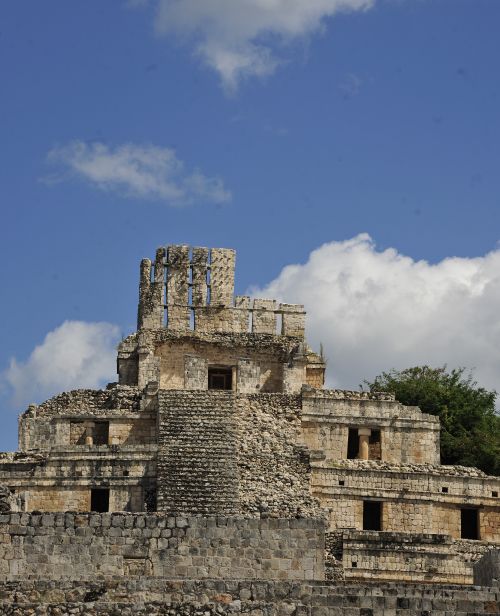 Edzná archaeological site near Campeche City
Is the Feria de San Román suitable for different travellers?
For culture and history travellers, the feria adds living context to Campeche’s churches, port history, and neighbourhoods. It is more rewarding if you read a little about the Cristo Negro before arriving and accept that religious meaning cannot be reduced to a list of attractions. A quiet sanctuary visit and one major public event are usually better than rushing between every activity.
For families, the fairground, lights, food, public music, and daytime cultural events can be enjoyable. The main challenges are heat, crowds, late nights, and noise. Choose an earlier event where possible, keep children hydrated, and leave before exhaustion turns a good evening into a difficult one.
For photographers, the festival provides architecture and movement, but access is not unlimited. Patience matters more than equipment. A wide view of the street, church, or waterfront may tell the story better than a close image of a worshipper. Respecting a no-photo request is part of being a responsible visitor.
For travellers seeking quiet, the festival may feel intense. You can still visit Campeche during the period by choosing mornings, staying away from the main fairground, and exploring the walls, museums, plazas, and malecón between scheduled events. Expect some noise and traffic near San Román even if you do not attend.
For travellers with limited mobility, ask the accommodation and organisers about the exact route, surface, seating, toilets, and accessible entrances before attending. Historic streets and dense crowds can make wheelchairs, walking frames, and strollers difficult to manoeuvre. A quieter viewing point is often more practical than the centre of a procession.
Common mistakes to avoid
The first mistake is treating an old programme as the current one. Dates and performers change, and a traditional event can alter its route or access rules. Check the latest parish or municipal announcement.
The second is assuming that the festival is one attraction in one place. The sanctuary, fairground, cultural venues, waterfront, and procession routes may be separate. Give yourself travel time and confirm the meeting point each day.
The third is arriving without water or cash. Heat and temporary stalls are predictable parts of the experience. A card and a phone app are useful, but neither replaces a small cash reserve and a bottle of water.
The fourth is treating the religious programme like a show. Do not interrupt prayer, push toward the altar, or photograph the image against instructions. Visitors can take part by listening, standing respectfully, and allowing local worshippers priority.
The fifth is trying to combine the festival with too many distant stops. Campeche State is large, and Calakmul, Ciudad del Carmen, Palizada, and the southern Maya sites require separate logistics. Stay in Campeche City for the feria, then continue your route after the celebration if you have enough time.
A practical decision about dates
Choose the central September period if your priority is the devotional heart of the celebration and the main processions. Choose an earlier or later programme date if you prefer concerts, exhibitions, or a less crowded fairground, but confirm the event you want before booking. If your trip is flexible, keep two or three evenings available rather than building the entire visit around one unconfirmed poster.
The most balanced visit combines one religious moment, one cultural or musical event, and one ordinary Campeche day. That mix lets you understand the festival without reducing the city to a fairground. Walk the historic centre in the morning, visit San Román with care, watch the waterfront if the maritime programme is scheduled, and eat locally without expecting every experience to be packaged for visitors.
Before leaving, check the final procession route, weather, transport arrangements, and any conservation notice for the Cristo Negro. Then arrive early, carry little, and let the local rhythm set the pace. The Feria de San Román is at its best when you come as a respectful guest to a celebration that belongs first to Campeche.