Hecelchakán is a useful northern Campeche stop for travellers who want more than a quick highway view of the state. The town sits on the historic Camino Real corridor between San Francisco de Campeche and Calkiní, with a central church, a small but important Maya archaeology museum, and a food culture that is closely tied to the wider Hecelchakán municipality. Nearby Pomuch adds a second, very different layer of local culture, while Bécal and Calkiní make natural extensions if you are travelling north.
This is not a destination built around a long list of ticketed attractions. Hecelchakán works as a compact town visit, a food stop, or a base for exploring several communities along northern Campeche’s old road. Its rewards are easy to miss if you arrive expecting a large colonial centre or a major archaeological zone. Allow time to walk slowly, check the current status of the museum before travelling, and treat the town as a living community rather than a collection of staged sights.
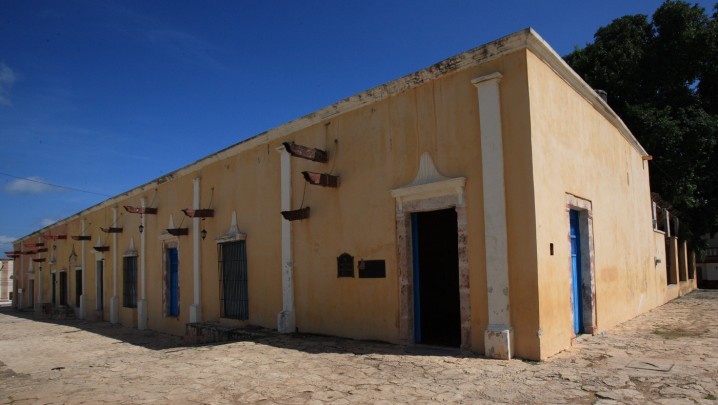 The historic building of the Museo de Arqueología Maya del Camino Real de Hecelchakán
Is Hecelchakán worth visiting?
Hecelchakán is worth visiting if your trip includes northern Campeche, especially if you enjoy local food, regional history, churches and smaller towns. It is an easy addition to a drive between Campeche City and Calkiní, and it gives context to the settlements that grew along the Camino Real rather than asking you to spend an entire day on one attraction.
The town is a good fit for travellers who want to:
- visit a museum focused on Maya objects from the Camino Real region;
- see a historic church and central streets without a large-city crowd;
- eat regional dishes prepared in local homes and kitchens;
- combine a town stop with Pomuch, Bécal, Calkiní or other northern Campeche communities;
- build a slower route between Campeche City and the Yucatán border;
- travel independently and make decisions based on what is open that day.
There are honest limitations. Hecelchakán is not a resort town, and visitors should not expect a continuous tourist infrastructure. Museum status can change. Some businesses do not publish reliable hours online. The most interesting food experiences may be tied to breakfast, market rhythms or local recommendations rather than a formal restaurant itinerary. Public transport is possible, but it is less flexible than having a car when you want to include Pomuch or several villages in one day.
The best visit is usually one part of a wider northern Campeche route. Give the central area enough time for the church, museum if open, a meal and a short walk. If you are travelling specifically for the museum, confirm the current operating status through INAH before leaving. The INAH museum information has shown different status messages across its pages, so an old timetable should not be treated as a guarantee.
Where is Hecelchakán?
Hecelchakán is in northern Campeche State, on Federal Highway 180 between Campeche City and Calkiní. The town is roughly an hour’s road journey from San Francisco de Campeche, although traffic, stops and the exact starting point affect the time. It is north of Tenabo and south of Pomuch and Calkiní. Bécal lies farther north, in the Calkiní area and close to the Campeche–Yucatán boundary.
This geography matters because Hecelchakán is sometimes treated as a day trip from Mérida or as a generic Yucatán Peninsula stop. For this guide, the town is firmly in Campeche State. Its history is connected to the route between Campeche and Mérida, but you do not need to cross into Yucatán to make a worthwhile visit.
The town centre is compact enough to explore on foot once you arrive. The museum is in the central area near the main square, and the church is also part of the central streetscape. Pomuch is close enough to combine by car or local transport, but the practical connection depends on the day’s available services. If you want to add Bécal, plan for a longer northbound route rather than assuming every stop can be fitted into a short afternoon.
A short history of Hecelchakán and the Camino Real
Hecelchakán’s significance comes partly from its position. During the viceregal period, a road for carts and carriages connected Campeche and Mérida. INAH describes this colonial route as the Camino Real, or Royal Road. It gradually lost importance as railways and paved roads changed the way people and goods travelled, but the corridor remains legible through its towns, churches, foodways and communities.
The modern highway is not a preserved colonial road that you can follow as a single walking trail. It is a contemporary transport route passing through places whose histories reach further back. That distinction helps set realistic expectations. You will not find a continuous line of original paving, interpretive signs and restored roadside structures. Instead, the route is best understood through several separate visits.
Hecelchakán’s museum gives the archaeological background, the church represents the colonial and continuing religious landscape, and nearby communities show how Maya and regional traditions remain part of daily life. Pomuch is known for distinctive cemetery customs and food traditions. Bécal is associated with jipi-japa fibre work and cave workshops. Calkiní and Dzitbalché broaden the picture of northern Campeche craft and community life.
The town’s central architecture should be read with care. Colonial buildings in the region have often been repaired, repainted or adapted, and not every old-looking wall has a published history. Notice the scale, materials, arcades, shade and relationship between the public square and religious buildings, but avoid turning every façade into an exact historical claim. Hecelchakán is a working town, not a museum set.
The Museo de Arqueología Maya del Camino Real de Hecelchakán
The Museo de Arqueología Maya del Camino Real de Hecelchakán is the town’s clearest formal attraction. INAH describes it as a local museum in a historic colonial house and identifies collections including Maya architectural elements, Jaina figurines, vessels and carved stone objects. The museum opened to the public in 1965, and its collection helps explain the archaeological landscape around the Camino Real rather than presenting Hecelchakán as an isolated colonial town.
The Jaina figurines are especially useful for visitors who have already seen large Maya pyramids and want to understand a different kind of archaeological evidence. Small ceramic figures can communicate clothing, posture, social roles and artistic conventions in ways that monumental architecture cannot. They should not be treated as simple portraits of every Maya person, but as objects shaped by the beliefs, skills and social world of the communities that produced and used them.
Architectural fragments and carved stones also change the way you look at the region outside the museum. A ruined or dispersed site is not only a set of surviving walls. Pieces may have been moved, reused, conserved or displayed in different contexts. Museum visits are valuable because they bring together objects that can otherwise seem disconnected when encountered along a road.
INAH’s published visitor information has listed the museum at Calle 18 and 20 in the central area, with services such as parking, toilets, a shop and a library. It has also published a Tuesday-to-Sunday schedule and admission categories. However, the separate INAH museum page has shown a temporary-closure message at times. Verify the current status, schedule and admission before building a route around the visit. Do not rely on a third-party page that has copied an older timetable.
If the museum is open, allow enough time to read the labels rather than rushing through for a photograph. Start with the building and its courtyard, then look at how the displays connect objects to Maya society, craft and architecture. Ask staff whether photography is permitted and follow any restrictions on flash. A small museum rewards attention: the experience comes from comparing materials and forms, not from the number of rooms.
If the museum is closed, the trip is not automatically wasted. Walk the central area, see the church from the public space, find a meal and continue to Pomuch or another planned stop. Do not enter a closed building or treat a locked door as an invitation to photograph through windows. Hecelchakán’s value is broader than one institution.
Check current visitor information for the Hecelchakán museum on INAH.
GuideBaluarte de la Soledad & Museo de Arquitectura Maya: Visitor GuideA practical guide to Baluarte de Nuestra Señora de la Soledad and the Museo de Arquitectura Maya in Campeche’s walled centre, including its fortifications, Maya collections, access, timing, and how to combine the visit with a walk through the historic city.Explore
Iglesia de San Francisco de Asís
The Iglesia de San Francisco de Asís is the major religious landmark in Hecelchakán’s centre. Travel references describe it as a Franciscan church with a long history in the town, and its stone towers make it easy to recognise from the surrounding streets. The building is part of an active religious community, so the correct way to visit is quietly and with awareness of services, prayer and local use.
The exterior is the safest place to begin. Look at the masonry, towers, openings, landscaping and relationship to the nearby public space. The building’s appearance is not the same as a fully restored European church. Weather, repairs and local materials are visible, and those marks are part of the building’s continuing life.
If the doors are open and no service is taking place, enter respectfully. Dress in a way suitable for a functioning church, keep your voice low and ask before taking photographs inside. Do not walk in front of worshippers for a better angle. If a ceremony is under way, return later. A visitor’s photograph is less important than the community’s use of its own church.
 The stone towers of Iglesia de San Francisco de Asís in Hecelchakán, Campeche
The church is best combined with the museum rather than treated as a separate half-day attraction. You can see the exterior, explore nearby streets, pause in the central area and then decide whether to continue north or return toward Campeche. Early morning and late afternoon are usually more comfortable for walking than the hottest part of the day, but services and local activity determine the atmosphere.
GuideBastions of Campeche: San Carlos, San Francisco, San Pedro, Santa Rosa & SantiagoExplore
The central square and everyday town life
Hecelchakán’s central area is where the visit becomes less about named attractions. Spend time observing how the square works: people crossing between shops and homes, families using shade, local transport moving through the town and residents carrying out ordinary errands. The point is not to photograph strangers as scenery. It is to understand the scale and rhythm of a Campeche town on the Camino Real.
A short walk is enough for most visitors. Wear shoes that cope with uneven paving, carry water and keep valuables secure without making the town feel like a security exercise. The streets can be bright and hot, and shaded seating may be limited. If you travel with children or older companions, plan a break rather than trying to cover every nearby block.
Town visits are more rewarding when you leave room for unplanned details. A small food stand may be active in the morning but closed later. A church door may be open for only part of the day. A local celebration, market rhythm or school release can change the feel of the square. These are not failures of tourism; they are reminders that the town is organised around residents rather than visitors.
Avoid assuming that every colourful façade, food stall or person in traditional clothing is available for a staged experience. Ask before photographing people, homes, workshops or ceremonies. Buy something when you genuinely want it, but do not turn a purchase into a condition for conversation. A calm, polite approach will take you further than a checklist.
What to eat in Hecelchakán
Food is one of the strongest reasons to include Hecelchakán in a northern Campeche route. The municipality is associated with regional preparations including cochinita pibil, made by slow cooking seasoned pork in an underground pit. The exact preparation, accompaniments and serving times vary by household and cook. Seek out a current local recommendation rather than assuming a restaurant mentioned online is still operating.
Morning is often the most practical time to look for substantial local food. Ask where residents are eating breakfast or where a current market-style service is available. In smaller towns, menus may be limited, and the most characteristic food may be made in batches rather than cooked to order. Arrive early, be flexible and carry cash for small purchases. Do not expect every place to accept cards.
Pomuch, within the same municipality, is particularly associated in travel coverage with baked goods and local food traditions. If you visit, treat bakery references as leads to verify locally rather than promises of a fixed opening schedule. You can ask residents, a driver or accommodation staff what is open that morning. This approach is more reliable than travelling across the town for a single item without confirmation.
Cochinita is not the only dish worth noticing. Look for regional pork and chicken preparations, handmade tortillas, pickled onions, tamales when available, sweet breads and chilled drinks suited to the heat. You may encounter food names that vary by family or locality. Ask what is in a dish, especially if you have allergies, and do not assume a familiar English translation captures the local version.
Food etiquette is straightforward. Wait to be invited before entering a preparation area, ask before photographing cooks or ovens, and avoid blocking a stall while deciding. If a vendor says a product is sold out, accept the answer. Travelling at a slower pace often means you get a better meal, not fewer experiences.
Pomuch as the best nearby addition
Pomuch is the most natural nearby extension to a Hecelchakán visit. It is a community in Hecelchakán Municipality, only a short distance away by road, and is known nationally for its distinctive Día de Muertos tradition of cleaning and rewrapping the bones of deceased relatives. The practice is intimate and family-led. Visitors should never treat it as a spectacle or assume that a cemetery visit gives permission to photograph open tombs, remains, families or ritual objects.
The strongest time to understand Pomuch’s public atmosphere is around Hanal Pixán and Día de Muertos, but this is also when sensitivity matters most. Public decorations, processions or community events may be visible, while family rituals remain private. Follow signs, local instructions and cemetery rules. If you are unsure whether photography is permitted, do not take the photograph.
Pomuch also fits Hecelchakán outside the festival period. The town’s church, streets and food traditions provide a more ordinary context for the community. You can visit without trying to recreate the atmosphere of late October. A respectful traveller learns about the tradition, supports local commerce where appropriate and accepts that some parts of the practice are not for public consumption.
 The church in Pomuch, Hecelchakán Municipality, Campeche
If you plan to combine Pomuch with Hecelchakán, allow more time than the map distance suggests. You may need to park away from a busy central area, wait for local transport or adjust your route around a ceremony or meal. A car gives the most control, but independent visitors can ask locally about buses or colectivos rather than assuming a service runs at a convenient tourist schedule.
Bécal, Calkiní and other northern connections
Hecelchakán is a practical link in a wider northern Campeche journey. Calkiní and Bécal are north along the same general corridor. Bécal is known for jipi-japa hats and other palm-fibre work, often woven in humid cave workshops. That is a distinct craft tradition from Hecelchakán’s archaeological museum and Pomuch’s cemetery customs, so the stops complement one another rather than repeating the same experience.
Bécal is close to the state’s northern edge. Check the direction carefully if you are driving, because the route can continue toward Yucatán. For a Campeche-focused day, Hecelchakán, Pomuch, Calkiní and Bécal can make a full schedule with significant driving and short visits.
 The hat monument in Bécal, Campeche, on the northern Campeche route
The monument is an orientation point rather than a substitute for meeting the craft. If you continue to Bécal, ask where a current artisan visit is possible and whether photography is permitted. A cave workshop is a working space, often connected to a household, so access should be treated as an invitation rather than an entitlement. Do not add every possible town simply because the highway connects them. Choose two or three experiences and leave time for food, heat and unexpected delays.
Calkiní is useful as a larger local reference point for the northern part of the state. It can help with transport, supplies and route decisions, while Bécal offers the more specialised craft visit. If a workshop in Bécal is not receiving visitors, you can still explore the town’s public spaces and ask about current artisan access without forcing a demonstration.
Campeche City is the most comfortable base for travellers who want more accommodation and evening options. Hecelchakán is better as a daytime stop unless you have a specific reason to sleep nearby. For a slower route, spending a night in the north can reduce driving, but check current accommodation availability before relying on small-town inventory.
How to get to Hecelchakán from Campeche City
By car, follow Federal Highway 180 north from Campeche City toward Calkiní. The road connection is straightforward, but driving time is only one part of the calculation. Heat, town traffic, food stops and the decision to add Pomuch or Bécal can turn a simple journey into a full day. Leave Campeche with enough fuel, water and phone charge, and do not assume that every smaller stop has a convenient card payment or an open service station.
By bus, ADO lists a Campeche-to-Hecelchakán route on its official booking pages. Check the current departure times and destination wording directly with ADO because schedules, boarding points and ticket availability change. Local or second-class services may also operate along the highway, but travellers should confirm where they depart and where they drop passengers. A bus can work well for Hecelchakán’s centre; it is less flexible if you want to move between several villages.
A taxi or private transfer provides more flexibility but should be agreed clearly before departure. Confirm whether the quoted service is one-way, round trip or includes waiting time. Do not treat an online estimate as a fixed local fare. For a multi-stop day, a rental car or a pre-arranged driver is usually easier than negotiating each leg after arrival.
Check current ADO departures to Hecelchakán.
Guided inventory for Hecelchakán itself is thinner than for Campeche City and Edzná. If you want a cultural day involving northern Campeche communities, search the live listings rather than relying on an invented tour title or a static blog description. A regional tour may depart from Campeche City or Mérida and combine Bécal, Pomuch or other stops. Read the current itinerary carefully and confirm what is actually included.
Compare Campeche City activities on GetYourGuide · See regional Campeche and Yucatán experiences on Viator.
How to plan a Hecelchakán day trip
A simple independent day can begin with an early departure from Campeche City, followed by Hecelchakán’s centre and the museum if its current status is confirmed. Continue with lunch, then choose Pomuch or a northbound stop. This gives you a coherent day without pretending that every attraction has fixed hours.
A longer route can include Hecelchakán, Pomuch and Bécal, but only if you start early and accept that each stop may be shorter. This works best for travellers with a car who are comfortable changing the order. Put the most time-sensitive activity first. If the museum is open only during a published window, start there. If your main goal is a workshop visit, contact or verify access before driving north.
A food-focused day should prioritise meal timing. Ask locally where a current preparation is available and build the museum or church around it, not the other way around. Food is often more rewarding when you accept the town’s rhythm. A late arrival can mean missing the dish you travelled for.
A culture-and-history day can pair Hecelchakán with the existing Camino Real guide route. Read the route as a sequence of communities, not as a single attraction. The museum explains Maya objects and regional archaeology; the church shows continuing religious architecture; the streets, kitchens and workshops show the present-day life of northern Campeche.
Where to stay
Most visitors will find it easiest to stay in Campeche City and visit Hecelchakán as a day trip. Campeche City offers a wider range of accommodation, restaurants and evening transport, and it is well placed for Edzná and other state routes. Staying in the city also avoids depending on limited late-day services in smaller towns.
A night near Hecelchakán can make sense if you are building a slow northbound itinerary or want to be close to Pomuch and Bécal early the next morning. Inventory is more limited, so check the exact location, check-in arrangements and recent reviews before committing. Do not assume that a listing described as “Hecelchakán” is in the central town; verify the map and transport implications.
Check current Hecelchakán-area rates on Booking.com · Compare Hecelchakán stays on Trip.com.
If you stay in Campeche City, choose the area according to your transport plan. The historic centre is convenient for walking and evening meals, while a location nearer the bus station may be useful for an early departure. Either way, confirm how you will reach the highway and whether your accommodation can arrange an early taxi. For a self-drive route, ask about parking before booking rather than assuming a central property has a private space.
When to visit Hecelchakán
Hecelchakán can be visited year-round, but the heat should shape your schedule. Start outdoor walking early, carry water and use the middle of the day for a museum, meal or rest when possible. The hottest hours can make a short central walk feel longer than expected.
The late-October and early-November period is culturally important because of Hanal Pixán and Día de Muertos. Pomuch receives particular attention during this season, but increased visitor interest does not turn private rites into public entertainment. If you visit then, be especially careful with photography, parking and crowd movement. Check whether any public programme has been announced locally, and do not assume that a published festival event gives access to family spaces.
Rain can change road conditions and the comfort of outdoor stops. Keep a flexible order and protect cameras and phones. After heavy rain, unpaved edges and cemetery paths may be muddy. Dry-season travel can be easier for road planning, but dust, glare and heat remain real considerations.
Before any visit, verify the museum, transport and accommodation details. Online information about small towns often remains visible after a temporary closure or schedule change. INAH is the best starting point for the museum; ADO is the best starting point for its own bus services; local accommodation staff can often give the most current advice about food and short connections.
Practical advice and local etiquette
Carry small cash, but avoid displaying it. Smaller food stalls and local transport may not accept cards. Download maps or save the key locations before leaving reliable coverage. Hecelchakán is not remote in the same way as Calakmul, but a day that includes several villages can still become inconvenient if your phone battery or data fails.
Dress for heat and for the places you are visiting. Lightweight clothing, a hat, sunscreen and closed shoes are useful. Bring a layer if you are sensitive to air conditioning on buses. For churches and cemeteries, choose clothing that does not treat a religious or memorial visit like a beach stop.
Ask before photographing interiors, artisans, graves, offerings, food preparation and people. In Pomuch, this is particularly important. Do not touch archaeological objects, church furnishings, woven goods or tools unless invited. Follow museum rules, including restrictions on flash, food and professional photography.
Use established roads and public paths. Do not enter a workshop, home, cemetery area or church space marked as private. If a person offers directions, confirm whether they are describing a public place or a private business. A polite “no, gracias” is enough when you do not want to buy something.
Avoid making claims about a local tradition based on one short encounter. Ask how a custom is practised today and recognise that families and communities may differ. This is especially relevant to Maya cultural traditions, which are living practices rather than a single performance for visitors.
Hecelchakán compared with nearby stops
Choose Hecelchakán over a direct drive if you want a manageable town visit with archaeology, church architecture and food. Choose Pomuch if the cemetery tradition and local food are central to your interest. Choose Bécal if your priority is jipi-japa craft and the relationship between weaving and humid cave workshops. Choose Calkiní if you need a larger northern Campeche stop for route decisions and local services.
Choose Campeche City if you want a fuller historic centre, more museums, a malecón and easier evening options. Choose Edzná if your main interest is a major Maya archaeological site. These are not substitutes so much as different layers of the same state. Hecelchakán makes most sense when you want to understand the settlements between the headline destinations.
The town also works well for repeat visitors. A first trip can focus on the museum and church; a later visit can be built around food, Pomuch or a slower northern route. Because the experience depends on current opening times and local life, returning travellers may notice more by moving slowly than by trying to add another distant attraction.
A realistic half-day itinerary
Leave Campeche City in the morning and travel north on Highway 180. Start in Hecelchakán’s central area. If the museum is confirmed open, visit it before the hottest part of the day and take time with the Jaina figurines, vessels, carved stone and architectural elements. Then walk to the church and view the surrounding public spaces respectfully.
Stop for a local meal or snack based on current recommendations. Ask what is available rather than insisting on a dish that may not be prepared that day. If you have time and transport, continue to Pomuch for a short community visit. Outside the Hanal Pixán season, keep the focus on the town and food rather than expecting a public cemetery ritual.
Return to Campeche with a buffer for traffic and an unhurried meal. Do not add Bécal to this half-day unless you have verified the route and accept a very compressed visit. Hecelchakán is more enjoyable when you treat the central stop as the destination, not as a box to tick between two larger attractions.
A realistic full-day northern Campeche route
For a full day, leave early and choose the order according to the activity that matters most. A Hecelchakán–Pomuch–Bécal route can work by car, but distances and waiting time add up. Begin with the museum if it is open and your priority is archaeology. Continue to Pomuch for food or community context, then travel north to Bécal for craft.
At Bécal, remember that a cave workshop is not guaranteed to be open. Ask respectfully about current access, and accept an alternative such as a public craft display or shop if a family is not receiving visitors. Allow time to buy only if you have inspected the weave, asked about care and genuinely want the piece.
If the museum is closed, change the day rather than filling the gap with unsupported claims. Spend more time on food and town streets, or continue to Bécal and Calkiní. The best itinerary is the one that remains honest when one attraction is unavailable.
Final recommendation
Use Hecelchakán as a northern Campeche context stop, not as a rushed checklist attraction. Confirm the museum before travelling, begin early, see the Iglesia de San Francisco de Asís respectfully, eat according to the town’s current rhythm and decide whether Pomuch or Bécal suits your interests. A car gives the most freedom, but ADO and local services can work for a focused centre visit when you verify the details first. If you give the town a few unhurried hours, Hecelchakán makes the Camino Real feel like a living route rather than just a line on the map.
Frequently asked questions
Is Hecelchakán in Campeche State?
Yes. Hecelchakán is a town and municipality in northern Campeche State, on the route between Campeche City and Calkiní.
Is the Hecelchakán museum open?
The status can change. INAH has published visitor details and has also displayed temporary-closure information on a separate page. Verify directly with INAH before planning your day around it.
Can Hecelchakán and Pomuch be visited together?
Yes, they are close enough to combine, especially by car. Allow extra time for local transport, meals, parking and respectful visits during Día de Muertos season.
Is Hecelchakán a good overnight base?
It can work for a slow northern route, but accommodation is more limited than in Campeche City. Check the exact property location and current check-in arrangements before booking.
What should travellers avoid doing in Pomuch?
Do not photograph or approach private cemetery rituals, open remains, families or offerings without clear permission. Treat the tradition as a living family practice, not a tourist performance.
How long should you spend in Hecelchakán?
A focused centre visit can take a few hours. Add more time if you plan to eat locally, visit the museum, include Pomuch or continue to Bécal and Calkiní.

