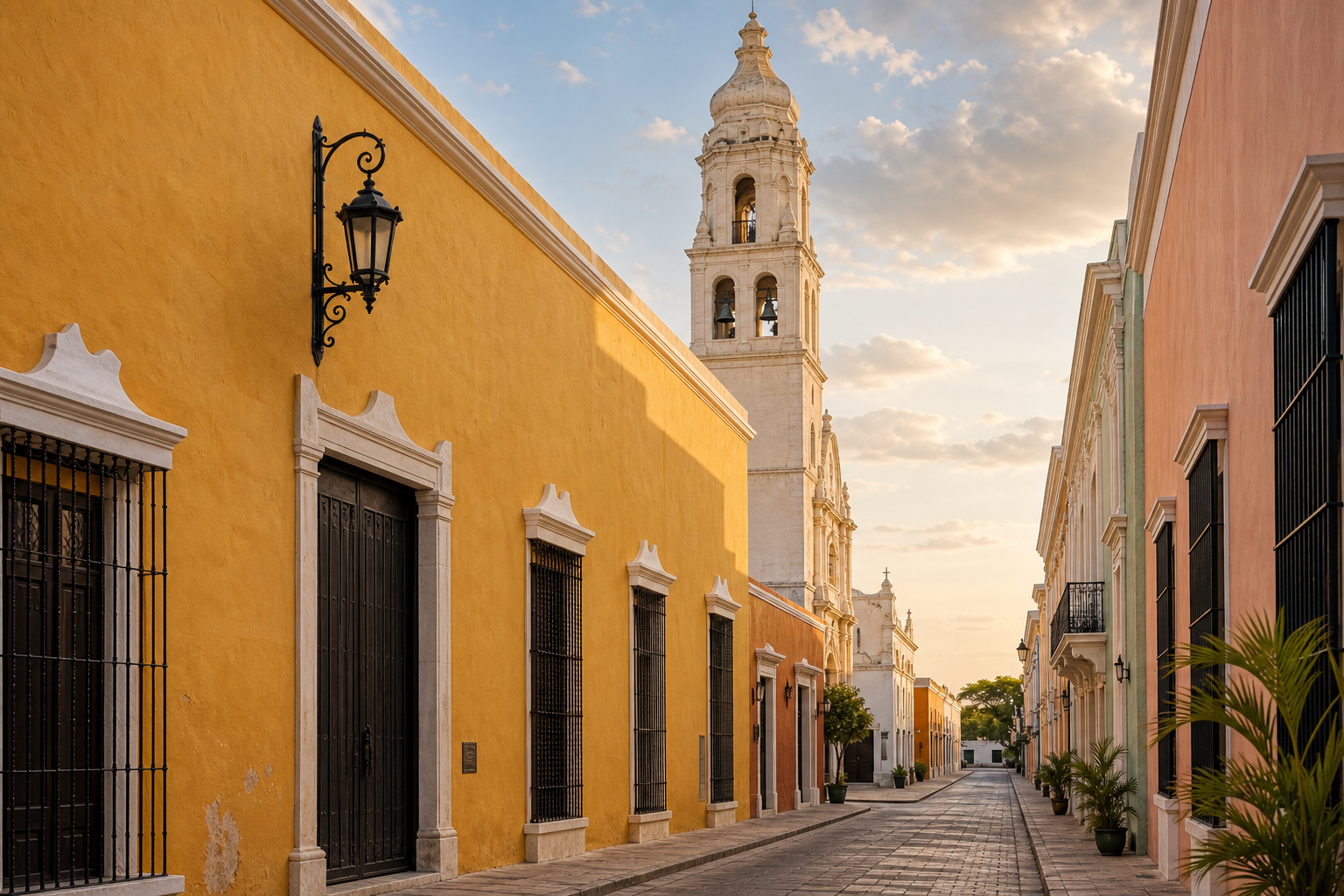

Why visit the Iglesia de San Román?
The Iglesia de San Román is the sanctuary of the Cristo Negro Señor de San Román, the most important devotional image in Campeche State. It stands in the San Román neighbourhood of San Francisco de Campeche, outside the compact walled centre and close to the city’s historic relationship with the Gulf. For travellers, the visit offers something that the better-known forts and pastel streets cannot quite provide: a chance to see a living place of worship whose story is tied to fishermen, sailors, storms, the port, and generations of local families.
The church is not a grand cathedral and it does not need to be. Its importance comes from continuity. The chapel’s beginnings date to the sixteenth century, and the Cristo Negro has been associated with the sanctuary since 1565. Local tradition tells of an image brought by sea from Veracruz during a dangerous storm. Different versions explain the voyage in different ways, and the miraculous elements belong to religious memory rather than a fully documented shipping record. That distinction does not make the story less useful. It explains why the crucifix is understood locally as both a sacred image and a protector connected with the sea.
A visit is usually short if you are only looking at the façade, but it becomes more meaningful when you allow time to notice the devotional setting, learn how San Román developed beyond the walls, and understand the relationship between the church and the annual Feria de San Román. During a quiet weekday, you may find a calm sanctuary with people praying. During the festival period, the same neighbourhood can be busy with processions, music, food, rides, and visitors.
 Cristo Negro Señor de San Román in Campeche
Plan it as one stop in a wider Campeche City day, not as an isolated attraction that justifies crossing the state. It pairs naturally with the historic centre, the waterfront, San Román’s streets, or one of the city’s fort museums. The church is also a good choice for travellers who want to understand Campeche beyond the UNESCO postcard: religion, neighbourhood life, and port history are all present here.
GuideBastions of Campeche: San Carlos, San Francisco, San Pedro, Santa Rosa & SantiagoExplore
Where is San Román in Campeche City?
San Román is one of Campeche City’s traditional neighbourhoods and lies outside the old defensive walls. The church is not in the central square and should not be confused with the cathedral in the walled centre. From the historic core, the journey is short by taxi, but the exact time depends on traffic, weather, and where you start. It is possible to walk, particularly if you enjoy seeing how the colonial city changes beyond the walls, although the heat and broad roads make a taxi more practical for many visitors.
The neighbourhood’s geography is part of the story. Colonial Campeche was not only a set of fortified streets. People lived and worked beyond the walls, and San Román became associated with Indigenous communities, fishermen, mariners, and families connected to the port. The sanctuary’s location helps explain why the Cristo Negro developed a strong maritime identity. When the image is taken through the city during the annual celebrations, the route connects church, neighbourhood, waterfront, and bay rather than remaining inside the tourist centre.
Give a taxi driver the name Iglesia de San Román or Santuario del Cristo Negro Señor de San Román. Showing the Spanish name on your phone is useful. If you are using a ride app, check that the pin lands at the church and not at another San Román reference. For the return, you can walk toward a busier avenue or arrange a pickup. Do not assume a taxi will be waiting outside, particularly during a quiet part of the day.
A rental car is unnecessary for this stop alone. If you already have one for Edzná, the forts, or a Campeche State road trip, use navigation and allow time to find legal parking without blocking the church frontage. The historic centre is easier on foot, and San Román is best treated as a separate neighbourhood stop rather than an extension of the pedestrian circuit.
The city’s main bus network may be useful to residents, but route names and stopping patterns can change. Visitors should confirm locally rather than rely on an old map or a generic online route. Ask at your accommodation which current route passes closest to San Román, and remember that a stop on a main road can still leave you walking in full sun. The final approach is more comfortable with water, a hat, and time rather than a rushed connection.
The history of the church and the Cristo Negro
Accounts from the Instituto Nacional de Antropología e Historia place the beginning of the San Román chapel in 1563, with the Cristo Negro entering the sanctuary in 1565. The early church belonged to a city still establishing itself as a Spanish colonial port. Campeche’s seafront position brought trade and contact, but it also brought storms, disease, shipwreck risk, and the threat of attacks. A devotional image connected with a difficult sea crossing could become deeply rooted in that setting.
The traditional arrival story says that a crucifix was brought from the Gulf coast region of Veracruz. A violent storm threatened the voyage, yet the vessel carrying the image reached Campeche. In some versions, a dark sailor appears or takes control of the ship; in others, the emphasis falls on the survival of the image and crew. Treat this as a tradition with several tellings. The story’s value is cultural: it shows how Campeche’s maritime history and Catholic devotion have been narrated together over centuries.
The title Cristo Negro does not mean that visitors should approach the image as an exotic curiosity. It is a name of devotion, identity, and local familiarity. The crucifix is venerated by Campechanos, pilgrims, and visitors who come to give thanks or ask for protection. The image’s dark appearance has prompted legends and explanations, but those should not replace attention to the people who maintain the sanctuary and the religious practice that gives it meaning.
The sculpture is wooden, assembled and carved, and conservation work is necessary because of its age and the humid coastal climate. In January 2026, INAH specialists began a new intervention after the image was lowered from the principal altar for study and restoration. The exact public arrangements can change while conservation work is underway. If seeing the original image is central to your visit, check current parish or INAH information shortly before travelling. Never assume an old photograph or an earlier festival programme describes the current display.
The church’s history is also the history of a neighbourhood beyond the walls. San Román was not simply a religious building placed in an empty suburb. It developed in relation to people who worked around the port and the bay. That helps explain the annual maritime procession and the unusual emotional force of the sanctuary. The Cristo Negro is both a Catholic image and a marker of Campeche’s relationship with water, travel, danger, and return.
What you will see inside
The interior experience depends on the service calendar, conservation arrangements, and the number of worshippers present. On a quiet visit, the first impression may be the altar and crucifix, followed by candles, flowers, devotional gifts, and small signs of regular community use. On a busy day, you may have only a brief view before moving with the congregation. Both are valid visits. Do not measure the church by how long you can stand in front of the image.
Look at the building as a functioning sanctuary rather than a museum display. The worn surfaces, additions, religious objects, and changing flowers are part of an ongoing place. A guidebook can describe dates, but the people who enter to pray show why the church remains important. If you do not share the faith, quiet observation is enough. There is no need to perform belief or to turn a service into a photo opportunity.
The image has a large presence, and its scale helps explain the devotion around it. Yet details can be difficult to see from a distance or when the altar is busy. Do not use flash, move into a restricted area, or touch the base, clothing, cross, or offerings. If a barrier is in place, it is there to protect the object and the worshippers. Ask a church volunteer before photographing an interior detail.
The façade and exterior approach deserve attention too. San Román has a different visual relationship with the city than the cathedral: it is a neighbourhood church, not the centrepiece of the walled plaza. Observe the street, the scale of nearby buildings, and the way the sanctuary sits within ordinary city life. This is one reason the stop complements a walk around the fortified centre rather than competing with it.
 Iglesia de San Román in Campeche’s San Román neighbourhood
If the church is closed when you arrive, you can still understand the neighbourhood from outside, but do not press against doors or enter during a private event. Opening and service times are not always presented consistently online. A current parish notice is more reliable than an old visitor page. The sanctuary may also alter access for weddings, funerals, festival preparations, or conservation work.
How to behave during a visit
Dress as you would for any active church. Campeche’s heat makes lightweight clothing sensible, but beachwear is not appropriate for a sanctuary. Cover shoulders and upper legs reasonably, especially if you plan to attend Mass. Carry a light layer if you are moving between hot streets and a cool interior, but avoid large bags that obstruct pews or aisles.
Keep your voice low, silence notifications, and do not make phone calls inside. If a service is beginning, move to the side or wait outside rather than walking through the congregation. Stand where local worshippers stand, and follow any instructions from ushers. If you do not know when to sit or stand, remaining quietly at the back is perfectly acceptable.
Photography is a privilege, not the purpose of the visit. Ask before photographing people, altar details, or devotional offerings. Never photograph someone who is visibly praying without permission. Avoid flash, tripods, and staged portraits. Professional or commercial photography may require separate permission. The same applies to filming a procession: stay out of the route and do not make participants repeat an action for the camera.
Religious objects may be protected for conservation reasons. Do not touch the crucifix, candles, flowers, clothing, or barriers. Avoid placing personal objects at the altar unless a local church representative tells you how to do so. If you bring a donation, use an official box rather than handing money to an unknown person.
Families can visit, but prepare children beforehand. Explain that this is a church where people are praying, not an interactive museum. A short quiet visit works better than expecting young children to wait through a long service. During the fair, the outside atmosphere is louder and more relaxed, but the sanctuary still requires the same respect.
Visiting during the Feria de San Román
The Feria de San Román is the church’s busiest public context. It generally occupies a period around the September celebrations of the Cristo Negro, with religious services, processions, cultural programmes, food, music, rides, and neighbourhood gatherings. Dates and activities change each year. The exact programme should be checked through the parish, municipal announcements, and current local notices before you book around it.
The festival is not a single attraction with a guaranteed timetable. The religious calendar may include novenas, special Masses, serenades, a descent or public presentation of the image, and processions. Civic events can be organised in different locations and may change because of rain, crowd control, conservation decisions, or performer availability. A poster from a previous year is useful for understanding the tradition but not for planning a current visit.
One of the most distinctive traditions is the connection between the Cristo Negro and the bay. A maritime procession or paseo por mar recreates the image’s relationship with its legendary arrival. The event can draw large crowds along the waterfront and around departure or viewing points. Arrive early if you want a clear view, but do not enter restricted areas or crowd boat crews. The safest and most respectful position is usually the one assigned by organisers or local police.
 Cristo Negro procession on the waters of Campeche Bay
The fairground has a different mood from the sanctuary. Families may come for rides, food stalls, games, music, and socialising rather than for a full religious programme. That does not make it separate from the faith at the centre. The fair is one way the neighbourhood welcomes people and marks its calendar. Visitors can enjoy the public atmosphere while understanding that the most important moments may be private or devotional.
Expect heat, humidity, sudden rain, loud sound, and uneven crowd movement. Wear shoes that can handle wet pavement, carry only what you need, and keep a phone or wallet secure in dense areas. Cash is useful for small purchases, but do not assume every temporary stall accepts cards. Avoid inventing a list of food vendors or rides: temporary participants change from year to year, and current local information is the right way to identify what is operating.
If you want photographs, daylight outside the sanctuary is easier than the crowded evening programme. During a procession, photograph the overall movement rather than pushing forward for a close-up. Ask before photographing families carrying candles or devotional images. People may be attending for personal reasons, and not everyone wants to appear in a travel article or social-media post.
GuideFeria de San Román, Campeche: Dates, Traditions & Visitor GuideExploreHow much time should you allow?
For the church alone, allow about thirty minutes to an hour, depending on whether the sanctuary is open, a service is in progress, and how much context you want to absorb. That estimate is not a promise about access. A short visit may be appropriate if worship is underway; a longer visit is possible during a quiet period when you can observe the architecture and neighbourhood respectfully.
A practical half-day combines San Román with the historic centre or the malecón. Visit the church first, then take a taxi to the walled city for the main square, cathedral, Calle 59, and the walls. Alternatively, begin in the centre during the cooler morning, stop at San Román around midday, and continue toward the waterfront. The best order depends on heat, services, and your accommodation.
Do not combine the sanctuary with Edzná as if both were casual nearby stops unless you have checked your transport and site timing carefully. Edzná lies outside Campeche City and needs a separate road plan. The same applies to Fuerte de San Miguel, which is a city attraction but not part of the walk between the cathedral and Calle 59. A taxi-based day is easier if you group neighbourhood stops geographically.
Travellers with mobility limitations should ask locally about the current entrance, thresholds, steps, and usable seating. Historic churches can contain changes in level and narrow areas even when the principal entrance appears straightforward. During a festival, temporary barriers and crowds may make movement harder. Visiting outside the busiest procession windows usually gives you more space and a calmer approach.
Where to stay in Campeche City
San Román is easy to visit from accommodation in the historic centre, and most first-time travellers will find the walled city the simplest base for restaurants, evening walks, museums, and transport connections. Staying outside the walls can be quieter or more convenient for a car, but it may mean using taxis for every evening plan. Choose the area according to the whole itinerary rather than the church alone.
For current availability, check Campeche City stays on Booking.com and compare Campeche hotels on Trip.com. These are search inventories rather than recommendations of a particular property. Read the current map, cancellation terms, air-conditioning details, and recent reviews. In Campeche’s warm climate, reliable cooling and a practical location matter more than a decorative description.
If you are attending the Feria de San Román, book with flexibility when possible and confirm how late you can return to the property. Festival noise can extend beyond the church area, and roads may be busier or temporarily restricted. Travellers who need quiet sleep should not assume that a central address will remain quiet during the celebration. Conversely, staying farther away can make the return journey slower after a procession.
The sanctuary itself is not a reason to choose a named hotel in San Román. Avoid treating every lodging listing near the neighbourhood as a local recommendation unless you have checked its current status and facilities. A city-centre base with clear transport access is usually the more useful choice for a short stay.
Pairing the church with other Campeche sights
The historic centre is the obvious companion. The cathedral and Plaza de la Independencia show the formal colonial centre, while San Román shows a neighbourhood sanctuary beyond the walls. Walk the two areas separately and notice the change in scale. In the centre, the streets and façades are arranged for a compact visitor circuit. Around San Román, the church is embedded in everyday life.
The malecón adds the Gulf context that runs through the Cristo Negro story. The waterfront is not the same place as the sanctuary, and it should not be used as a substitute for visiting San Román. Together, however, they help explain the maritime references in the festival. A visitor can move from the church to the bay and understand why a seafaring arrival remains central to local memory.
The city’s forts and museums provide a different historical lens. Fuerte de San Miguel focuses on defence and Maya archaeology, while the bastions inside the walls reveal how the port protected itself. The church is not a fort and should not be described as one. Putting these places side by side is useful because Campeche’s identity was shaped by faith, trade, war, archaeology, and the sea at the same time.
For a guided context walk, compare current Campeche City tours on GetYourGuide and see Campeche sightseeing options on Viator. Inventory changes, and a general city listing may not include the Iglesia de San Román. Confirm the route, language, meeting point, and whether a church visit is actually included before booking. If no suitable product is operating, an independent visit with a careful reading of current local information is better than assuming a tour covers the sanctuary.
Planning the visit around a city day
The easiest rhythm is to make San Román the cultural stop between two outdoor parts of Campeche City. Visit the sanctuary before the strongest afternoon heat, take a break in the walled centre, and walk the malecón later when the light softens. This avoids asking one small church visit to carry an entire day and leaves enough flexibility if a service, rain shower, or closed door changes your timing.
A short Spanish phrase helps: ¿Está abierta la iglesia para visitantes? asks whether the church is open to visitors, while ¿Hay misa ahora? asks whether Mass is taking place now. You do not need fluent Spanish, but greeting people and waiting for an answer makes the visit smoother. If staff or parish volunteers indicate that the interior is unavailable, accept that decision and enjoy the exterior and neighbourhood without treating it as a problem to overcome.
Bring a small amount of water, sun protection, and a charged phone for navigation. A large camera bag is inconvenient in a crowded sanctuary. If you are visiting during the festival, carry less than usual and decide in advance where you will meet companions if mobile service becomes unreliable in a dense crowd. These small choices matter more than a tightly timed attraction list.
What to know about current conditions
The most important practical fact is that access and display arrangements can change. A sanctuary is an active parish, not a public museum with a permanently fixed visitor schedule. Services, weddings, funerals, restoration, feast preparations, and local decisions can affect what you see. Check for a current notice close to the date of travel, especially if the original Cristo Negro is the central purpose of your visit.
Do not rely on a precise opening-hours claim from an old blog. Search the parish’s current announcements or ask your accommodation to confirm whether the church is open for visitors outside services. If you arrive during Mass, attend quietly if appropriate or return later. A closed door is not a failure of the place; it is a reminder that religious buildings serve their congregation first.
Campeche’s coastal weather affects the whole experience. The hottest part of the day can make the walk from the centre tiring, while rain can turn festival streets slippery and alter outdoor events. Early morning and late afternoon are generally more comfortable for neighbourhood walking, but the actual church schedule should decide your timing. Carry water and protect electronics from rain.
Security is the same practical matter as elsewhere in a busy city: keep valuables out of sight, use official transport arrangements, and avoid wandering unfamiliar streets late at night simply because a map shows a short route. During a large celebration, stay with the public flow and agree on a meeting point if travelling with children. The church is a local place of worship, not a reason to ignore ordinary city awareness.
Is it worth visiting?
The Iglesia de San Román is worth visiting if you want to understand Campeche as a lived city rather than only a preserved historic centre. The architecture alone will not fill an entire day, and travellers looking for a conventional museum may find the visit brief. Its value is the combination of place, history, devotion, and maritime tradition. The Cristo Negro explains a part of Campeche that cannot be reduced to walls, forts, or restaurant streets.
It is especially suitable for travellers interested in culture and history, religious heritage, photography conducted respectfully, and local festivals. Families can visit outside services, provided children understand the setting. It is less suitable as a rushed stop between unrelated attractions or as a guaranteed photo opportunity. During restoration or a crowded festival, the experience may be different from what an older article describes.
Approach the sanctuary with modest expectations and attention. Read the story before you arrive, check current access, and let local worshippers set the pace. Then connect the church with San Román’s neighbourhood, the bay, and the walled city. That gives the visit its proper scale: not a standalone monument, but one of the places where Campeche’s religious and maritime history is still present in ordinary city life.
For most visitors, the best plan is to visit outside the busiest service or procession, spend a quiet half-hour at the sanctuary, and then continue to the historic centre or malecón. If your trip coincides with the Feria de San Román, allow extra time, follow the current programme, and treat the procession as a community event rather than a staged attraction. That balance makes it possible to enjoy the public celebration while respecting the people for whom San Román is home.
A respectful final recommendation
Visit the Iglesia de San Román when you have enough time to be present, not when you are trying to collect one more landmark. Confirm current access, dress for a church, keep photography discreet, and learn the difference between the documented history and the traditional legend of the Cristo Negro. Pair the sanctuary with the waterfront and the walled city so the sea, neighbourhood, and colonial port fit together. Campeche’s most meaningful places often reveal themselves through those connections, and San Román is one of the clearest examples.
Before your day out, check current Campeche activities on GetYourGuide or browse Viator’s local inventory only if you want a guided context; otherwise, use the parish’s current notices and make the visit independently. The right approach is simple: arrive respectfully, observe quietly, and leave room for the sanctuary to remain a church rather than turning it into a backdrop.