
Choosing where to stay in Campeche State is straightforward once you know your base. The state is compact enough that you can reach most highlights — Edzná, Calakmul, the coast — as day trips from two main hubs. Your accommodation decision comes down to which hub fits your trip, what kind of building you want to sleep in, and how much you plan to spend.
This guide covers the four main accommodation zones: the walled capital (San Francisco de Campeche), Ciudad del Carmen and the coast, the Calakmul/Xpujil jungle corridor, and the hacienda estates south of the capital. In every range, Campeche delivers more character per peso than most Mexican states — the colonial architecture is not decorative wallpaper here, it is the actual structure of the hotels.
San Francisco de Campeche — The Walled Capital
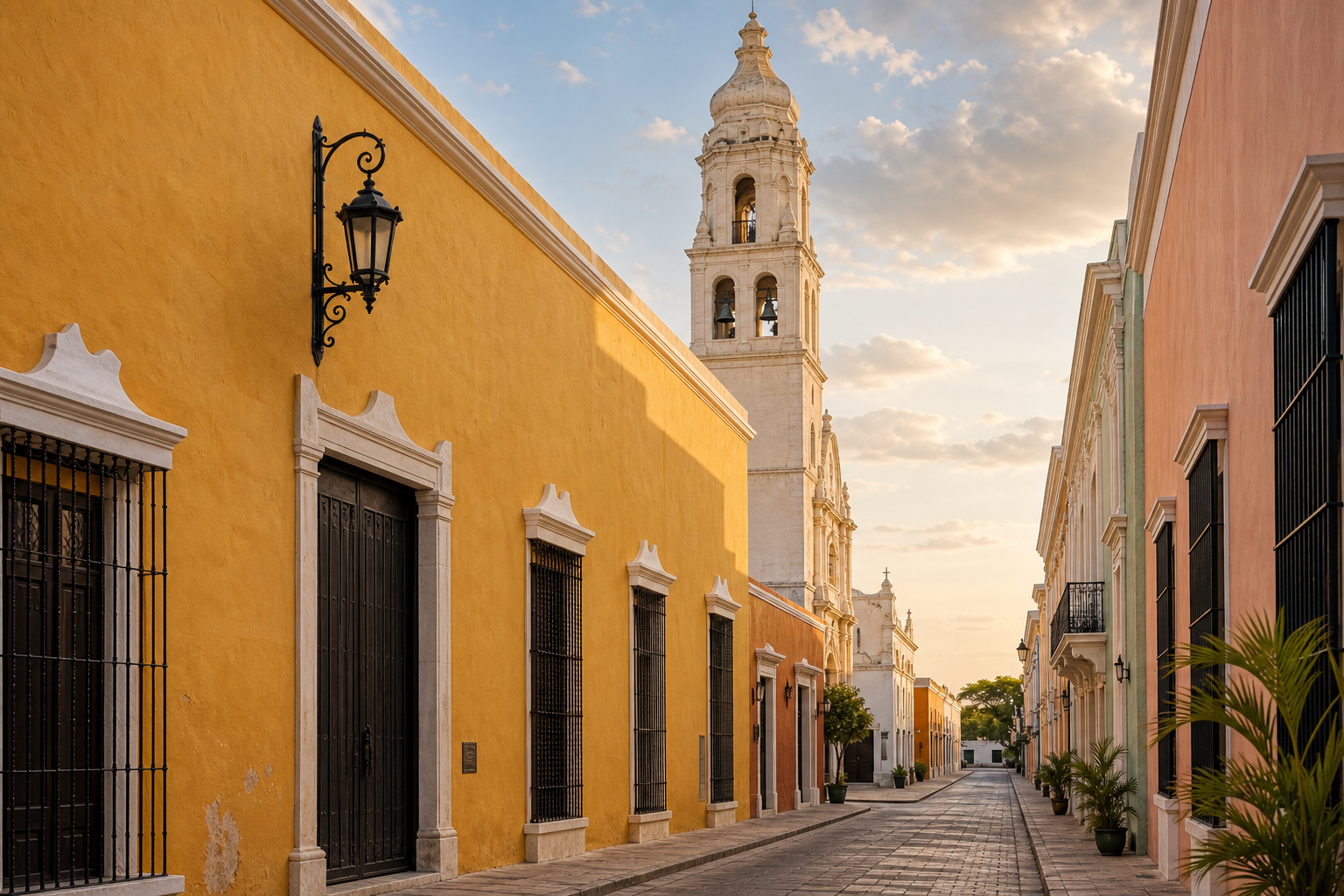
The historic centre is the default base for good reason. Everything — the cathedral, Calle 59, the malecón, the morning market, the bastion museums — sits within a tight grid inside the old fortress walls. You walk everywhere. There is no need for taxis unless you are heading to the airport or the highway bus terminal.
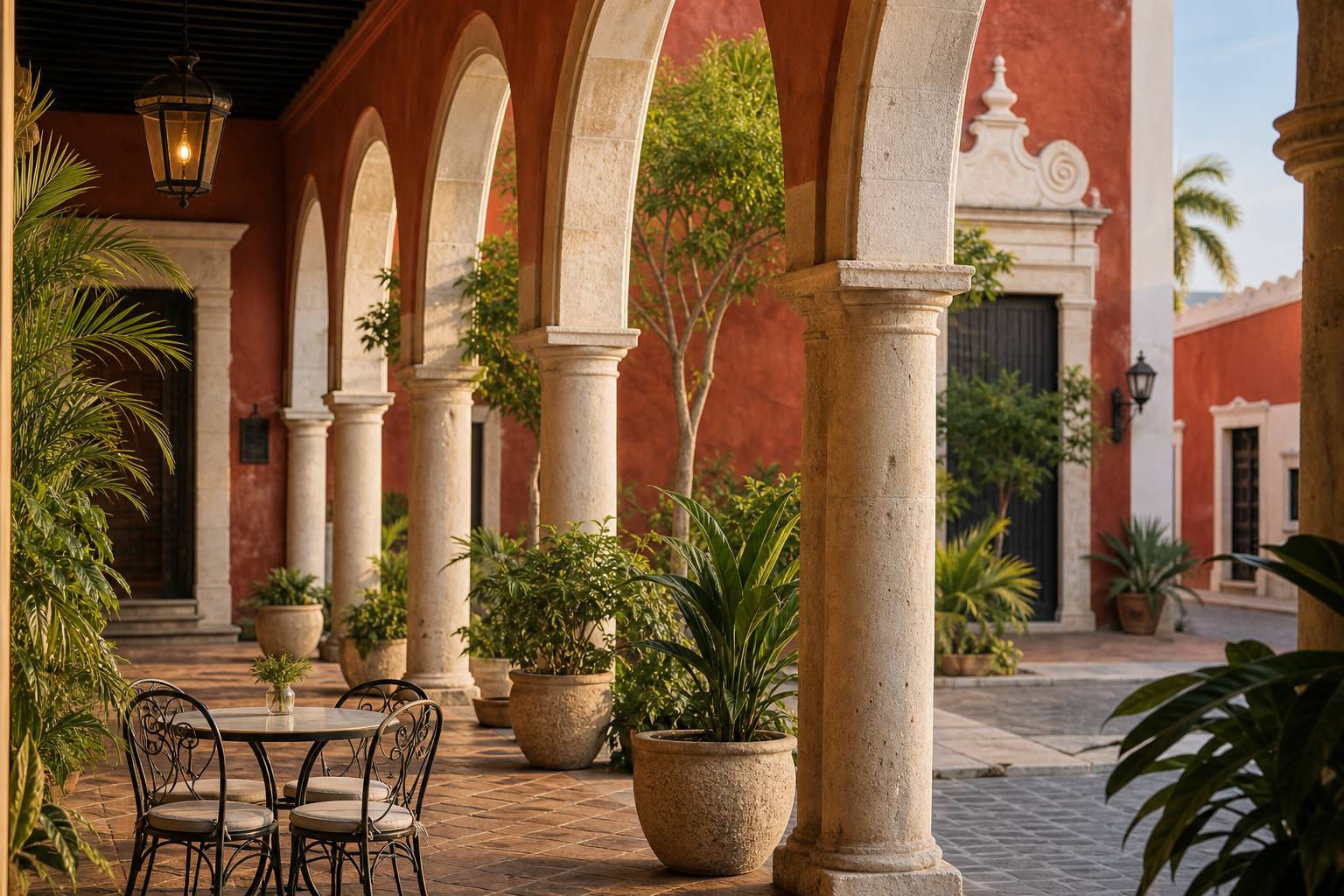
Boutique colonial hotels dominate the centre. Properties like Casa Don Gustavo, Hacienda Puerta Campeche and Hotel Castelmar occupy restored 17th- and 18th-century mansions with thick stone walls, high ceilings, interior courtyards and decorative tile floors. Rooms stay relatively cool during the day thanks to the construction, though most add air conditioning for night. Expect to pay moderate-to-high rates. The best-known properties book out weeks ahead during peak periods (November through March, Carnival in February, long weekends).
Mid-range and budget options exist within the walls and just outside them. Hotel H177, Maya Campeche and several smaller guesthouses on side streets offer clean rooms at lower prices, often without the colonial architecture but with the same walkable location. Hostels along the pedestrian streets cater to solo travellers and backpackers.
Practical notes for the capital:
- The centre is quiet at night. Calle 59 sees evening foot traffic but nothing rowdy.
- Rooftop terraces are common at boutique hotels — worth requesting a room on upper floors for malecón views.
- Parking is limited inside the walls. If you rent a car, confirm parking with your hotel before booking.
- Most properties accept cards; smaller guesthouses may be cash-only.
Ciudad del Carmen and the Coast
Ciudad del Carmen is the second hub — a working oil and fishing city on the Laguna de Términos, 220 kilometres southwest of the capital via the fast highway. It is not a colonial charm destination, but it gives you access to Isla Aguada, Sabancuy, Champotón and the Laguna de Términos biosphere.
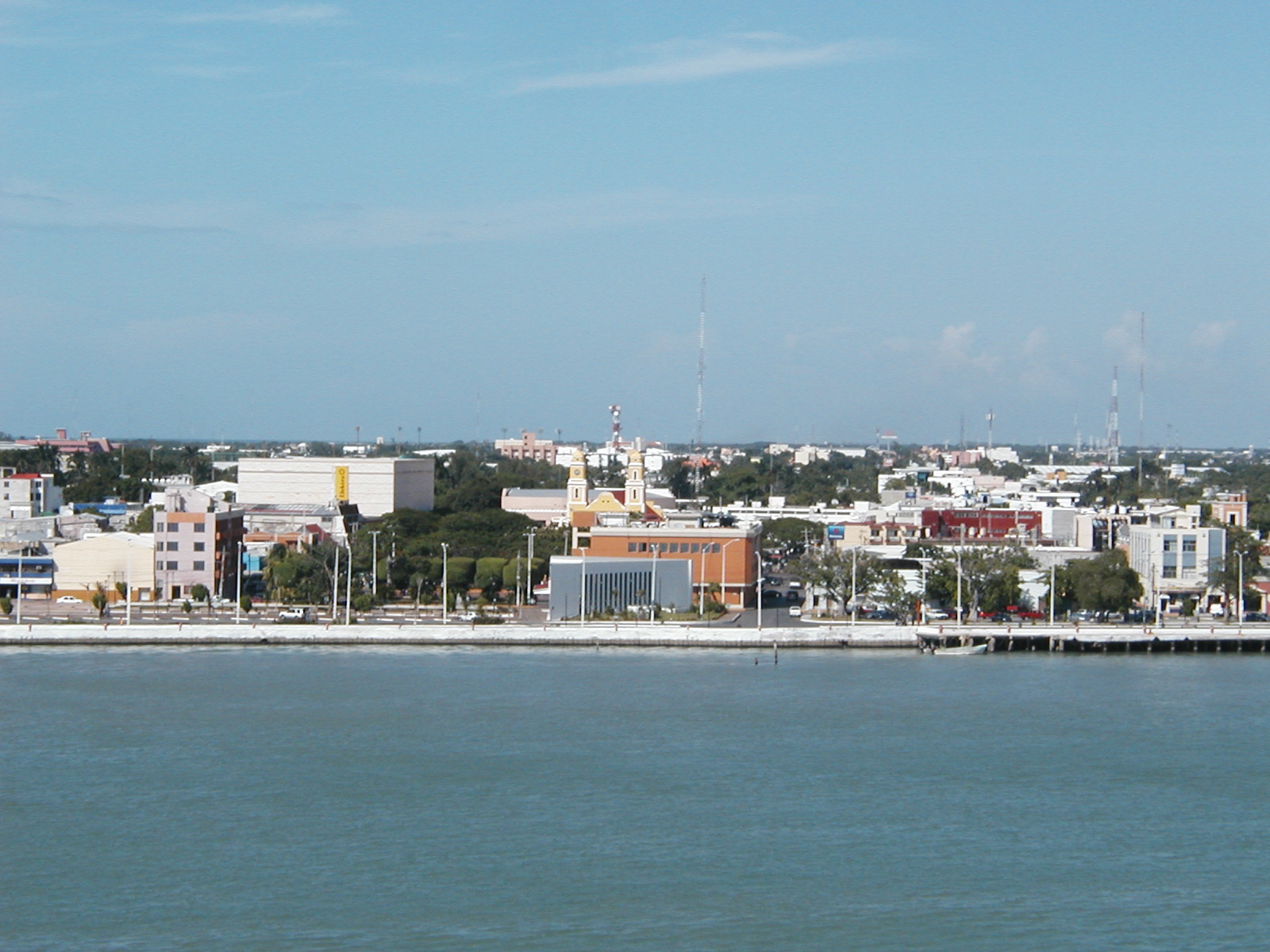 Ciudad del Carmen skyline from the Laguna de Términos
Hotels in Ciudad del Carmen lean toward business and mid-range chains — Hampton Inn, Fiesta Inn, City Express, Holiday Inn — with reliable air conditioning, pools and on-site restaurants. Rates are lower than the capital's boutique properties. The malecón area and the city centre have the highest concentration of options. The airport (CME) is close to town, making arrival and departure easy.
Isla Aguada, 23 kilometres north of Ciudad del Carmen, offers a quieter beach-town alternative. Small hotels and guesthouses line the waterfront. This is the right base if your trip centres on dolphin tours, flamingo boat trips in Laguna de Términos and lazy beach days. Accommodation here is simpler — expect basic rooms, sea breezes and a slower pace.
Champotón and Sabancuy have a handful of small hotels and cabañas. These are low-key fishing villages with decent beach stretches. Do not expect resort infrastructure. Bring cash, book ahead on weekends, and treat these as genuine small-town stays rather than polished tourist products.
GuideCiudad del Carmen, Campeche: Complete Travel Guide & Things to DoA practical guide to Ciudad del Carmen, Campeche: beaches, the waterfront, local history, Laguna de Términos, transport, food, and how long to stay.Explore
Hacienda Estates South of the Capital
Between the capital and Champotón lie several restored haciendas that operate as small luxury hotels. The standout is Hacienda Uayamón, about 30 minutes south of the city off the highway toward Champotón. It is a 16th-century estate — originally a cattle and henequen hacienda, later sacked by pirates in 1685 — now restored with a dozen rooms, a pool, a restaurant serving Yucatecan cuisine, and the atmospheric ruins of its old sugar-processing buildings still standing on the grounds.
This is the most romantic accommodation option in the state. Rooms have soaring ceilings, four-poster beds and vintage details. The spa and garden setting make it a destination in itself rather than just a place to sleep. It is not cheap, but for a special occasion it delivers an experience no colonial-city hotel can match.
Getting to Hacienda Uayamón requires a car or a pre-arranged transfer. There is no public transport to the door. If you are relying on tours, you can book day visits that include lunch — the breakfast service is open to outside guests — but overnight stays are the real draw.
Xpujil and the Calakmul Corridor
If Calakmul is the focus of your trip, staying near the ruins makes a significant difference. The drive from Campeche city to Calakmul takes roughly five to six hours one way, making a same-day return exhausting and rushed. Xpujil, the nearest town to the Calakmul Biosphere Reserve entrance, has a growing cluster of small hotels, eco-lodges and guesthouses.
Accommodation in Xpujil is functional rather than luxurious. Expect clean rooms, basic restaurants, and early bedtimes — this is a jungle town, not a nightlife spot. Some eco-lodges offer guided night walks and birdwatching excursions. Rates are moderate. The advantage is location: you can leave for Calakmul at dawn, spend the full day at the ruins and biosphere, and return for dinner without a long drive.
Becán and Chicanná, the smaller Río Bec ruins, are closer to Xpujil than Calakmul and can be visited on the same day. Staying in Xpujil puts you within reach of all three sites.
GuideXpujil, Campeche: Complete Travel Guide & Things to DoExplore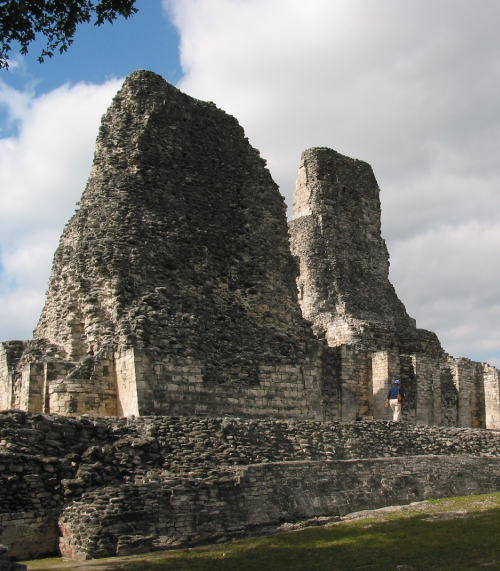
Quick Reference by Travel Style
Couples and honeymooners: Boutique colonial hotel in the walled capital (Casa Don Gustavo, Hacienda Puerta Campeche) or Hacienda Uayamón for seclusion.
Families: Mid-range hotel in the capital with a pool (Holiday Inn, Gamma Campeche) or Ciudad del Carmen if you are combining with coastal activities.
Solo and budget travellers: Hostel or small guesthouse inside the walls of Campeche city. Xpujil's guesthouses for the Calakmul base.
Adventure and nature: Eco-lodge in Xpujil for Calakmul; small hotel in Isla Aguada for Laguna de Términos.
Business travellers: Ciudad del Carmen — chain hotels, reliable WiFi, airport access.
Booking Tips
- Peak season runs November through March, with Carnival (February) and Semana Santa (March/April) the busiest weeks. Book 4–6 weeks ahead for boutique properties during these windows.
- Rainy season (June–October) brings lower rates and thinner crowds, but afternoon downpours are common. The heat and humidity are significant — prioritise air conditioning or at least a pool.
- Cash is useful at smaller properties, cenote entrances and lagoon docks. ATMs are reliable in Campeche city and Ciudad del Carmen; less so in Xpujil and Isla Aguada.
- Wi-Fi is standard in mid-range and boutique hotels but can be spotty in remote haciendas and jungle lodges. If you need reliable connectivity, confirm before booking.
- Tren Maya now connects Campeche city to Mérida, Cancún and other peninsula hubs. If arriving by train, the station is outside the historic centre — budget for a taxi to your hotel.