Printable guide
Xpujil, Campeche: Complete Travel Guide & Things to Do
Published
Xpujil is the practical base for exploring the southern interior of Campeche. It is a small highway town rather than a polished resort, but that is precisely its value: the town sits beside the Río Bec archaeological route, close to the Xpuhil ruins, and within reach of Becán, Chicanná, Balamkú, Calakmul, and the Calakmul Biosphere Reserve. It is also a useful stop on the long road between Escárcega and Chetumal, and the arrival of the Tren Maya has added another way to reach the area.
The spelling can be confusing. Xpujil usually refers to the modern town, while Xpuhil is commonly used for the ancient archaeological site. Both names describe the same general area, and signs or official pages may use either form. The name is associated with xpuh, a plant traditionally described as “cat’s tail,” and the Maya suffix -il, meaning a place of.
Xpujil works best when you treat it as a jungle archaeology base. There are basic hotels, small restaurants, shops, fuel, cash points, local transport contacts, and people who can help arrange a trip to Calakmul. It is not the place to expect a long list of museums, nightlife, or resort amenities. The rewards are early starts, quiet roads, forest, architecture, and the ability to visit several very different Maya sites without relocating every night.
Why stay in Xpujil?
The main reason to choose Xpujil is geography. Calakmul is deep inside the reserve and is not a realistic casual stop from Campeche city. Xpujil places you on the correct side of the long approach, so you can leave early for the ruins and return without turning the visit into an exhausting cross-state drive. The town is also close to the smaller Río Bec sites, which makes it possible to spend one day at Calakmul and another comparing sites such as Xpuhil, Becán, and Chicanná.
Xpujil suits travellers who want:
- A base for Calakmul rather than a same-day expedition from the state capital.
- Easy access to a group of southern Campeche archaeological zones.
- A slower, more practical alternative to rushing between Chetumal, Escárcega, and the ruins.
- Jungle and wildlife potential alongside Maya history.
- A place that can be reached by highway, bus, or Tren Maya, followed by local arrangements.
It is less suitable if your trip is built around beaches, colonial streets, or a large choice of restaurants. Campeche city is the better base for the walled historic centre, Edzná, the Gulf waterfront, and evening walks. Ciudad del Carmen is the more useful urban base for the Laguna de Términos coast. Xpujil is for the forest and the archaeology of the southeast.
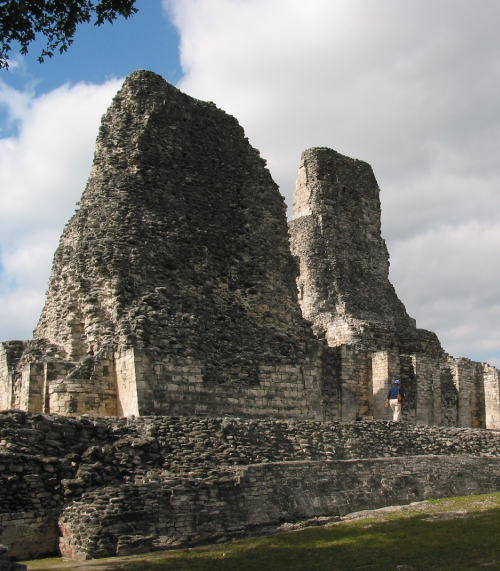
The Xpuhil archaeological zone near Xpujil, Campeche
Where Xpujil is in Campeche
Xpujil is in the municipality of Calakmul in southeastern Campeche, on Federal Highway 186 between Escárcega and Chetumal. The town is inland, far from the Gulf coast and far from the colonial centre of San Francisco de Campeche. This matters when you plan distances: a map of the state can make the route look compact, but roads through the interior and the final reserve approach take time.
The town sits at a junction between several types of journey. Travellers coming from the west normally pass through Escárcega, a major road and rail connection. Travellers coming from the east may arrive from Chetumal or Bacalar, in Quintana Roo, and use Xpujil as their first Campeche base. A northern approach from Hopelchén follows a more rural road before joining Highway 186. The final destination in each case is the same small service town.
Calakmul archaeological zone is not in the town. From Xpujil, you still need to arrange a car, driver, or organised trip for the reserve road. The same distinction applies to the Tren Maya: the Xpujil station is a transport stop near the town, not the archaeological entrance. Do not book a train ticket assuming that arriving at the station means you have arrived at Calakmul.
The ancient Xpuhil zone is much closer to town and can be visited independently if conditions allow. INAH describes the protected archaeological area as part of a much larger ancient urban landscape, while the visitor route presents only selected groups. The modern town grew around a place with a much deeper history than its size suggests.
Things to do in Xpujil
Visit the Xpuhil archaeological site
The first stop should usually be the archaeological zone that gives the area its name. Xpuhil is a Río Bec-style site whose best-known feature is the three-towered Edificio 1. Río Bec architecture is often associated with paired towers, steep stairways, and façades that create the impression of temples rising above the forest. Xpuhil is unusual because its principal building presents three towers rather than the more typical two.
The towers should not be read as ordinary staircases to a summit. Their steep, narrow forms and false stairways were part of an architectural language of power and sacred imagery. Some elements imitate functional temples while making access impossible or impractical. That distinction is useful when you compare Xpuhil with sites where climbing is the central visitor experience.
Allow time to look beyond the headline building. The cleared groups, platforms, vegetation, and spacing between structures show how little of the ancient settlement is visible at first glance. INAH places the occupation broadly between about 400 BC and AD 1200, with particular importance during the Classic period. The site is not simply a single isolated pyramid; it is part of a larger urban area that extended beyond the visitor route.
The town is close enough that you can visit Xpuhil on an arrival afternoon, provided you have daylight and the site is open. Confirm current opening conditions and fees through INAH before setting out. The official INAH page currently lists daily opening from 8:00 to 17:00 and a general admission price, but archaeological-site details can change, and payment arrangements should be confirmed locally. Bring water, insect repellent, a hat, and shoes suitable for uneven ground.
Use Xpujil as the base for Calakmul
Calakmul is the major reason most international visitors come to this part of Campeche. The ancient city lies deep inside the biosphere reserve, and the journey includes a long forest approach after leaving the main highway. It is one of the state’s most demanding visits: you need an early start, enough water and food, cash for access payments, and a dependable return plan.
A local driver or guided excursion is the simplest option if you are not renting a car. Ask exactly what is included. A tour may cover transport and interpretation but treat the reserve, community, and archaeological payments separately. Confirm the departure time, expected return, language, lunch arrangements, time at the ruins, and whether the itinerary includes other stops. The headline name “Calakmul tour” does not always describe the same day.
Compare Calakmul tours from the Xpujil area on GetYourGuide · See verified Calakmul options on Viator
If you drive, fill up before leaving town, download offline maps, and avoid treating the reserve road as a fast transfer. Wildlife, rain, potholes, and other vehicles can slow the approach. There are no normal shops along the final road, so buy water and food in Xpujil. Mobile coverage is not dependable once you enter the forest.
For a detailed explanation of the final leg, read the Xpujil to Calakmul transport guide. That article covers the route and practical choices without repeating the archaeology itself.
Explore Becán
Becán is one of the most useful additions to an Xpujil stay because it offers a different architectural and historical experience from both Xpuhil and Calakmul. The site is near the highway and can normally be combined with other Río Bec stops, although you should verify transport and opening conditions before relying on an informal connection.
The name Becán was assigned by archaeologists and refers to the ditch or water-formed ravine surrounding the central area. The moat is one of the site’s defining features. Whether it was primarily defensive, symbolic, or served several purposes over time, it changes how you understand the settlement. You are not only looking at temples and plazas; you are seeing a deliberately bounded centre with major earthworks around it.
Becán grew into an important regional centre, and its buildings include large plazas, elevated structures, ceremonial architecture, and remnants of Río Bec design. The forest setting is part of the visit. Shade can be useful, but the humidity and uneven paths still make this a substantial walk. Plan for at least a couple of hours if you want to move slowly and understand the site rather than photographing the first pyramid and leaving.
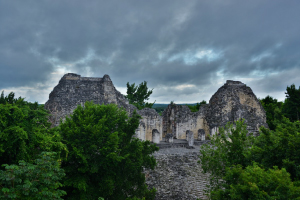 Structure IX at Becán, a Maya archaeological site near Xpujil in Campeche
See Chicanná
Chicanná is close to Becán and is often paired with it on a Río Bec day. Its name is commonly translated as “house of the serpent’s mouth,” reflecting the imposing zoomorphic doorway associated with the site. The scale is more intimate than Calakmul, but the architectural details can be more immediately legible because the route concentrates on a smaller set of groups.
Look closely at the façades rather than rushing from one mound to the next. Río Bec architecture uses masks, corners, stairway forms, and symbolic entrances to turn buildings into statements about authority and the sacred world. At Chicanná, the doorway gives visitors a strong visual key, but the surrounding plazas and relationship with nearby settlements are equally important.
Chicanná is also a reminder that the region was not one city with a collection of unrelated monuments. Becán, Chicanná, Xpuhil, Hormiguero, and other sites occupied the same broad cultural landscape. They were close enough for contact while still expressing different roles and architectural choices. A two- or three-site day can make that regional pattern clearer than visiting one large ruin in isolation.
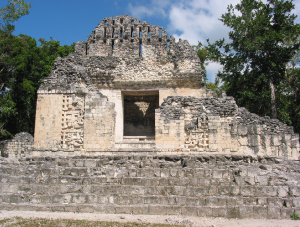 The Río Bec architecture of Chicanná archaeological site in Campeche
Add Balamkú when the route makes sense
Balamkú is a smaller archaeological site on the approach toward the Calakmul area. It is known especially for a stucco frieze with powerful animal and cosmological imagery. The site is not a substitute for Calakmul, and it is not sensible to add every ruin to one rushed day. It works better as part of a carefully arranged route from Xpujil or as a separate stop when your driver can confirm the opening conditions.
The important planning point is that southern Campeche sites are spread along roads with limited services. A map may show several pins close together, but each visit involves parking, walking, heat, and time at the gate. Decide whether you prefer a short sequence of highlights or fewer places visited with enough attention. If Balamkú is a priority, tell your driver before departure rather than hoping to fit it in at the end of a Calakmul day.
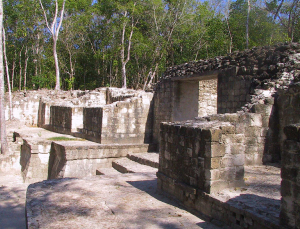 Balamkú archaeological site in the Calakmul region of Campeche
Follow the Río Bec archaeological route
The phrase “Río Bec route” describes a cluster of Maya sites rather than a single marked attraction with a fixed tour format. Xpujil is the most practical base because of its location and local contacts. Depending on current access, a route may include Xpuhil, Becán, Chicanná, Balamkú, and other sites such as Hormiguero. Not every site has the same facilities, road quality, opening conditions, or interpretation.
The best itinerary is usually selective. One day can cover Xpuhil, Becán, and Chicanná at a comfortable pace. A separate early day can focus on Calakmul. Trying to include Calakmul, multiple Río Bec sites, and the bat emergence in one schedule creates a long day with little margin. Ask whether a site is open, whether a local guide is available, and whether the vehicle can handle the route before committing.
Look for wildlife on the forest roads
Xpujil is a useful nature base because the town is surrounded by tropical forest and sits near the Calakmul Biosphere Reserve. Wildlife sightings are never guaranteed, and the ethical way to observe animals is to keep distance, avoid feeding, and never ask a driver to chase or corner an animal for a photograph.
Possible sightings vary by season, time of day, and luck. Visitors may see birds, lizards, deer, monkeys, or signs of larger mammals. Howler monkeys can be heard before they are seen. The forest road into Calakmul is often more productive early in the day, when traffic is lower and temperatures are more comfortable. Binoculars are more useful than a long camera lens for most travellers.
Treat the forest as habitat rather than a wildlife park. Do not play recorded calls, leave food, or approach nests and troops. Keep windows and doors under control around animals, and take every wrapper back to town. The reserve’s value is not measured by the number of sightings on one visit.
Visit the bat cave only with a realistic schedule
The bat emergence near the Calakmul access road is sometimes included in local itineraries, but it needs careful timing. The event is seasonal and conditions can vary. If you want to see it, ask whether the cave is open, how long the walk is, and whether your driver will wait. Do not assume a Calakmul excursion that leaves the ruins in the afternoon can automatically include a dusk stop.
The emergence can be spectacular, but it is also a natural event that should be observed quietly. Keep away from the cave entrance, follow local instructions, and do not use flash if guides ask visitors to avoid it. The road back to Xpujil is dark and remote, so do not arrange a late return with a driver who has not explicitly agreed to the timing.
GuideQué Hacer en Campeche: Best Things to Do in the CityThe best things to do in Campeche City — from walking the UNESCO walls and sunset on the malecón to Calle 59 at night, bastion museums, the central market, and day trips to Edzná.Explore
Getting to Xpujil
By car
A rental car gives you the most flexibility for Xpuhil, Becán, Chicanná, and Calakmul. Federal Highway 186 is the main west–east approach and is the route most visitors use from Escárcega or Chetumal. The drive is long but straightforward in broad geographic terms. The more difficult part is not finding the town; it is managing fuel, fatigue, night driving, and the side roads to the archaeological zones.
Fill the tank before the reserve journey. Keep a spare tyre and basic supplies in the vehicle, and download navigation before leaving an area with reliable service. Avoid driving the jungle roads after dark. Animals cross, lighting is limited, and a minor problem becomes more serious when there is no nearby workshop or signal.
From Campeche city, consider breaking the journey rather than driving to Xpujil, visiting Calakmul, and returning in one push. The state rewards staged travel. A night in Escárcega or Xpujil can make the archaeological day safer and more enjoyable.
By bus
Intercity buses and colectivos use the Highway 186 corridor, with service patterns that change. Xpujil is generally reachable from Escárcega and Chetumal, but check current departures with the operator or terminal rather than relying on an old timetable. The town is a useful bus stop precisely because it lies on a major road, but the archaeological sites are separate journeys.
Arrive with the name of your accommodation and a plan for getting from the highway to it. Xpujil is walkable in its central areas, yet luggage, heat, rain, and the distance from the bus stop can make a short taxi ride worthwhile. If you are visiting Calakmul without a car, arrive the previous day and arrange your excursion locally.
By Tren Maya
The Xpujil station provides a newer rail option for reaching the area. Check the official Tren Maya booking system for current services, fares, luggage rules, and changes. The station is outside the central town area, so confirm how you will continue to your hotel and how you will get back for the return train.
A train ticket does not include transfers to Calakmul. Arrange a driver, taxi, or tour before relying on the railway for a same-day archaeology visit. The reserve road is too remote for an improvised connection, and the Calakmul-named station elsewhere on the route should not be confused with the archaeological zone.
The train can work well for travellers who want to avoid a long highway drive, especially when they plan two nights in the area. It is less convenient for a tightly timed visit built around several ruins unless the train schedule and local transport line up exactly.
Where to stay in Xpujil
Accommodation is concentrated around the town and the Highway 186 corridor. The choice is functional rather than resort-like. Prioritise early breakfast or a kitchen arrangement, parking if you are driving, reliable air conditioning or ventilation, secure luggage storage, and help arranging transport. Ask whether the property can prepare food for an early Calakmul departure and whether water is available before dawn.
A town-centre base is convenient for small shops, food, and walking to local services. A highway-oriented base may be easier for drivers and early departures but less pleasant if you want to walk to dinner. Remote jungle lodging can offer a stronger nature setting, but it may be farther from fuel and supplies and may not solve the transport problem to the ruins.
Check current Xpujil-area rates on Booking.com · Compare Xpujil stays on Trip.com
Book ahead when your dates fall in a busy winter travel period or around a local holiday. In quieter periods, local availability may be more flexible, but do not leave the Calakmul transport arrangement until the morning. The town has services, not an unlimited supply of vehicles or rooms.
Eating and supplies
Xpujil’s food scene is local and practical. Expect small restaurants, family-run kitchens, shops, and roadside options rather than a destination dining circuit. Opening times can vary, especially early in the morning and later at night. Buy water, snacks, fruit, and a packed lunch before leaving for Calakmul. Do not depend on finding food inside the reserve or at the archaeological zone.
For an early start, ask your accommodation what can be prepared in advance. A simple meal that travels well is more useful than waiting for a full restaurant service. Carry cash in small denominations, but avoid displaying it unnecessarily. Keep a reserve for transport and site access payments rather than spending every peso on arrival-day extras.
The heat changes how much you eat and drink. Take regular water breaks and do not mistake the forest shade for cool conditions. A hat, light long sleeves, repellent, sunscreen, and closed shoes are more important than a large day bag full of unnecessary equipment.
How many days do you need?
One night
One night is possible if you arrive early enough to visit Xpuhil and have a confirmed Calakmul plan for the next morning. It is a compressed option. Any bus delay, train change, rain event, or transport confusion can remove your margin, so it suits travellers who accept a tight schedule.
Two nights
Two nights is the better minimum for most first visits. Use the arrival day for Xpuhil and perhaps Becán or Chicanná, dedicate the next day to Calakmul, and leave on the third morning. This structure protects the main visit from a late arrival and gives you time to buy supplies and confirm transport.
Three nights
Three nights suits travellers interested in archaeology, photography, wildlife, or a slower road trip. You can separate the Calakmul day from the Río Bec sites, allow for changing weather, and consider a bat-cave visit if it fits safely. It also makes the town a useful pause between longer journeys rather than just a bed beside the highway.
Practical conditions and safety
The main challenges are heat, distance, limited services, and the need to keep a schedule in a remote area. Start early for long archaeology days. Drink water before you feel thirsty. Stay on marked paths, respect barriers, and do not climb structures where access is prohibited. Stone can be slippery after rain and hot in direct sun.
Carry offline copies of your accommodation details and transport arrangements. Tell someone where you are going if you drive into the reserve. Keep the car fuelled, lock it when parked, and do not leave passports or electronics visible. Normal travel awareness is sufficient in town, but the remote road deserves extra preparation because help is farther away.
Check the official INAH page for Xpuhil and the current reserve information before departure. Opening hours, admission fees, road conditions, payment methods, and access rules may change. A page that was accurate last season is not a guarantee for your travel date.
Is Xpujil worth visiting?
Xpujil is worth visiting if you want to understand southern Campeche as a landscape of forest and connected Maya sites rather than as a single pyramid excursion. Its services are modest, but its position is excellent. You can walk to Xpuhil, reach Becán and Chicanná without moving hotels, and plan Calakmul from the correct base. The town also gives the journey a human scale: you buy water at a local shop, arrange a driver, eat before dawn, and then travel into a reserve where the road and the forest set the pace.
The most sensible plan is to stay two nights, arrive with enough daylight for Xpuhil or another nearby site, and reserve the early part of the next day for Calakmul. If you have more time, add the Río Bec sites one at a time rather than treating them as a checklist. Xpujil is not trying to be the destination’s main attraction. It is the gateway that makes the deeper attractions possible, and for travellers interested in Campeche’s southern archaeology, that is exactly what you need.
When booking the town, check current hotel availability and transport options together. A room without an early ride to Calakmul is not a complete plan, and a tour without a sensible night before can make the main visit unnecessarily tiring. Build around the forest road, leave room for heat and delays, and Xpujil becomes a calm, useful base for one of Campeche’s most distinctive regions.
Frequently asked questions
Is Xpujil the same as Calakmul?
No. Xpujil is the modern town and service base. Calakmul is the ancient Maya city deep inside the biosphere reserve. They are in the same broad municipality, but reaching Xpujil does not mean you have reached the ruins.
Can you visit Calakmul from Xpujil without a car?
Yes, but arrange a local driver, shared transport, or guided excursion in advance. There is not a normal frequent public bus that takes visitors from the town directly to the archaeological entrance. Confirm the return time and all included fees.
Can you walk from the Tren Maya station to Xpujil?
The station is outside the main town area. Depending on luggage, heat, and your accommodation, a taxi or pre-arranged transfer is more practical than assuming a comfortable walk. Confirm the local connection before buying your ticket.
Is Xpujil a good base for Becán and Chicanná?
Yes. These sites are among the natural additions to a Xpujil stay. Arrange transport and check opening conditions, then allow enough time for walking, heat, and the return journey rather than squeezing them into the Calakmul day.
What is the difference between Xpujil and Xpuhil?
Xpujil is the modern spelling generally used for the town. Xpuhil is commonly used for the ancient archaeological site, although spelling varies in tourism and government materials. If you are searching maps or asking for directions, use both forms when needed.
Should you stay in Xpujil or Campeche city for Calakmul?
Stay in Xpujil when Calakmul is a priority. Campeche city is much better for the historic centre and Edzná, but the long distance to the reserve makes a same-day Calakmul visit tiring. A staged itinerary with a night in Xpujil is the more practical choice.
Are there ATMs and fuel in Xpujil?
Basic services are available, but reliability and opening conditions can vary. Withdraw or carry a sensible cash reserve before the reserve journey and fill the vehicle before heading toward Calakmul. Do not expect an ATM, shop, or fuel service at the archaeological zone.
What should you pack for Xpujil?
Pack water, food for long excursions, cash, repellent, sunscreen, a hat, closed shoes, a light long-sleeved layer, offline maps, and a power bank. Add binoculars if you are interested in birds and forest wildlife.
Is Xpujil suitable for families?
It can work well for families who are comfortable with heat, early starts, long drives, and uneven paths. The town itself is manageable, but Calakmul is demanding. Plan shorter site visits, plenty of water, shade breaks, and a transport arrangement that does not force children to wait in the sun.
What is the best time of day to visit the ruins?
Early morning is usually the most comfortable choice. Temperatures rise quickly, wildlife is more active earlier, and an early departure gives you margin for checkpoints and the long return road. Always confirm current access hours before travelling.
Can Xpujil be a stop between Campeche and Chetumal?
Yes. It is a useful staged stop on Highway 186, especially if you want to visit the southern archaeological sites. Avoid turning the stop into an unsafe overnight drive followed by a full Calakmul day; arrive with enough time to rest and organise the next morning.
Is there nightlife in Xpujil?
Not in the way there is in Campeche city or a Caribbean resort. Evenings are generally quiet and practical. The town is best used for dinner, supplies, planning, and rest before an early archaeological or wildlife outing.
How should you plan a first visit?
Book two nights, confirm your accommodation and Calakmul transport before arrival, visit Xpuhil or a nearby Río Bec site on the first afternoon, and dedicate the following morning to Calakmul. Keep the departure day flexible enough for transport changes and do not schedule a long night drive after the reserve.
Xpujil rewards travellers who plan for the real geography. It is a small town beside a very large forest, and the archaeology around it cannot be separated from roads, weather, local transport, and time. Use it as a base rather than a box to tick, and southern Campeche becomes far easier to explore well.
Browse Xpujil-area experiences on GetYourGuide · Compare regional archaeology tours on Viator
Check current Xpujil hotel rates on Booking.com · See more Xpujil accommodation options on Trip.com