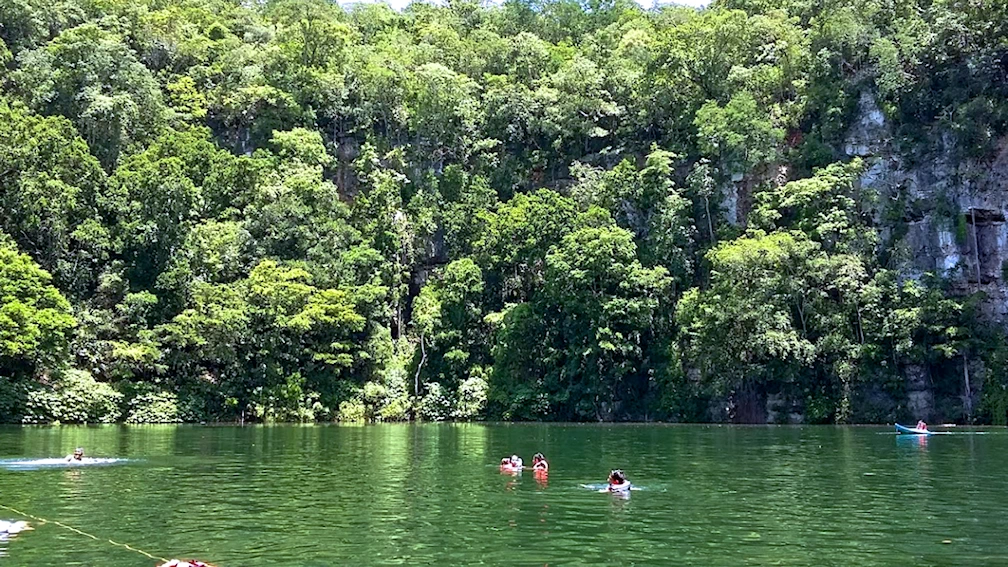
Why visit Manantiales de Pedro Baranda?
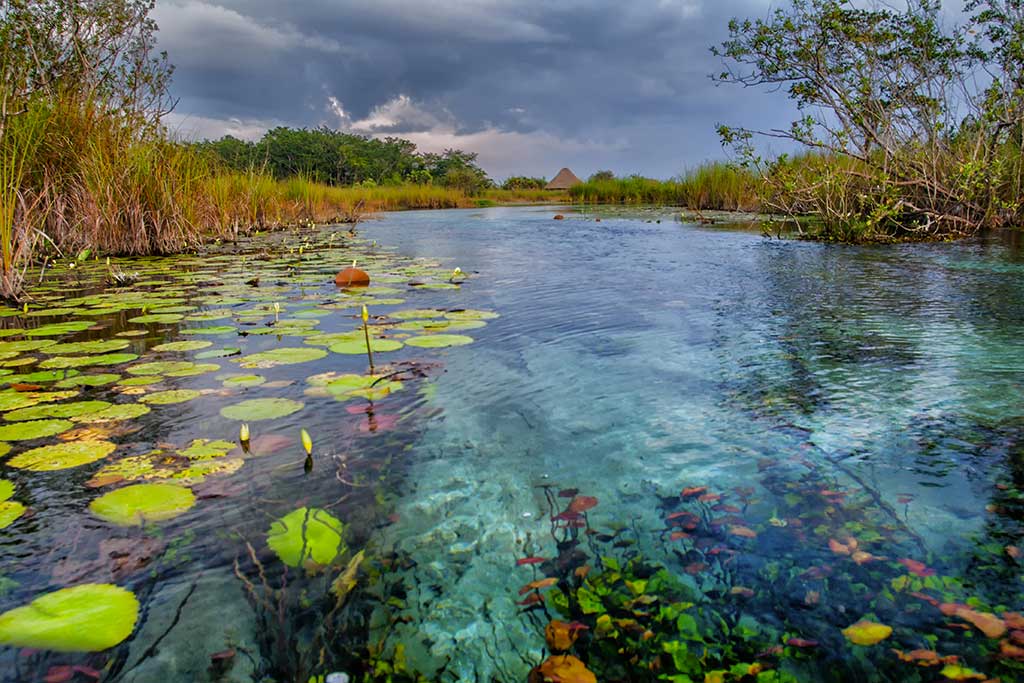
Manantiales de Pedro Baranda is a freshwater destination in the municipality of Candelaria, in southern Campeche State. It is a long, clear spring system surrounded by tropical vegetation, not a developed resort or a conventional swimming pool. The water shifts between blue, green and turquoise depending on depth, weather and the plants below the surface. In calm sections, you can see submerged grasses and the roots of aquatic lilies from above.
 Clear spring water at Manantiales de Pedro Baranda in Candelaria, Campeche
The attraction suits travelers who would rather spend a day in a rural landscape than move between heavily built-up attractions. Swimming, floating, kayaking, light walking, nature photography and birdwatching are the main reasons to come. The experience is quiet and weather-dependent. You should not arrive expecting a full service centre with a fixed restaurant schedule, reliable card terminals, a large equipment shop or frequent public transport.
Pedro Baranda works best as part of a Candelaria itinerary. The town is a useful base for the Candelaria River, Salto Grande and the El Tigre archaeological zone. It can also fit a longer southern Campeche route that includes Escárcega, the Río Bec sites or the Calakmul region, although those places are not close enough to treat as casual side trips. From Campeche City, the journey is long enough that an overnight in or near Candelaria is usually more comfortable than trying to see the springs and return after a full day outdoors.
The name can appear as Manantiales de Pedro Baranda or Pedro Baranda springs. It refers to the community of Pedro Baranda, not to a spring in Campeche’s capital. When asking for directions, use the community and municipality together: Pedro Baranda, Candelaria, Campeche. That avoids confusion with other water attractions in the state.
What the springs are like
The springs emerge in a lowland landscape where underground water reaches the surface and forms a connected-looking corridor of pools and shallow channels. Travel descriptions commonly describe the spring area as extending for several kilometres, but that does not mean a visitor swims or walks the entire length. Access points, usable sections and local facilities can vary. Think of it as a natural water landscape with selected places to enter and enjoy, rather than one clearly bounded attraction with a single entrance plaza.
The most memorable feature is the transparency. In bright conditions, the surface can look almost glassy, while pale sand, submerged vegetation and darker channels create bands of colour. The water is not uniformly deep or equally easy to enter. One section may be shallow and comfortable for wading while another edge may be slippery, soft or difficult to climb from. Use the access indicated by local staff or residents rather than choosing an attractive-looking bank at random.
The setting is open and green in some parts, more enclosed by trees and reeds in others. Aquatic plants are part of the scenery, not debris to clear away. Do not pull lilies, stand on underwater vegetation or kick up the bottom unnecessarily. The clarity of the water is part of the destination’s value and depends on keeping the spring clean and undisturbed.
The springs are inland freshwater, so do not use seaside assumptions. Reef-safe sunscreen is not the specific issue here; reducing oils, lotions, perfume and ordinary body products before entering freshwater is more relevant. Follow any local request to rinse first or avoid products altogether. If the community has introduced additional rules since an older article was published, those current rules take priority.
Pedro Baranda is not a substitute for a large cenote park with lockers, changing rooms, restaurants and a timetable of activities. Its lower level of development is precisely why the place can feel peaceful, but it also transfers more responsibility to you. Bring water, food, dry clothes, cash and a way to protect your phone. Confirm what is available before committing to a long drive.
Swimming and floating
Swimming is the simplest way to enjoy Manantiales de Pedro Baranda. The water is clear and generally calm in the spring areas described by local tourism sources, making it attractive for a slow float rather than a strenuous open-water session. Choose a supervised or commonly used entry point, walk in carefully and test the footing before moving farther from shore.
Do not judge safety by colour. Turquoise water can conceal a sudden change in depth, a soft bottom, submerged branches or a slippery ledge. If you are not a strong swimmer, stay in a shallow section or use a flotation aid. Children should remain within arm’s reach of an adult, even when the surface looks tranquil. Natural water has no marked swimming lanes, lifeguard tower or predictable edge.
Wear water shoes or secure sandals if the local access allows them. Bare feet may be comfortable in one place and painful on another. Avoid jumping from banks, bridges or rocks unless a local guide specifically identifies a safe place and gives permission. A jump that looks low can end with an awkward landing on plants or an unseen shelf.
Take breaks. The water may cool you down, but the tropical sun still affects you between swims. Use shade when available, drink regularly and dry off before sitting for a long time in wet clothing. A lightweight towel and a second set of clothes make the return journey much more pleasant, especially if you are continuing by car or bus.
The springs can work for families, but the lack of formal infrastructure changes the planning. Ask about toilets, changing space and the safest child-friendly entry before you arrive. If a family member cannot swim, the trip can still be worthwhile from the bank, but do not build the entire day around everyone entering the water.
Kayaking and calm-water exploration
Local tourism material presents kayaking as one of the possible ways to explore the springs. The activity is more about observing the water and vegetation than covering a long route quickly. A kayak lets you move quietly through wider sections, look down into the clear water and see how the spring landscape changes around bends and reeds.
Confirm the current equipment and launch arrangement in advance. The presence of a spring does not guarantee that kayaks are stored on site every day. Ask whether a guide accompanies the outing, how long it normally lasts, whether life jackets are supplied and where you should meet. Online descriptions may remain visible after a local provider has changed its schedule or stopped offering a particular activity.
Wear the flotation equipment provided, even if you are comfortable in water. Keep phones and cameras in a dry bag with a tether, and do not balance loose objects on the boat. Paddling is usually gentle, but a small shift while entering or turning can send equipment into the spring. If you have never used a kayak, ask for a short demonstration before leaving the bank.
The best behaviour on the water is quiet and unhurried. Do not chase birds into reeds, scrape the paddle along plants or approach other swimmers too closely. Keep the group together if a guide asks you to do so. A clear spring is a shared ecosystem, and noise and traffic affect both wildlife and other visitors.
For a bookable activity in this part of Campeche, inventory is limited and may be seasonal. Check El Tigre-area activities on GetYourGuide · Compare available Campeche and Candelaria experiences on Viator. These are closest marketplace landers rather than a promise that a Pedro Baranda kayak product is available on your dates; confirm the exact meeting point, inclusions and transport before paying.
Nature, birds and the underwater garden
The springs are as interesting from the bank as from the water. Look for movement at the edges, calls from the trees and birds using open water or reeds. White herons and other wetland birds are reported around the wider Candelaria region, but no particular sighting is guaranteed. Go early if birdwatching matters to you, when temperatures are lower and the site is less likely to be busy.
The underwater vegetation is the feature that gives the springs their garden-like character. From a safe edge or kayak, you may see lilies, grasses and roots suspended below the surface. The view changes with cloud cover. Strong sun can reveal the bottom, while overcast light can make the water look deeper and more blue-green. Avoid using flash near people or wildlife, and do not enter a plant bed simply to take a closer photograph.
Bring binoculars if you have them, but keep a phone or camera secondary to the surroundings. A waterproof case is useful only if it is genuinely secure. Do not hold a device over the water without a strap. Once a phone falls between plants or into a deeper channel, recovery may be impossible and a local resident should not be asked to risk themselves retrieving it.
Wildlife may include insects, amphibians, fish and birds that are easy to miss when a group is noisy. Do not feed anything. Feeding changes animal behaviour and can create problems for future visitors. Leave shells, plants, feathers and stones where they are. A spring is not a souvenir shop, and removing small natural objects adds up when many visitors do the same.
Mosquitoes and other insects are normal in a wet, wooded environment. Lightweight long sleeves, trousers and repellent can make the visit easier. Ask what kind of repellent is acceptable around the water. Use only what you need, and do not spray directly over the spring or onto vegetation. Pack all wipes, bottles and wrappers out with you.
Salto Grande as a nearby companion
Salto Grande is a different kind of water experience in the Candelaria area. It is associated with the Candelaria River and includes moving water, small cascades, natural pools and forest around the river. Pedro Baranda is the calmer, clearer spring experience; Salto Grande adds current, river sound and a more developed sense of an ecological park. The two can complement each other, but seeing both properly in one day may be too ambitious if you are travelling from far away.
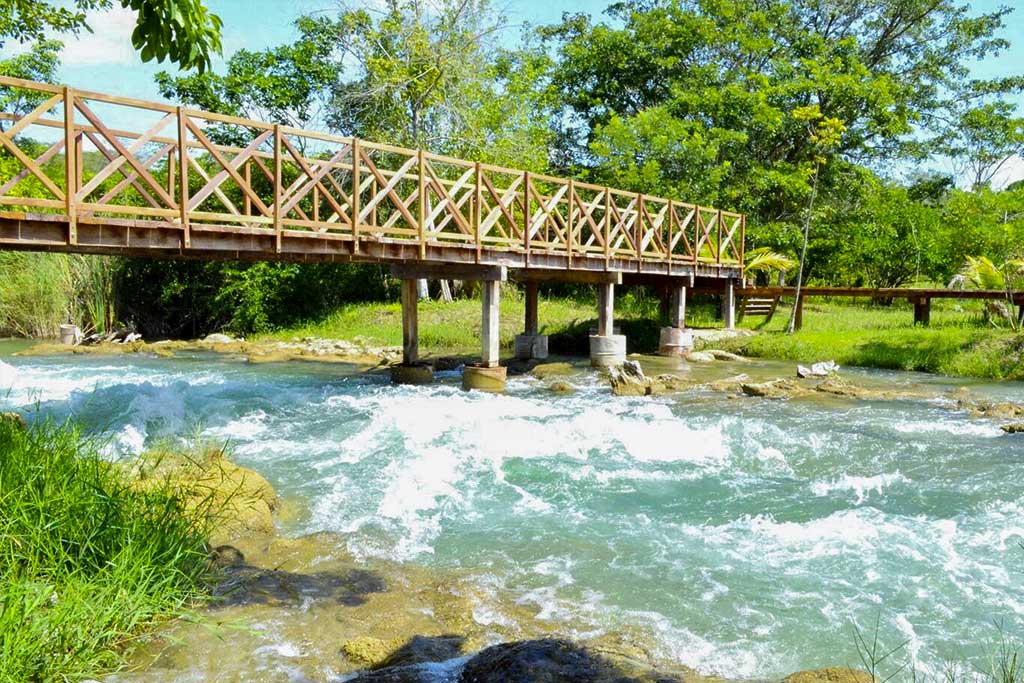 Bridge over the river at Salto Grande near Candelaria, Campeche
At Salto Grande, stay within areas considered safe by local staff. Flow can be stronger than it appears, and wet rocks are easy to underestimate. Natural pools are not automatically safe for unsupervised swimming. Ask about current water levels, recent rain and which sections are open. A bridge or viewing area may provide a better experience than entering the river if conditions are unsettled.
Tourism descriptions mention walking, birdwatching, kayaking and swimming in natural pools. Availability depends on the day, water and local operators. Do not assume that every activity is operating because it appears in a promotional gallery. If you are arranging a boat or guided nature visit, confirm the provider, departure time and return plan directly.
A simple Candelaria plan could use Pedro Baranda in the morning, a meal and rest in town, and a short Salto Grande visit later if daylight and road conditions allow. A better two-day plan gives each water landscape enough time. You can also pair one water day with El Tigre rather than trying to collect every attraction in a single schedule.
Adding El Tigre archaeological zone
El Tigre, also known as Itzamkanac in discussions of its ancient identity, is the main archaeological attraction associated with Candelaria. The site lies in the Candelaria River basin and is reached from the town by road or, where currently arranged, by river. It is not the same place as Pedro Baranda and should be planned as a separate visit.
 El Tigre archaeological site in the Candelaria region of Campeche
The ancient settlement’s importance came partly from its position near a river route linking interior regions with the Gulf lowlands. Archaeological descriptions identify plazas, monumental structures, ball courts, altars and stelae. The setting is different from the more visited Maya sites of northern Yucatán: the visit feels more remote, the landscape is greener, and interpretation and visitor services may be more limited.
Check current INAH conditions before travelling. Opening hours, road access, admission arrangements, conservation work and guide availability can change. Carry water, sun protection and cash where appropriate, and do not rely on an old listing for a fixed price or schedule. If you want to reach the site by boat, arrange it locally and confirm the complete return logistics. A river departure is not something to improvise after arriving late in the day.
El Tigre and Pedro Baranda appeal to different interests. Choose the springs if you want to swim, float and photograph clear water. Choose El Tigre if you want architecture, history and a jungle archaeological landscape. Combine them only with an early start and a confirmed route. See the current El Tigre listings on GetYourGuide · Browse broader Campeche activity inventory on Viator.
How to get there from Campeche City
The usual road approach from Campeche City heads south through the state toward Escárcega and then continues toward Candelaria. National tourism descriptions give different journey estimates depending on the starting point, stops and road conditions. Use the broad planning assumption that this is a long inland excursion, not a quick trip just beyond the capital. Confirm the final route with the local tourism office or community contact before departure.
A rental car gives you the most control. Download offline maps, fill the tank before the rural section, carry cash and leave early. A map pin may lead to a general community or an access road rather than a clearly signed visitor entrance. Ask for the final turn and do not continue down an uncertain track simply because a navigation app insists it is correct.
Avoid driving unfamiliar rural roads after dark. Rain can affect unpaved sections and visibility. Build in time for a slower approach, a wrong turn or a stop for supplies. Keep the car locked and do not leave valuables visible while swimming. If the vehicle is a rental, check its policy for unpaved roads before choosing a route.
A guided excursion can simplify the long day, especially if you want transport, interpretation and equipment arranged together. The trade-off is a fixed itinerary and less flexibility. Ask whether the excursion truly goes to Pedro Baranda or instead visits another Candelaria water attraction. Confirm pickup, return time, swimming arrangements, food, language and cancellation terms.
Arriving through Escárcega or Candelaria
Escárcega is a useful transport reference point for southern Campeche, but it does not remove the final rural journey to Pedro Baranda. If you arrive by bus or Tren Maya, arrange a confirmed transfer before travelling. Do not assume that a taxi at the station will know the spring access, wait for you, or provide a reliable return after activities finish.
Candelaria is the more logical overnight base. The town provides local services, river access and connections to the attractions of the municipality. Public transport to the community may not match a visitor’s preferred schedule, so ask locally about current departures and whether a taxi can be hired for a round trip. Get the driver’s waiting arrangement and return time clear before leaving town.
From Ciudad del Carmen, the journey is also a substantial inland trip. The city can be a practical base for other wetland and Gulf-coast experiences, but it is not a convenient day-trip base for a relaxed Pedro Baranda visit unless you have a private vehicle and accept a long road day. The same principle applies to Palizada: both destinations are in southwestern Campeche, but the roads and river systems do not make them interchangeable stops.
Where to stay
For most visitors, Candelaria is the sensible base because it puts you closer to the springs, Salto Grande and El Tigre than Campeche City. Book a room before arriving if your dates overlap with a local festival, holiday period or a weekend when regional visitors are travelling. Ask the property about parking, early breakfast, drinking water, late arrival and whether they can help you contact a local guide or driver.
Do not choose accommodation solely by a map pin. Ask how long it takes to reach the specific access point, whether the road is paved all the way, and whether a local contact is needed for the final section. A cheaper room farther away can become less useful if it forces an early drive after a full day in the water.
There are fewer accommodation choices than in Campeche City, and facilities vary. Confirm air conditioning, private bathroom, power reliability, mosquito protection and payment method directly. If you are travelling with children, ask about safe space to dry swimwear and store gear. If you are carrying camera equipment, check whether there is a secure place to leave it during a swim.
Check current Candelaria stays on Booking.com · Compare Candelaria hotels on Trip.com. These destination searches are more honest than naming a property without verifying its current listing, facilities or availability.
What to bring
Pack for a rural freshwater day rather than a city sightseeing afternoon. Bring a swimsuit, towel, dry clothes, water, food or substantial snacks, cash, insect repellent, sun protection, water shoes and a waterproof pouch. A light long-sleeved shirt helps with sun and insects. Closed shoes are useful if you plan to walk on uneven paths or visit Salto Grande afterward.
Use a small bag that you can keep dry and carry comfortably. Leave unnecessary jewellery and electronics at your accommodation. If you need medication, protect it from splashes and heat. A simple first-aid kit is sensible because formal services are not immediately beside the springs.
Bring a reusable bottle and refill only where the water source or local provider confirms it is safe. Do not assume clear spring water is automatically drinking water. Carry rubbish bags and take everything back with you, including wet packaging, tissues and damaged footwear. A natural site can look clean while still being affected by small amounts of plastic and oil.
Cash is useful because signal and card payment can be irregular outside towns. Keep money divided rather than carrying everything in one wallet. Download maps and booking confirmations before leaving service. Tell someone your broad plan if you are driving independently, especially if you expect to leave the main highway.
When to go
The most comfortable time for an outdoor visit is generally the drier part of the year, but conditions vary and the springs are a year-round natural system. Tourism descriptions commonly recommend the months with less rain for clearer water and easier roads. Rain does not automatically cancel a trip, but it can change water levels, access tracks and the safety of river activities.
Early morning has several advantages: cooler temperatures, softer light, better conditions for birds and more time to deal with a wrong turn or a delayed local contact. Avoid planning a first visit so late that you reach the community near closing or after daylight has begun to fade.
In the hottest months, schedule swimming and walking around shade and rest. Tropical heat can be tiring even when the distance is short. During the rainy season, check the forecast and ask locally about the road on the same day. A clear forecast in Campeche City does not guarantee the same conditions in Candelaria.
There is no single perfect season for photography. Dry-season light can make the water colours appear stronger, while cloudy skies create softer reflections. If wildlife matters more than swimming, ask a local guide which time of day is currently productive rather than relying on a generic seasonal promise.
Planning the day around the water
The order of activities matters more here than it would at a city attraction. Start with the spring while everyone is fresh, then eat and rest before considering another stop. Wet clothing, strong sun and a long drive can make a short-looking itinerary feel much longer. Keep one part of the day deliberately unplanned so you can wait for a local contact, change the swimming time after rain or simply stay beside the clearest section instead of hurrying away for a second photograph.
If you are travelling with a mixed group, agree in advance that swimming is optional. One person can float, another can photograph from the bank, and someone else can take a slow walk with a guide. That flexibility is easier when nobody has promised to complete a fixed list of activities. Ask where bags can remain under supervision and keep passports, wallets and medication out of a communal pile whenever possible.
The return journey deserves the same care as the arrival. Change into dry clothes, check that phones and cameras are sealed, and confirm the route before leaving the community. If you are heading to Candelaria, leave enough daylight for the road and for buying anything needed for the following morning. If you are continuing toward Escárcega or Campeche City, do not let the attractive water persuade you to drive tired after dark.
Safety and environmental care
Stay on established paths and use the entry points recommended by local residents or staff. Do not explore a new bank alone because it looks quiet. Wet ground, deep water, unstable edges and hidden roots can all be difficult to judge. Keep children close, wear secure footwear and stop an activity if weather or water conditions change.
Do not swim after drinking alcohol. Do not enter fast water at Salto Grande without local advice, and do not try to cross a river channel because it appears shallow. Avoid climbing trees, bridges or rock edges for photographs. The most memorable images can be made from a safe, low position.
Protect the spring by keeping products and rubbish out of the water. Do not use soap, shampoo or perfume in the pools. Do not feed animals, touch wildlife or collect plants. Keep music low or off. Ask permission before photographing residents, guides, boats or community facilities.
The local community is the best source for current access information. A visitor who pays for local guidance, buys food locally and follows rules contributes more than someone who arrives without preparation and expects residents to solve every problem. Be patient if services run on a slower schedule than an online booking platform suggests.
A practical one-night plan
On the first day, travel to Candelaria early enough to check in, buy water and food, and ask about the next morning’s access. If conditions allow, take a short walk along the Candelaria River or visit Salto Grande without trying to add every activity. Use the afternoon to confirm a driver, guide, kayak or entry arrangement for Pedro Baranda.
Start the second day early at the springs. Swim or float in a designated section, walk quietly along the edge, and allow time for changing and a meal. If the road and daylight permit, continue to another confirmed local attraction. Otherwise, return to Candelaria without rushing. A full spring visit followed by a long drive to Campeche City is tiring; spend a second night if the onward journey is important.
An alternative is to put El Tigre on the second afternoon only if the archaeological site’s current opening and transport have been confirmed. Do not assume that a boat trip, a spring swim and a distant archaeological visit will all fit because they appear close together on a map. Candelaria’s attractions are spread across a rural municipality.
Is Pedro Baranda right for your trip?
Choose Manantiales de Pedro Baranda if you value clear freshwater, quiet surroundings, swimming, simple nature experiences and a destination that still feels locally organised rather than mass-market. It is especially appealing to travelers already exploring southern Campeche, photographers who enjoy natural colour and families who are comfortable with modest facilities.
Choose a more developed attraction if you need guaranteed opening times, changing rooms, equipment rental, food on demand or accessible paths. Choose Campeche City’s museums and walled centre if your trip is short and you do not want a long inland transfer. Choose Calakmul or the Río Bec route if Maya archaeology and jungle wildlife are the main purpose of your journey.
Pedro Baranda is most rewarding when treated as a real rural outing. Check the route, arrange the local details, leave early, accept that weather may alter the plan and spend enough time to notice the water rather than rushing through it. Base yourself in Candelaria when possible, combine the springs with one nearby experience, and leave the site as clear and quiet as you found it.
If you want to include the springs in a wider southern Campeche trip, use the Candelaria destination information from Campeche Travel to confirm current local contacts before setting out. That small step is more valuable than relying on a fixed old timetable, because Pedro Baranda’s appeal—and its practical challenge—is that it remains a community nature destination rather than a fully standardised attraction.
Plan for the water, allow the road its proper time, and let the springs be the centre of the day.