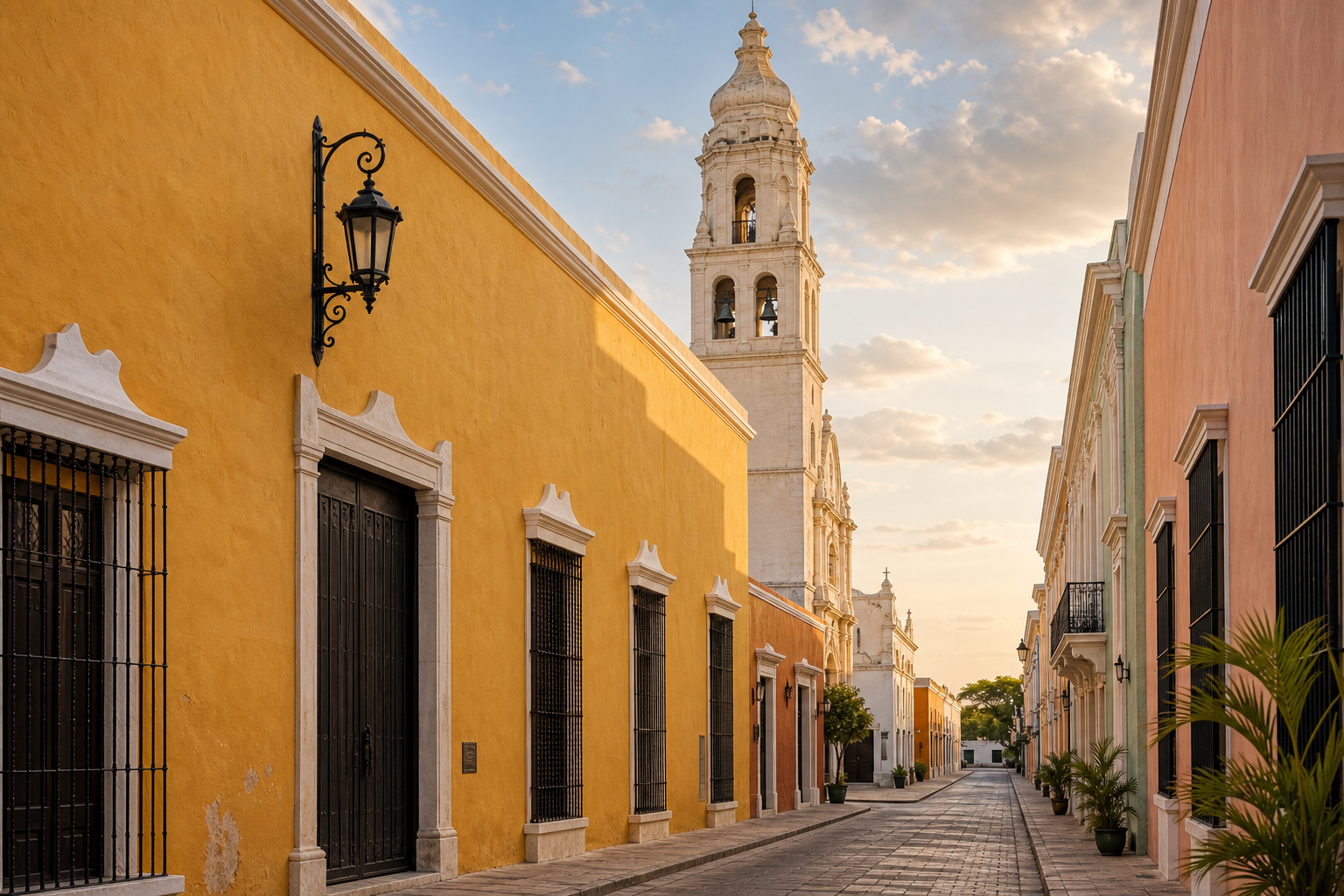
Campeche rewards travelers who slow down. The state capital is not a place where you need to race between a dozen headline attractions; its best experiences connect naturally: a walk along the old wall, a museum inside a bastion, a sunset on the Gulf-facing malecón, and a late dinner on a street where the pastel façades are still part of everyday life. Add Edzná for archaeology, or use the city as the first or last stop on a longer Campeche road trip.
The city’s formal name is San Francisco de Campeche, but most travelers simply say Campeche. It is the capital of Campeche State and the principal urban base for exploring the western side of the state. The historic centre is a UNESCO-listed fortified town, while the malecón stretches beyond the walls along the Gulf coast. These are close enough to combine in one day, but different enough that you should not treat the waterfront as an extension of the old town or confuse Campeche city with the distant Calakmul reserve.
This guide focuses on the most useful things to do in and around the capital: what each place contributes, how to link the sights without exhausting yourself in the heat, when to choose a museum or fort, and where a day trip makes sense. It does not assume that every traveler wants the same itinerary. A history-focused visit looks different from a family afternoon or a road trip built around Maya sites.
Start with the fortified historic centre
The obvious first activity is also the right one: walk through Campeche’s historic centre before you decide what else to add. The old town is compact enough to explore on foot, with coloured façades, arcaded buildings, churches, small plazas and surviving defensive structures arranged around a straightforward street grid. The pleasure is in the transitions. A quiet residential-looking block can lead to a busy square; a stretch of wall can open a view over rooftops; a doorway can reveal a courtyard or a museum.
Go early if you want architectural photographs and cooler walking conditions. Morning light brings out the painted façades, and the streets are easier to cross before the day’s heat settles over the stone. Return after sunset for a different atmosphere. The centre is not only a preserved monument; it remains a place where residents shop, meet, attend services and move between neighbourhoods.
A sensible first loop begins around the main square, continues along Calle 59 and then branches toward the old gates and bastions. You do not need to complete every street to understand the layout. Instead, notice the relationship between the commercial core and the military perimeter. Campeche’s walls were not decorative scenery added for modern tourism. They were a response to the vulnerability of a Caribbean and Gulf port whose trade attracted repeated attacks.
Wear shoes with a firm sole. Cobblestones and uneven paving are manageable, but they make a long walk more tiring than the map suggests. Carry water, especially between indoor visits. There is shade in arcades and plazas, but many of the most photogenic stretches are exposed. If you are traveling with children or anyone sensitive to heat, split the centre into a morning walk and an evening walk rather than trying to see everything in one hot circuit.
See the main square and Campeche Cathedral
The main square, Plaza de la Independencia, is the natural orientation point for the walled city. It provides the clearest sense of scale: the cathedral and surrounding colonial buildings establish the civic and religious centre, while the pedestrian streets lead toward the fortifications. Spend time here without turning the visit into a checklist. Look at the proportions of the square, the arcades and the way the cathedral’s twin towers rise above the lower buildings.
Campeche Cathedral, formally the Catedral de Nuestra Señora de la Inmaculada Concepción, is one of the city’s key landmarks. Its exterior is especially effective at dusk and after dark, when the towers stand out against the sky. Inside, the experience is quieter and more dependent on service schedules and local custom. Dress respectfully and avoid treating an active church as a photo set during worship.
The cathedral is best combined with a wider centre walk rather than visited as a standalone stop. From the square, you can reach Calle 59, the old gates and several museums without needing transport. If you want to photograph the building, return at more than one time of day: daytime shows the stone and façade details, while evening emphasizes the silhouette and the life of the square.
A short visit may take only a few minutes, but the surrounding area deserves longer. Sit under shade when available, watch the movement around the square and use it as a reset between museums. Campeche is more enjoyable when the itinerary leaves room for this kind of pause.
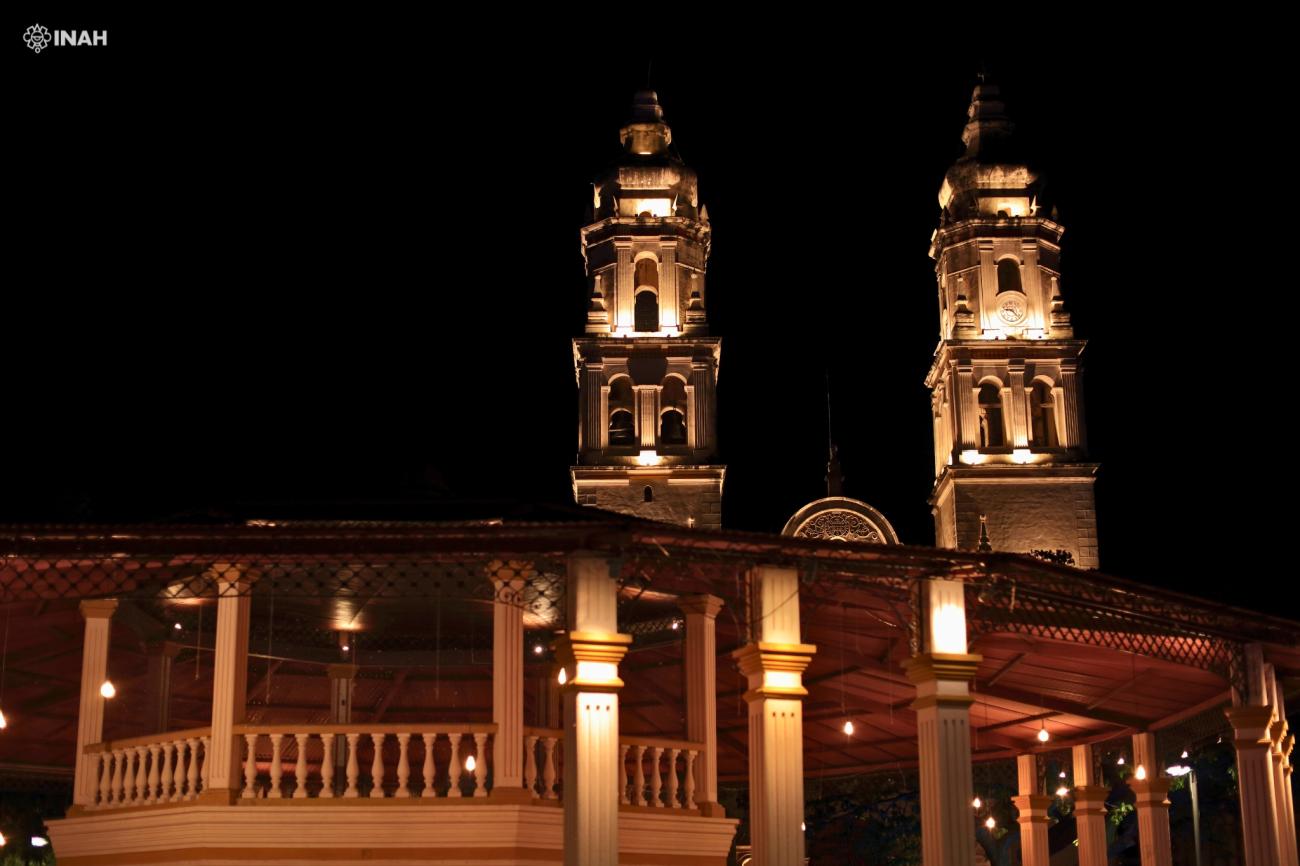 Campeche Cathedral lit at night in the historic centre

Walk Calle 59 from gate to gate
Calle 59 is the easiest pedestrian spine for a first evening in Campeche. It links the area around Puerta de Tierra with Puerta de Mar and passes through the heart of the walled city. The street is useful not because every doorway is an attraction, but because it lets you experience several layers of the centre in one slow walk: colourful façades, restaurants, cafés, galleries, churches and the changing light on the masonry.
Walk it once in daylight to understand the route. Then walk part of it after sunset, when the street becomes more social and the heat is less oppressive. The two visits feel different. During the day, you can pay closer attention to architectural details and entrances. At night, the draw is the atmosphere, the lit façades and the ease of combining a stroll with dinner.
Do not assume that a pedestrian street means the entire area is traffic-free at all times. Watch crossings at the ends and along connecting streets. Keep the group together after dark, particularly if you branch away from the busiest section. The historic centre is generally straightforward for visitors, but ordinary urban awareness still applies.
Calle 59 works well for travelers with limited time because it gives you a coherent introduction without requiring taxis between every stop. It also works as a first orientation before you choose a more specialized activity. If the city’s architecture interests you, spend the next morning on the walls and bastions. If food is your priority, use the street as one part of a wider search rather than assuming that the most visible tables are automatically the best representation of Campeche cooking.
Climb or walk the old defensive walls
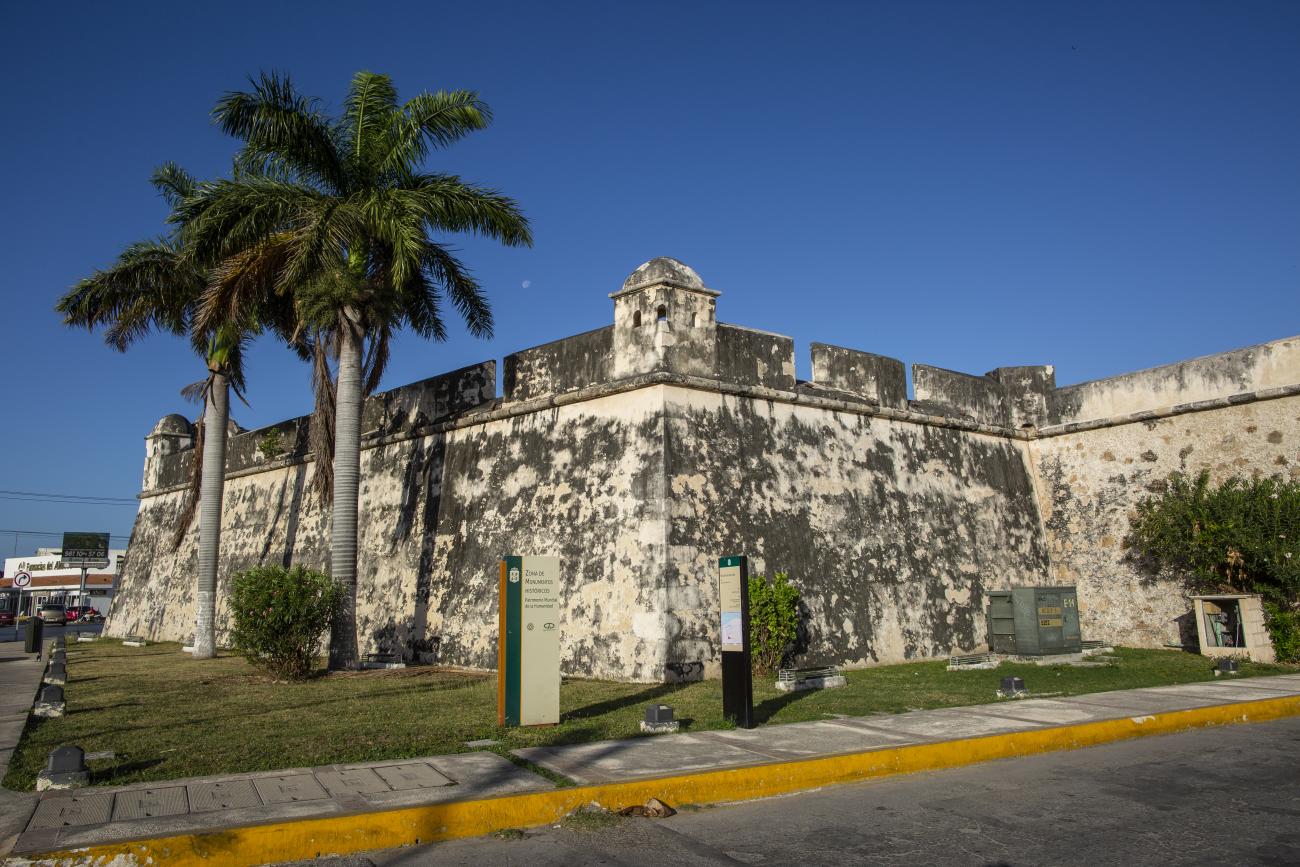
Campeche’s defensive system is the city’s defining sightseeing subject. The walls, gates, bastions and outlying forts were built in stages as the port’s strategic importance and military vulnerability became clearer. Walking the accessible sections changes how you read the centre. From street level, the old town can look like a collection of painted colonial blocks. From the wall, you see the perimeter as a deliberate enclosure, with controlled entrances and corners designed for defense.
Some sections may have restricted access, changing schedules or temporary closures. Treat the posted information on the day as authoritative. Do not climb onto masonry that is not clearly open to visitors. The best experience is not necessarily the highest viewpoint; it is the chance to understand how the fortifications relate to streets, gates and the sea.
Puerta de Tierra is especially useful for understanding the landward approach. Puerta de Mar explains the relationship between the enclosed city and the harbour. The surviving bastions then fill in the corners and stretches between them. You can visit these as individual sights, but the historical idea becomes clearer when you connect at least one gate, one bastion and a section of wall in the same walk.
Plan the walls for early morning or late afternoon. Stone absorbs heat, and exposed parapets offer little relief at midday. Bring water and avoid rushing along narrow or uneven sections. Families should keep children away from edges and openings. Travelers with mobility limitations may find that access varies between sites; ask locally about the most manageable entrance instead of assuming that all parts of the fortification have the same surface.
The fortification story is also why a walking guide can be helpful. A guide may connect the walls to maritime trade, colonial engineering and the pirate attacks that shaped the city, rather than offering a series of disconnected dates. If you prefer to arrange a guided experience, compare the current Campeche activities on GetYourGuide with Campeche options on Viator before choosing. Inventory changes, so confirm the meeting point and language directly on the live listing.
Visit Baluarte de la Soledad and the Maya architecture museum
Baluarte de la Soledad is one of the most useful museum stops for combining military history with Maya archaeology. The bastion sits within the old defensive system, while its museum content gives context for the wider state. This is a good choice when you want an indoor break but do not want to leave Campeche’s central historical story behind.
The museum is particularly valuable before an archaeology day trip because it helps you recognize that Campeche is not represented by one single Maya city. The state contains different regions, architectural traditions and historical centres. A museum visit cannot replace standing in a plaza at Edzná or walking through the forest near Calakmul, but it can make the fragments and monuments easier to interpret.
Allow time to read rather than rushing through the galleries. Look for the relationship between the building and the objects: the bastion itself is part of the lesson. A defensive structure has been reused to preserve and explain an older cultural landscape. That layered use is characteristic of Campeche, where colonial walls, Maya heritage and contemporary city life occupy the same compact geography.
Check current opening information with the relevant cultural authority before setting out. Museums can change hours for conservation, public holidays or special programming. Avoid planning several indoor attractions as if they all share one schedule. One carefully chosen museum paired with an outdoor walk is usually more satisfying than a string of rushed visits.
GuideBaluarte de la Soledad & Museo de Arquitectura Maya: Visitor GuideA practical guide to Baluarte de Nuestra Señora de la Soledad and the Museo de Arquitectura Maya in Campeche’s walled centre, including its fortifications, Maya collections, access, timing, and how to combine the visit with a walk through the historic city.Explore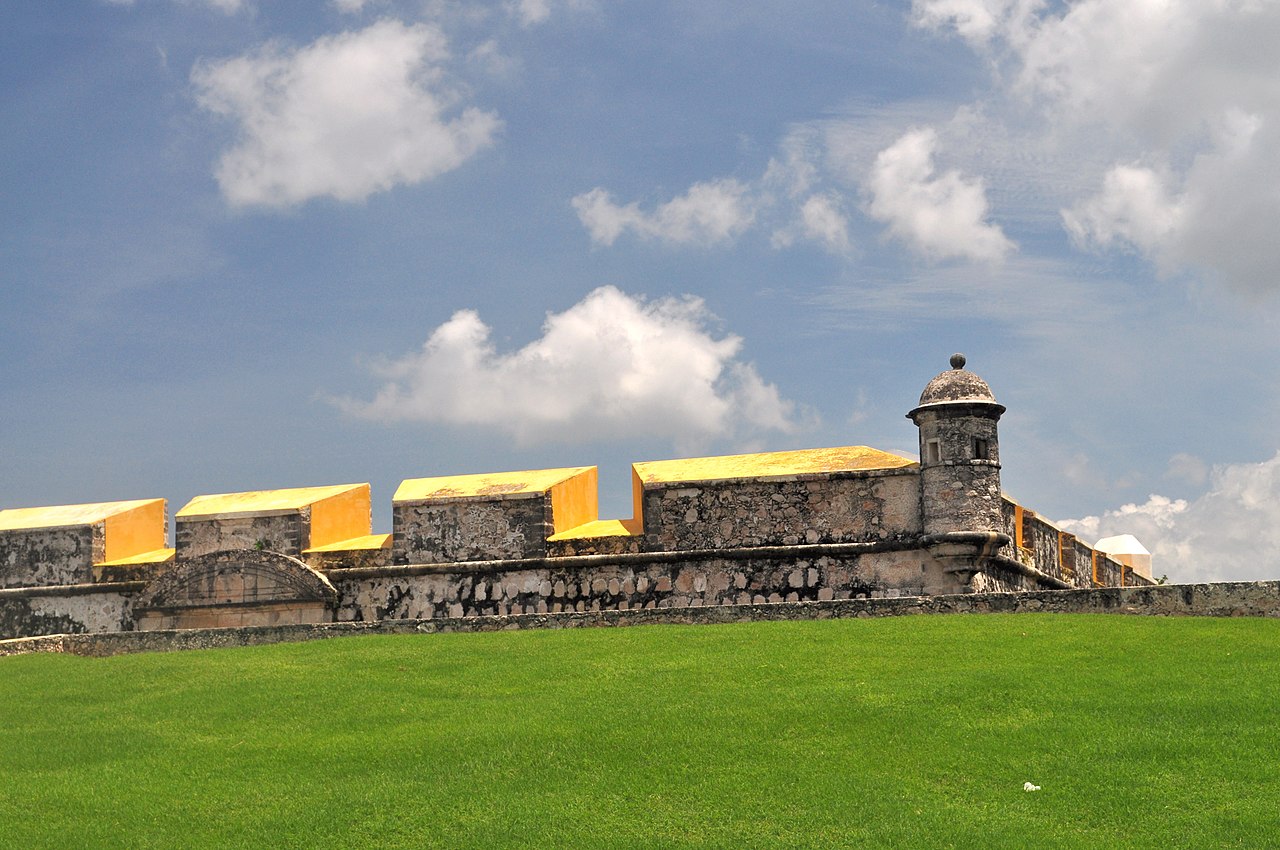
Make Fuerte de San Miguel your main museum visit
Fuerte de San Miguel stands on higher ground outside the centre and houses the Museo de Arqueología Maya. It is both an attraction in its own right and one of the strongest introductions to Campeche’s archaeology. The building’s military form matters: the moat, controlled entrance, thick walls and elevated position show how the fort defended the city. Inside, the collections connect the capital to sites across the state.
The museum is known for important Maya pieces, including material associated with Calakmul and Jaina. That makes it a useful stop even if you will not reach every archaeological site on this trip. Seeing artefacts in a museum first can give a later ruin visit more depth, while travelers who only have time for Campeche city still receive a substantial introduction to the state’s pre-Hispanic history.
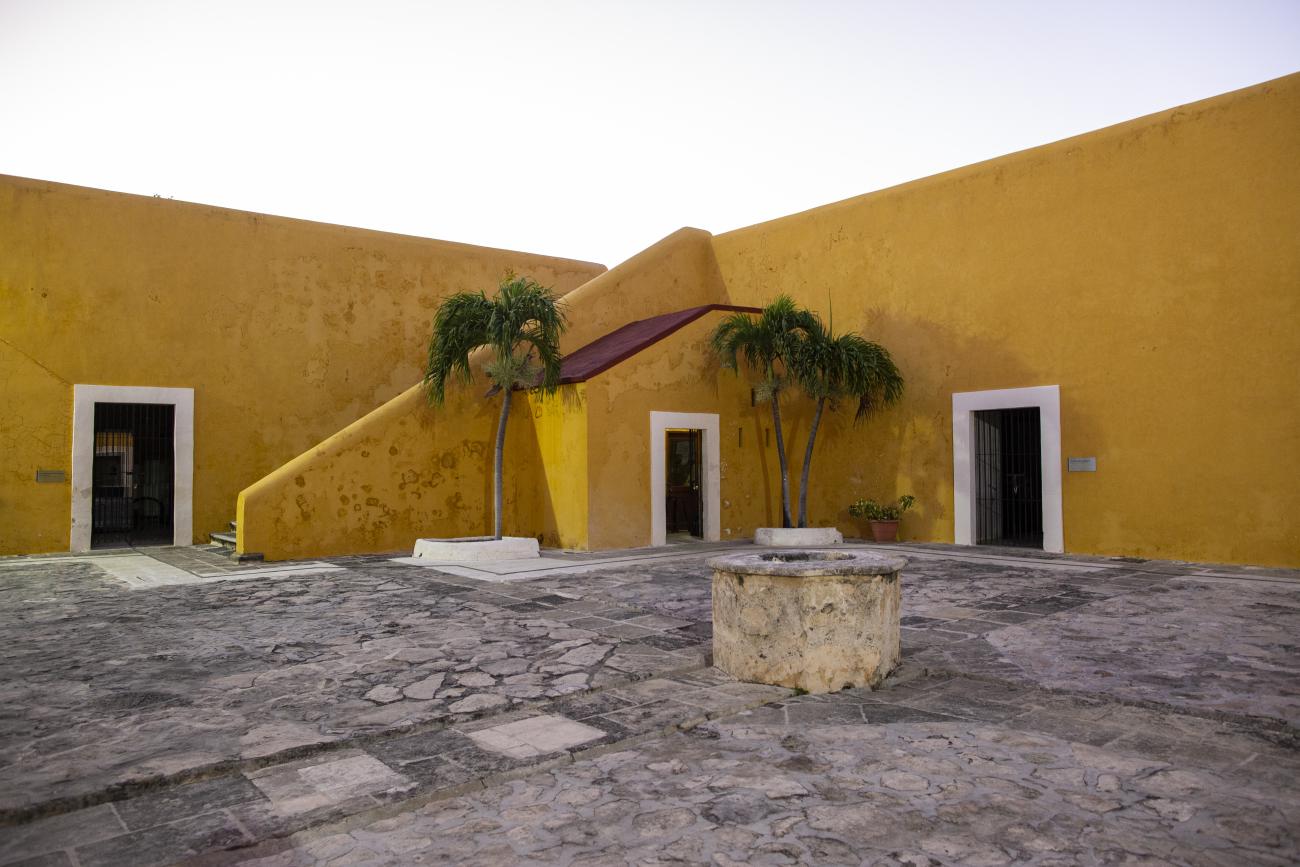 Courtyard inside Fuerte de San Miguel in Campeche
The fort is not in the middle of the pedestrian centre, so plan the visit as a separate leg. A taxi is the simplest option for many visitors; drivers can help with the return, but do not rely on an assumed waiting arrangement without agreeing clearly. If you have a rental car, confirm parking and access locally rather than treating a map pin as a guarantee.
The official INAH listing has reported hours and admission details, but these are the kind of practical facts worth checking again close to your visit. Current information can change, and public holidays may affect access. The museum’s official page is the right place to start: Museo de Arqueología Maya, Fuerte de San Miguel.
Allow at least enough time to see both the structure and the collection. Do not enter, look only at the objects and leave without walking the exterior perimeter. The fort’s military architecture is one half of the experience. From the higher ground, you can also understand why the city’s defenses extended beyond the central wall.
This visit suits several kinds of travelers. History enthusiasts can use it to organize the chronology of the state. Families often find the fort’s shape more memorable than a conventional gallery. Travelers preparing for Calakmul can focus on the jade masks, inscriptions and regional connections without trying to memorize every label. If you are short on time, choose San Miguel over adding multiple small museums; it provides the broadest return.
See Fuerte de San José el Alto and the maritime side of the city
Fuerte de San José el Alto is another elevated fort connected with Campeche’s outer defense. It offers a different perspective from the central bastions and San Miguel, especially for travelers interested in military engineering, coastal strategy and the city’s relationship with the Gulf. The fort houses the Museo de Arqueología Subacuática, giving the visit a maritime and underwater-heritage focus.
Do not treat the two hilltop forts as interchangeable. San Miguel is the stronger choice for Maya archaeology. San José el Alto broadens the story toward maritime history and underwater heritage. If your interest is primarily pre-Hispanic art, visit San Miguel first. If you have a second day or want a more varied museum plan, add San José el Alto after seeing the central fortifications.
As with all museums in Campeche, confirm opening status and current arrangements before traveling. Hilltop sites are less convenient to reach on foot from the centre, and a closure can turn a carefully timed taxi ride into wasted time. The official museum information is the best starting point for current access.
The surrounding viewpoints can also be useful, but this is not a substitute for visiting the museum. The point is to understand how the defensive network worked as a system: central walls around the settlement, bastions controlling approaches, and forts on higher ground extending the city’s reach.
Spend a full evening on the malecón
Campeche’s malecón is the city’s Gulf-facing promenade and one of the easiest activities to fit around everything else. It is not the historic centre, and it is not a beach resort. Think of it as open waterfront space for walking, cycling, watching the sky change and taking in the scale of the coast. The route feels especially good after a day inside the walled city, where the streets and walls can feel close and enclosed.
Go near sunset, but arrive early enough to find your preferred stretch and avoid making the entire experience a race against the light. The waterfront is used by residents for exercise and evening time, so behave as you would in any public promenade: keep to the appropriate side of paths, watch for cyclists and give local activities room.
The Gulf horizon does not promise a dramatic tropical beach scene every day. Weather, haze and cloud determine the view. That is part of the appeal. A calm evening may offer a long band of colour rather than a spectacular sunset, but the cooler air and open space still make the malecón worthwhile. On windy days, the atmosphere changes again, and you should secure hats, maps and loose clothing.
A short taxi ride can connect the historic centre and malecón, though some visitors prefer to walk part of the way if the temperature is comfortable. Cycling can work for confident riders, but check the surface and traffic around connecting roads. Avoid assuming that every waterfront section is equally comfortable after dark; stay where there is regular pedestrian activity and lighting.
 Campeche’s historic centre and cathedral at night
For visitors staying near the waterfront, the malecón becomes an easy morning or evening routine. For visitors staying inside the walls, it is a change of scene rather than a second historic attraction. If you discuss overnight bases while planning, compare Campeche stays on Booking.com with Campeche hotels on Trip.com.
Eat your way through Campeche without chasing a single “best” place
Food is one of the strongest reasons to leave time unassigned in Campeche. The state’s cooking reflects the Gulf, Maya ingredients, regional techniques and the city’s history as a port. You will encounter seafood, chile, citrus, masa and slow-cooked preparations, but no single restaurant or street captures the whole food culture.
Try local dishes as opportunities arise rather than treating a famous dish as a scavenger hunt. Pan de cazón is closely associated with Campeche and is built around layered tortillas, beans, fish and sauce. A good serving should make sense as a composed meal, not simply as a novelty. Seafood preparations vary with the day’s supply and the establishment’s style. If you eat fish or shellfish, ask what is fresh and pay attention to food-handling conditions, especially in hot weather.
Street food and market eating require ordinary judgment. Look for turnover, clean preparation surfaces and food that is cooked hot when appropriate. Carry cash in smaller denominations because smaller vendors may not accept cards. Travelers with allergies should explain them clearly in Spanish and keep expectations realistic when a kitchen is busy.
The best food itinerary includes breakfast, a market or casual lunch, and a slower evening meal rather than three expensive stops. Walk Calle 59 and the nearby streets, but do not assume that a visible tourist corridor is the only place worth eating. Neighbourhoods outside the central blocks can have their own rhythm, though transport and language demands increase.
Food travelers can also use the malecón as a transition: eat in or near the centre, then walk by the water, or do the reverse if you prefer an early dinner. Avoid adding a formal food tour to your plan unless the current itinerary and meeting point are clearly verified. For bookable activity inventory, browse GetYourGuide’s Campeche listings and check Viator’s Campeche activities; if listings are limited, independent market exploration may be the better choice.
Visit Edzná as the best nearby archaeology day trip
Edzná is the most practical major Maya site to add to a Campeche city stay. It is close enough for a realistic day trip and substantial enough to justify the journey. The site’s architecture, plazas and water-management story show a city adapted to the regional landscape, while the open setting provides a clear contrast with the enclosed capital.
Go early. Heat accumulates quickly on exposed plazas, and shade is limited compared with the comfort of a city museum. Bring water, sun protection, insect repellent and footwear suitable for uneven paths. Do not plan Edzná as a casual late-afternoon stop without checking current access and driving conditions; the route may be manageable, but the site visit itself deserves daylight and unhurried attention.
A rental car gives the most control over timing. Independent travelers can also investigate local transport or arrange a verified guide, but should confirm return logistics before entering the site. A taxi negotiated only for the outbound journey can leave you stranded if no return plan is clear. If you choose a commercial day trip, verify what is actually included rather than assuming that every “Edzná tour” has the same route, duration or entry arrangements.
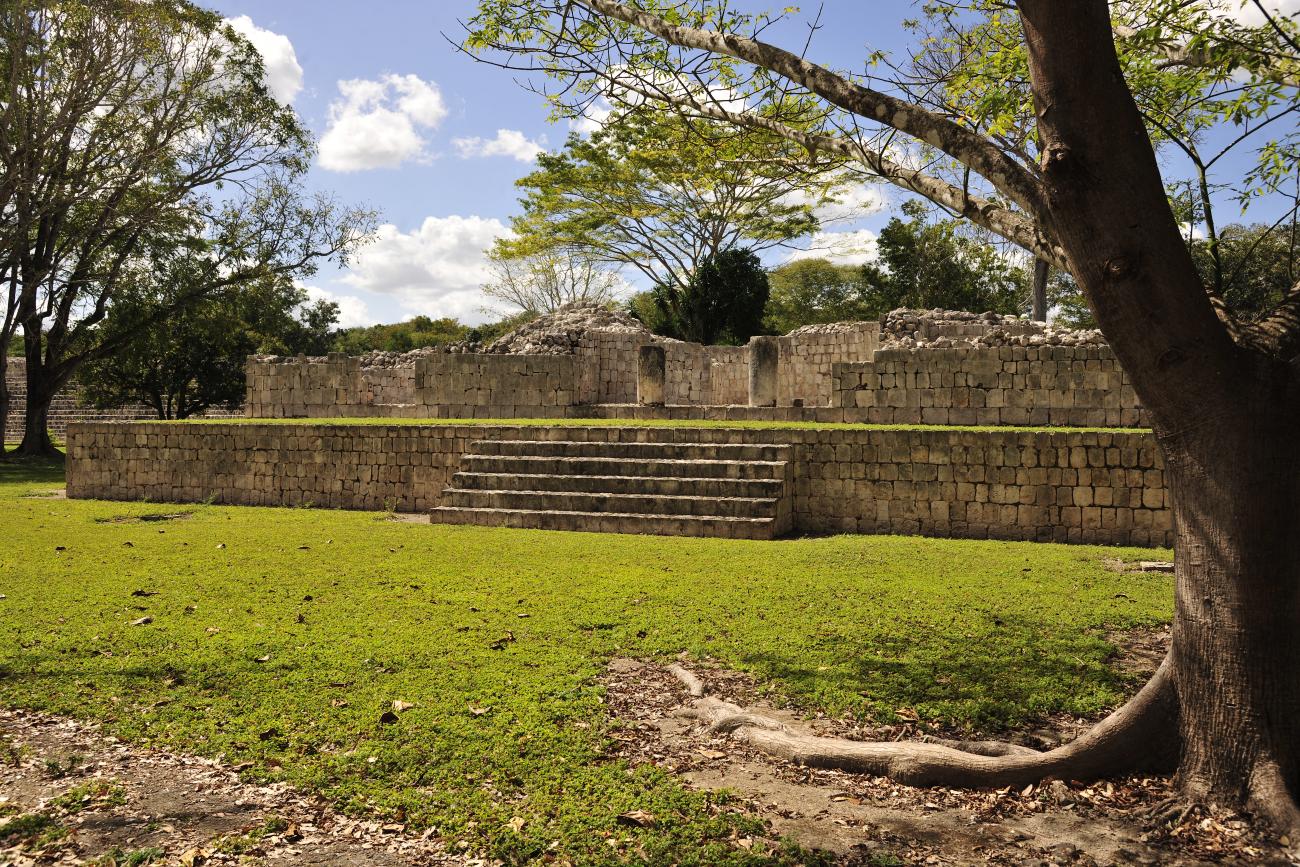 Maya stone architecture at the Edzná archaeological site in Campeche
Read the current official information before leaving: INAH’s Edzná archaeological-site information is more reliable for access changes than an old blog post. For bookable comparisons, see GetYourGuide’s Campeche and Edzná inventory and Viator’s Campeche tours.
Edzná can be a half-day visit if you focus on the principal buildings, but do not measure its value only by hours spent. The site is useful for understanding water management, urban planning and the political landscape of the region. Travelers continuing toward the Ruta de los Chenes or Hopelchén may use it as one stop on a longer route, while city-based visitors should return to Campeche with enough time for an evening walk rather than compressing the day until everyone is exhausted.
Choose between a city day and a longer Campeche route
The most important sightseeing decision is not which attraction ranks first. It is whether you should stay focused on the capital or use Campeche as one stop in a larger state itinerary.
Choose a city-focused visit if you have one or two nights, do not want long drives, or prefer architecture, museums, food and the waterfront. A balanced two-day plan can include the historic centre, cathedral, gates, bastions, one hilltop fort, the malecón and a flexible food evening. Add Edzná only if you can protect the start and end of the day.
Choose a longer route if your priorities include Calakmul, the Río Bec sites, Xpujil, wildlife or the southern jungle. Those destinations are not realistic add-ons to a casual Campeche-city day. Calakmul in particular requires a long approach and careful planning; most travelers benefit from staying near Xpujil or another southern base rather than attempting a rushed return to the capital.
The same principle applies to the coast. Champotón, Isla Aguada, Ciudad del Carmen and Laguna de Términos are in Campeche State, but they are not interchangeable with the capital. They reward different itineraries and transport decisions. A traveler who wants mangroves, lagoons and coastal wildlife should allocate time accordingly instead of squeezing a brief “coast stop” between city museums.
A practical one-day sightseeing plan
Start with the historic centre in the morning. Walk the main square, cathedral area, Calle 59 and one accessible section of the defensive walls. Use an indoor museum as your late-morning break if the heat is rising. Eat lunch at a place that looks busy and well maintained, allowing enough time rather than grabbing food while still trying to navigate.
In the afternoon, choose one major destination: Fuerte de San Miguel, Fuerte de San José el Alto or a second central museum. Do not schedule both hilltop forts and several bastions in the hottest part of the day. Return to your accommodation for a rest if necessary. Campeche’s relaxed pace is an advantage; there is no prize for remaining outdoors through the most uncomfortable hours.
Finish at the malecón or back in the centre after sunset. If you want photographs of the cathedral, plaza or walls at night, this is the time to make them. If you are traveling with children, the open waterfront can be a better evening release than another museum. If food is the priority, build the walk around your chosen meal but keep the route flexible.
This plan works because it alternates exposure and shade, history and open space, structured visits and unstructured walking. It also leaves a margin for closures, slow meals and the occasional detour.
A better two-day plan
On day one, stay inside the walled city. Walk the main square and Calle 59, see the cathedral, connect Puerta de Tierra and Puerta de Mar, and visit Baluarte de la Soledad or another central museum. Use the evening for the malecón and dinner.
On day two, visit Fuerte de San Miguel in the morning, then decide between Edzná and a slower city afternoon. If you want Edzná, leave early and confirm the route and return before departure. If you prefer not to drive, spend more time with the fortifications, add Fuerte de San José el Alto if open, and explore streets outside the busiest pedestrian corridor.
Two days allow you to see the city without treating meals, rest and sunset as wasted time. They also let you move a museum visit when the weather changes. Book a base that matches your plan: inside the walls is convenient for evening walks, while the malecón can be easier for travelers who value open space and road access. Compare current Booking.com rates for Campeche and Trip.com accommodation options before finalizing.
Plan for heat, surfaces and changing access
Campeche’s sightseeing is physically easier than a jungle ruin circuit, but the climate changes the day. Wear lightweight clothing that covers shoulders when entering churches or museums, use sunscreen and carry water. A hat is useful on the walls and malecón, while insect repellent becomes more relevant near vegetation and during evening outdoor time.
Carry a small amount of cash. Cards are common in formal businesses, but smaller vendors, taxis or access points may operate differently. Keep your phone charged for maps and transport, but do not rely on mobile coverage as your only route plan when leaving the city for Edzná or farther destinations.
Check official pages before visiting INAH museums and archaeological sites. Hours, admission arrangements, conservation work and local restrictions can change. Avoid copying exact prices or schedules from a post written years earlier. If a site matters to your itinerary, confirm it shortly before departure and keep a backup activity in the city.
Respect churches, museums and archaeological structures. Do not touch carved surfaces, climb closed monuments or use flash where it is prohibited. At the malecón and in plazas, leave room for residents. Good sightseeing in Campeche depends on treating the city as a living place rather than a collection of backdrops.
Where to stay for the sights
For a first visit, staying inside or immediately near the historic centre makes the evening easier. You can walk to the main square, Calle 59, the cathedral and several fortification sites without arranging transport every time. The trade-off is that parking and vehicle access can be less convenient on narrow historic streets.
The malecón suits travelers who prefer a wider setting, morning walks, sea air or simpler access for a rental car. It is still possible to reach the walled city, but you will plan the connection rather than stepping out directly into the colonial streets. Families and travelers who want a quieter base may prefer this arrangement.
Do not name a hotel simply because it appears often in search results. Properties change, and a suitable choice depends on dates, accessibility, parking and cancellation terms. Compare the current Campeche hotel inventory on Booking.com with Campeche stays on Trip.com, then check the map and the property’s current conditions before booking.
Is Campeche worth visiting?
Yes, particularly if you value a walkable historic city with a strong sense of place rather than a resort-style list of attractions. Campeche’s best day combines several modest experiences that reinforce each other: a plaza, a cathedral, a wall, a museum, a meal and the Gulf at sunset. None needs to be exaggerated to be worthwhile.
The city is also a useful gateway to a much larger state. Edzná can extend a short stay into archaeology; Calakmul and the Río Bec region can turn the trip into a road journey; the southern wetlands and coastal towns offer a different landscape entirely. The key is to respect distances. A guide to things to do in Campeche city should not pretend that every destination in the state is a quick excursion.
If there is only one full day, focus on the walls, historic centre, one substantial museum and the malecón. If there are two, add the hilltop fort that best matches your interests and consider Edzná. If you have longer, use the capital as a calm starting point before committing to the state’s longer jungle and coast routes. That approach gives you enough structure to see the important places while leaving space for the slow, observant travel that makes Campeche memorable.
A good final evening is simple: walk the centre after the heat has softened, look back at the walls you saw in daylight, eat something local, and continue to the malecón if the weather is comfortable. Campeche does not need a hurried finale. Give the city one unplanned hour, and it will usually show you more than another item added to the list.
GuideIs Campeche Worth Visiting? An Honest Guide to DecidingCampeche is one of Mexico's quietest colonial gems — a UNESCO walled city with real local life, nearby ruins, and Gulf coast access. Here is who it suits, who should skip it, and how to fit it into a Yucatán trip.Explore