
Shopping in Campeche is less about a single shopping district and more about learning where different kinds of local commerce happen. The walled centre has the easiest souvenir browsing, the main market shows the everyday rhythm of the capital, and the towns along the Camino Real are where particular crafts make more sense in their place of origin. You can buy a small woven item in central Campeche, but a visit to Bécal gives you a much better understanding of why jipi-japa hats are made underground. The difference is part of the experience.
This guide covers markets, state handicrafts, regional food products, practical buying advice, and day trips for travellers who want something more meaningful than a generic refrigerator magnet. It stays focused on Campeche State: San Francisco de Campeche, the northern craft towns, Champotón, Hopelchén, Tenabo, Hecelchakán, Calkiní, and other places where the state’s materials and techniques are visible. Stock, prices, payment methods, and opening hours change, so treat a shop’s current information as something to confirm locally rather than a permanent promise.
The short answer: where should you shop?
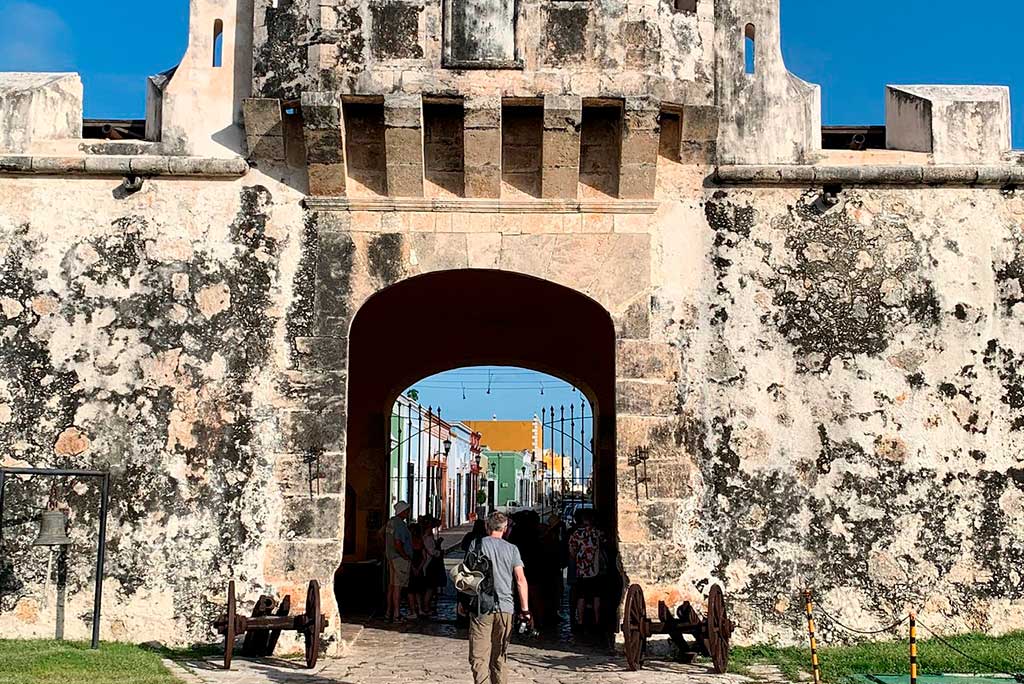
If you have only a few hours in the capital, begin in the historic centre. Walk through the numbered streets around Calle 59, look for the Casa de Artesanías Tukulná, and leave time for the market if you want food products or a less curated view of local commerce. The centre is compact enough to browse on foot, and you can combine shopping with the plazas, gates, bastions, cathedral, and the evening walk toward the malecón.
For the clearest range of Campeche-made crafts, Tukulná is the most useful first stop. Official Campeche tourism material describes it as a state handicraft house carrying hammocks, traditional clothing, jipi-japa hats, accessories made from bone and bull horn, and other regional work. It is a showcase rather than a street market, which means the presentation is easier for a first-time visitor to understand. It also means you should not assume every item on display was made in the building or in the capital; ask which municipality or workshop produced the piece.
For daily market life, go to Mercado Principal Pedro Sáinz de Baranda. It is primarily a food and provisions market, not a dedicated craft hall, but it is valuable for local products, practical baskets, small household goods, seasonal produce, and the sense of how Campechanos actually buy food. Go with modest expectations about browsing space. Corridors can be busy, smells are part of a working market, and some stalls close earlier than the building’s broad public schedule suggests.
For a particular purchase, travel to the relevant town when your itinerary allows. Bécal is associated with jipi-japa weaving, Tenabo with fruit preserves and piñatas, Hopelchén with embroidery, and Calkiní and nearby communities with textiles and other handwork. These are not interchangeable attractions. A route through the northern state is best when you want to meet a craft in its local context, not when you need a fast shopping stop between two major destinations.
Check current Campeche City tours on GetYourGuide · Compare Campeche sightseeing and cultural activities on Viator
Casa de Artesanías Tukulná: the easiest place to start
Tukulná means “house of thought,” and the Casa de Artesanías Tukulná occupies a historic building in Campeche’s centre. Its official tourism description highlights an interior organised around a patio and an assortment of crafts from across the state. That setting matters: shopping here can be a gentle introduction to materials and techniques before you decide whether a day trip to a producing community is worth the time.
Expect to see several types of work rather than one narrow speciality. Hammocks are an obvious choice if you have room in your luggage, while textiles and traditional garments are easier to fold but require more care when checking fibre, stitching, colourfastness, and provenance. Jipi-japa hats are the recognisable purchase for many visitors, but do not treat the cheapest hat as automatically the best value. Weave density, shape, finishing, and the amount of handwork affect how a hat travels and how long it lasts.
You may also find jewellery or decorative pieces made with bone, horn, wood, or other materials. Ask what the material is, whether it is legally sourced, and how it should be cared for. A careful seller should be able to explain whether a piece is intended for daily use, display, or occasional wear. If a product is made from an animal-derived material and the explanation is vague, choose another item. International customs rules can also be stricter than you expect, particularly for animal products, plant fibres, and food.
Tukulná is particularly useful for comparing styles. Look at several pieces before buying, then return to the one that feels best made rather than purchasing the first attractive object. Take a photograph of the maker’s label or municipality if one is provided. That information helps you explain the item at home and makes it easier to buy a replacement later without guessing what you bought.
Do not plan around an unconfirmed opening time. Confirm current hours through the official tourism channel or locally, especially on holidays and during public events. The building is near the central pedestrian routes, so it is easy to combine with Calle 59 and the nearby historic sights without dedicating an entire day to shopping.
What to see on Calle 59 and the central streets
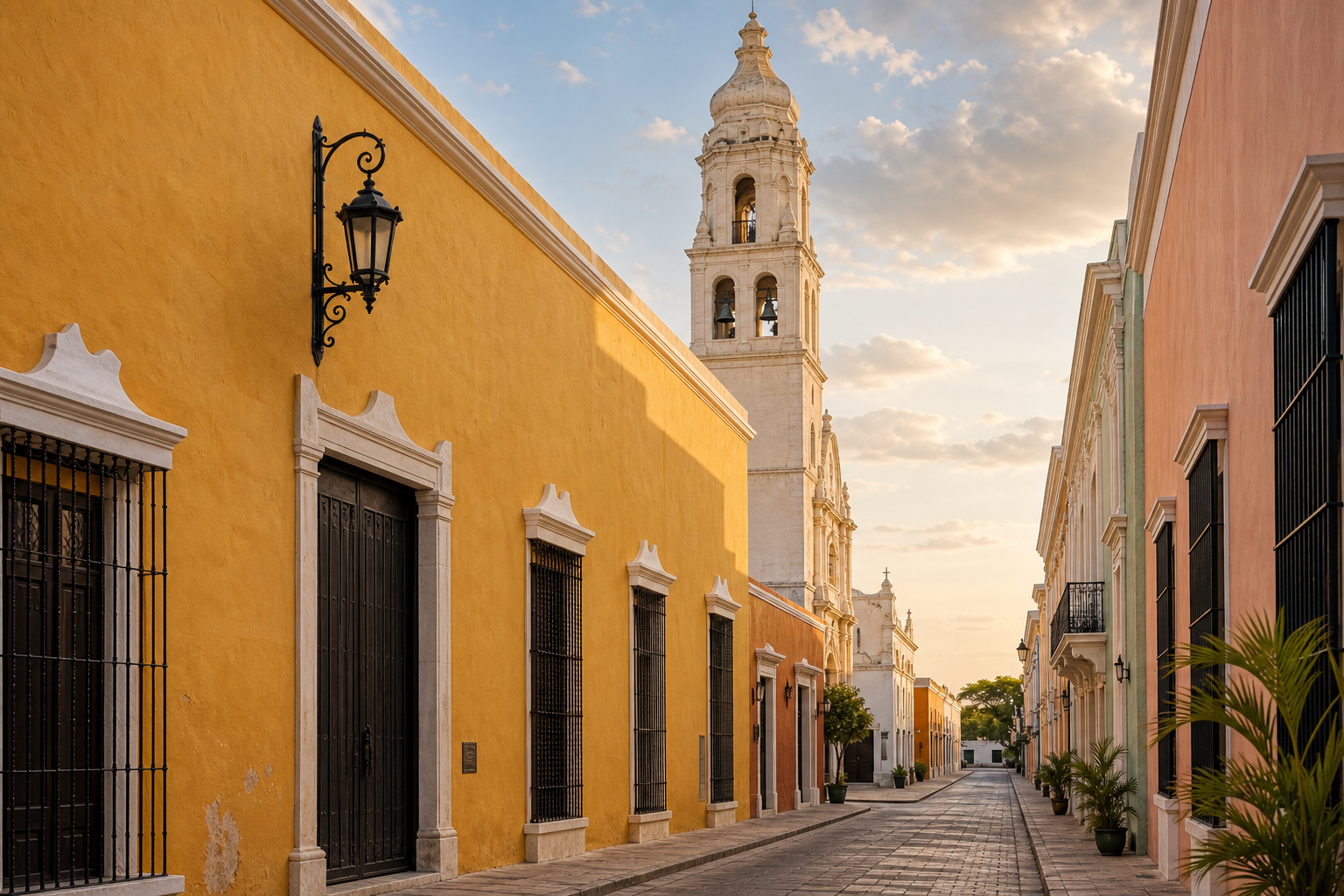
Calle 59 is not a traditional market, but it is the most convenient browsing spine in the walled city. The pedestrian corridor links the areas around Puerta de Tierra and Puerta de Mar, with colourful façades, restaurants, cafés, cultural venues, and small retail spaces. The useful approach is to walk it once without buying anything, then return to shops that still look interesting. That prevents a common travel mistake: purchasing a fragile or bulky item before you have seen what the rest of the centre offers.
Use the surrounding numbered streets as well as Calle 59 itself. A shopfront on a side street may have a better selection of textiles or regional products than a highly visible terrace-facing display. Conversely, some attractive-looking items may be imported or mass-produced. Ask direct, polite questions: “¿Es de Campeche?” and “¿De qué comunidad viene?” are enough to open a conversation. If the answer is “regional,” ask whether that means made in the state or simply inspired by the region.
The colonial setting changes how you carry purchases. Cobblestones, steps, narrow pavements, and the heat make a rolling suitcase awkward. A small backpack with a separate cloth bag is more practical for a morning of browsing. Keep paper receipts and labels dry; humidity can damage packaging and make a food product difficult to identify later.
The best time for the centre depends on your tolerance for heat. Midday is useful for shops that close or reduce activity later, but it is the hardest time for walking in direct sun. Early evening is more comfortable and gives the façades a softer light, although individual businesses may have different schedules. If you want both Tukulná and the main market, visit the market earlier and reserve the historic centre for later in the day.
Shopping here works best as part of a wider walking route. See one museum or bastion, browse for a while, stop for a drink, and continue. The city’s craft story is easier to understand when you notice the relationship between imported colonial goods, Gulf trade, Maya and regional materials, and the contemporary businesses selling them to residents and visitors.
 The Casa de Artesanías Tukulná in Campeche’s historic centre
The official Campeche Travel handicrafts overview is useful for checking the state’s craft categories before you shop.
Mercado Principal Pedro Sáinz de Baranda
The main market is where shopping becomes less polished and more useful. Its stalls deal in food, produce, seafood, meat, prepared dishes, small goods, and household supplies. Travellers sometimes walk through expecting a craft market and leave disappointed; that is the wrong test. The market’s value is seeing the ingredients and objects that support everyday life in Campeche, then buying something that can realistically travel.
Go early if you want the broadest selection and the liveliest atmosphere. The exact rhythm differs by stall, season, and day, so do not rely on a single online listing for every vendor. A market may remain open while particular sellers have already packed up. Morning is also more comfortable in hot weather and gives you time to handle food products before the heat of the afternoon.
This is a place for small, durable purchases rather than an elaborate souvenir hunt. Look for packaged regional sweets, dry ingredients, spice blends, or sealed products only when the labelling is clear and the item is permitted in your destination. Fresh seafood, unsealed sauces, and fragile prepared foods are better enjoyed during the trip than carried across borders. If you buy produce, ask how it should be stored and whether it is ready to eat.
Keep your phone and wallet secure in crowded corridors. Ask before photographing a vendor or a person working at a stall. A wide photograph of a display is less intrusive than a close portrait, but courtesy is still the right default. Bring small notes for modest purchases and check the change before stepping away, without turning a normal transaction into an adversarial negotiation.
The market is also a useful place to observe language and terminology. A product called one thing in a tourist shop may have a more specific local name in the market. Listen, ask, and write down unfamiliar words. That small effort often produces a better conversation than asking only for the “most authentic” item.
GuideManantiales de Pedro Baranda, Campeche: Complete Visitor GuideHow to plan a visit to Manantiales de Pedro Baranda in Candelaria, Campeche: clear spring water, swimming, kayaking, access, nearby nature, and practical logistics.Explore
Which Campeche crafts are worth looking for?
Jipi-japa hats and woven palm fibre
Jipi-japa is the craft most strongly associated with Bécal and the northern Camino Real area. The fibre is worked in humid caves or cave-like working spaces because moisture makes it more pliable. The underground setting is not a decorative gimmick; it is part of the production conditions. A hat’s final shape, weave, brim, and finish can vary considerably, so handle it gently and ask how it should be stored.
If you are buying a hat, check the crown for evenness, the brim for a clean edge, and the interior for a comfortable band. Foldability is not the only measure of quality. A very fine hat can be delicate, and a sturdier weave may suit a traveller who wants to use it outdoors. Ask whether the piece can be reshaped and whether the maker recommends keeping it away from prolonged moisture.
Do not pack it under heavy clothing. Use a hat box if the shop offers one, or protect the crown with soft clothing and keep the brim flat. Never buy an animal-fibre or plant-fibre item without thinking about airline and customs rules at the other end.
 Jipi-japa and shell handicrafts presented by Campeche tourism
Hammocks
Hammocks are practical Campeche souvenirs when you have checked luggage or a reliable way to carry a bulky textile. Compare the suspension loops, edge finishing, and overall tension. A hammock made for decoration may not be the same as one intended for regular use. Ask about the recommended support points and weight limits rather than assuming that every colourful hammock is ready to hang.
A hammock’s size is easy to underestimate in a shop. Measure the space where you expect to use it, including the distance between supports and the clearance below. If you live in an apartment or travel with a small bag, a compact woven item or hammock chair may be more realistic than a full-size model.
Keep the seller’s care advice. Some fibres tolerate washing differently from others, and bright dyes may bleed. Fold the hammock loosely, keep it dry, and avoid sealing it in plastic while it is still humid.
Embroidered clothing and textiles
Campeche’s municipalities have different textile traditions and styles. You may encounter embroidered blouses, huipiles, dresses, bags, table textiles, and decorative pieces. Ask where the garment was made and whether the embroidery is handwork or machine work. Machine work is not automatically inferior, but the distinction affects what you are paying for and how you describe the piece.
Check the reverse side for loose threads, the seams for strength, and the fabric for a comfortable fit. Traditional clothing is not a costume to be worn carelessly for a photograph. If you purchase a garment, treat it as clothing with a history and a maker. Ask whether the colours are likely to fade and whether the seller recommends hand washing.
Sizing can be inconsistent. Try a garment on over the clothing you expect to wear, or measure a similar item you already own. A slightly loose fit is easier to adapt than a piece that is too tight across the shoulders. Keep the receipt or seller information if you may need an exchange.
Wood, natural fibres, and household objects
Wooden objects, baskets, mats, and other fibre work can be useful purchases because they are often durable and easy to understand at home. Examine them for cracks, insect damage, unstable joins, and a strong chemical smell. If a wooden piece is unfinished, ask how to protect it from humidity. If it is painted, ask whether the finish is intended for food contact before using it as kitchenware.
Natural-fibre baskets can be excellent for storage but are vulnerable to crushing. Pack them around the outside of your bag or fill them with soft clothing. A seller may be able to show you how to flatten or reshape the item for travel.
Horn, bone, and marine materials
The state has crafts using materials such as bull horn and, in coastal areas, shells or fish scales. These pieces can be visually striking, but they carry extra questions. Confirm exactly what the material is, how it was obtained, and whether you can legally transport it home. Rules vary by country and sometimes by species or product type. When provenance is unclear, choose a textile, wood, or fibre item instead.
Do not buy coral, protected wildlife products, or anything presented with a story that sounds deliberately vague. A souvenir is not a good souvenir if it creates a customs problem or contributes to illegal collection.
Regional foods and edible souvenirs
Food is often the easiest souvenir because it can be shared and consumed without taking permanent luggage space. Campeche’s Gulf coast and tropical climate shape what you see in markets and shops: fruit products, sweets, spices, sauces, chocolate, coffee from broader regional supply chains, and preserved items. Buy sealed products with clear ingredient and date labels when you are carrying them far.
Fruit preserves are associated with parts of northern Campeche, including Tenabo. Ask whether a jar needs refrigeration after opening and protect glass from heat and impact. A small sealed jar is safer than a large one for air travel. If the product has no label, keep it for the immediate journey rather than assuming it will pass an international inspection.
Honey, sauces, dried chiles, and spice mixtures can be useful gifts, but liquids and pastes belong in checked luggage unless they meet your airline’s cabin rules. Put jars in leakproof bags and separate them from clothing. Do not buy fresh meat, seafood, or unpasteurised products for a long journey. Enjoy them in Campeche instead.
Taste before buying when a vendor offers a sample, but do not pressure a stallholder to open a sealed package for you. Ask about spice level and allergens. The word “regional” does not guarantee that a product was made in Campeche, so check the label or ask directly.
Shopping beyond the capital
Bécal and the Camino Real
Bécal is the strongest choice for travellers who want to connect a purchase with a producing community. The town lies on the northern route through Campeche and is known for jipi-japa hats and other palm-fibre work. A visit makes sense as part of a longer route that can include Calkiní, Hecelchakán, Pomuch, and other stops, but do not promise yourself a perfectly timed chain of open workshops. Community activity and shop hours vary.
Allow time to speak with a craftsperson and see the working environment rather than arriving only to collect a hat. If a cave or workshop visit is offered, listen to the conditions and ask before taking photographs. You are entering a workplace, not a staged display. Buy directly when you can, and ask for the maker’s name or community so the object keeps its context.
Compare the Camino Real craft and culture tour inventory on GetYourGuide · See Viator’s Campeche walking and cultural options
Calkiní, Hecelchakán, and Pomuch
These northern towns are useful for travellers interested in textiles, food traditions, and local culture rather than a single landmark. Calkiní is part of the wider craft landscape around jipi-japa and woven work. Hecelchakán and nearby communities are associated with clothing, embroidery, and regional food. Pomuch is known for its cemetery tradition and bread, but it should not be reduced to a souvenir stop. Buy food respectfully and do not photograph ceremonies or family spaces without permission.
A car gives you more flexibility, although buses and colectivos can connect major towns with patience and local advice. Treat the route as a day of visits, not a timed shopping conveyor belt. Carry water, cash, and a bag for purchases. Confirm where you will find your return transport before leaving the main road.
Tenabo and Hopelchén
Tenabo is associated with preserves and other local products, while Hopelchén is known for embroidered work in the state’s craft descriptions. The availability of a particular item can be seasonal or concentrated in a community rather than the municipal centre. Ask at local cultural or tourism information points where a product is currently being sold instead of driving to a shop named in an old blog post.
Hopelchén also sits within a wider inland landscape where agriculture, Maya communities, and archaeological routes overlap. Shopping is more rewarding when you approach it as a reason to slow down and learn where the item comes from. If a seller cannot explain the provenance, there is no need to force the purchase.
Champotón and the coast
Champotón and the coastal municipalities have craft traditions involving wood, shells, and marine-themed materials. The coast also makes edible purchases tempting, especially seafood. Keep the distinction between a locally made object and a generic beach souvenir. Ask whether shells were collected legally and whether the item is intended to travel.
Do not plan a coastal shopping stop around a precise stock list. Fishing, weather, festivals, and local events all affect what is available. If you are staying overnight, ask accommodation staff or a trusted local information point where residents shop for crafts and packaged products rather than relying only on a roadside display.
How to judge quality without being an expert
Start with the maker’s explanation. A good seller does not need to use grand claims; they can usually tell you the material, community, process, care instructions, and intended use. Then inspect the item in ordinary light. Look for even weaving, secure joins, clean hems, stable handles, and a finish appropriate to the object.
Price alone is a poor quality test. A low price may reflect machine production, simpler materials, a smaller item, or a direct-sale context. A high price may reflect a central location, presentation, or a seller’s overhead rather than exceptional workmanship. Compare similar pieces and ask what accounts for the difference.
For textiles, check fibre, stitching, dye, and size. For hats, check weave and shape. For wood, check moisture, cracks, and finish. For food, check ingredients, dates, and storage. For jewellery, check clasps and material. For anything made with a plant or animal product, check transport rules before paying.
Negotiation is not mandatory. In a fixed-price craft house, accept the posted price unless staff invite discussion. At an open market, a polite question about the price for two items is different from aggressively pushing down the value of handwork. If you cannot agree, thank the seller and leave the item.
Paying, packing, and getting purchases home
Carry a mix of cards and cash. Larger established shops may accept cards, while smaller stalls and producing communities may not. Do not assume that a card terminal means every card or foreign bank will work. Ask about the total before paying and keep receipts for more expensive purchases.
Pack fragile items in the centre of your luggage, surrounded by soft clothing. Keep hats uncompressed and use a box when possible. Wrap glass food products separately and put them in leakproof bags. Do not place a damp woven item in sealed plastic; let it dry fully first.
Think about airline weight and customs before buying a large hammock, pottery, or wooden object. A bargain becomes expensive when it requires an extra bag. If you are moving through Campeche by bus, choose purchases that can stay with you and avoid leaving valuables in an unattended luggage compartment.
For international travel, retain labels and receipts. Declare food, plant fibres, animal materials, and agricultural products when required. Customs officers decide what enters a country; a seller’s assurance in Campeche cannot replace the rules of your destination.
A practical half-day shopping route in Campeche City
Begin at the main market in the morning. Walk through without trying to photograph everything. Buy breakfast or a small packaged product if the labelling is clear, then note which items you want to look for later. This first stop gives you a sense of local prices and materials without committing to a large purchase.
Continue toward the historic centre and take a shaded break before browsing the streets around Calle 59. Visit Tukulná when it is open, ask about the origin of pieces that interest you, and compare its selection with smaller shops. If you are buying clothing, do this before lunch so you can still return for a different size or colour.
Spend the afternoon on one or two nearby historic sights rather than carrying purchases through an endless circuit. Return to the shop you prefer, buy only what you can pack well, and keep the rest as a note for a future visit. Finish with the cooler evening walk along Calle 59 or toward the malecón.
This route suits visitors based in the walled city. If you are staying outside the centre, plan the return journey before sunset and avoid assuming that every taxi or bus route will be equally convenient after a market visit.
Check current rates for Campeche City stays on Booking.com · Compare Campeche hotels on Trip.com
GuideBest Beaches in Campeche and Near Campeche CityExplore
A longer craft-focused route
A longer route can combine Campeche City with Bécal and the Camino Real towns, but it deserves at least an overnight-minded pace rather than a rushed out-and-back. Start with the capital’s overview at Tukulná, then travel north with a clear idea of which craft you want to understand. Bécal is the logical place for jipi-japa; Calkiní and Hecelchakán add context on northern Campeche’s textiles and communities; Pomuch adds a culture visit that should be approached respectfully, not treated as a shopping display.
Driving is the simplest way to connect scattered stops, but it requires attention to fuel, topes, road conditions, and return timing. Public transport is possible between larger towns but is less suitable for a tightly scheduled shopping itinerary. Ask locally where to wait and which service is operating that day. Do not leave a town after buying something large without knowing how you will carry it to the next stop.
An organised cultural excursion can reduce the logistics, but verify the exact itinerary before booking. A listing that says “Camino Real” may include only selected towns or may depart from another city. Browse current GetYourGuide Campeche cultural inventory and check Viator’s Campeche tour listings, then confirm pickup location, language, inclusions, and whether shopping is an optional stop rather than the central purpose.
What not to buy
Avoid protected wildlife products, coral, archaeological objects, and anything presented as “ancient” without lawful provenance. Maya artefacts belong in museums and archaeological collections, not in luggage. Do not buy a shell or feather product if the species or source is unclear. A responsible seller should not become defensive when you ask what an item is made from.
Be cautious with medicinal products, unlabeled liquids, and food that has no ingredients or date information. Do not assume that a sealed bag is safe for customs or that a product sold to tourists has been tested for your destination’s rules.
Finally, do not buy a traditional garment or ceremonial object simply to use as a costume. If you love the textile, learn its name, community, and use, and wear it with the same care you would give any culturally significant item. Shopping is a form of contact with a place; it should leave the maker’s work more visible, not stripped of meaning.
The best souvenir is the one you can explain
Campeche gives you a choice between convenience and context. A central shop is convenient, the market is immediate, and a northern road trip takes more planning. None is automatically better. The useful question is whether you can say where an object came from, what material it uses, how it was made, and how you will care for it.
For a short stay, visit the market early, browse Tukulná, and walk Calle 59 without rushing. For a longer stay, make time for Bécal or another producing community and buy directly when the opportunity is genuine. Carry cash, protect fragile work, keep labels, and check customs rules before purchasing animal, plant, or food products. That combination gives you a souvenir that fits in your luggage and still makes sense when you are back home.
If shopping is part of your Campeche itinerary, leave the final purchase until you know how much space and weight you actually have. The best choice is usually the small, well-made piece whose maker and community you can name—not the largest object you can persuade yourself to carry.
 Calle 59 in Campeche’s historic centre, near the city’s craft shops
Where shopping fits in your trip
Shopping works particularly well on the last full day in Campeche City because the historic centre, market, and craft house can be combined without a long transfer. It is less sensible to postpone a fragile purchase until a day when you are immediately travelling to Calakmul, because jungle roads, heat, and luggage handling are hard on hats, glass, and delicate textiles.
If you are continuing through Campeche State by car, place the biggest purchases near the end of the route or make sure they can be secured in the vehicle. Never leave visible shopping bags in a parked car, even for a short stop. For bus travel, use a soft protective bag and keep receipts together with your passport documents.
The state’s shopping story is strongest when you allow the geography to guide you. Campeche City gives you the overview; Bécal explains jipi-japa; northern towns connect textiles and food to communities; coastal places show different materials and markets. Choose one or two threads rather than trying to collect every category. You will have a better day and a more honest understanding of what you take home.
That is the practical way to shop in Campeche: start with the working market, learn the difference between a state craft and a generic souvenir, buy directly and respectfully when you can, and leave enough room in your luggage—and your schedule—for the object’s story to travel with it.